
All-on-X Scanning Solutions Compared
Full-Arch Accuracy Without the Photogrammetry Price Tag
You already scan single units and implant bridges with total confidence. So why does All-on-X still trip you up? In about an hour, Dr. Ahmad Al-Hassiny shows you the workflow that finally makes full-arch predictable, on the scanner you already own.
With Dr. Ahmad Al-Hassiny
Founder of iDD | Digital Dentistry KOL
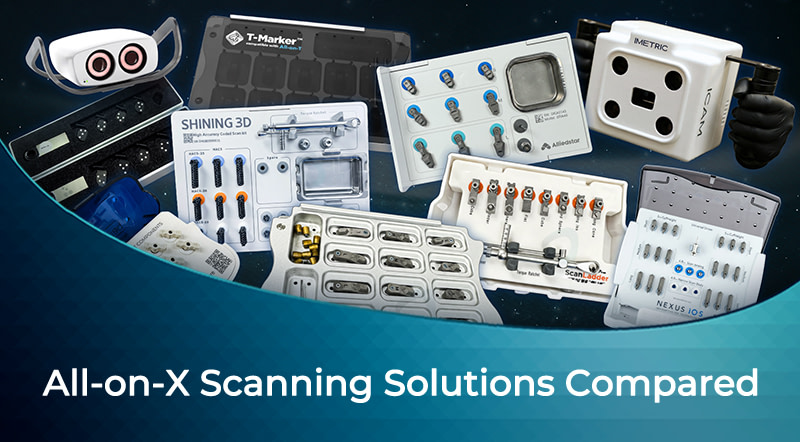

Here is the strange part about full-arch. You can scan a single implant, an implant bridge, even a tricky multi-unit case curving through the anterior, and send it straight to the lab. That is the standard of care now. Full-arch is the one case where a perfectly normal scan quietly lets you down.
For years the only honest fix was the verification jig, and nobody enjoyed it. Then photogrammetry arrived and worked beautifully, but at $40,000 to $50,000 USD and living in a Pelican case, it never made sense for most general dentists doing occasional full-arch work.
Horizontal scanbodies changed that. This webinar is the honest, data-backed breakdown of why full-arch scanning fails, and the workflow that fixes it without buying a separate device.
Why Full-Arch Scanning Fails
Intraoral scanners stitch images together like a video camera, and that stitching error builds up across the arch. Accuracy that starts around 27 microns where you begin can drift past 52 microns by the opposite side. For a passive fit, you need cross-arch deviation under roughly 50 to 100 microns. Past that threshold, the prosthesis will not seat, and on a full-arch case with a patient expecting teeth, that is an expensive problem.
This was never a "buy a better scanner" issue. It is a capture problem, and it needs a verification step.

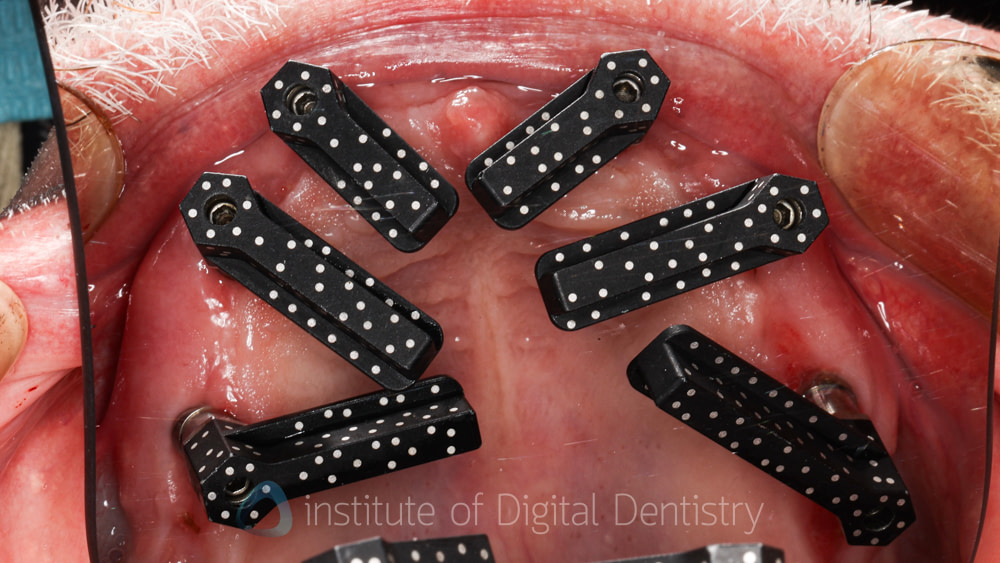
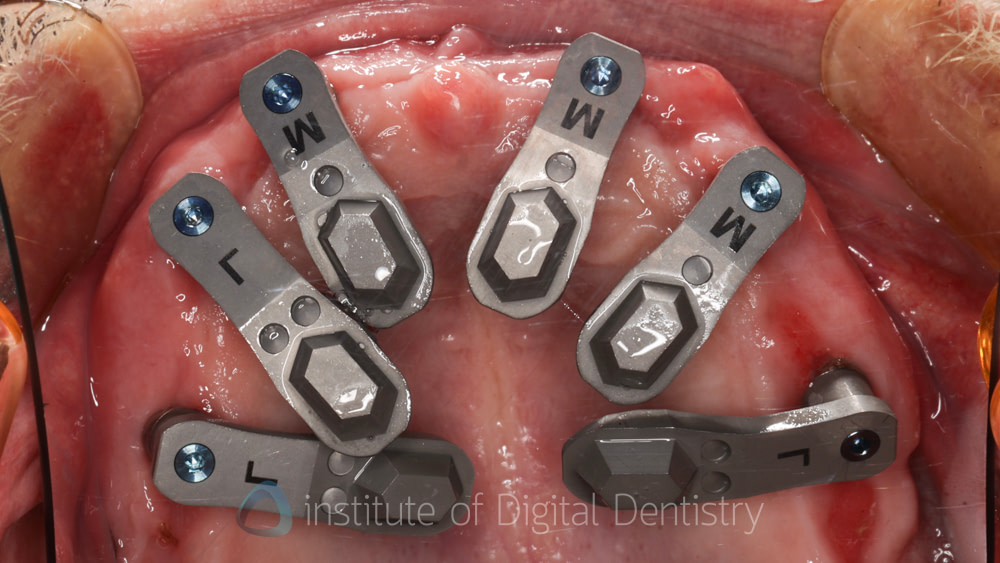
What Horizontal Scanbodies Actually Solve
Dr Ahmad ran an ICAM photogrammetry unit in his own practice for 3 years, then retired it. In his own study, using a contact-measuring machine (CMM) as the gold-standard reference and scanning each system around 20 times over several months, horizontal scanbodies measured 20 to 30 microns.
Why? Because it solves one of the critical issues of intraoral scanning: stitching. And now there are more options than ever.
The accuracy of most horizontal scan body systems is comparable to photogrammetry, at a fraction of the cost. ScanLadder, for example, runs around $2,000 USD against photogrammetry's historic $40,000. But there are different pros and cons of each system.
Which system, which scanner, and how to scan it predictably chairside is what this webinar gives you.
What You Will Learn
Why full-arch scans accumulate cross-arch error past the threshold for a passive fit, while single-unit scans stay accurate
How the real options compare, verification jigs, photogrammetry, and horizontal scanbody systems, including their cost, bulk, and accuracy trade-offs
The full chairside horizontal scanbody workflow, from attaching the scanbodies to the digital transfer that lets a capable lab deliver a printed prosthesis in a day
How the leading kits stack up, including Osteon NEXUS, SHINING 3D Elite, Alliedstar, Medit, ScanLadder, and TruAbutment, with their software, cost, and technique-sensitivity differences
Ahmad's own in-vitro data showing horizontal scanbodies measuring 20 to 30 microns, and why your scanner brand still matters (weaker scanners drifted up to around 121 microns with the same scanbody)
Practical answers on capturing the bite, verifying scanbody seating before you commit, scanning widely spaced and angled implants, and a realistic pathway into full-arch dentistry
Who This Is For
General dentists and prosthodontists who place or restore implants and want to predictably move full-arch work onto an intraoral scanner. It assumes you are already comfortable with single-unit and multi-unit implant scanning. It suits clinicians ready to take on All-on-X, those already doing it who want a more accurate and lower-cost workflow than standalone photogrammetry, and lab technicians supporting digital full-arch cases.
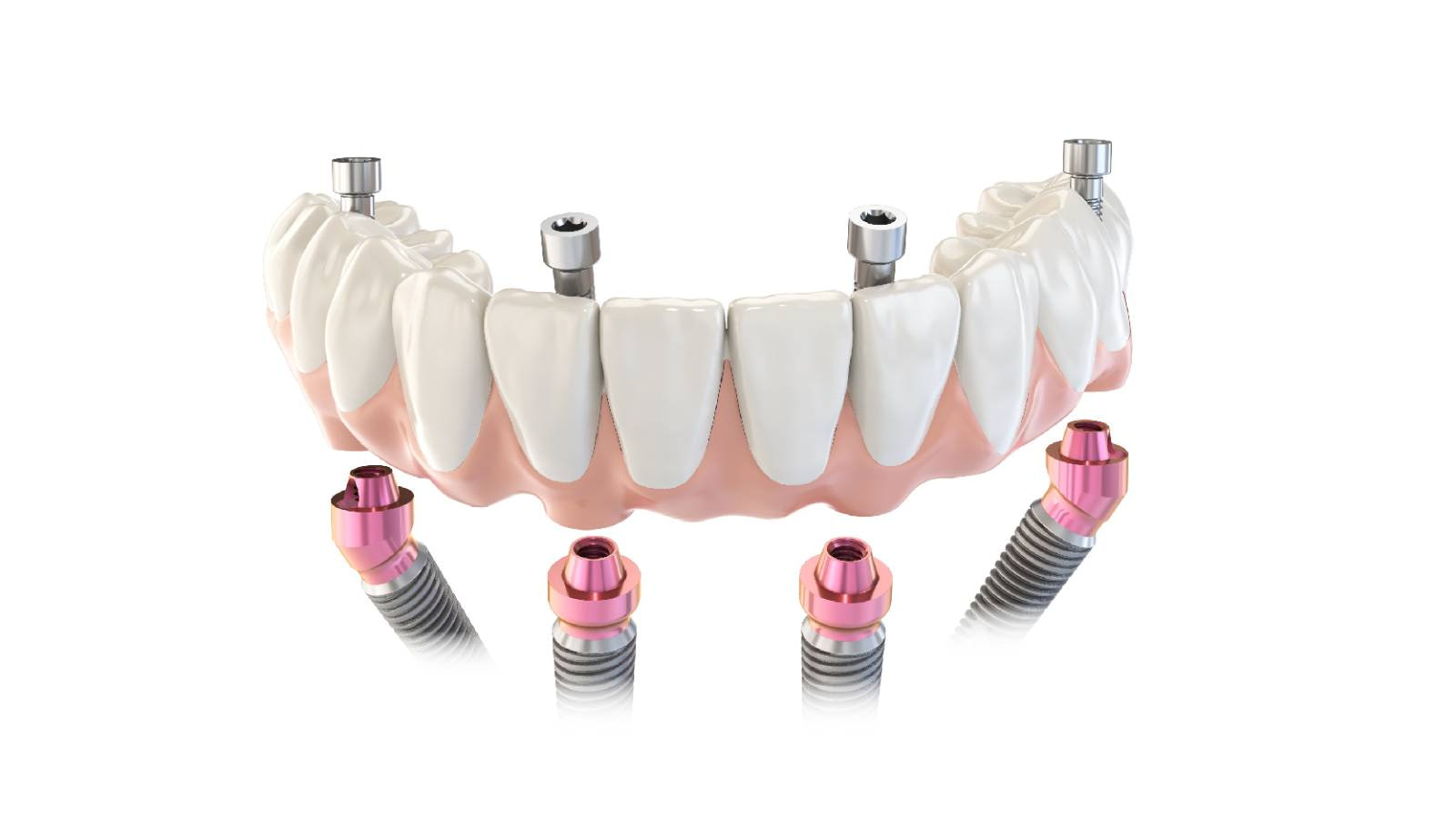
Get The Pros and Cons of Every Full-Arch Scanning System in 2026
When you enrol, you also get Ahmad's complete 2026 rundown of every full-arch implant scanning solution on the market, Pros and Cons of Full-Arch Implant Scanning Solutions in 2026. The webinar shows you why full-arch scanning fails and how to fix it. This bonus shows you exactly which device to back.
In one rapid-fire lesson, he works through every major option, from traditional photogrammetry to the horizontal scanbody kits (SHINING 3D, TruAbutment, Osteon, Apollo, ScanLadder, Alliedstar) and the new iPad-based photogrammetry apps. For each one he gives the honest pros, cons, and cost, backed by his own clinical use on real patients and CMM accuracy testing of every device. He even covers whether the newest large-field-of-view scanners let you skip the extra hardware altogether.
By the end you will know which option actually fits your workflow, case volume, budget, and lab setup, before you spend a cent on a kit.