
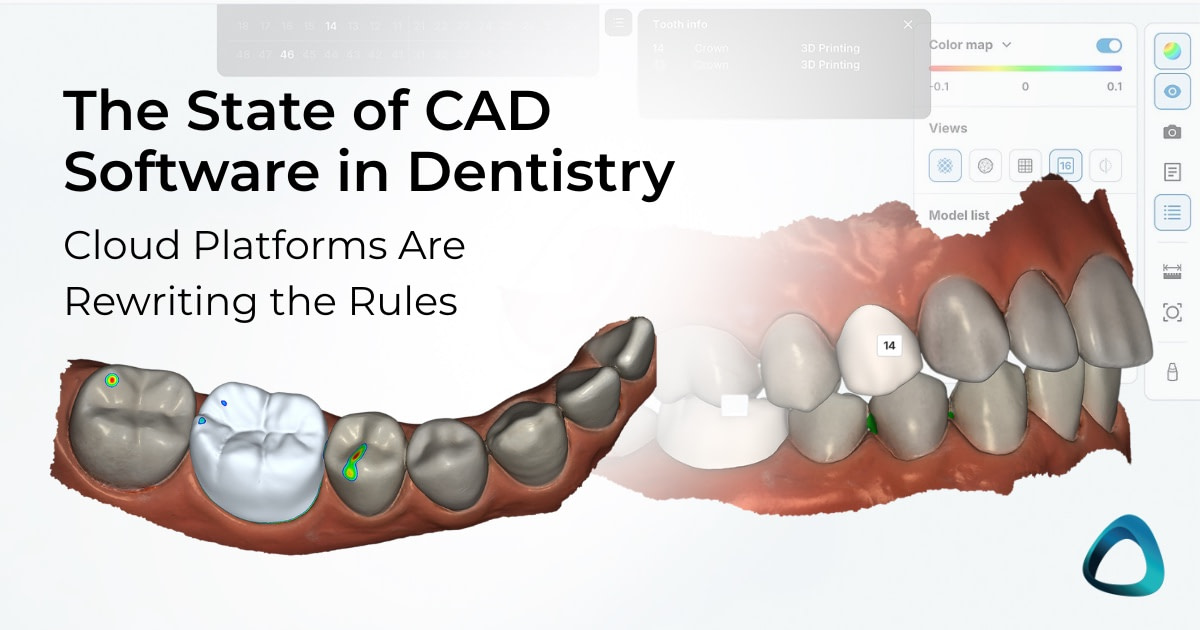

The dental CAD landscape is undergoing a transformation. What traditionally required expensive desktop workstations and years of training can now be accomplished in the cloud with AI assistance, often in minutes rather than hours.
We're witnessing a paradigm shift in how dental restorations are designed and delivered. But before diving into specific platforms, we need to understand a critical distinction that's reshaping the entire industry.
Two Distinct Paradigms: Fully AI vs Cloud CAD
Cloud-based CAD is actually splitting into two very different approaches, and understanding this distinction is important:
Fully AI Workflow (Design-for-You Model). This is exemplified by platforms like 3Shape Automate. You upload the scan, specify the indication, and AI generates a complete design proposal within 90 seconds. You review it, make any necessary minor adjustments using basic tools, and approve it for production.
The AI does the heavy lifting; you're essentially accepting or tweaking what it proposes. This is true automation. Inspect and correct, rather than design.
Cloud CAD (Design-by-You Model). This includes platforms like Dentbird, CEREC on DS Core, Circle One, and traditional CAD software that has been moved to the cloud. Here, you're still the designer; the software runs in a browser instead of on local hardware.
The AI does help with a lot of things, such as creating margin lines, positioning of library teeth/making the design from adjacent morphology, but it's not being completely done for you. The cloud provides accessibility and ecosystem integration, but you're doing the actual CAD work.
3Shape Automate - Fully AI-Driven Design
3Shape Automate represents arguably the most mature, AI-powered CAD solution, taking a different approach to most cloud-based CAD software. This software focuses on AI doing the work, and you simply check and modify it using basic tools.
How does it work? Go to https://automate.3shape.com, log in, and then set your preferences for your AI-powered designs. The system can currently produce crowns, onlays, inlays, bridges, copings, night guards, and models. The system can also align bite marks to match the upper and lower jaws, even when original scan data is missing or incorrect, and provides automated tooth outlining for copy dentures.
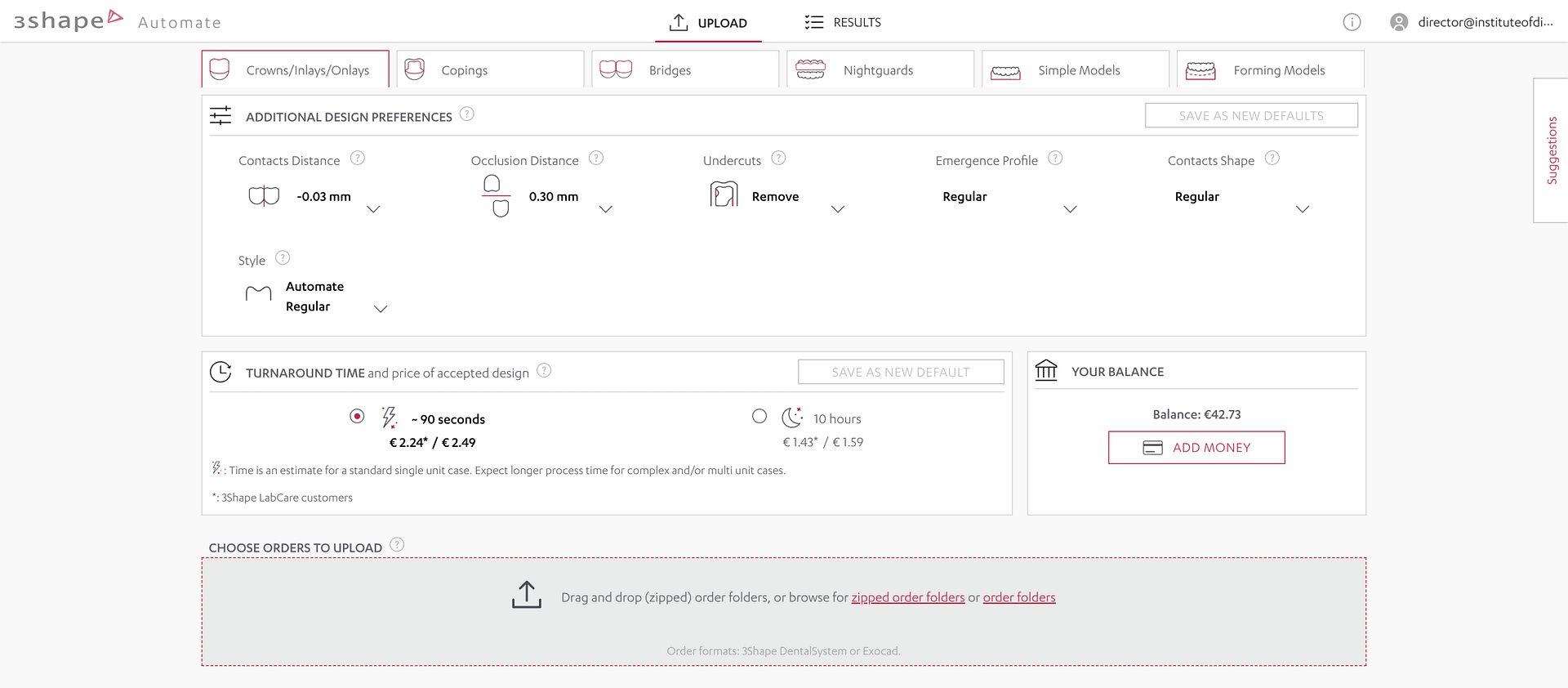
The integration workflow is seamless, AI design proposals are available for TRIOS scans, integrated third-party intraoral scanners, and 3Shape desktop scans. The company reports a 94% acceptance rate for crown designs. Results look nice, and the designs, I think, are generally good. Not completely amazing, but none of the AI solutions are there yet, yet they're good.
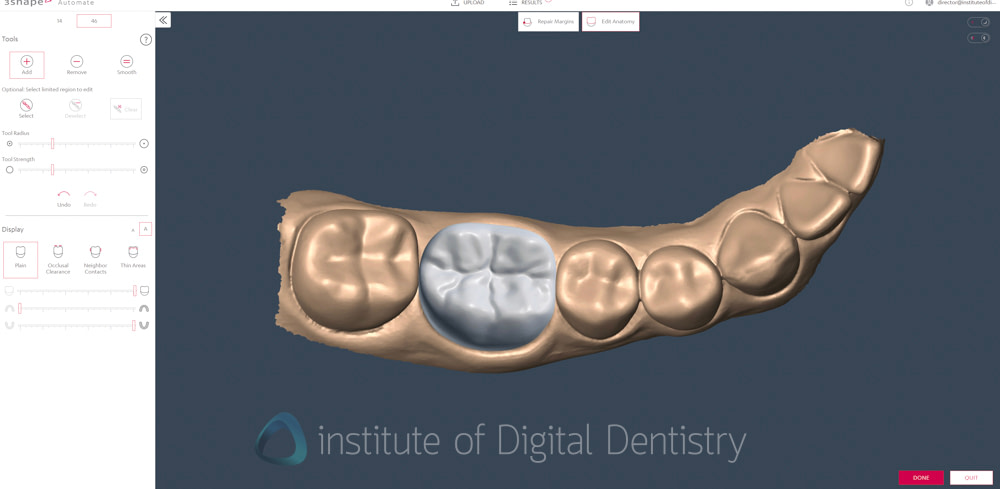
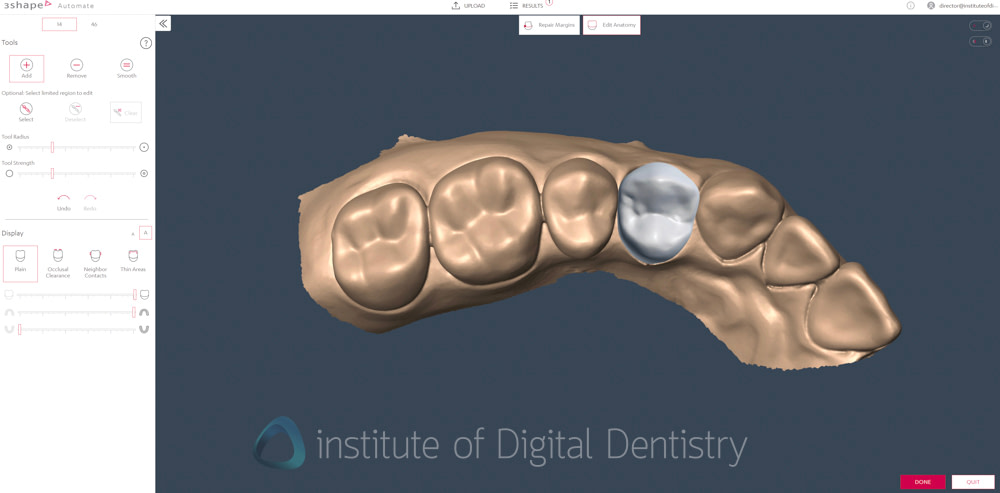
Automate works by a pay-per-design model. Design pricing ranges from $2.00 for most indications to up to $13.00 for night guards. Interestingly, there are two options: a fast design option that can be completed within 10 minutes and a slow design option that takes up to 10 hours and costs more. The model is pay-after-approval: you only pay for designs you approve, which is another nice touch. It is also now integrated into the Dental System (3Shape lab software), offering free AI-powered design proposals to 3Shape LabCare subscribers.
Like all platforms in this space, any complex design work, such as smile design, all-on-X, or dentures, cannot be done by AI and requires exceptional CAD skills. This is true across the entire industry; no platform currently fully automates the process of making dentures.
The main downside of 3Shape Automate is that it is not as open as other Cloud CAD software on this list. Although it is browser-based, it still requires you to upload a 3Shape Lab or exocad case file to use it. It is not as simple as just uploading STL files. So basically, unless you have lab CAD software, you cannot use it.
It really feels like it's designed mainly for labs, rather than for clinics that may not own lab software.

Dentbird Solutions - Platform-Agnostic Challenger
While 3Shape is basically closed unless you have lab software, Dentbird Solutions (developed by the Korean company Imagoworks) took the opposite approach: universal compatibility. This platform was one of the first on the market to offer CAD in the cloud, has had the longest development time, and therefore arguably offers the most features and tools.
Dentbird integrates with major CAD software, such as 3Shape Dental System and Exocad, as well as various 3D printers and milling machines. Dentbird Crown has been designed to be compatible with platforms such as Medit Link and Shining 3D Dental Cloud. You can also simply upload STL or PLY files, making them usable with any scanner.
The process is simple: visit www.dentbird.com, log in, and upload a scan file to get started with designing. After uploading files, the AI automatically generates designs for crowns, copings, inlays/onlays, nightguards, and simple models. At IDS 2025, Imagoworks unveiled Dentbird Solutions, featuring Dentbird Crown for the automatic generation of tooth-supported crowns, bridges, inlays, onlays, and implant-supported crowns, as well as Dentbird Modeler for digital model design automation.
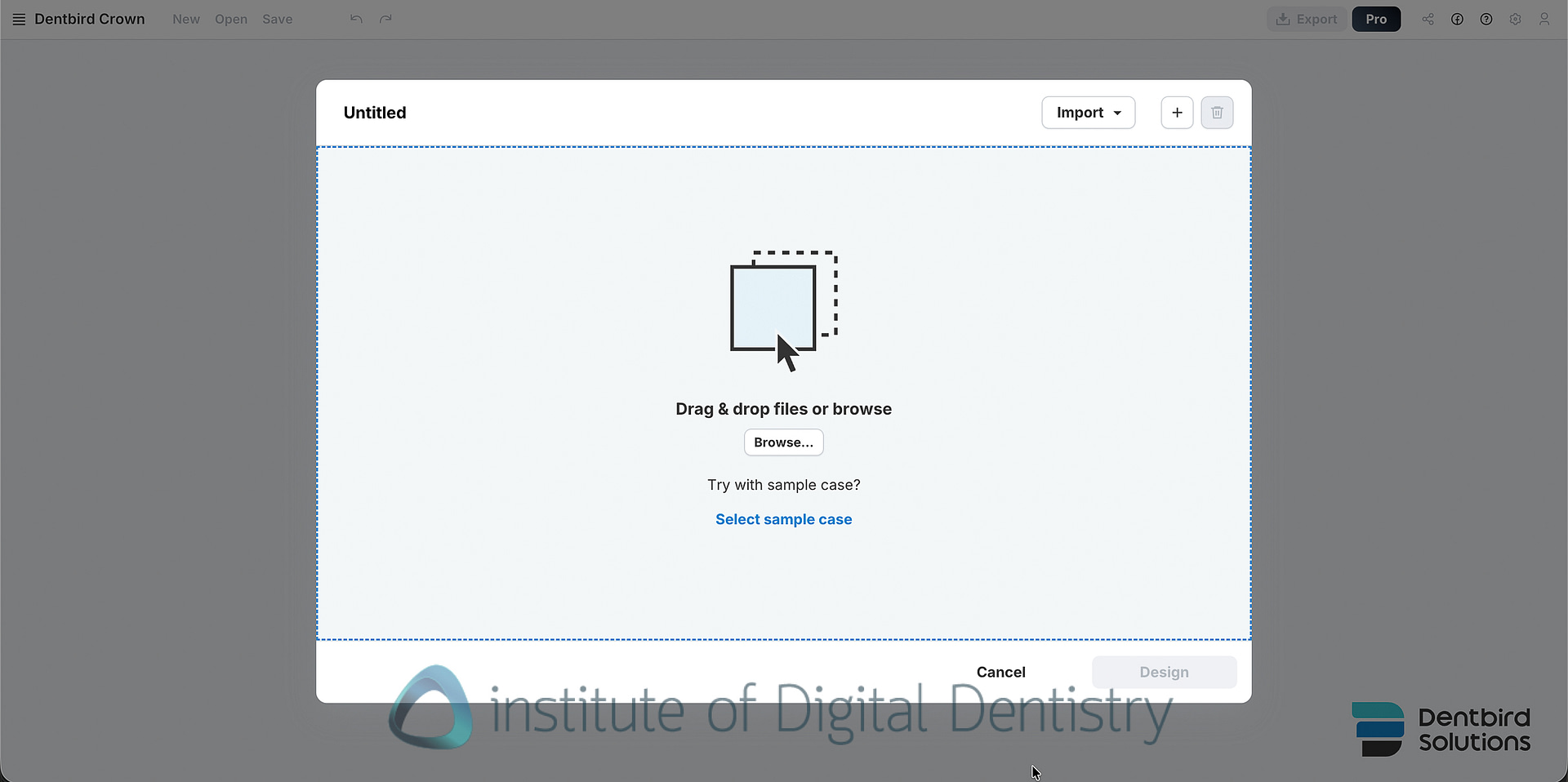
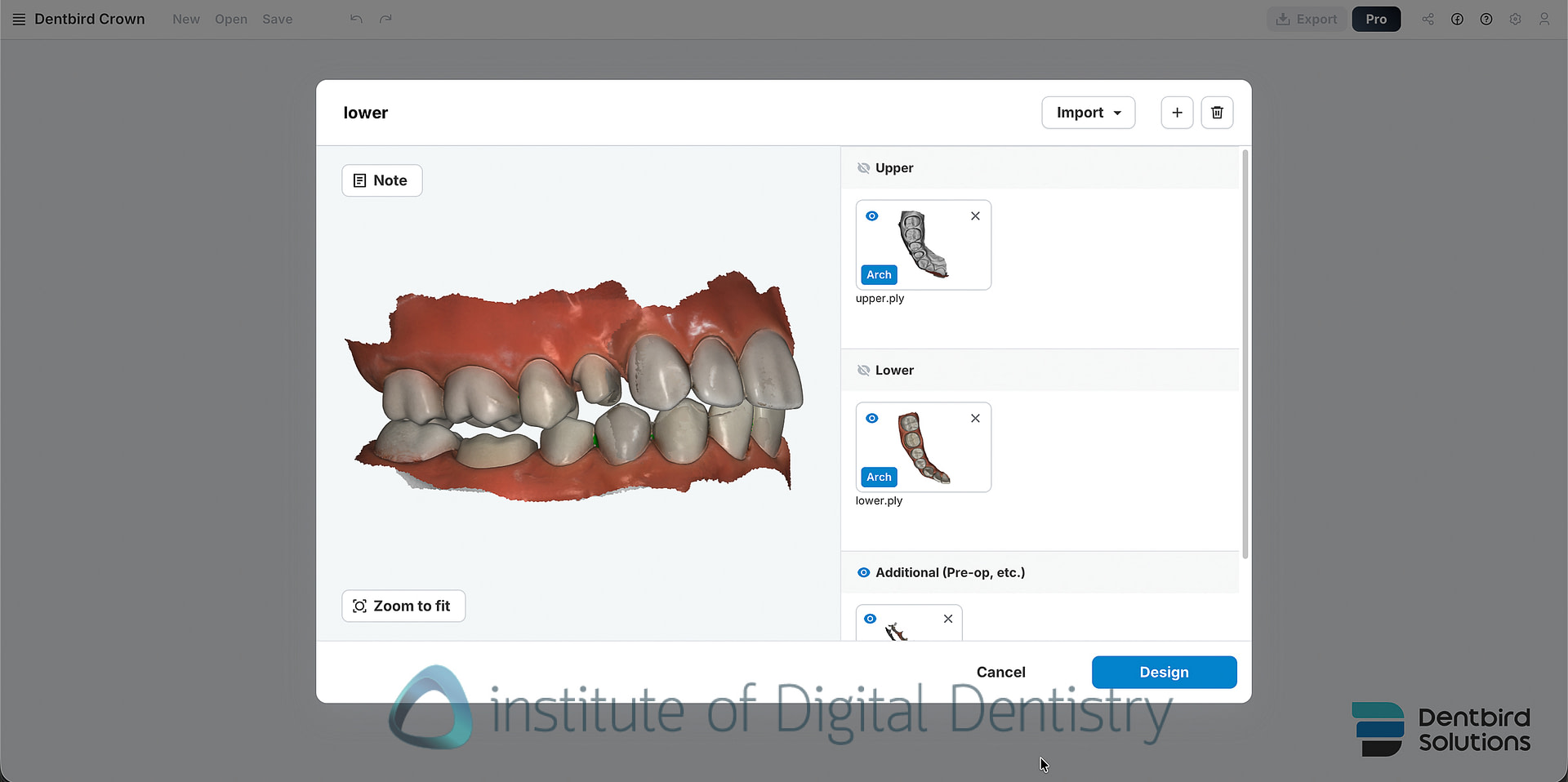
This AI-powered system is less like AI doing all the work for you, as with 3Shape Automate, and more like AI assisting and guiding you through the workflow. It is a more robust design cloud option with design tools that are significantly more fleshed out. The designs are good but not excellent. Note: essentially none of these cloud CAD software platforms can match the level of design a technician on exocad can, but they are certainly much better than they once were and will likely improve over time.
Dentbird Solutions also continues to improve its software. They have recently added some nice tools, such as case sharing. With this feature, anyone can view your finished design in full 3D, even without a Dentbird account or cloud storage. That means your client clinics, colleagues, or lab technicians can access and review cases directly from any device, instantly and securely.
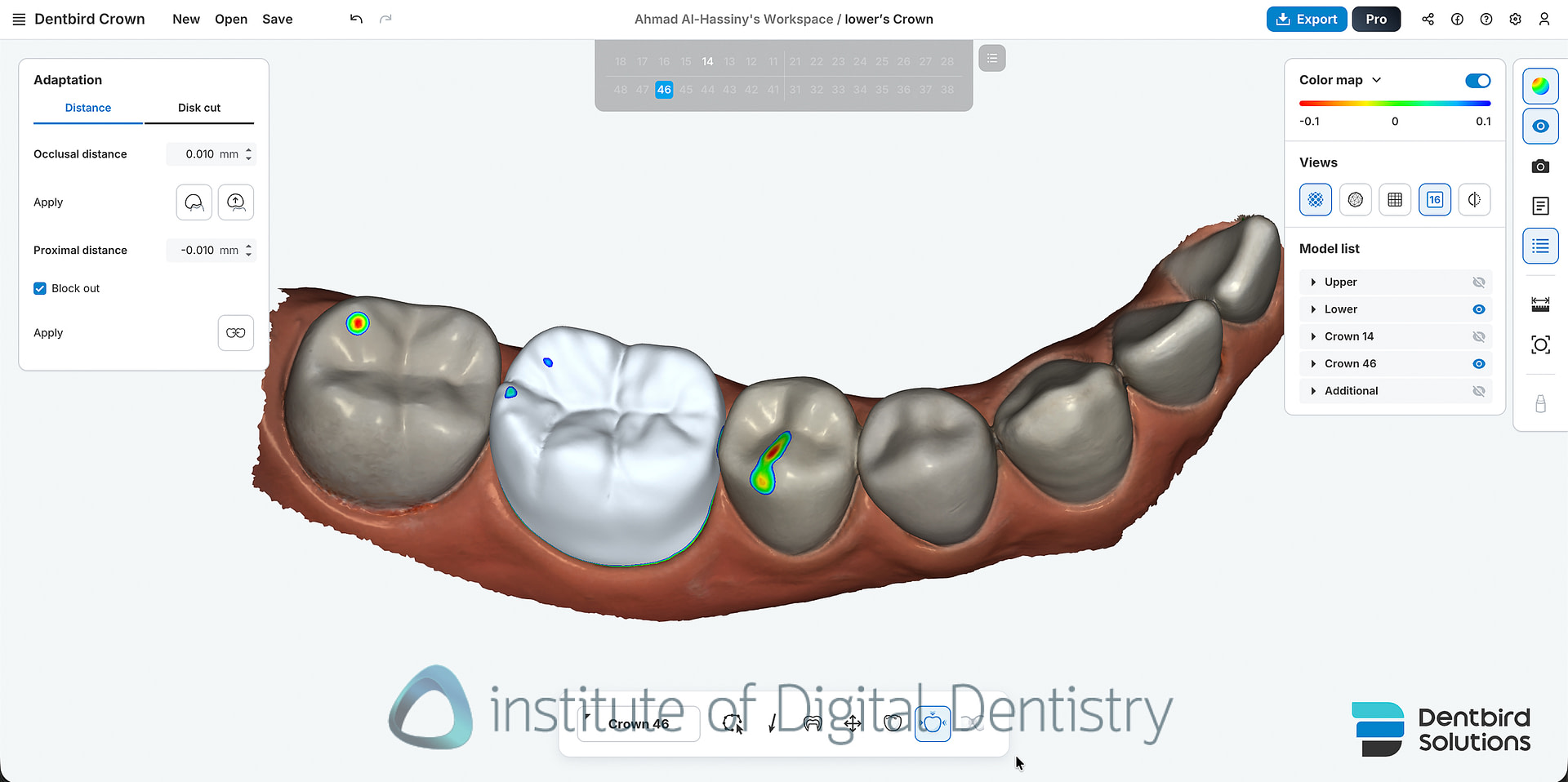
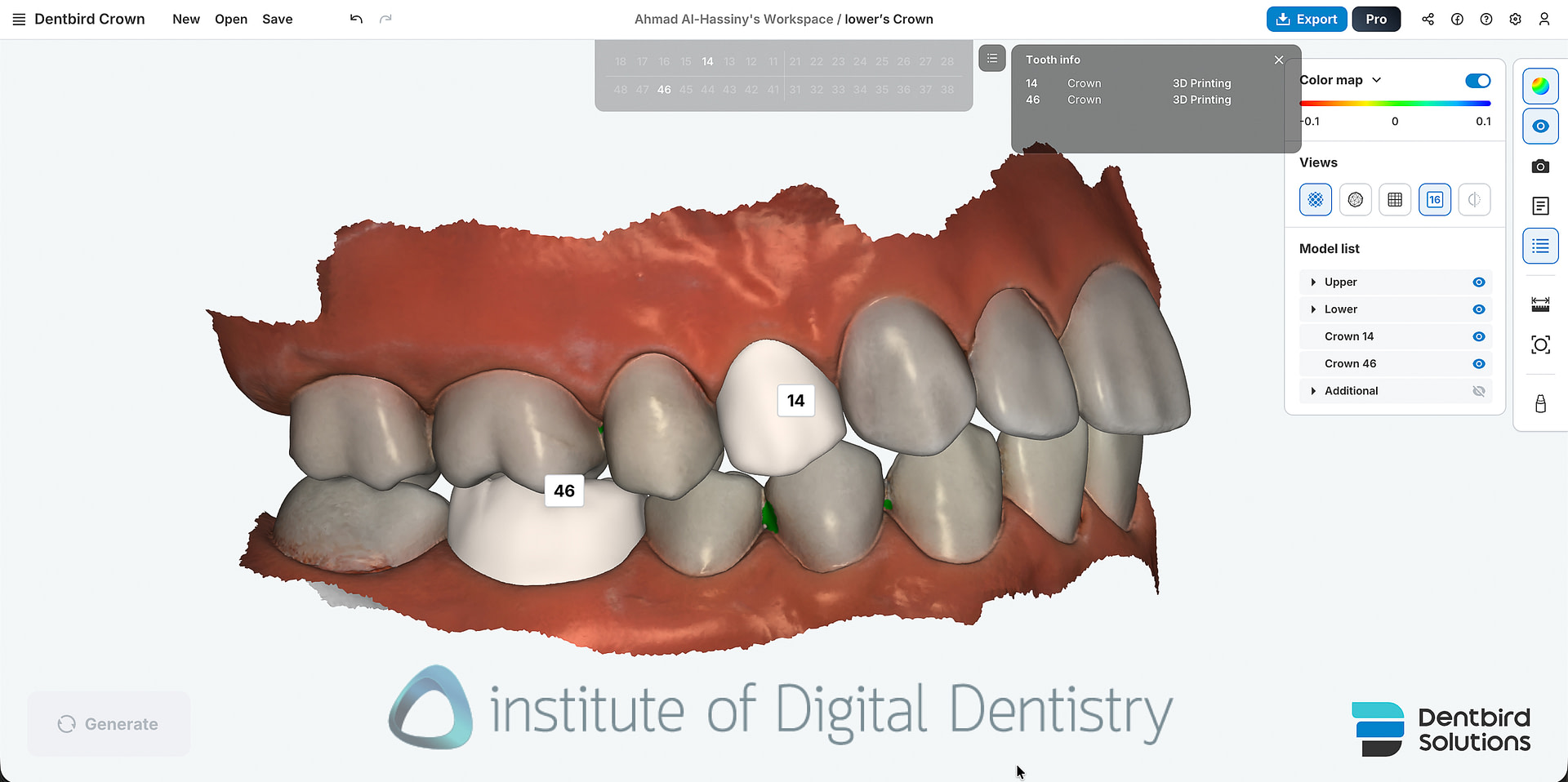
One significant advantage of Dentbird is that it is one of the few cloud-based AI CAD software solutions currently on the market that can design adjacent or opposing crowns on the same case. Apart from 3Shape, most of the cloud CAD software options listed below allow only one crown to be designed per case.
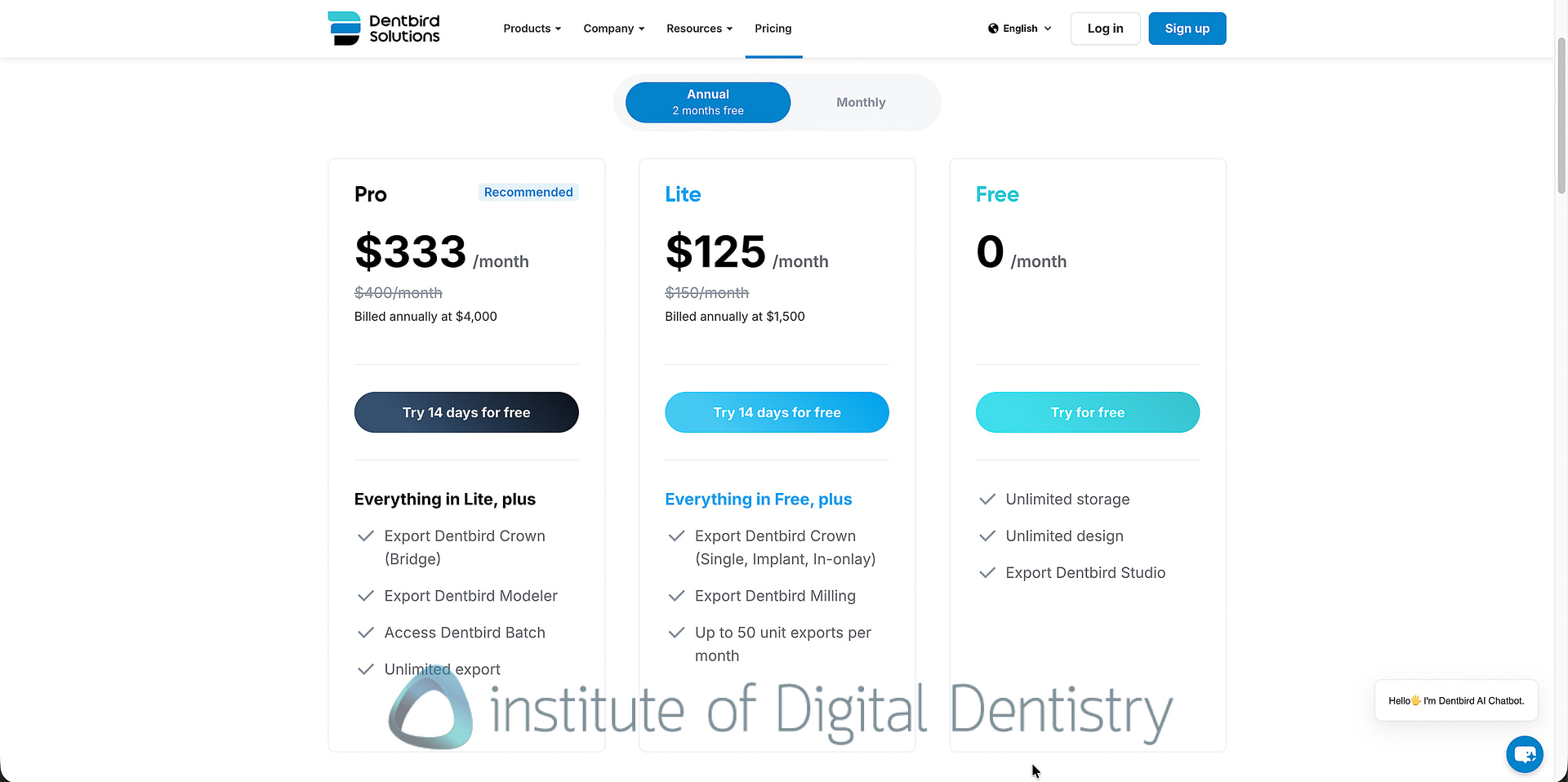
Pricing is interesting here. Prior to Dentbird, they charged a per-design fee, but their model has changed. Now it is subscription-based with different tiers based on exports per month. They also have a free option that lets you try before you buy.
Medit ClinicCAD – Free Chairside CAD Inside Medit Link
While much of this article has focused on dedicated cloud CAD platforms, it’s worth highlighting what Medit has been doing inside its own ecosystem with its ClinicCAD app. Medit ClinicCAD is essentially built-in CAD software that runs within the Medit Link platform.
For years, Medit has blurred the lines between scanner and CAD software with multiple apps. The remarkable part is that Medit offers this as free software for its scanner users. There is no additional CAD licence or subscription fee required to start designing. As an entry point into chairside CAD, ClinicCAD is one of the most accessible options on the market, particularly for clinicians already invested in the Medit ecosystem who want to experiment with design without committing to exocad, 3Shape, or a full cloud CAD subscription.
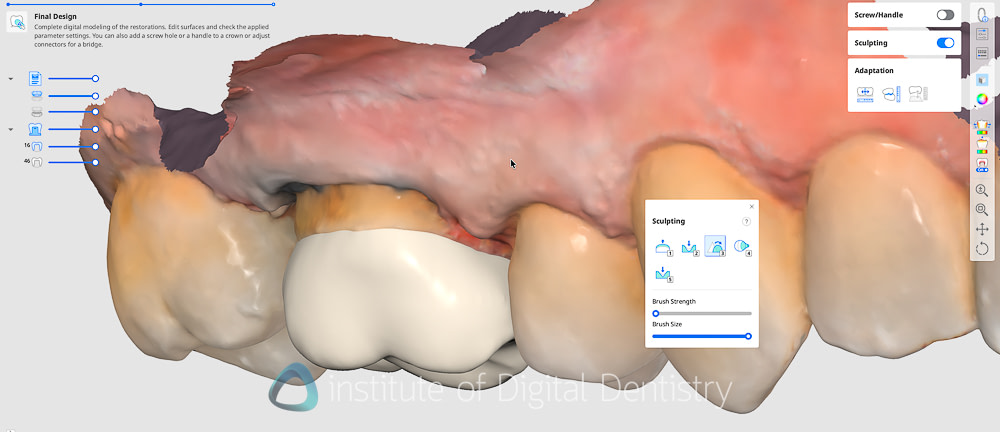
Of course, there are trade-offs. The anatomy and fine detail of ClinicCAD restorations are not yet at the same level as what an experienced technician can achieve in exocad or 3Shape Dental System, and heavy-duty lab workflows are beyond its scope. But that isn’t really the point of the software. ClinicCAD is designed to make everyday chairside CAD approachable, fast, and inexpensive – not to replace a full lab CAD package.
From a “cloud vs local” perspective, ClinicCAD occupies an interesting middle ground. The design work itself runs on your local machine, but it is tightly integrated with Medit Link’s cloud infrastructure for case storage, sharing, and communication. In practice, this gives you many of the workflow benefits of cloud CAD (easy collaboration, simple hand-off to labs, centralised case management) without forcing you into a purely browser-based design environment.
CEREC on DS Core - the Veteran Goes Cloud
After 40 years of leadership in chairside dentistry, CEREC's move to DS Core represents Dentsply Sirona's most significant strategic shift since the original CEREC launch in 1985. This is cloud CAD, not full AI doing all the design for you. You're still designing, just in a browser. However, for argument's sake, 'AI' has been incorporated into CEREC's design proposals for generations.
CEREC on DS Core lets you scan with your CEREC scanner and design restorations in any web browser, freeing up the scanner cart in busy practices. The Standard Subscription costs $99.95/month with basic CEREC features, while the Advanced Subscription at $229.95/month unlocks TRIOS integration, STL export, and expanded manufacturing capabilities.
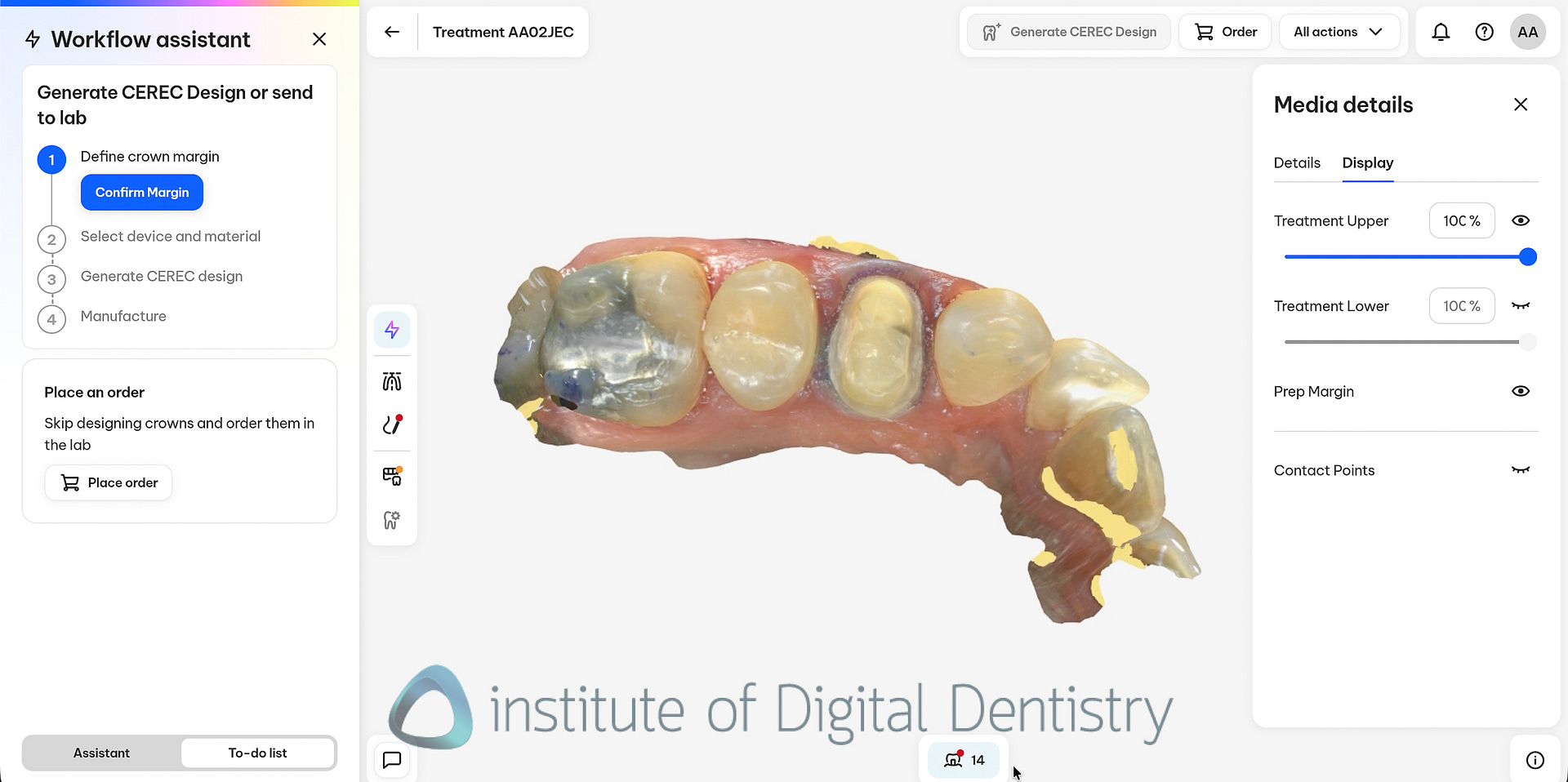
The latest CEREC workflow introduces AI-supported features accessible via the cloud-based DS Core platform, with initial capabilities including AI-generated margin and design proposals for crowns, inlays, and onlays. The DS Core platform introduces centralized access to manufacturing files, remote operation of milling units, and automatic firmware updates.
It works as well as CEREC, and the fact that Dentsply Sirona has moved it to the cloud is very telling of where our industry is heading. Overall, the UI feels modernized yet still familiar to CEREC users. The design proposals are also decent, but this is not a full-fledged 'AI will do it for you' like 3Shape Automate. It really is CEREC on the cloud.
Access to CEREC on DS Core is included in the DS Core Standard subscription, which costs around $100 per month. Of course, this is also locked to DS Core users and only Primescan or TRIOS scanners.
iTero Design Suite & Exocad's Cloud Evolution
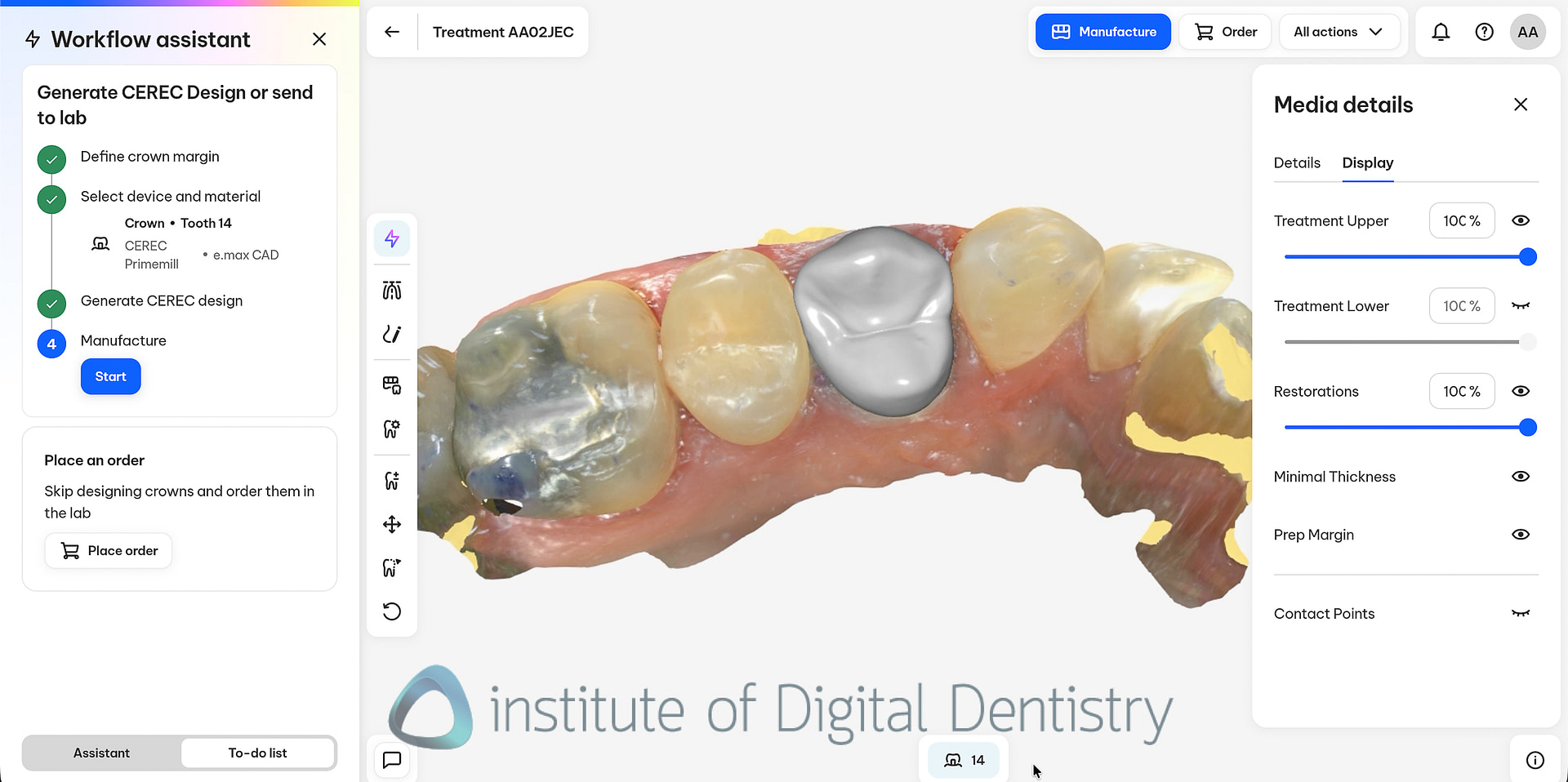
Align Technology recognized that owning the scanning ecosystem meant little without controlling the design workflow. They moved quickly in this space and released iTero Design Suite - essentially exocad on the cloud for iTero users. They beat Dentsply Sirona to the punch and became the first traditional CAD software to go to the cloud last year.
Their approach appears measured - cloud as an option, not a requirement. Exocad ChairsideCAD is already in clinical use, while exocad DentalCAD remains the full-featured desktop application for labs. iTero Design Suite is essentially a dongle-free version of ChairsideCAD in the cloud.
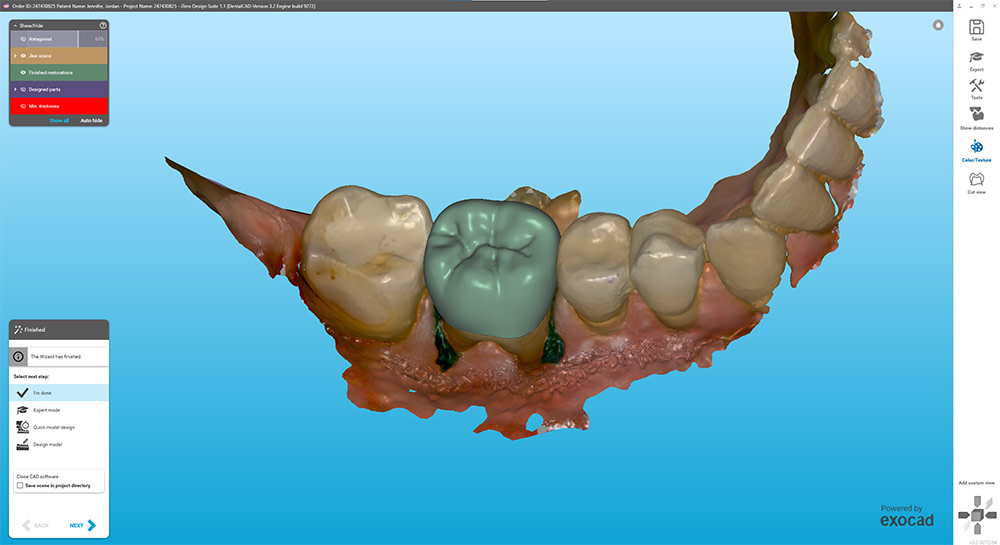
It works seamlessly with the myiTero.com portal. You access your iTero scans from there after logging in, and then you can launch iTero Design Suite. This opens a window that lets you launch the software. iTero Design Suite runs in the cloud, but it requires local software to be downloaded and installed, so it does not offer as much flexibility for use from anywhere as the other cloud offerings.
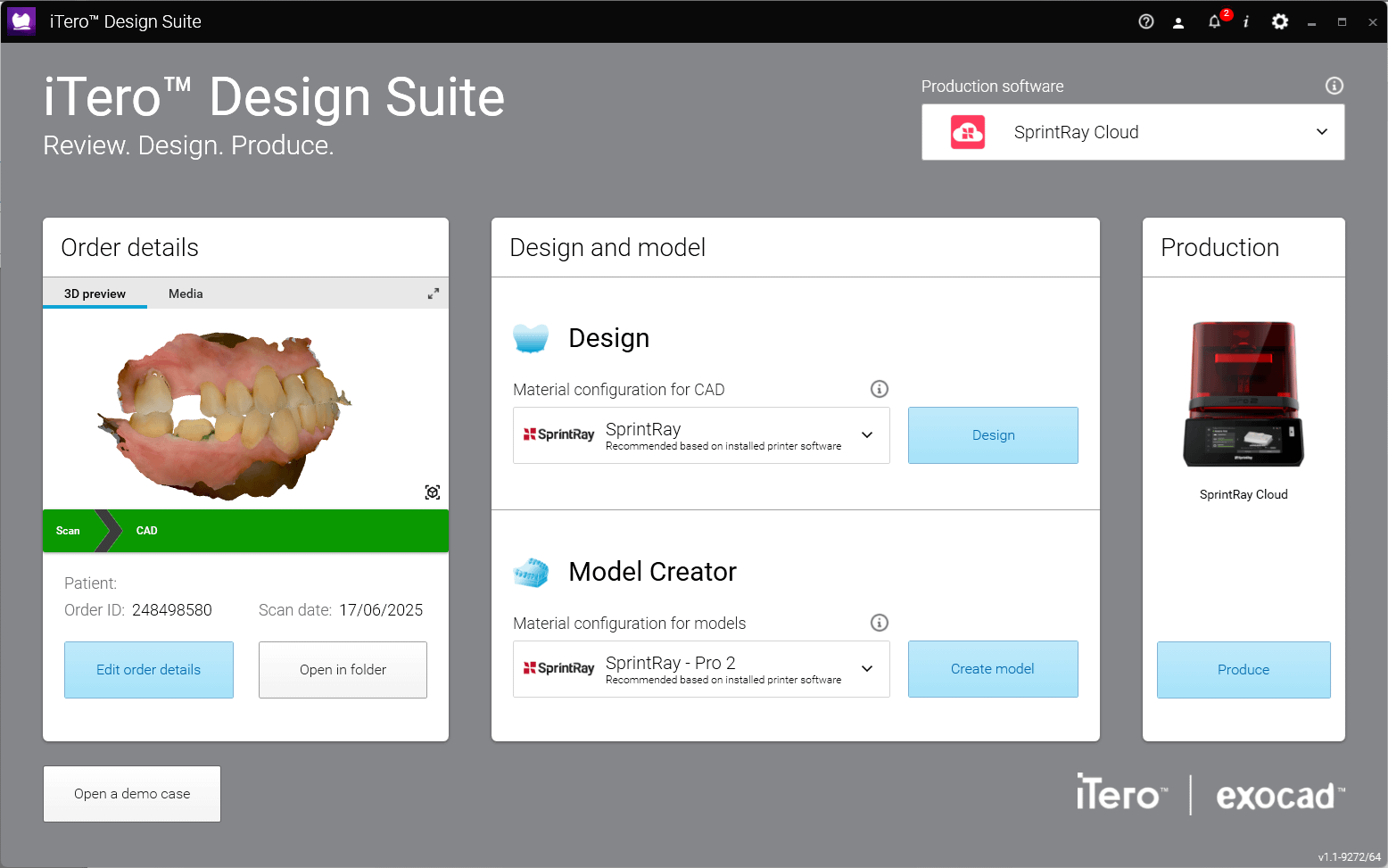
Once you use it, it is actually quite amazing. All the power of exocad can be used on any computer regardless of specs. It works well, gives you all the features of exocad, and out of all the options we talked about prior, it is the most authentic to the original software. This is not AI doing it for you, although exocad, of course, has AI elements. It is an exocad port on the cloud with some nice 3D printer and mill integrations through the iTero Design Suite. So you will need to learn exocad if you want to use this.
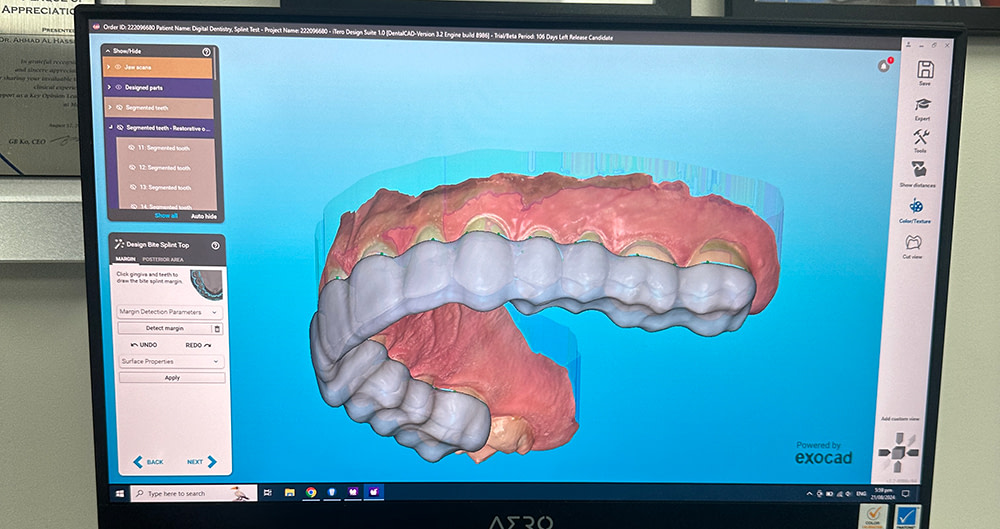
iTero Design Suite comes with an iTero subscription called the Comprehensive Service plan, which costs approximately $380 USD per month and includes service and warranty coverage. It is a nice option for iTero users, but it's more like exocad on the cloud rather than an 'AI CAD platform' even though exocad does use AI in its design process.
Circle One - New Chairside Focused Option
Circle One is the newest kid on the block. This CAD software is designed for everyday clinical use and is optimized for efficiency. It is built to simplify every step with a smooth, intuitive, and accessible experience.
Circle's approach is similar to other cloud platforms - you log in to https://www.circle.one/en and then upload scan files. Then, you can design crowns, inlays, onlays, and other single-tooth restorations. This is not AI designing for you like Automate, but rather AI guiding you through the steps.
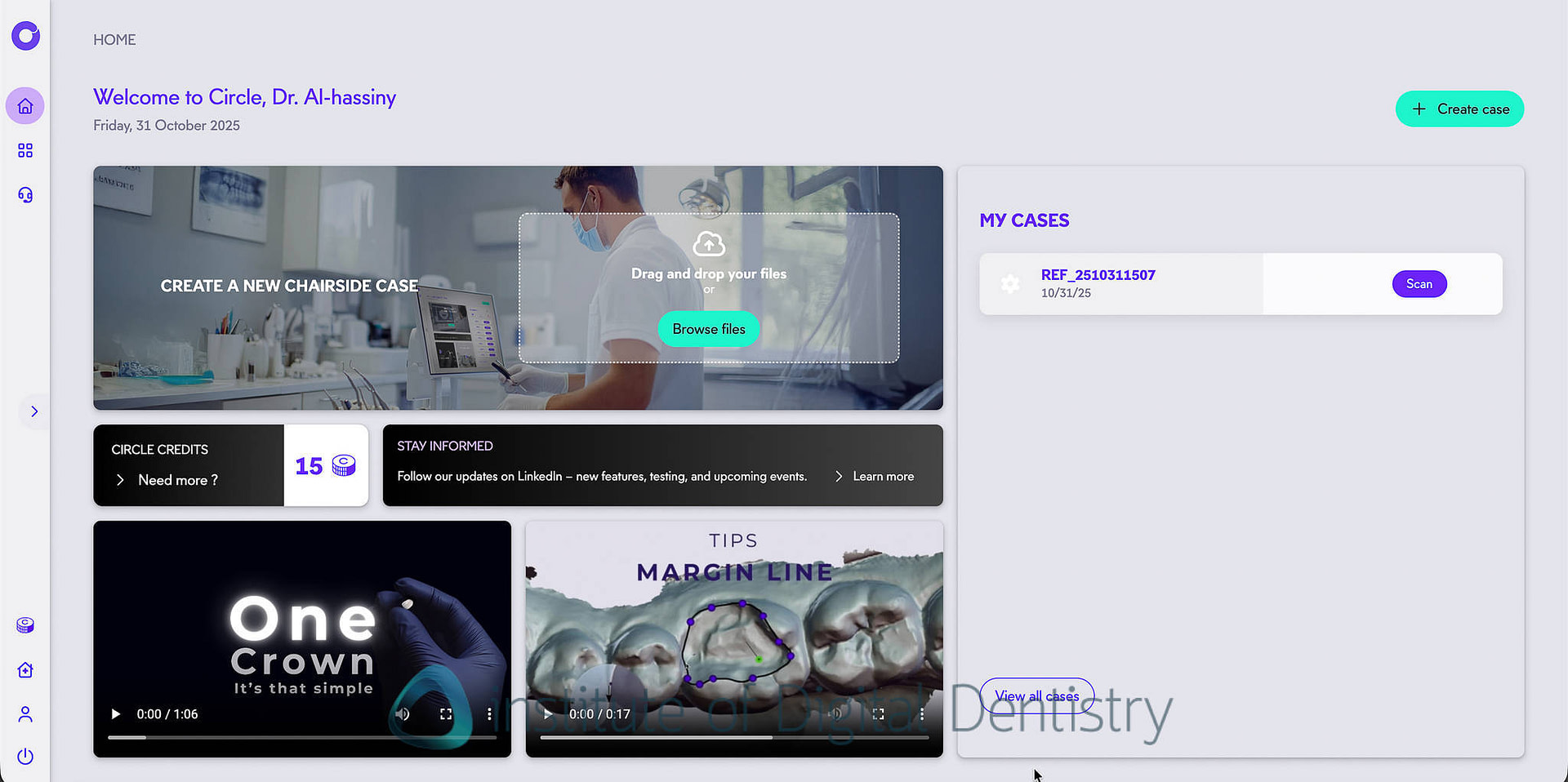
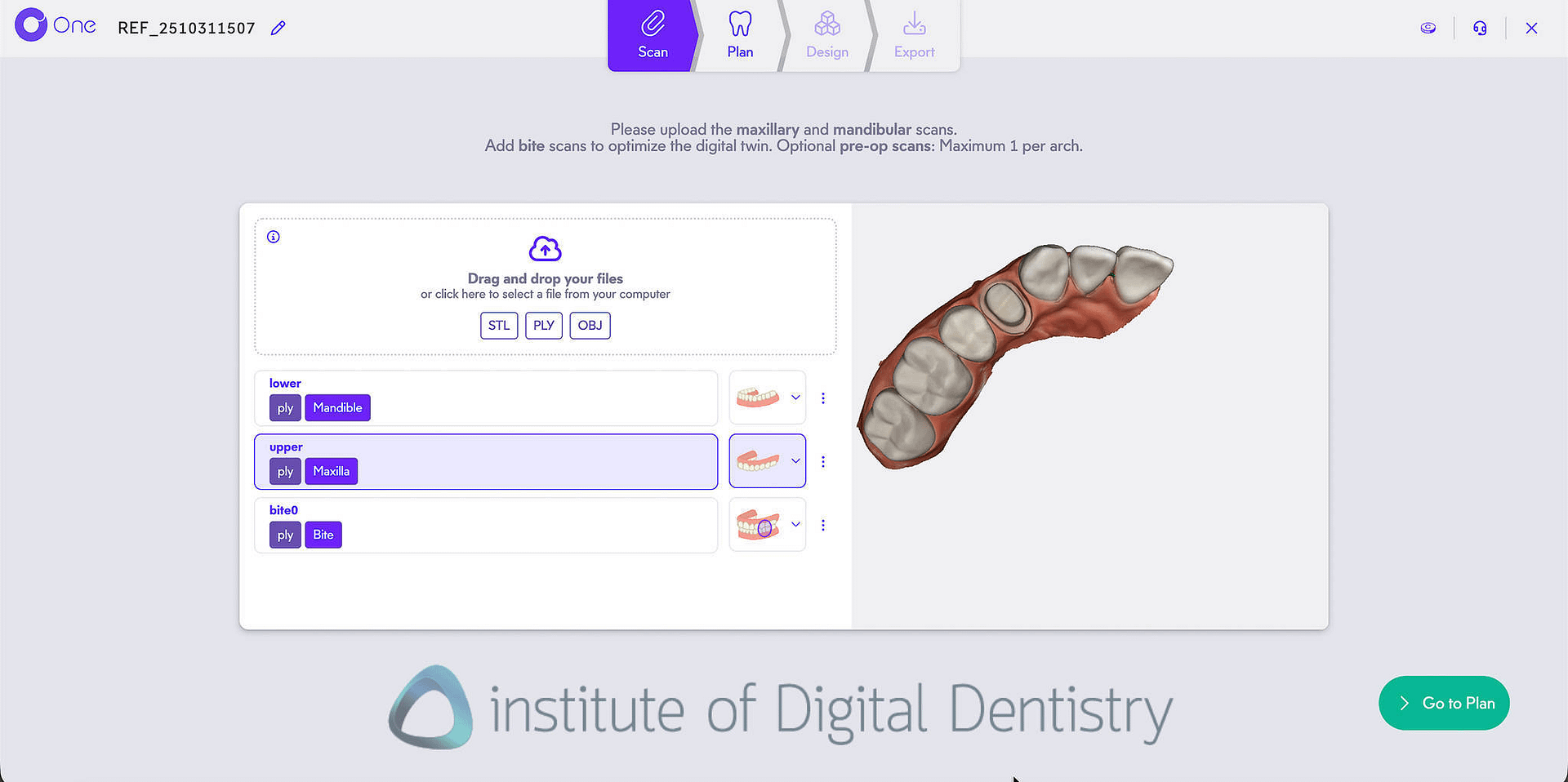
The system functions like a smart assistant, supporting every move while maintaining occlusal contact, insertion axis, and functional balance in real-time. There are some nice features, such as an anatomy slider, which reminds me a lot of CEREC. It is also one of the few CAD software that uses the adjacent teeth to guide the restoration, rather than just a library tooth, again reminding me of CEREC.
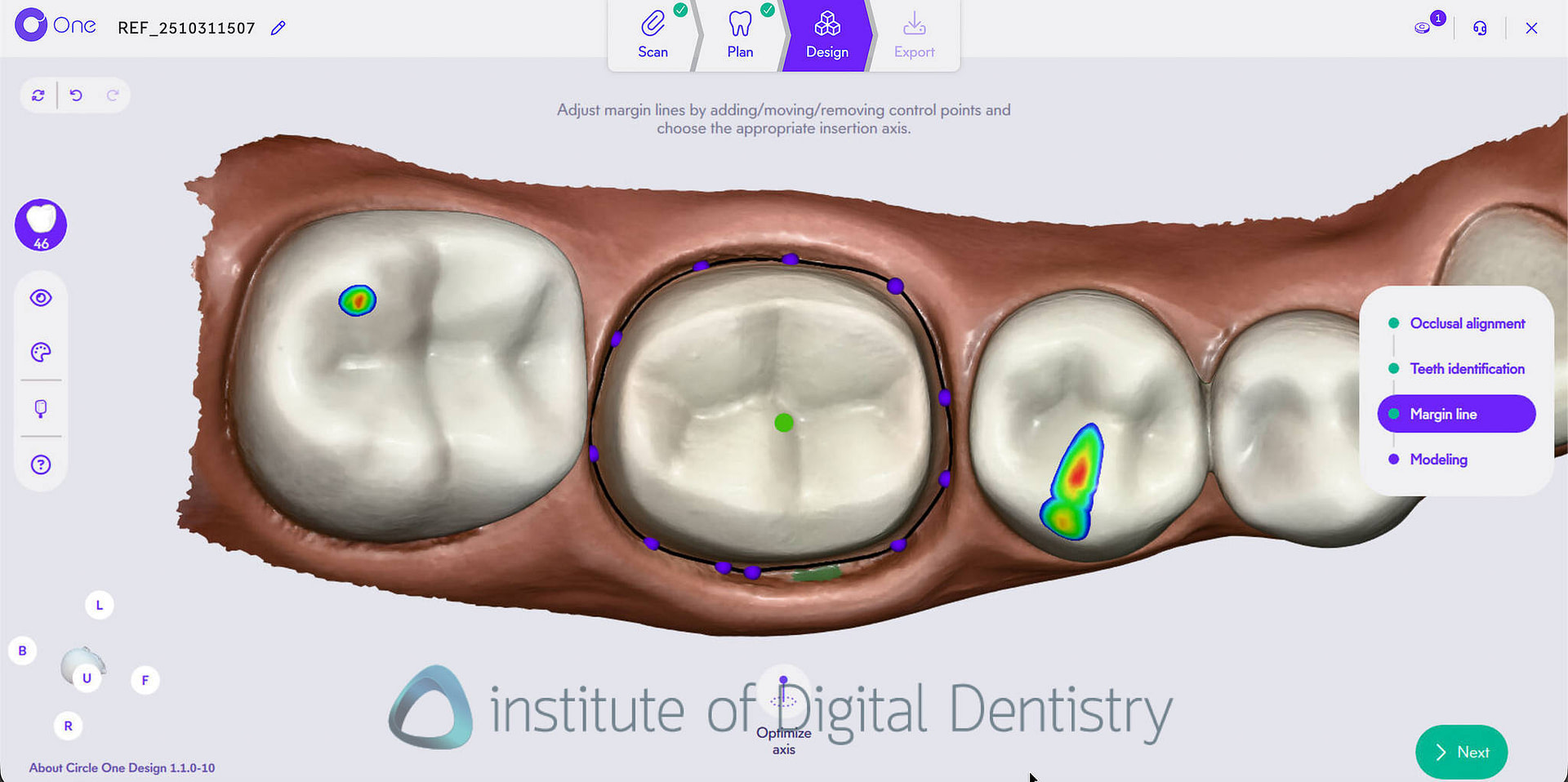
Circle One's design tools are very simple, but not in a terrible way. The CAD proposals look nice. Circle has partnered with DEXIS and also a number of other intraoral scanner companies, like Alliedstar, which is very interesting. It seems that every iOS company is either developing its own CAD solution or partnering with third parties - a telling sign of the times.
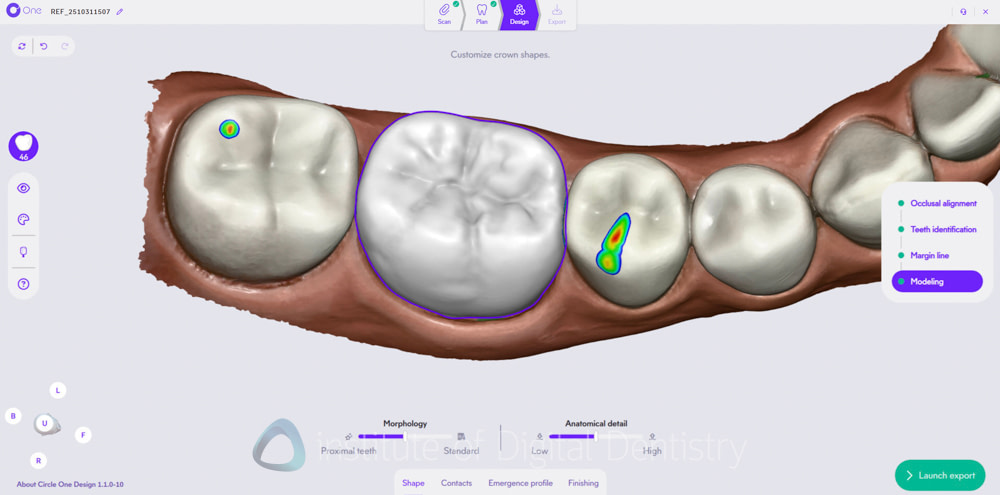
The limitations of Circle One currently are that it can only design single-unit restorations on teeth and does not support any other dental applications. No model builder, etc.
It uses a credit system. You can purchase 200 credits for approximately $2,000 USD, and each design exported costs 1 credit. This means that each restoration, designed and exported, costs approximately $10 USD.
This new cloud-based CAD is focused on enhancing the user experience, making traditional CAD design more intuitive and accessible, rather than replacing designers with AI. To me, it is interesting seeing so many players enter the space.
SprintRay's AI Studio - the Hardware Manufacturer's Play
SprintRay recognized a fundamental truth: selling 3D printers means nothing if users struggle with design software. Their "AI Studio" cloud CAD software represents the hardware manufacturer's solution to the CAD bottleneck.
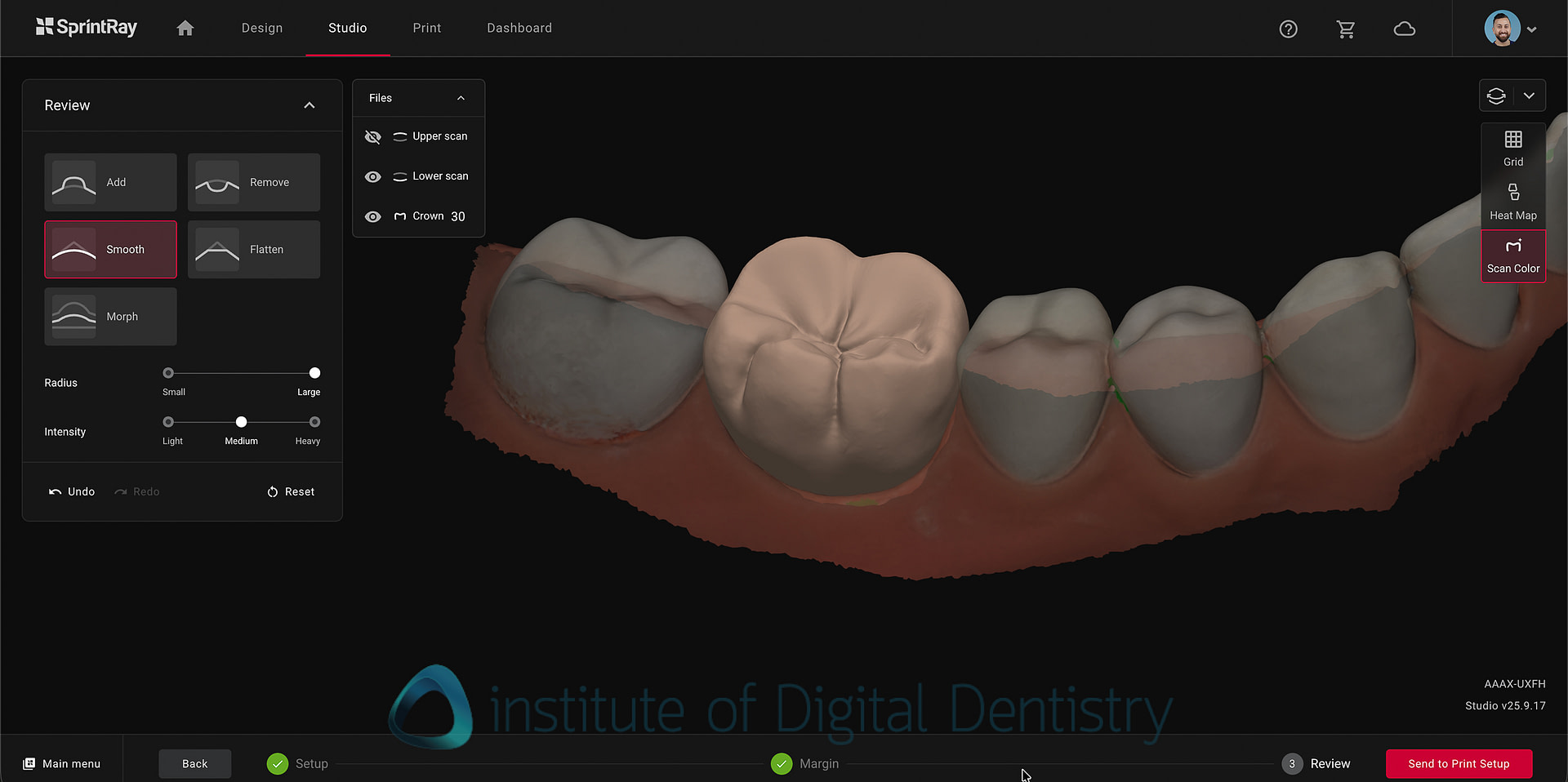
AI Studio is a browser-based solution that enables users to upload scans, create marginal notes, and receive AI-generated restoration proposals, along with design tools to modify the results. Over the past 12 months, numerous updates have been made to enhance the proposals, design tools, and overall usability.
The system generates six crown options using different tooth libraries that users can swap between. Overall, quite impressive, to be frank, what the company has accomplished. Especially given that they are a 3D printer manufacturer, this type of software is not yet offered by any other 3D printer company.
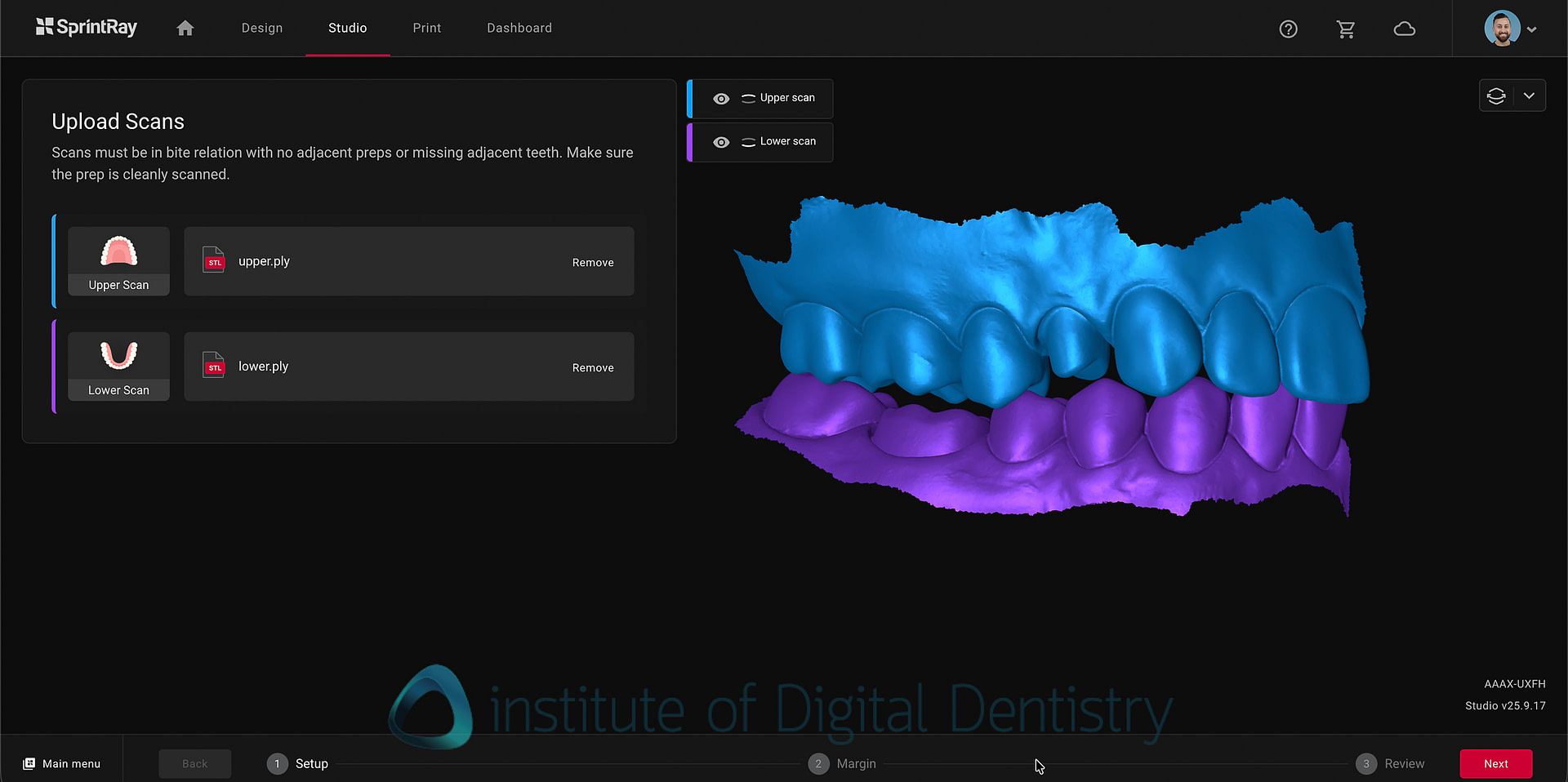
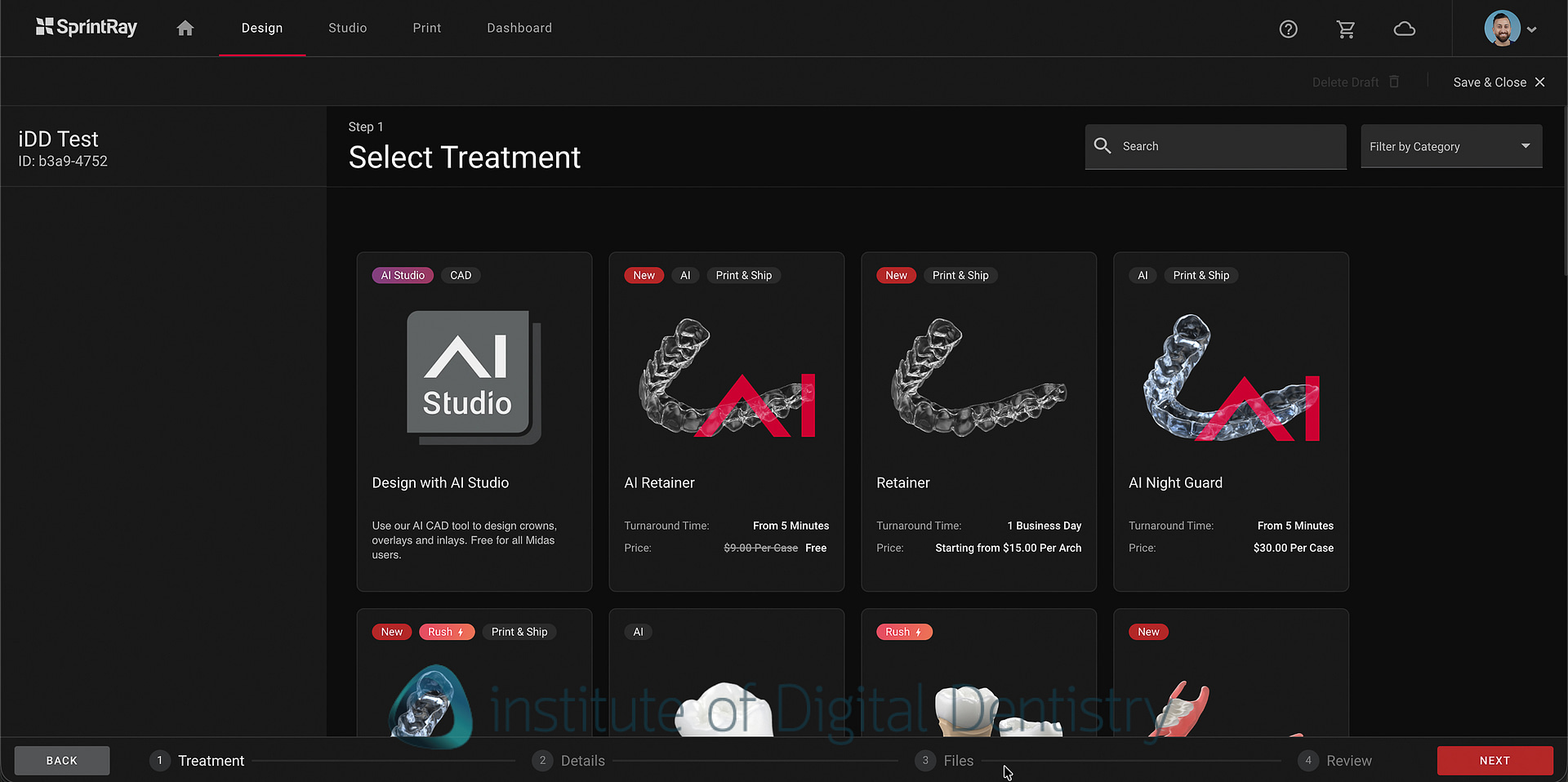
Sprintray also offers a Design Service option for crowns, with a design fee of 15 USD per crown and a turnaround time of approximately 5 minutes. This is basically having the design done for you. Whereas AI Studio is an online CAD software you can run. Recent updates to all of this also include integration with 3Shape Automate within Studio, allowing users to get designs via 3Shape Automate, as we mentioned above.
AI Studio sits between a fully AI solution and traditional CAD; the AI generates proposals, but you have good editing tools, albeit a bit simplistic for those who have used exocad before. The target audience is clear: make it easy for clinicians. It's also optimized specifically for 3D printing. One limitation currently is that it cannot be used to design adjacent or opposing crowns simultaneously.
Lastly, this software is currently free and is obviously locked to Sprintray Users.
Additionally, there are many other honorable mentions, such as Atomica.ai's cloud CAD software, which enables the creation of stackable guides in the cloud. Interestingly, a workflow that is not easy even in traditional CAD software has been simplified with a cloud solution. I expect many cloud CAD solutions to be released in the future.
Now, let's move on to some of the challenges of AI / Cloud CAD.
Honourable mentions
There are numerous players coming into this space, and, as with intraoral scanners, I won't be surprised to see many more emerge next year. Currently, I am testing a few other AI SAAS products that deserve a mention in this blog, such as Atomica.ai and H3D.
What is interesting is that from my meetings with these companies, they all have a slightly different spin. Some cater squarely to labs with batch uploading, processing, and approvals, while others cater to clinicians and clinics with simpler workflows that make it as easy as possible for dentists to get on board.
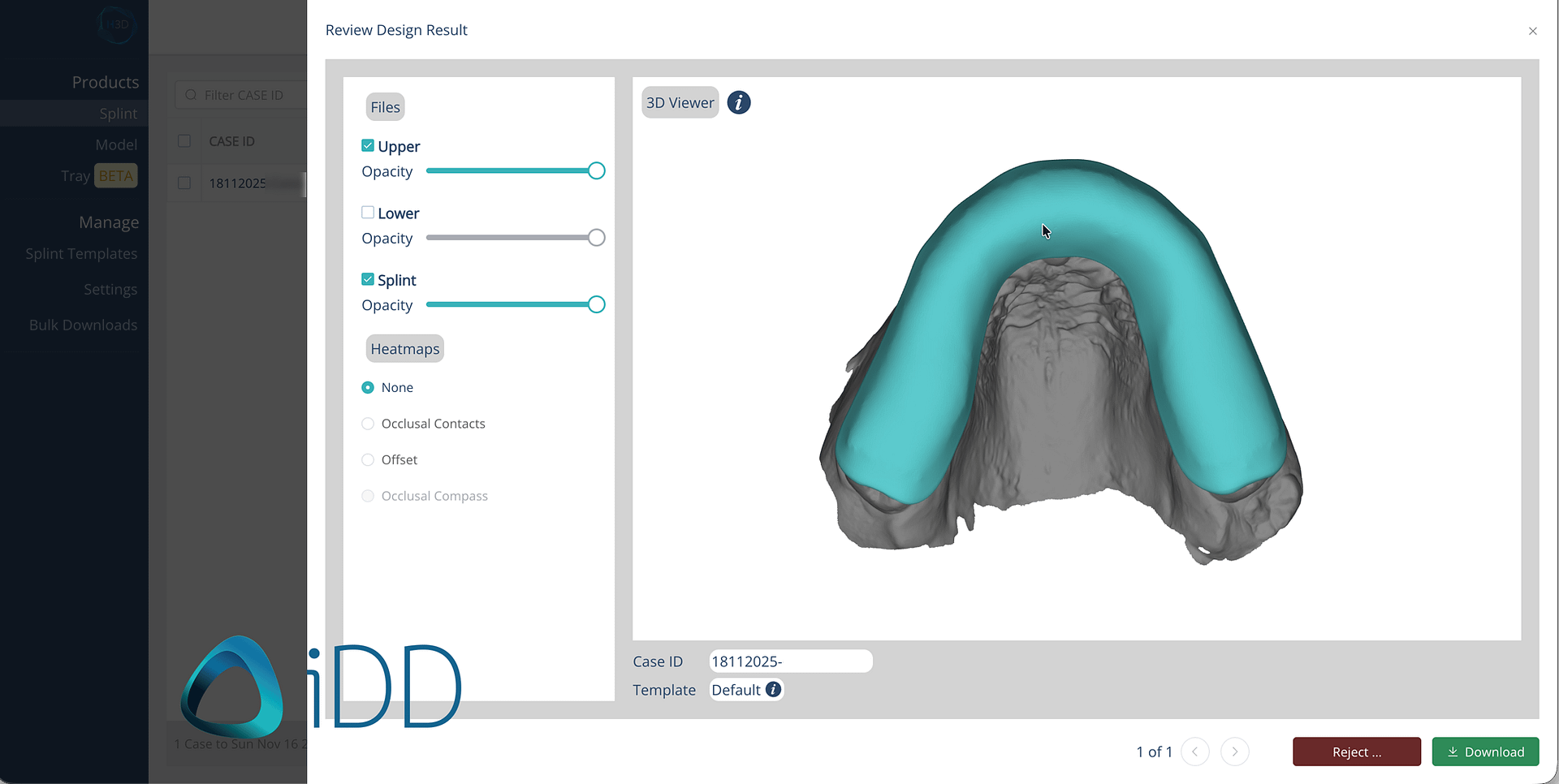
For example, H3D focuses on Models, Splints, and interestingly, Special Trays - not something I have seen done before. So, quite obviously a lab-focused product. Their philosophy is very much focused not on having many indications but on ensuring the AI is as perfect as possible for the key indications that take a lot of time. They do not want you tinkering with each design; they want it automated as much as possible.
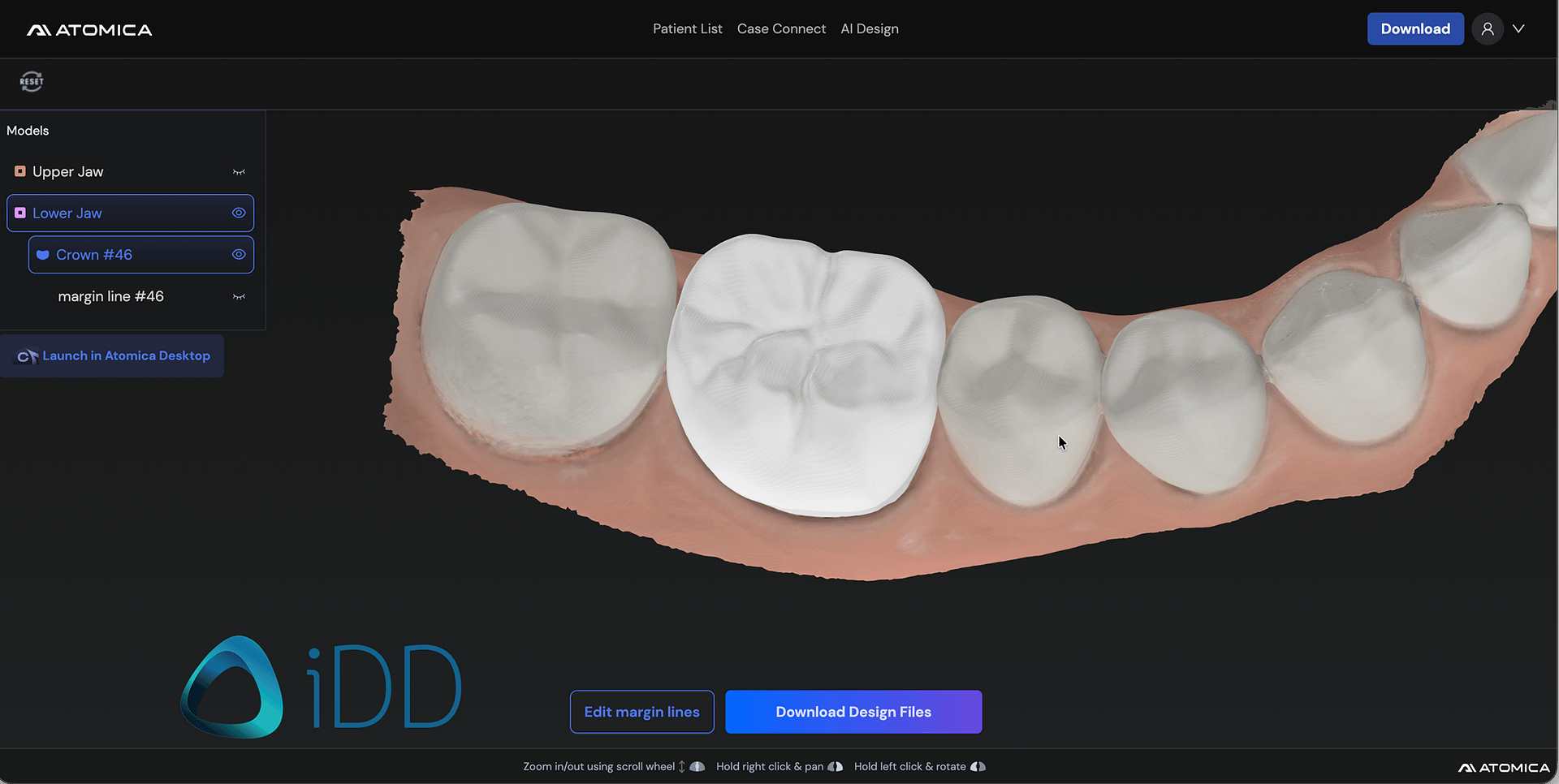
Whereas Atomica.ai started its business with AI surgical guides (especially stackable guides) and later expanded to crowns, inlays, onlays, and veneers, and is now looking to add splints. This company punches above its weight, quite frankly, and has designed one of the best stackable surgical guide workflows I have seen. Now they are expanding their portfolio to include all indications. Sign of the times. I have no doubt CAD on the cloud will be the market norm within 3 years.
Note how every AI has its own 'style' when designing crowns. They don't all look the same.
The Denture Problem - the Industry's Shared Challenge
Here's the reality - none of these platforms can, or even bother doing, denture CAD or complex designing very well. Even the very heavy AI workflows cannot seem to figure it out just yet. Unlike crowns, where success/failure is relatively objective (fits or doesn't fit), denture success involves patient satisfaction, phonetics, retention, comfort, all of which are harder to quantify for machine learning. Same thing with AI-generated designs for anterior work, full-mouth rehab, and even some splints - they don't turn out so nice.
However, things are improving. Several major developments are on the horizon:
Denture AI - This is one of the hardest problems. We'll see gradual progress: AI tooth arrangement, AI flange design, and AI occlusal scheme optimization. But complete automation of quality dentures is probably a few years away.
AI Surgical Guides - Fully automated surgical guide design is on the way. Upload CBCT and intraoral scan, and some software will even propose implant positions. The AI can then generate the guide with all necessary support structures, sleeve positioning, and tissue offset. Early versions exist, but they aren't yet reliable enough for routine clinical use, notably by Diagnocat.
Multi-Modal Integration - Future AI will simultaneously consider intraoral scans, CBCT data, facial scans, photographs, and patient history. Imagine: "Design an anterior crown for this 67-year-old female patient optimized for her smile line, facial proportions, and bite force patterns." The AI analyzes everything and proposes multiple design approaches. Would be cool.
Why Cloud-Based AI CAD Is Inevitable
Several forces are driving this trend toward cloud platforms:
Computational Superiority: AI model training and real-time inference require GPU clusters that are simply not feasible at the clinic or lab level. As AI models become increasingly sophisticated with transformer architectures and larger training datasets, this computational gap is expected to widen.
Continuous Learning: Cloud-based systems improve with every case processed. When a design succeeds or fails, that data feeds back into the training loop. Desktop software updates quarterly at best, while cloud AI improves daily, sometimes even hourly. This creates a compounding advantage over time.
Accessibility & Democratization: Removing hardware barriers matters profoundly. A practice doesn't need a $3,000 workstation with a dedicated GPU; it just needs a modern web browser. This democratizes access to sophisticated design capabilities.
The Bottom Line - Choosing Your Path
The question isn't whether your CAD will be cloud-based - that ship has sailed. It really seems like the future of dental CAD will be mostly in the cloud, and maybe for labs, a local, dongle-less software. The real questions are: Do you want AI to design for you, or do you want to design in the cloud?
Another interesting question is: who will win? With so many CAD options now trying to make it more accessible than ever before, who will capture the most market share? Is it the veteran companies or will it be the companies that sell hardware and can more easily push their solutions onto their customers? What about third-party players focusing solely on software - can they disrupt the market? It will be interesting to watch the next year or two
The platforms that win will be those that seamlessly blend AI automation with human expertise, knowing when to let AI work and when to hand control to the clinician/lab. The new era is collaborative, intelligent, and cloud-native, with AI handling mechanical design tasks while humans focus on clinical judgment, aesthetic refinement, and patient communication.
The only question is which ecosystem you'll choose to be part of.