

As we step into 2026, it's time for our annual tradition - joining forces with Rune Fisker to explore where digital dentistry is heading next.
Looking back at our 2025 predictions, they proved accurate. AI platforms continued their explosive growth, intraoral scanner adoption crossed the 60% threshold in major markets, and 3D printing firmly established itself as a clinical reality rather than just a promising technology. If you'd like to see how our previous forecasts played out, check out our 2025, 2024, and 2023 predictions.
This year brings something fundamentally different.
We're no longer just watching digital dentistry mature - we're witnessing the emergence of truly autonomous systems and interconnected workflows that will redefine how we practice. 2026 will be the year digital dentistry transitions from "innovative" to "indispensable."
As always, Rune has shared his invaluable insights on the industry's trajectory. Below, you'll find his predictions, along with my thoughts on what they mean for everyday clinical practice.
#1. AI Agents Will Enter the Clinic
Rune Fisker:
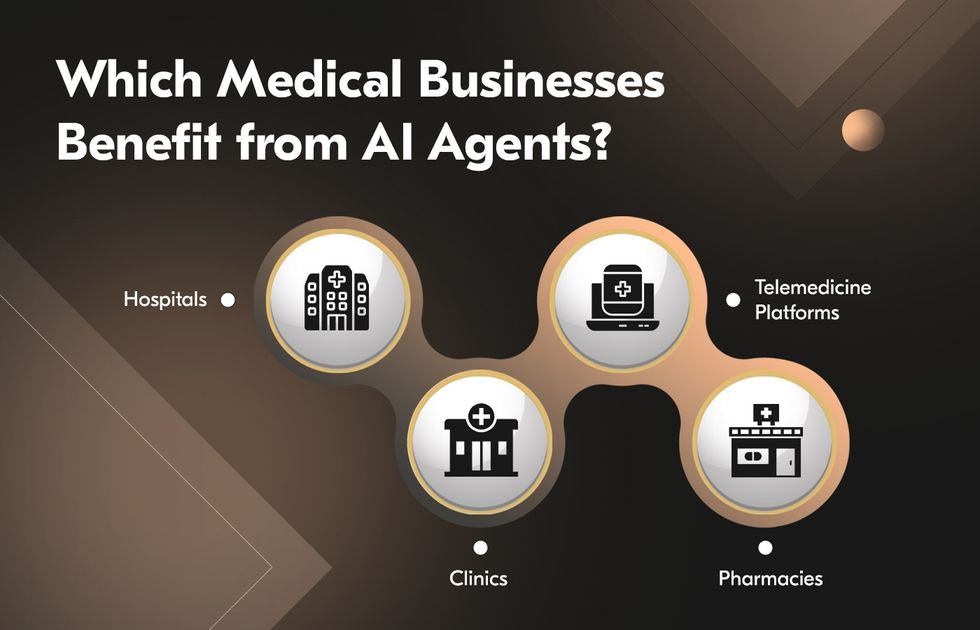
The significant new trend in 2026 will be the adoption of AI agents that combine the power of AI foundation models with the ability to act and create "virtual coworkers" that autonomously plan and execute multistep workflows. Examples of this will include AI receptionists handling full patient conversations; speech recognition for clinical notes; and the auto-updating of patient charts directly into the Practice Management System.
iDD's take:
This is a game-changer, and frankly, it's about time. We've been discussing AI in dentistry for years, but Rune's description goes far beyond caries detection or simple diagnostics.
AI agents represent a fundamental shift from AI as a tool to AI as a team member. Imagine an AI receptionist that not only books appointments but also understands patient history, treatment plans, and insurance coverage, conducting natural conversations that feel genuinely helpful rather than robotic. Or clinical documentation that writes itself as you work, updating patient records in real-time without you touching a keyboard.
The impact on practice efficiency could be massive. In my experience, administrative tasks consume an enormous amount of time that could be spent on patient care. If AI agents can handle these workflows autonomously and reliably, we could see a significant transformation in how dental practices operate.
However - and this is crucial - these systems need to be seamlessly integrated and actually work reliably. We've all experienced AI tools that promise the world but create more headaches than they solve. The success of AI agents will depend entirely on their ability to function smoothly within existing practice ecosystems without requiring constant oversight or correction.
Practices that successfully implement AI agents in 2026 will have a significant competitive advantage. The question is: which companies will deliver truly reliable solutions, versus those just jumping on the AI agent bandwagon?
#2. Generative AI in Daily Use
Rune Fisker:
AI for diagnostics, patient engagement, treatment planning, and execution continues to accelerate rapidly. AI diagnosis of X-rays is already well established. In 2025, 3Shape launched the first AI-assistive diagnostics of IO scans, and AI for CBCT will soon follow from multiple companies. AI CAD design is booming in use, and Smile Design has advanced to an entirely new level by using AI-generated patient videos for treatment simulation – an impressive leap forward.
iDD's take:
We're witnessing AI transition from experimental to essential, and the breadth of applications Rune mentions is staggering.
The evolution of AI diagnostics from 2D radiographs to intraoral scans and now CBCT represents a natural progression, but the implications are profound. We're moving toward a reality where AI provides comprehensive diagnostic support across every imaging modality in the practice. This isn't replacing clinical judgment - it's augmenting it in ways that can catch things we might miss and provide data-driven treatment planning support.
What is particularly interesting is the advancement in AI-generated patient videos for smile design. This takes patient communication to an entirely new level. We've been using digital smile design for years, but showing patients realistic video simulations of their potential outcomes? That's transformative for treatment acceptance and patient understanding.
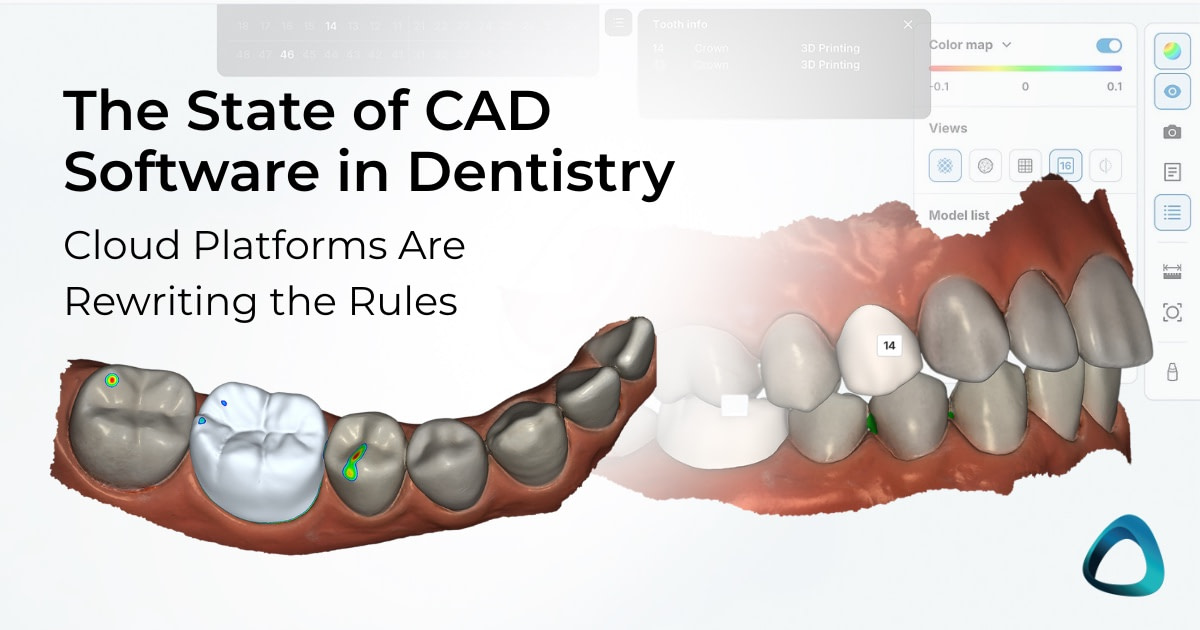
The AI CAD boom Rune mentions is something I've been following closely. Platforms like 3Shape Automate, Dentbird, and others have demonstrated that AI can design restorations not only quickly but also with clinical accuracy that rivals or exceeds traditional workflows. As these systems continue to improve, the question becomes less "Can AI do this?" and more "Why wouldn't you use AI for this?"
That said, we need to maintain our critical eye. Not all AI platforms are created equal, and we'll continue to review and test these solutions to help you separate genuine innovation from marketing hype.
#3. IOS Becoming the Standard of Care
Rune Fisker:
Intraoral scanner (IOS) penetration is now exceeding 60% in the USA and Northern Europe and has become the standard of care for modern practices. Usage continues to grow quickly. TRIOS scanned more than 35 million patients in 2025, a 24% year-over-year increase, representing a patient scanned every 0.8 seconds. Scanning of All-on-X cases has been enabled by elongated scan bodies such as those from TruAbutment. IOS use will expand beyond core digital impressions to diagnostic applications and will increasingly be shared with patients in the clinic and through smartphone apps such as 3Shape's DentalHealth app.
iDD's take:
These numbers are remarkable. A scan every 0.8 seconds? That's extraordinary growth, and it confirms what we've been saying for years - digital impressions are no longer optional; they're standard practice.
The 60% penetration rate in mature markets means we've crossed a critical threshold. Maybe this number is a bit high but Rune would know.
This isn't early adoption anymore; this is mainstream. Importantly, adoption in developing markets is accelerating rapidly, fundamentally changing the global digital dentistry landscape.
What's particularly interesting is how scanners are evolving beyond impression-taking. The expansion into diagnostic applications - combining scanning with AI analysis - transforms the intraoral scanner from a replacement for impression material into a comprehensive diagnostic hub. When you can scan, diagnose, plan treatment, and communicate with patients all through one device, the value proposition becomes overwhelming.
The emergence of elongated scan bodies for full-arch cases, such as those from TruAbutment, addresses one of the last remaining technical barriers in digital workflows. Full-arch implant cases can now be captured digitally with confidence, enabling this high-value treatment category to adopt fully digital workflows.
And sharing scans with patients via smartphone apps? That's the digital consumer experience we've been advocating for. Patients can review their scans at home, share them with family, and engage more fully with their treatment in ways traditional dentistry never allowed.
If you haven't added an intraoral scanner to your practice yet, 2026 is the year to do so. The technology is mature, the workflows are proven, and the ROI is clear.

#4. The Rapid Rise of 3D Printing
Rune Fisker:
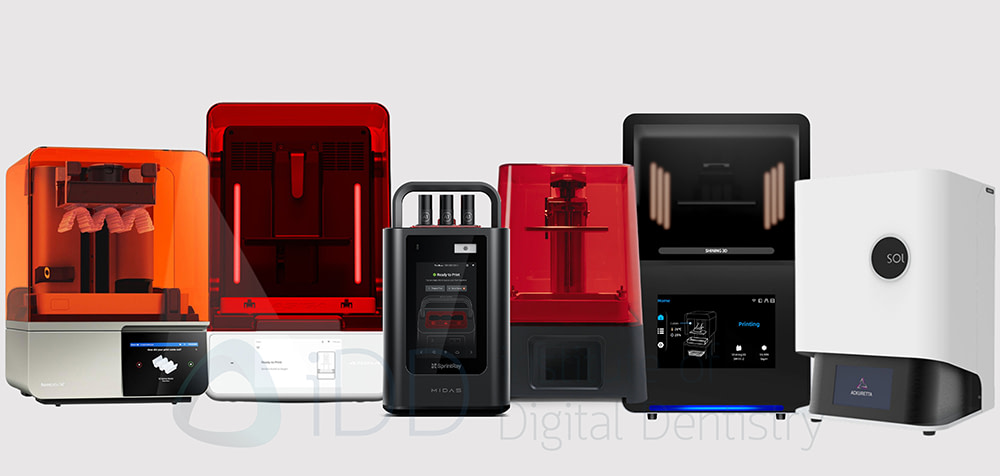
3D printing is one of dentistry's most dynamic areas, driven by rapid advances in printing technology and, not least, materials. By 2024, the number of 3D printers in U.S. clinics surpassed the number of mills, and adoption is now expanding globally. The biggest drivers of deep clinical penetration will be the quality of the final 3D-printed crowns and workflow improvements. SprintRay's Midas was a major step forward, and the developments to come in 2026 will be exciting to follow.
iDD's take:
The fact that printers now outnumber mills in U.S. practices is a massive milestone that I don't think many people fully appreciate. This represents a fundamental shift in how in-office restorative dentistry is practiced.
The reason is simple: economics and accessibility.
As I've mentioned before, printers are significantly more affordable than milling machines, easier to maintain, and increasingly capable of producing high-quality restorations. The barrier to entry for chairside dentistry has dropped dramatically.
SprintRay's Midas material represents exactly the kind of innovation that's driving adoption - a crown resin that promises the quality and durability that clinicians demand.
What I'm particularly excited about in 2026 is the continued development of materials by multiple companies. SprintRay is the trailblazer, but others are following, and competition drives innovation. We'll see better materials, faster printing, and more refined workflows throughout the year.
However, let's be realistic: 3D-printed permanent crowns still have skeptics, and rightfully so. Long-term clinical data is still accumulating. As someone who has used CEREC for nearly a decade and understands the value of same-visit dentistry, I'm optimistic but cautious. We need to see continued proof of clinical success before 3D-printed crowns become universally accepted.
The workflow improvements Rune mentions are equally critical. Printing alone isn't the solution; it's printing combined with AI design, efficient post-processing, and reliable finishing that create a truly practical chairside workflow.
We'll be closely monitoring and reviewing the new materials and systems emerging in 2026. This space is moving fast, and staying informed will be crucial for anyone considering adding 3D printing to their practice.
#5. The Hyper-(Un)Connect Ecosystem
Rune Fisker:
While general technology is moving to a hyperconnected ecosystem where all devices and systems interoperate, dentistry remains far behind - compounded by a proliferation of digital offerings, AI startups, and slow-moving practice management systems. However, meaningful progress is underway as more companies develop integrated ecosystems, publish open APIs, and recognize that integration and workflows are essential for mainstream adoption. The shift of many software solutions to the cloud is accelerating this momentum.
iDD's take:
This might be the most important trend on this list, and it's one we've discussed for years. Let's face it - the digital dentistry ecosystem is still fragmented, and it's costing practices time, money, and frustration.
You know the problem: you have a scanner from one company, practice management software from another, imaging software from a third, AI platforms from various startups, and none of them talk to each other seamlessly. Data gets manually transferred, re-entered, or worse, lost in translation. It's inefficient, error-prone, and frankly, unacceptable in 2026.
The good news is that major players are finally taking integration seriously. DS Core from Dentsply Sirona, cloud platforms from Medit and DEXIS, expanded ecosystems from iTero - these represent genuine efforts to create connected workflows. Rune notes that the shift to cloud-based solutions is critical because cloud infrastructure inherently enables better integration and data sharing.
But we're not there yet. Practice management systems, which are arguably the most critical piece of the puzzle, remain stubbornly slow to evolve and integrate. Many are still operating on decades-old architecture, which makes modern integration challenging.
Open APIs are the key. When companies publish true open APIs and commit to interoperability, the entire ecosystem benefits. Data can flow seamlessly, third-party developers can create innovative solutions, and practices can choose best-of-breed solutions without sacrificing integration.
My hope for 2026 is that we see accelerated movement toward genuine ecosystem integration. Not proprietary platforms that lock you into one vendor's entire stack, but truly open systems that allow practices to build customized digital workflows using the best tools available.
Conclusion
As we look ahead to 2026, it's clear that digital dentistry is entering a new phase of maturity and sophistication.
AI agents, advanced generative AI, universal scanner adoption, practical 3D printing, and integrated ecosystems - these aren't isolated trends; they're interconnected developments that together represent a fundamental transformation in how dentistry is practiced.
With IDS 2025 behind us and the year ahead, we're eager to see how these predictions unfold and what unexpected innovations emerge. The pace of change can feel overwhelming at times, but remember - every advancement is ultimately about improving patient care, making our work more efficient and predictable, and creating better outcomes.
We'll continue to provide you with unbiased, comprehensive reviews and analysis of the technologies shaping our field. Our commitment remains unchanged: giving you the practical insights you need to navigate this rapidly evolving landscape and make informed decisions for your practice.
What are your thoughts on these trends? Are you already implementing any of these technologies?
What challenges are you facing with digital integration in your practice?
Leave a comment below - I'd love to hear from you.
Stay tuned for our continued coverage of the latest digital dentistry innovations throughout 2026. Have a great New Year!
“I couldn’t agree more with the shift toward AI-assisted diagnostics. We’ve recently integrated [Specific Tech, e.g., AI X-ray analysis or 3D Printing] at Midtown Toronto Dentistry, and the change in patient trust is remarkable. When a patient can see a 3D scan or an AI-highlighted area of concern on a screen, the ‘why’ behind the treatment becomes so much clearer. For any colleagues in the Toronto area, I’d love to connect and share how this has streamlined our workflow!”
Nice to meet you and thanks for your comment
I am coming to ODA! Hope to see you there
I found this really insightful. Digital dentistry is clearly evolving rapidly, especially as AI becomes more involved.
Glad to hear it 🙂
That’s exactly what will define the next generation of dentistry.
Doresc să mă mă instruiesc și să aflu noutăți de ultimă oră, în domeniul stomatologiei digitale.
Check out our courses and content on the website, we have romanian subtitles
https://instituteofdigitaldentistry.com/bundles/