Clinical execution is the least important part of digital smile design. That ranking comes from Dr. Christian Coachman, the person who created it.
Dr. Christian is a dentist, a dental technician, and the founder and CEO of Digital Smile Design (DSD). I got into DSD around nine years ago, and I have to say it changed my career. On this episode of Digital Dentistry Decoded, I wanted the thinking behind DSD, not just the smile templates most people think about.
We covered the three pillars of DSD, why the workflow should come before any technology purchase, AI agents, why adoption takes a decade, and where 3D-printed restorations actually fit. Great chat with lots of clinical insights from a master.
Listen to the episode below or keep reading to learn more.
TLDR - The Episode in 30 Seconds
- Christian divides digital smile design into three pillars (emotional, comprehensive, and guided dentistry) and ranks clinical execution as the least important of them.
- Dentists should design the workflow first and buy technology second, in Christian's view, and skip any technology that does not make the whole system more efficient.
- He sees non-dental AI agents as the most exciting development in dentistry, because current dental technology is fragmented across platforms and logins.
- According to Christian, it took about 20 years for aligners and 10 years for scanners to win dentists over.
- He believes every modern dentist needs a scanner and a printer, because the pair make copy-paste dentistry possible.
- His rule for printed restorations is to take whatever printing companies claim "down one level," which, in his view, makes today's "final" resins very good (long-term) provisionals.
From Dental Technician to Digital Smile Design
Christian was ready to quit dental school. At his father's suggestion, he switched to a half-period program in Brazil, studied to be a dental technician in parallel, and by his third year was working as a technician for his father.
Christian credits that lab work with shaping everything that came after, because it exposed him to far more cases than a single practice would.
"When trying to understand dentistry, being a technician has one advantage, and that is what I call having a bigger sample. As a technician, you work with several dentists. As a dentist, you face certain situations a few times a month in your practice. As a technician, if you work with 100 dentists, you multiply those situations by 100."
In the late '90s, that wider view showed him how poorly many early anterior implant restorations were turning out. His response was the pink hybrid implant restoration for the esthetic zone. It was the subject of his first articles and protocols, and it was the work that took him to the US.
DSD came from combining smile design with his other passion, communication. The idea was a system to design better smiles and then explain that design clearly to specialists, the lab, and above all, the patient.
The Three Pillars of Digital Smile Design
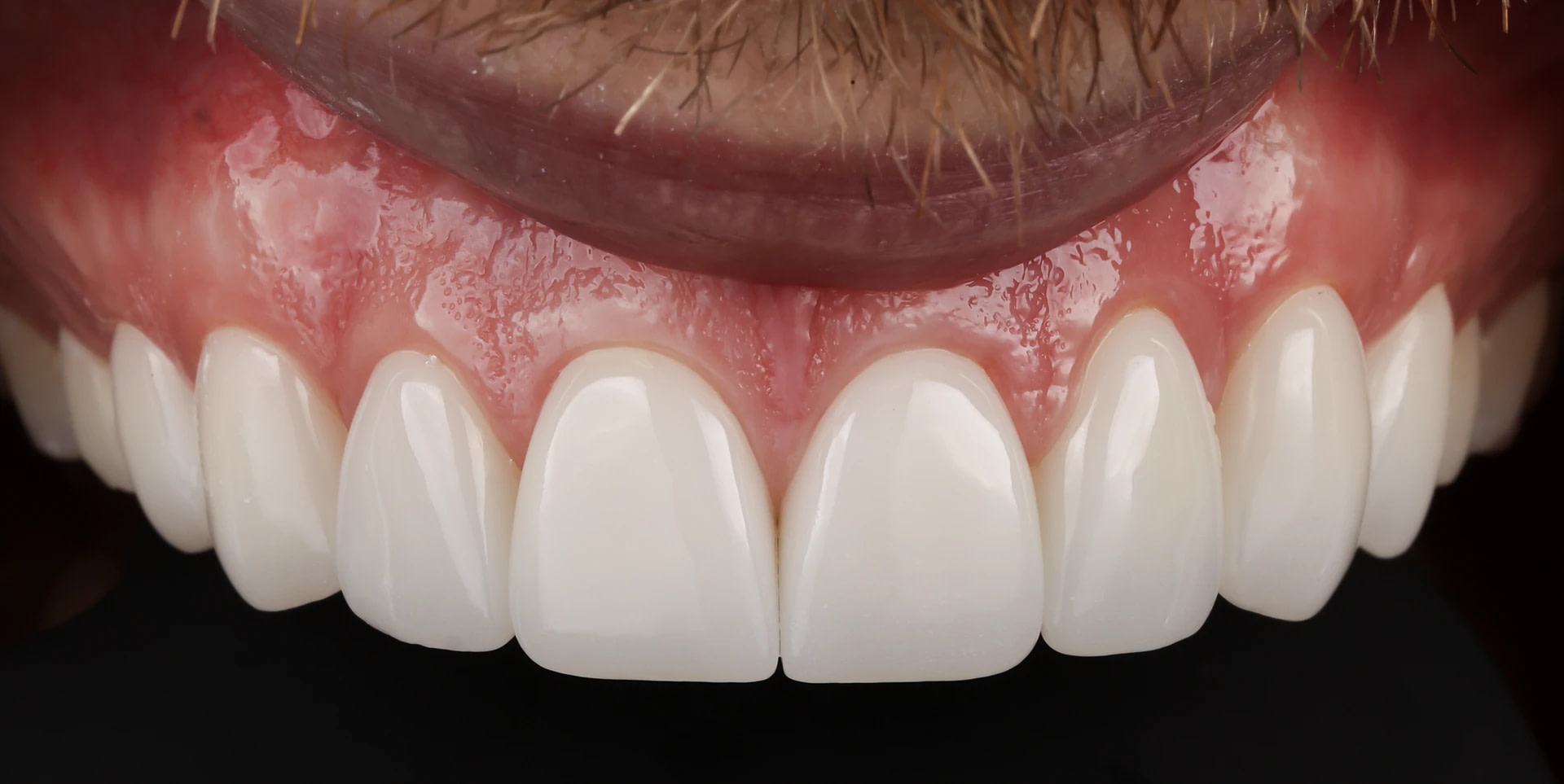
When we think of DSD, a lot of dentists picture digital smile design as a photo with a golden ratio template on top. Christian describes a much broader philosophy built on three pillars.
"I call it emotional dentistry, comprehensive dentistry, and guided dentistry."
Emotional dentistry is the patient experience, onboarding the patient ethically so you get to do more of the dentistry you love. Comprehensive dentistry is facially driven diagnosis and treatment planning, reverse-engineered from the smile design. Guided dentistry uses the digital files, guides, and stents to make the outcome look more like the simulation.
Christian ranks guided dentistry, the clinical execution pillar, last of the three.
"I'm putting this in order, and I'm saying that clinical execution is the least important, and unfortunately is the most taught one."
His point is not that execution is easy. For him, the key shift is respecting the plan and asking whether the outcome resembles what you showed the patient before starting.
Emotional dentistry comes second, and for Christian it is mostly about storytelling. He argues that most great clinicians are not great storytellers, and that becoming one is the only way to do more of the dentistry you believe in.
DSD runs a whole program on this, called Case Acceptance Mastery. I think the sales side of dentistry is way undertaught, so it was good to hear him put it so high on the list.
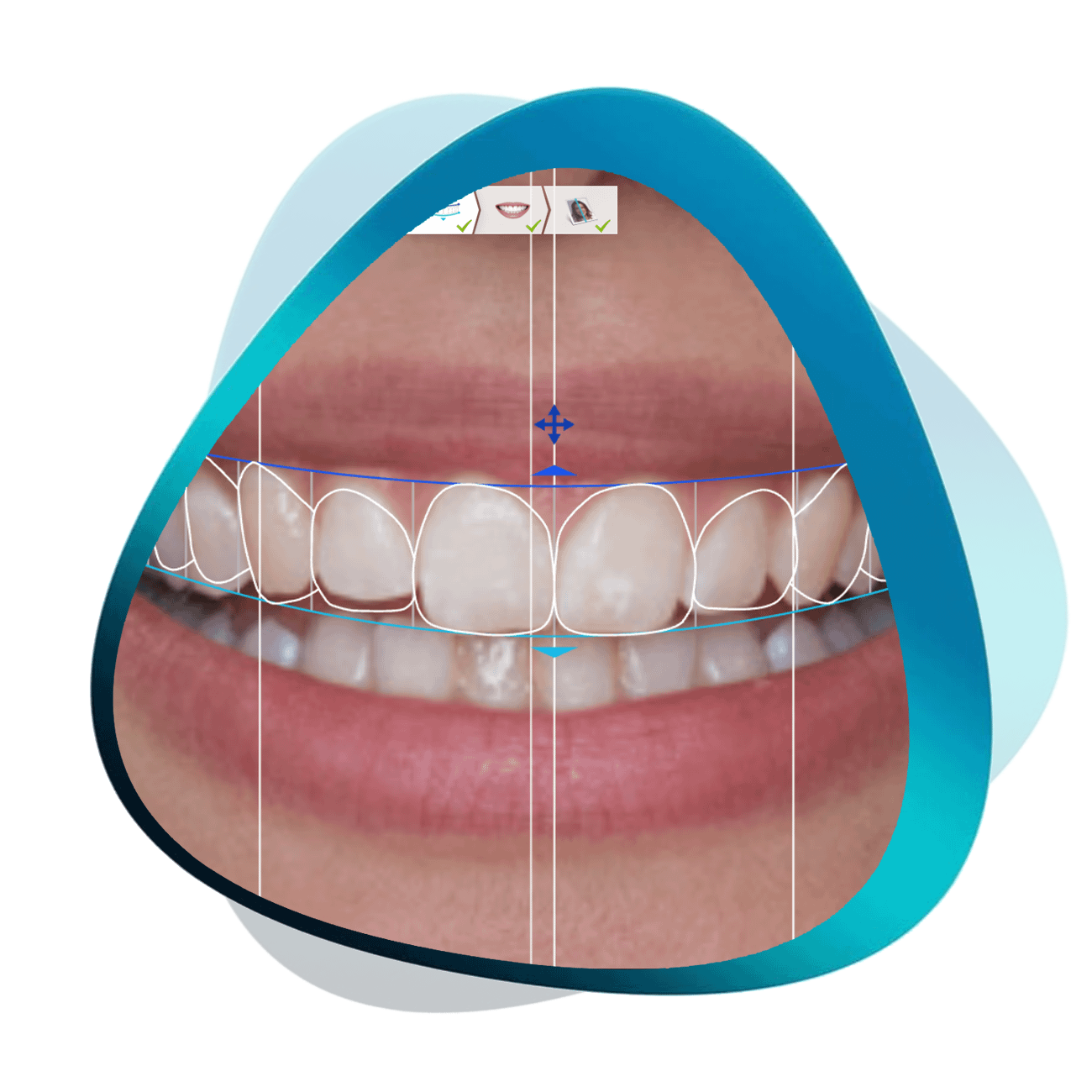
If you’re doing cosmetic dentistry, learning Smile Design is crucial.
Our Smile Design Training Bundle will help you improve your clinics revenue, sky-rocket case acceptance and increase patient happiness!
Exploration Before Execution
The comprehensive mindset sits at the top. Christian's advice is to use technology where you need the most help, and for him that means diagnosis rather than the procedure.
"We are much better executors than better explorers."
He plans around the final 10 years of a patient's life. A 50-year-old patient may well live to 100, so he asks how today's decisions will affect that patient at 90. Christian says this changes how you think about prevention, longevity, and the link between dentistry and total health.
Why the Workflow Should Come Before the Technology
Christian's approach to buying digital dentistry technology is to design the workflow first, even imagining it with no technology at all, and only then look for tools that remove the bottlenecks.
"They buy technology because it's cool, and then they try to figure out how to incorporate this into their daily work."
He applied this to scanners first. If a scanner only replaces your impressions, that is the only basis on which you should calculate its return on investment. He also warned that some companies invent problems to sell a solution.
Printer companies tell very exciting stories about why you need one, and Christian counters them with a question he asks himself.
"I haven't been doing it without a printer. Why do I now need to do that?"
He extends this to every decision, including courses. Each investment should have its own small business model with a clear intention behind it. "I want to get better," in his view, is too vague.
I've been on the receiving end of this myself, getting caught up in KOL hype and buying equipment that ended up sitting in my clinic, 30 or 40 grand worth, doing absolutely nothing. To be clear, neither of us was saying printing is useless. The point is to have a clear purpose before you buy.
Non-Dental AI and the Gadget Problem
When I asked Christian what excites him most right now, his answer was non-dental AI. By that he means learning from AI experts outside dentistry how to build agents that work for you, even when you are asleep or away from the computer.
His reasoning comes from how fragmented dental technology has become. Every company has its own platform and every gadget has its own login.
"The first appointment will take like 10 hours to use all the technology that we see around."
Christian has long argued that the leading dental company of the next decade will be the one that builds an agnostic platform above all the separate solutions. Since that has not happened, he expects AI agents to fill the gap, pulling the data together and giving the dentist just enough information to make the next decision.
This is why we personally set up an in-house lab and hired four technicians. Someone has to manage all the data and work.
I also think there is a real disconnect between podium speakers and the dentists running busy clinics who see more than one patient a day. Christian's test is whether an idea survives a normal month of new patients.
"Every great idea I have is only really good if a dentist can use that idea 20, 30 times per month for every single new patient."
Why Adoption Takes a Decade
According to Christian, it took 20 years for dentists to be convinced to use aligners and 10 years for scanners. Part of his consulting work for companies now focuses on accelerating adoption. That means simplifying the system so a dentist can use it on every patient, and showing staff how the change benefits their own working lives.
In my own practice, we have many different scanners and implant systems, but most of my associates find something that works and stick with it. They just want to keep doing reliable dentistry.
It took at least five years for companies to believe in DSD, and some dentists have told him it took them 10 years from seeing his first lecture to making it routine. When people get anxious that others are slow to adopt, Christian tells them not to worry about it that much.
"If everybody was adopting as fast as you, you wouldn't be special. You would be normal."
His advice is to pick your battles and to time the jump. Too early, and you waste energy on immature technology. Too late, and you lose the first mover advantage.

Scanners, 3D Printing, and Copy-Paste Dentistry
In my view, intraoral scanners are basically commoditized now, a bit like buying a flat-screen TV. I think printing is the next big wave in dentistry, and Christian agreed without hesitation.
"Every modern dentist needs a scanner and a printer, period."
For him, the main benefit is what he calls the empowerment of the prototype phase. With easy designs and chairside printing, you can test-drive function and esthetics before final ceramics, as a mockup or a provisional. You can then adjust occlusion, incisal edges, and soft tissue on the prototype and scan the changes into the final.
Christian coined a term for this, copy-paste dentistry. It means carrying files forward from mockup to provisional to final, from pre-ortho to post-ortho models, and from the diagnostic wax-up into the implant prosthesis.
Going from a wax-up the patient loved to a final that looked different was one of the most brutal pain points I dealt with. For 15 years, Christian has shown audiences a beautiful case he did with Galip Gurel next to the original wax-up, and the two have nothing to do with each other.
"I can guarantee, even if you're the best dentist in the world with the best technician in the world, the final outcome is completely different to the wax-up."
He is not claiming the final and the plan can be identical. His point is that we need to accept the gap exists before we can close it.
How to Choose a Dental 3D Printer
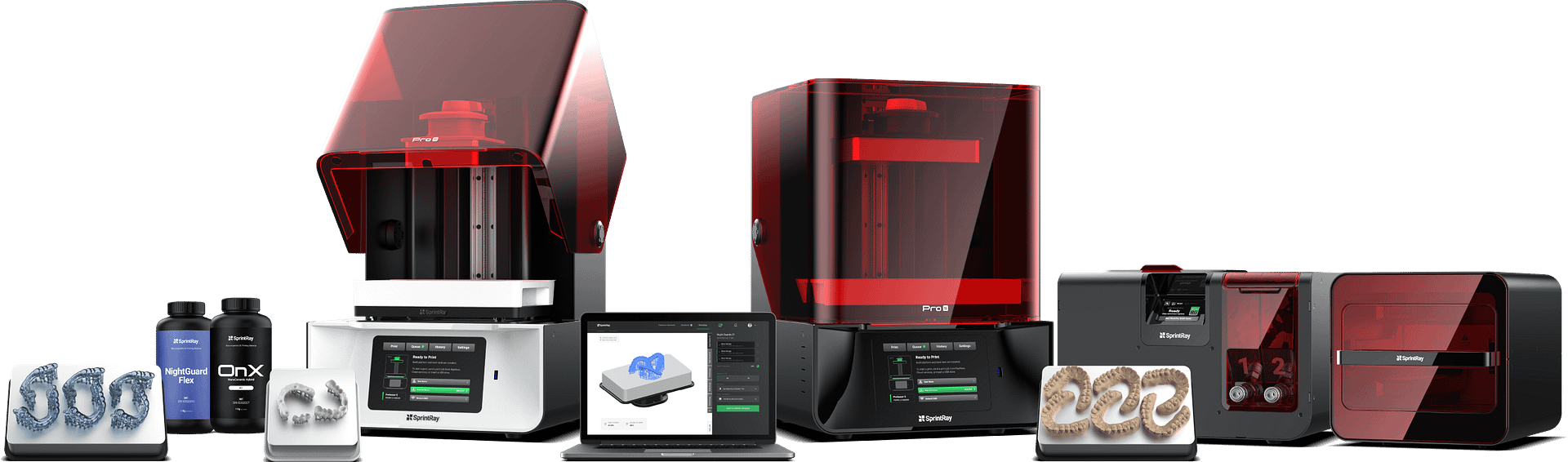
Christian's lab runs Formlabs and SprintRay printers, and they have been testing some of the newer Chinese printers too. He likes SprintRay for its innovation and its focus on simplicity, which he compared to the espresso machine approach. Overall, though, he thinks the major brands all perform well, much like scanners did a few years ago.
His advice is to list the things you want to produce most with the printer, whether that is guides for direct composite, in-house aligners, or guided implant work. Then ask the companies who have the best solution for those specific things.
My addition is that right now it's a resin game. Work backward from the indication you want to offer, find the best resin for it, and then buy a printer that lets you use that resin. Some very good third-party resins are open, and some exceptional resins, like SprintRay's, are locked to their printers. I also rate Asiga as a completely open lab powerhouse, and I like Formlabs for its simplicity. But resin is the key metric now.
Where 3D Printed Restorations Actually Fit
According to Christian, printing companies once said their printers could make provisionals when they could really only make mock-ups, and now they say final restorations.
"Whatever printing companies say, I take it down one level."
He thinks the race over ceramic filler percentages in printed resins is overhyped. In his view, a highly filled printed resin is still resin, and it cannot be compared with ceramics or milled restorations. When companies say "final restoration," he reads it as "very good provisional."
He still sees printed restorations as ideal long-term prototypes, left in the mouth for one, two, or three years. Ceramics will reliably last 15 or 20 years. A printed test-drive phase also lets you split a complex full-mouth case into quadrants, with payments spread out as well. When you are changing the vertical dimension and the patient's whole bite, Christian says it no longer makes sense to take that risk without a prototype phase.
Printing does beat two types of restoration, which we agree on. The first is anything milled that is not ceramic. The second is direct composite, freehand or guided. Add to that prepless veneers, which are very hard to mill well.
If you already own a chairside mill and it works for you, Christian advises keeping it and mastering it. Delivering in 40 minutes instead of 20 is fine if your patients, staff, and systems are already built around it.
Christian then described five scenarios in which the same conclusion (printing beats milling for resin) leads to different decisions, and I think it is the most useful framework in the episode.
- You don't have the workflow yet.
- You already do the workflow with existing technology.
- Your workflow is starting to break down (old tech).
- Your volume is growing, and you need to duplicate the workflow.
- Your workflow is not working for you, and you want to change it.
That framework applies to basically any investment in your clinic, from a DSLR to a CBCT to a printer.
Know what’s next in dentistry. Before everyone else.
The innovations, clinical insights, and digital trends that matter - curated by iDD and delivered straight to your inbox every week.
Back to Human Dentistry
Christian finished by saying he is falling in love again with human dentistry. He believes it will take several decades before dentistry can be done without humans.
"How do you invest on yourself to become a better human dentist?"
You can have every tool in your practice, but you still need to connect with patients and get them to accept what you are proposing. Overall a great chat with one of the most influential clinicians of this decade. I appreciate your time, Dr. Christian.
If you want to build smile design into your own workflow, our Digital Smile Design bundle covers the fundamentals and how they apply across different software.
Listen to the full episode for the complete conversation. If you have any questions, please leave them below.
Big thanks to SprintRay for sponsoring this Episode of the Digital Dentistry Decoded Podcast. To learn more about their 3D Printers and to book a demo, click here: info.sprintray.com/digital-dentistry-decoded-podcast