


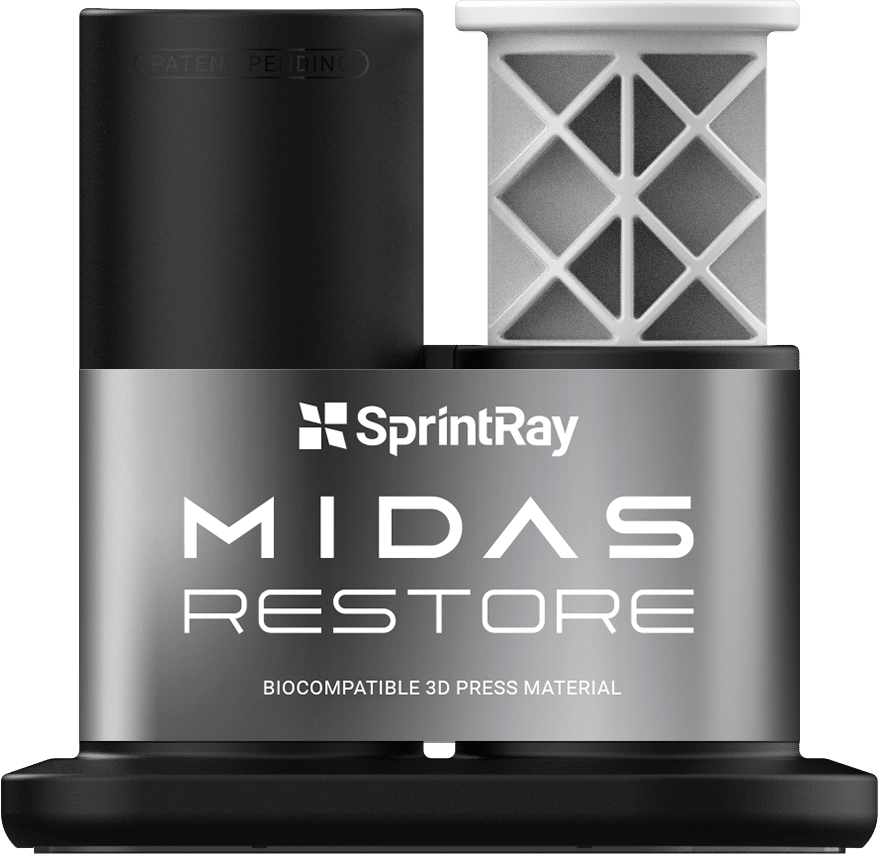
SprintRay has officially launched MIDAS Restore, and after several months of hands-on testing as part of the beta program, I think this is the most significant restorative resin release we have seen so far.
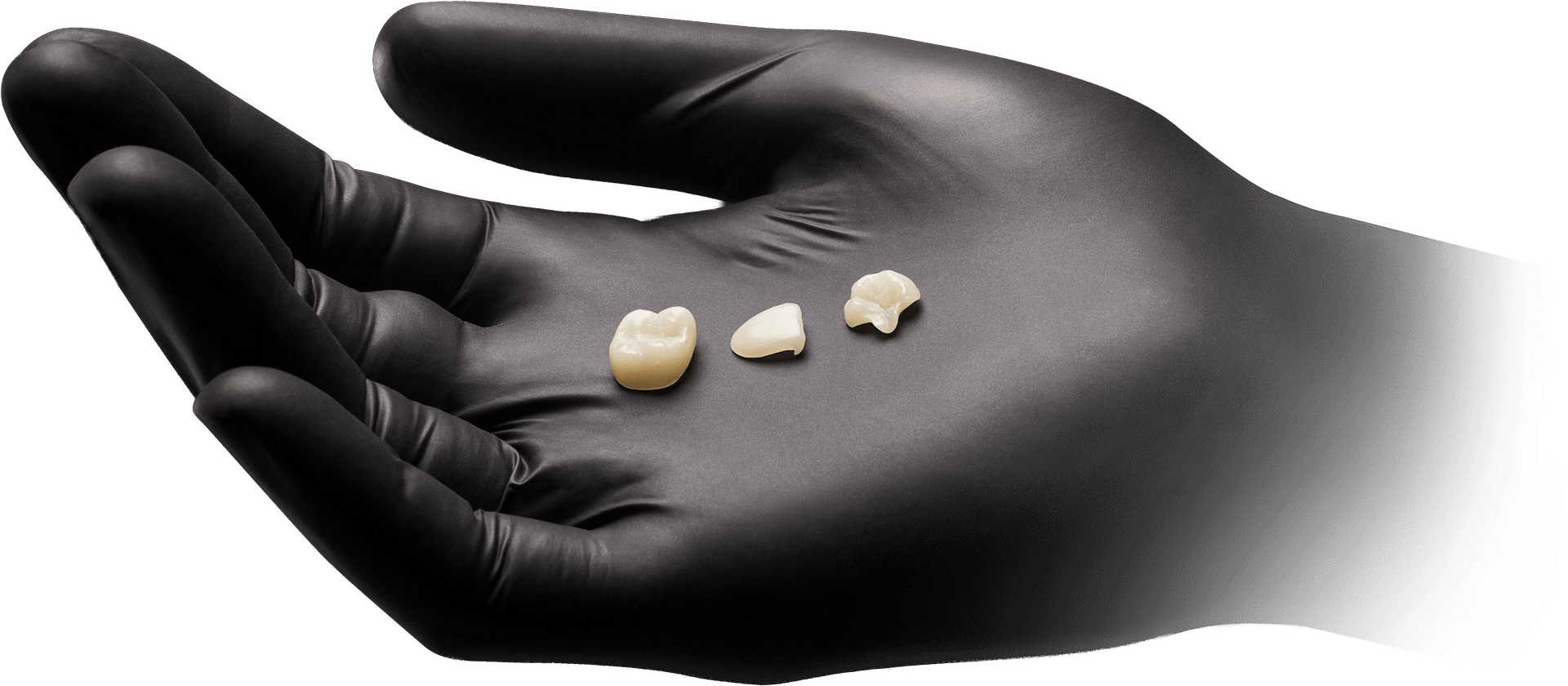
The launch went live on 1 September 2026 in the United States. Restore is a glass-ceramic and zirconia-filled definitive restorative resin built specifically for the MIDAS Digital Press, cleared by the FDA as a Class II device under 510(k) K260661. It is indicated for definitive crowns, inlays, onlays, and veneers.
Let me be clear about where I sit on this before going further. I was one of roughly 100 clinicians worldwide in the Restore beta program, and SprintRay supplied the capsules I have been testing. I have not been paid to write this. But this is a significant milestone for dental 3D printing that I had to share with you.
Enjoy the overview.
What MIDAS Restore Actually Is
The short version is that Restore is what happens when you stop designing a resin around the constraint of being printable.
Conventional dental 3D printing uses a resin vat, so the material has to flow. That puts a practical ceiling on how much ceramic filler you can load into it, and filler content is what drives wear resistance, hardness, and polish retention. Every printed restorative resin before this has been living inside that compromise.
MIDAS gets around it with Digital Press Stereolithography, which actively pushes material out of a sealed capsule into the print zone rather than waiting for it to flow. That is what lets Restore run at over 75 percent filler by weight, combining glass ceramic and zirconia. It is also why Restore only works on MIDAS. This is a closed system, and there is no version of this material for your Pro 2 or anyone else's printer.
If you want the background on how the MIDAS platform works, we covered the original launch here.
The Numbers SprintRay Is Publishing
- Biaxial flexural strength of 215 MPa. This is the highest of any SprintRay definitive restorative material. It is not in the same territory as lithium disilicate, and SprintRay is not claiming it is. But it is arguably the best printed restorative resin yet.
- Five times the wear resistance of SprintRay Ceramic Crown over 200,000 cycles, which the company describes as comparable to a milled hybrid ceramic.
- 98 percent gloss retention after 5,000 simulated toothbrush abrasion cycles. I can attest to the polish of this material. Genuinely excellent.
- Surface hardness above 80 HV, which SprintRay states is statistically equivalent to a leading nanofilled direct composite and roughly double the previous generation of printed restorative resins.
- Translucency parameter of 13.5 in shade A1, putting it in the same range as milled lithium disilicate HT. Other shades will vary.
The interesting part is the framing. SprintRay is explicitly arguing that peak strength is the wrong metric. Their position is that glass ceramics and zirconia defend against crack propagation through sheer bulk strength, which costs you tooth structure and gives you a restoration far stiffer than function requires. Instead, Restore has a flexural modulus closer to dentin, with a resin matrix designed to arrest cracks rather than resist them, so that once it is adhesively bonded, the restoration and the tooth distribute the load together.
If that argument sounds familiar, it is one Hossein Bassir has been making for a while. He is SprintRay's Chief Product Officer, and I spoke to him about exactly this on the podcast, in an episode where his central point was that materials, not printers, decide whether a 3D-printed crown works. Restore is that thinking turned into a product.
That is a coherent materials science argument, and I find it a genuinely more thoughtful position than chasing a bigger MPa number. But it is an argument, not demonstrated clinical equivalence. Nobody has research data on this material yet.
What I Have Seen Testing It
The polishability is the standout. This is easily the most polishable restorative printed resin I have used. A straightforward two-step polish gets you to genuine luster, no glaze and no oven. SprintRay says two wheels in under two minutes, and that matches what I have found. Crown HT can be polished well, too, but Restore takes noticeably less effort to achieve.
The translucency and shade accuracy are very good. The shades are close to bang on out of the capsule, and the translucency makes a real visual difference next to Crown HT. Printed the same design in both materials side by side, and the difference is obvious immediately. It does mean that if the tooth has a dark stump shade, this is likely not the material to use, however.
It is extremely thick, and that changes how you handle it. This resin is far more viscous than anything else in the MIDAS lineup, and it is sticky. There is a learning curve to correctly post-process this material.
Practically, that means being thorough with the cleaning step before it goes anywhere near the curing unit, especially in the intaglio. Smooth veneer surfaces are relatively easy. A crown or onlay with occlusal anatomy took me a while, using wipes and cotton buds to get the fissures properly clean.


The Things I Am Still Watching
Translucency cuts both ways. A translucency parameter in the emax HT range is excellent for blending and also allows the underlying substrate to show through. I have had a darker preparation throw off a printed veneer result, and that is a case type nobody posts about. At launch, Restore comes in A1, A2, A3, B1, and C2. There is no low or medium translucency option and no bleach shade, so tetracycline cases and high-value bleach cases will need careful consideration of cement selection.
Wear resistance is the whole ballgame, and it is not settled. The 200,000-cycle figure is from laboratory data. The question that actually matters for restorative work is whether a restoration holds its anatomy, contacts, and vertical dimension over years, and the honest answer is that we will not know for a while. Previous-generation printed restoratives have generally shown greater wear than ceramic or natural tooth structures. If Restore genuinely fixes that, it changes what chairside printing can be used for. If it does not, we have a very pretty material with the same ceiling.
This is the crux of the bigger question about whether printed resin is the next real shift in restorative dentistry, and Restore is the strongest test case we have had so far.
Cost and Availability
A three-pack of Single-Unit Capsules is $135 USD ($45 USD per capsule), available through the SprintRay Store and authorized distribution partners. Restore is validated for use with the MIDAS Digital Press and the SprintRay NanoCure.
Available in the United States only for now. It will come to other regions soon, with its own pricing. Restore has also received CE approval for the European market, although shipments have not yet commenced. European availability is expected within approximately 30–60 days.
The per-capsule figure is relatively high. Make sure you understand this before going in. But consider this: you can press more than one unit from a single capsule, so your real per-unit cost depends on how you nest. Whether that lands favorably against a lithium disilicate block depends on your local block pricing and how many units you can fit. I would encourage you to run your own numbers rather than take anyone's marketing comparison at face value.
Post-curing is four minutes. Restore can also be adjusted, added to, and repaired intraorally before adhesive cementation, a genuinely useful property that milled ceramic does not offer.
Where This Sits in the Market
MIDAS has been out since 2024, and SprintRay says clinicians in 33 countries have now produced over 100,000 restorations on it. Restore is the material the platform was built for, and until now, the platform has arguably been ahead of the resins available for it.
So the question becomes whether this is enough to move general dentists. My read is that there are two very different conversations here. The elite cosmetic crowd doing prepless veneers weekly will adopt this, and their cases will be all over social media within a month. But that group is relatively small, and it is easy to mistake it for the market. Most general dentists don't do veneer cases regularly. What they want to know is whether they can bill this as a definitive restoration and trust it to last on a molar, and that confidence comes from wear data over time, not from launch specs.
Based on my months of hands-on use, Restore is the most convincing printed definitive restorative material I have tested to date. Long-term clinical wear remains the unanswered question, but the early performance is genuinely impressive.
For single-unit work, if you already have a CEREC in the practice, milling remains extremely efficient, and I would not rush to change. Printing pulls ahead with multiple units and veneers. Very thin veneers are difficult to mill, and printing is clearly the better route there. Or simply for those priced out of buying a mill.
Credit where it is due. SprintRay has moved this category forward faster than anyone expected, and competitors now shipping their own capsule-based systems tells you the industry read it the same way. Shining 3D's Ceramix-Nano is the clearest example, and we have one in the iDD clinic if you want the hands-on first look. Restorative 3D printing has become a materials game, and right now Restore is the material to beat.
If you have any questions about MIDAS Restore or the MIDAS workflow, please leave them in the comments below.