
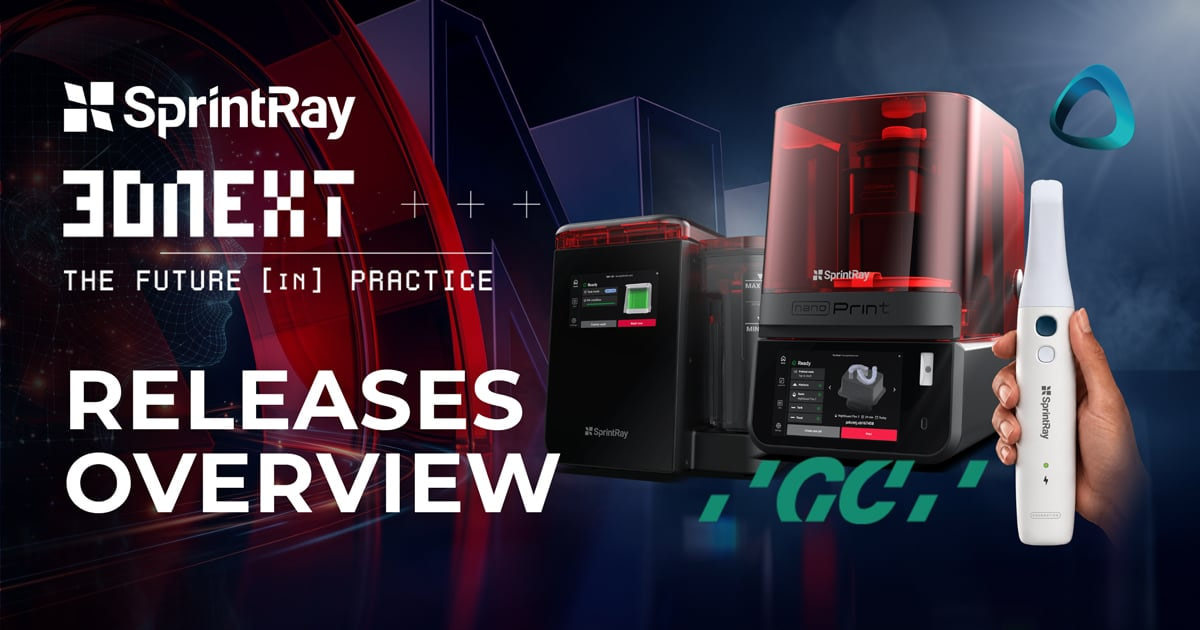

SprintRay's 3DNext 2026 event in Miami brought several major announcements, including the company's first branded intraoral scanner, two new additions to its Nano 3D printing range, and a collaboration with GC to introduce a definitive restorative composite for the Midas platform. Alongside the hardware launches, the company introduced new software capabilities and accessories aimed at simplifying chairside manufacturing.
I attended the event, saw and tried the products demonstrated, spoke with the SprintRay team, and learned more about the technology behind the announcements. Having followed the company's development for years and used its equipment in our clinical and laboratory workflows, I was particularly interested in how these releases address some of the practical challenges of chairside 3D printing.
The Foundation scanner and its accompanying ScanOS software mark SprintRay's expansion into owning the full end-to-end workflow starting with digital impression taking, while the GC partnership advances its restorative printing technology. Meanwhile, the NanoPrint and NanoWash offer a more compact and affordable approach to printing and post-processing, particularly for practices focused on single-patient workflows.
In this overview, I'll cover the key announcements, their technical specifications and clinical applications, and where I think they fit within the wider digital dentistry market. I've already published a separate NanoPrint and NanoWash unboxing and detailed overview here, so I'll give those products a shorter overview here.

Disclosure: This article is independent and was not sponsored or paid for by SprintRay. All opinions are my own.
SprintRay 3DNext 2026 – What Was Announced?
The main announcements included:
- SprintRay Foundation: A new wireless intraoral scanner integrated with SprintRay's cloud ecosystem for designing and printing. Note: The scanner runs on local software, not in the cloud.
- GC GRADIA PREMi: A new 3D-printable definitive restorative composite developed by GC for SprintRay's Midas capsule printing system. Big news.
- SprintRay NanoPrint: A compact 3D printer for single-patient, chairside workflows. Read all details here.
- SprintRay NanoWash: A compact automated washing and drying unit with interchangeable solvent tanks. Read all details here.
- SprintRay NanoRack: A storage accessory for organizing resin trays for the Duo Kit or NanoPrint.
- SprintRay ShakeWash: Not exactly new at 3D Next - but worth mentioning. It is a sealed washing solution for Midas capsule-printed restorations.
- Software and workflow updates: Greater automation across scanning, AI-assisted design, printing and post-processing.
The event also had a strong clinical component, with presentations covering restorative materials, adhesive dentistry, implantology, and the expanding role of 3D printing in everyday clinical practice. Dr. John Kois and Pascal Magne gave strong lectures on how to think about 3D-printed restoratives.
However, the event's main theme was clear: SprintRay wants to make the journey from intraoral scan to finished restoration or appliance as seamless as possible.
SprintRay Foundation – A New Intraoral Scanner
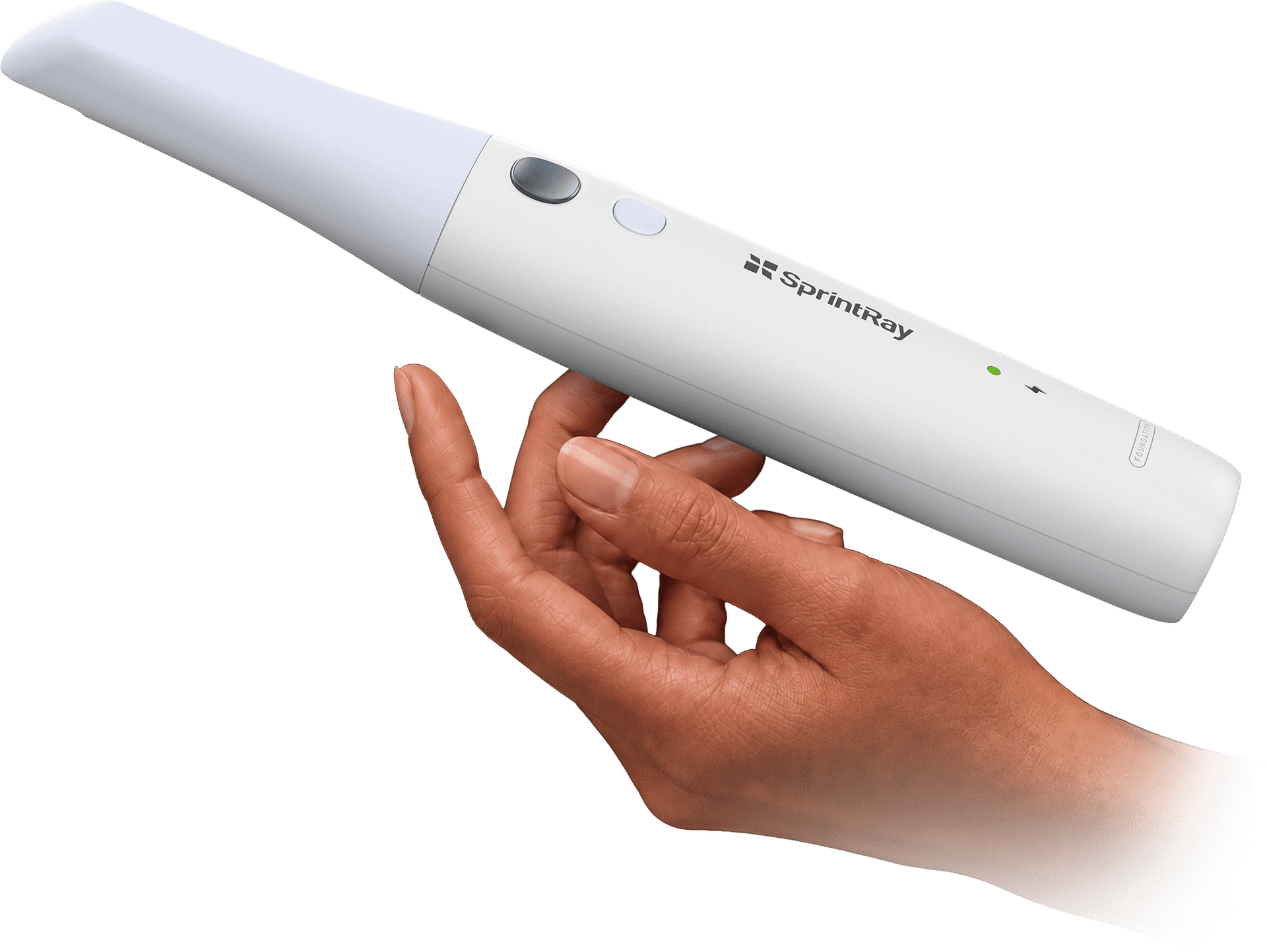
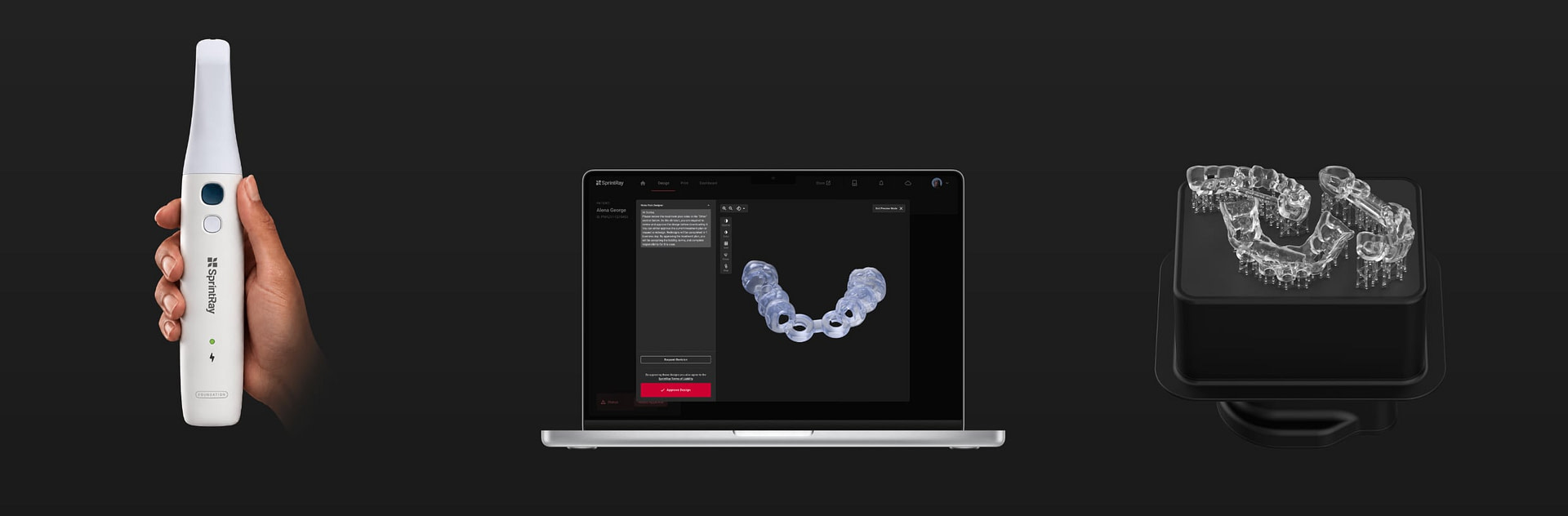
One of the more interesting announcements was the SprintRay Foundation, the company's first branded intraoral scanner. It's clear this is a partnership with Alliedstar, essentially a Sensa with a SprintRay logo, but with new local scanning software and a solid workflow within the SprintRay cloud ecosystem.
This is a logical expansion for a manufacturer already offering design software, 3D printers, post-processing equipment, and a growing range of dental materials. By adding intraoral scanning, SprintRay can now provide a more complete digital workflow without requiring clinicians to use a separate scanning platform.


Of course, the intraoral scanner market is already highly competitive and basically becoming commoditized. Manufacturers such as 3Shape, Medit, Shining 3D, and Align Technology have spent years refining their solutions. SprintRay's approach seems to focus on software integration and simplifying the transition from scanning to manufacturing; rather than building a brand-new scanner, they partnered with an established one that already performs very well.
If you are curious about the Alliedstar Sensa, which the SR Foundation Scanner basically is with new software, read my review here. I've used Alliedstar scanners since they launched their first product, and their hardware is solid.
Foundation Scanner Specifications
According to the specifications presented at the event, the Foundation features:
- Wireless scanning with more than three hours of continuous operation
- A weight of approximately 235 g, including the battery
- A 16 × 14 mm field of view
- Full-colour scanning
- Reusable scanning tips rated for up to 180 sterilization cycles
- Handpiece controls for interacting with the scanning software
- Wireless connectivity to a compatible Windows computer
The most important part? The cost. SprintRay was offering the Foundation scanner for $9,995 at the event but says the normal retail price will be $11,000.
ScanOS and the Integrated Workflow
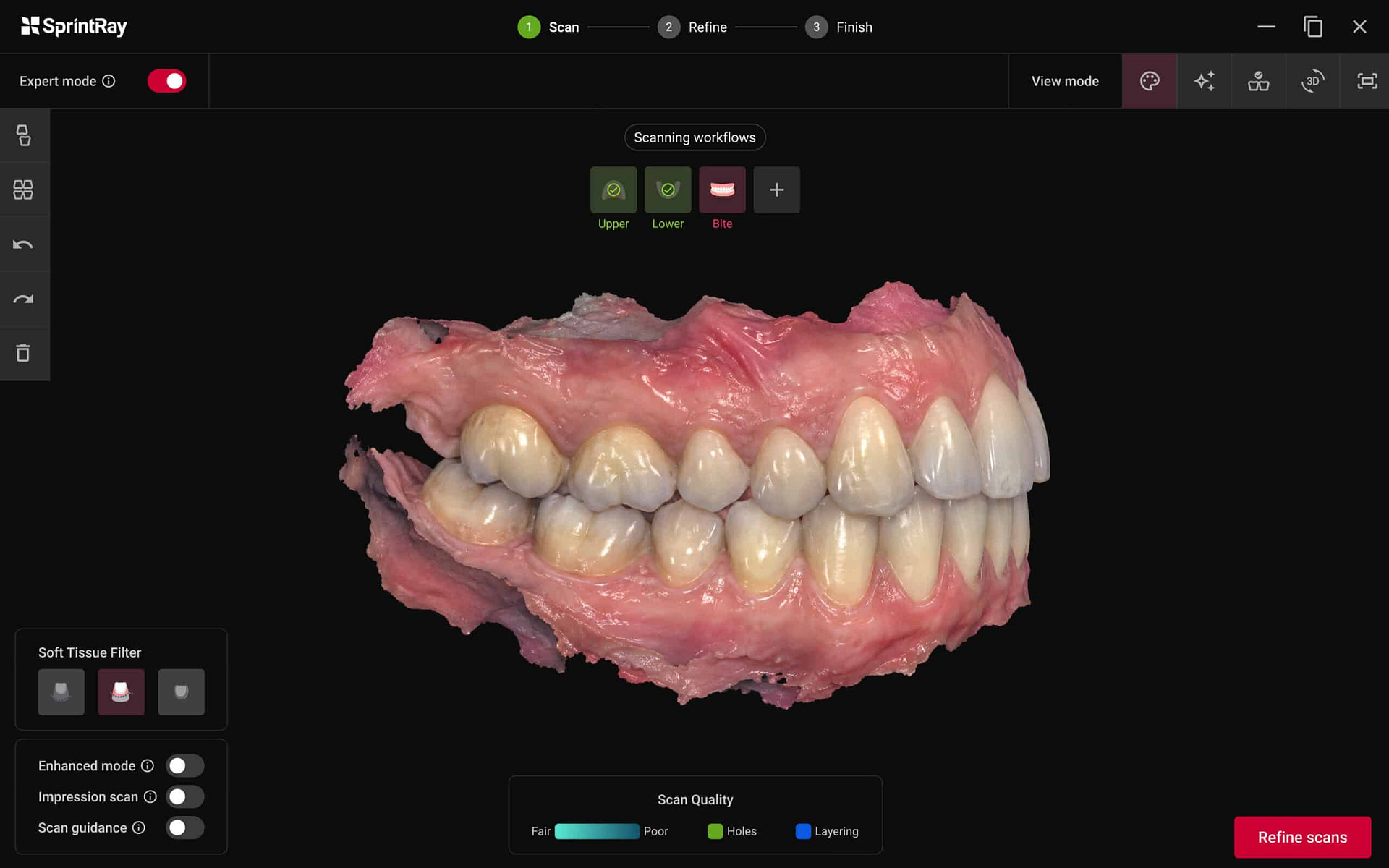
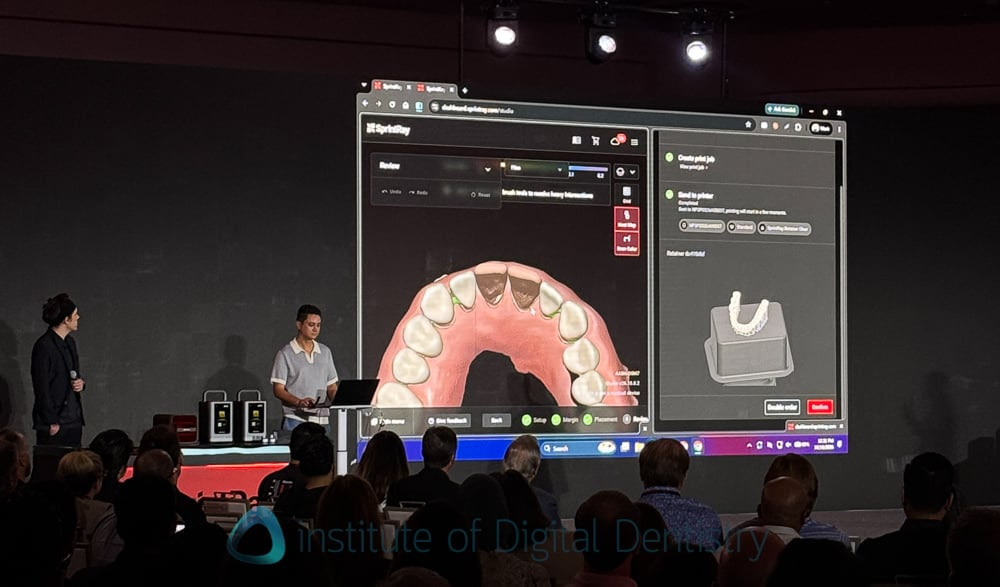
Perhaps more interesting than the scanner itself is SprintRay's new ScanOS software, which integrates intraoral scanning into the company's existing digital environment.
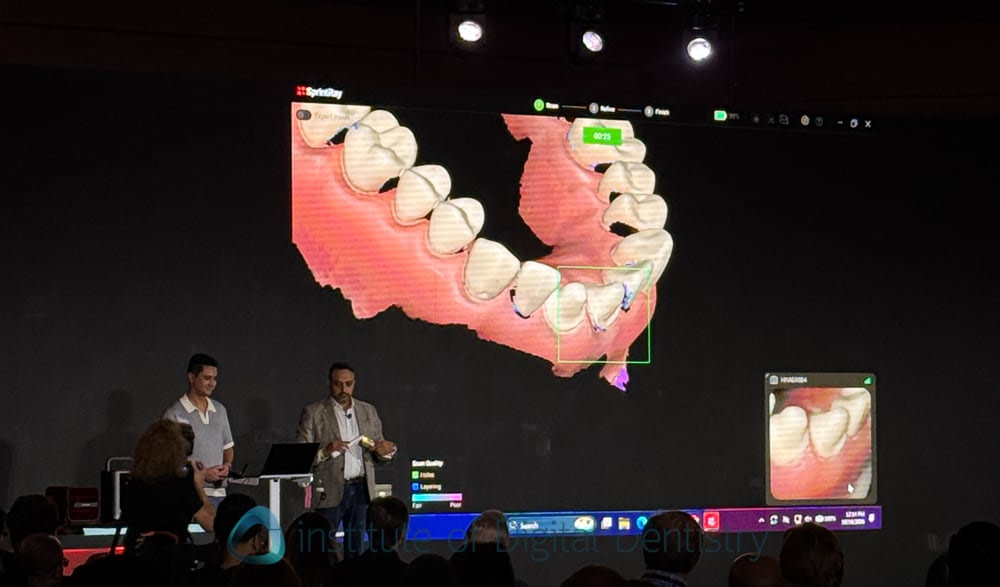
During the demonstrations, SprintRay showed how a clinician could open a patient case, select the intended treatment, and proceed through a guided scanning workflow. Once the scans were completed, the data was already available within the SprintRay ecosystem for design and manufacturing, without the usual process of exporting files and importing them into another application. Note: Again, the scanner software is local; it does not run in the cloud.
The software guides users through the records required for different treatments, with workflows for applications such as crowns, retainers, and other appliances.
SprintRay also demonstrated AI-assisted design capabilities, including automatic identification of teeth, margin detection, and generation of initial restoration designs. These tools aim to reduce the manual work involved in preparing a case, though clinicians still need to review and approve the results.
Several companies are already developing increasingly automated scan-to-design workflows, so this is not an entirely new concept. SprintRay's approach is interesting because it could integrate with its existing printers and post-processing equipment.
For a practice producing restorations or appliances in-house, reducing the number of software applications and file transfers can meaningfully improve efficiency.
My Thoughts on the Foundation
What I find particularly interesting about the Foundation is how Alliedstar is quietly becoming one of the most important OEM manufacturers in the intraoral scanner market. We have now seen its technology appear in products from companies such as Dandy and SprintRay, allowing these brands to enter the scanner market without developing the hardware entirely from scratch.
It is also looking like an increasingly valuable acquisition for Straumann. By acquiring Alliedstar, Straumann has not only strengthened its digital portfolio but also gained a scanner manufacturer whose technology other major players in digital dentistry are adopting. It will be interesting to see how this OEM business develops...
As for SprintRay, the decision makes complete sense. Shining 3D, arguably one of SprintRay's major competitors in chairside digital manufacturing, has already established an integrated scanner-to-printer workflow with its Aoralscan scanners and AccuFab printers. SprintRay can now offer something similar, combining the Foundation scanner with its design software, printers, and post-processing equipment.
I have said for some time that intraoral scanners are becoming increasingly commoditized. Many capable scanners are now on the market, and the differentiator is increasingly the software and workflow around the hardware.
At the event, the Foundation was offered for $9,995 USD, with a stated regular retail price of approximately $11,000 USD. At that price, the scanner is entering a competitive segment of the market, although its integration with SprintRay's existing products could make it particularly attractive to practices already using the company's printers or wanting to buy the entire workflow from one person/place.
The real test will be ScanOS, the reliability of the complete workflow, and how much flexibility clinicians retain to use third-party systems.
GC GRADIA PREMi – A Significant Development for Midas
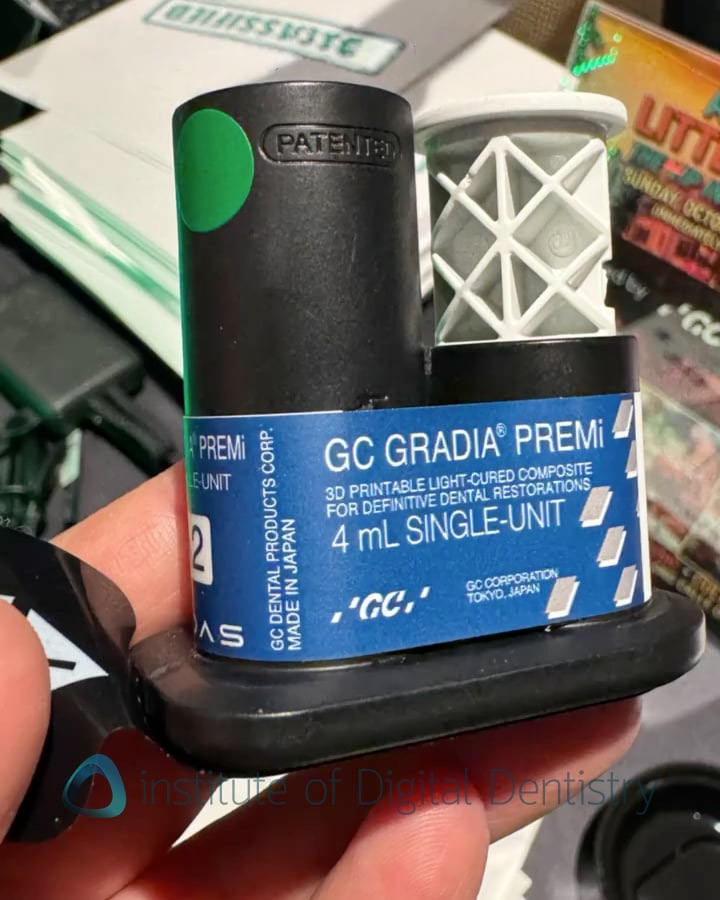
One announcement that particularly caught my attention was the introduction of GC GRADIA PREMi, a new 3D-printable light-cured composite developed by GC for SprintRay's Midas system.
GC is one of the major established manufacturers of dental restorative materials, with extensive experience in composites, adhesives, cements and CAD/CAM materials. Its involvement is significant because the development of definitive printed restorations depends as much on material science as it does on printing technology.
I have always been impressed by GC's restorative composites, and the company has a strong reputation for developing clinically useful materials. Seeing that expertise applied to Midas is an encouraging development for SprintRay's capsule-based printing system and 3D printing restorative resins in general.
There is also some relevant history here. SprintRay previously announced a collaboration with Ivoclar approximately two years ago, but that announcement has not resulted in a commercially available Ivoclar Midas capsule to date. The GC collaboration appears to be at a more agile stage, with a named product, dedicated technical documentation, published material properties and an anticipated ordering date in November 2026. Commercial availability will still need to be confirmed, but this is a more tangible announcement than a partnership without a defined product.
What Is GC GRADIA PREMi?
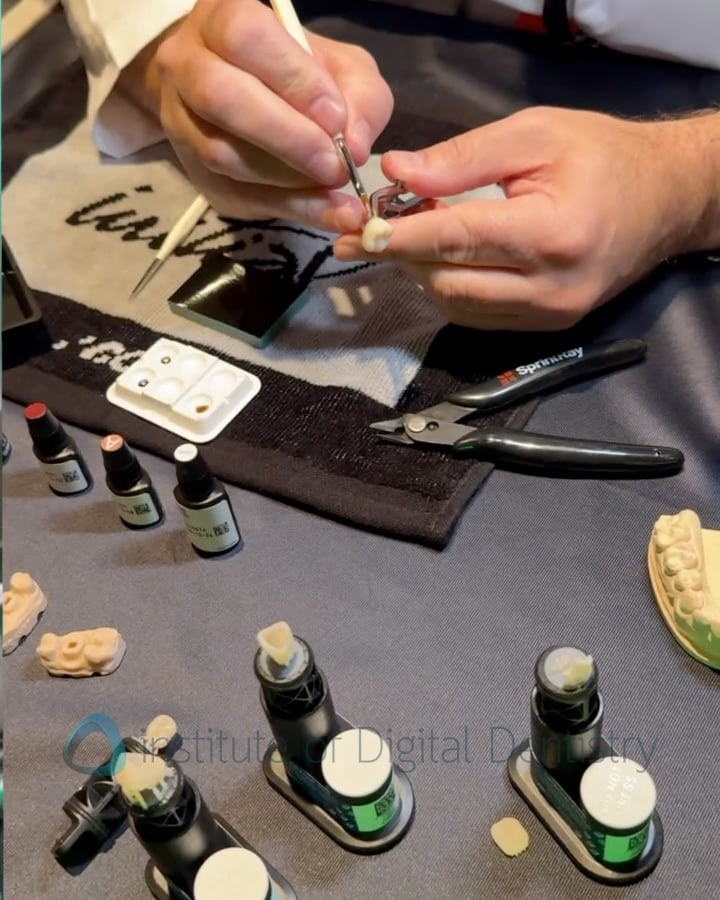
GRADIA PREMi is described by GC as a 3D-printable composite intended for definitive indirect restorations. Its stated indications include crowns, inlays, onlays and veneers, with the material supplied in prefilled capsules compatible with the Midas printing system.
The initial range consists of three shades, A1, A2 and A3, in a 4 mL single-unit capsule format.
Midas differs from conventional vat-based dental 3D printers by using individual material capsules rather than a shared resin tank. One of the advantages of this approach is its ability to process certain highly filled restorative materials that can be challenging to handle in traditional resin printing workflows.
However, the long-term success of the platform depends on the quality and clinical performance of the available materials. GC's entry into this area could therefore be important, particularly if GRADIA PREMi performs to the standard clinicians have come to expect from the company's conventional composites and milled blocks like CERASMART.
Material Composition and Technology
GC identifies two proprietary technologies used in GRADIA PREMi: High Density Micronization (HDM) and Full Silane Coating (FSC).
HDM aims to create a dense, homogeneous distribution of ultra-fine fillers throughout the material, reducing clustering and producing a more uniform internal structure. FSC focuses on improving the bond between the inorganic filler particles and the surrounding resin matrix through comprehensive silane treatment.
Both concepts affect composite performance. Filler distribution, filler-matrix bonding, and resin composition can influence mechanical properties, wear resistance, surface quality, and material durability.
GC also describes an engineered resin matrix designed to optimize stress distribution and long-term performance.
The company's published material properties include:
- Compressive strength: 370 MPa
- Three-point flexural strength: 170 MPa mean, 189 MPa maximum
- Biaxial flexural strength: 222 MPa mean, 235 MPa maximum
- Radiopacity: Approximately 300% aluminium equivalent
- Wear against opposing dentition: Approximately 11 µm under GC's reported test conditions
Let's play devil's advocate for a second: these figures are promising for a printable restorative composite, but they should be interpreted as manufacturer-reported laboratory results rather than evidence of long-term clinical performance. Comparing mechanical properties across manufacturers also has limitations. Test methodology, specimen preparation, and loading protocols can affect results, so isolated strength values do not necessarily indicate which material will perform better clinically.
That aside, I am quite impressed by this, quite frankly. I am particularly interested in how GRADIA PREMi compares with established milled resin composite blocks, including GC's own CERASMART, as well as other definitive printable materials. GC reps at the booth said it will perform similarly to CERASMART, and that is a huge boost for printed restorations.
A Complete Restorative Workflow
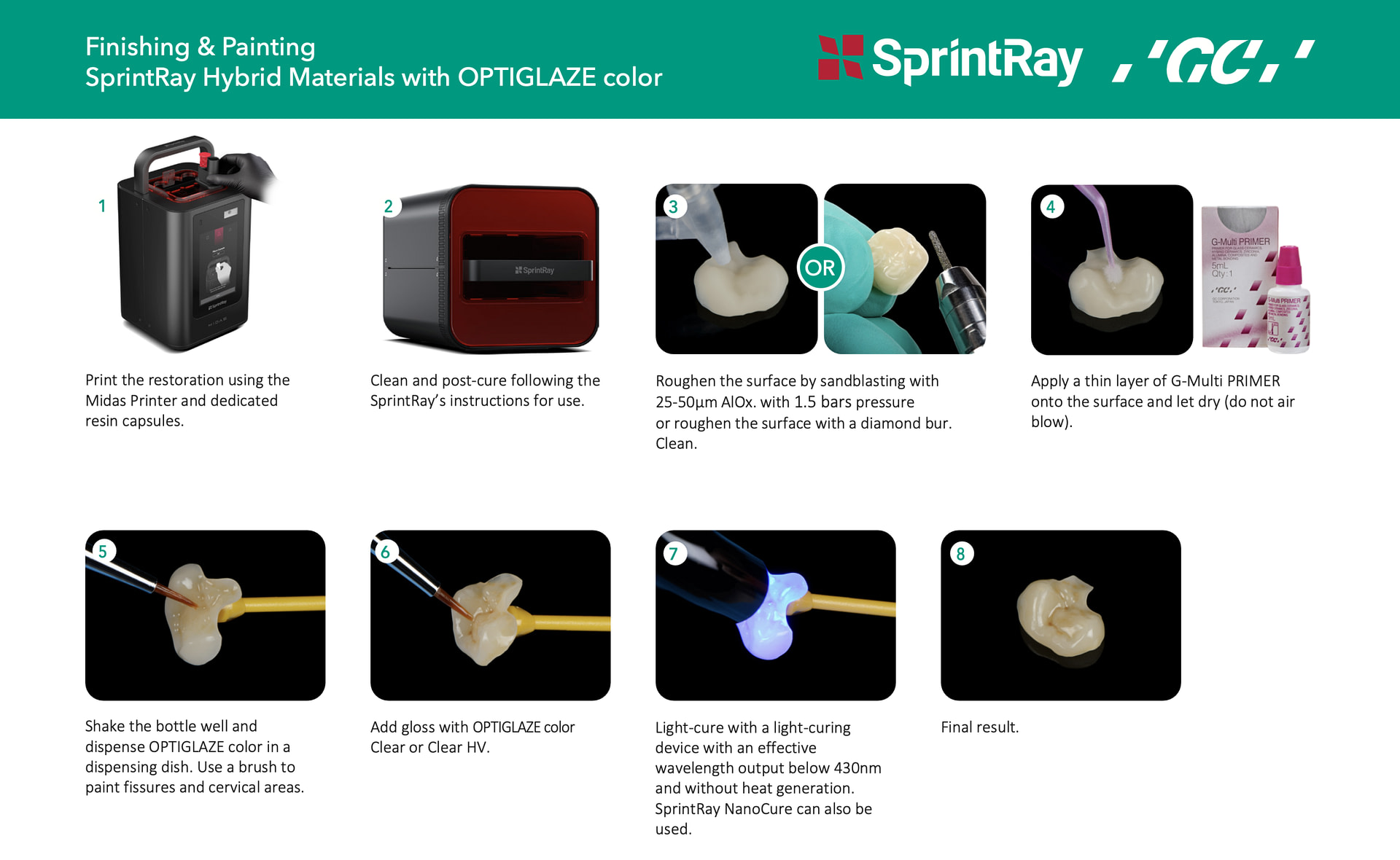
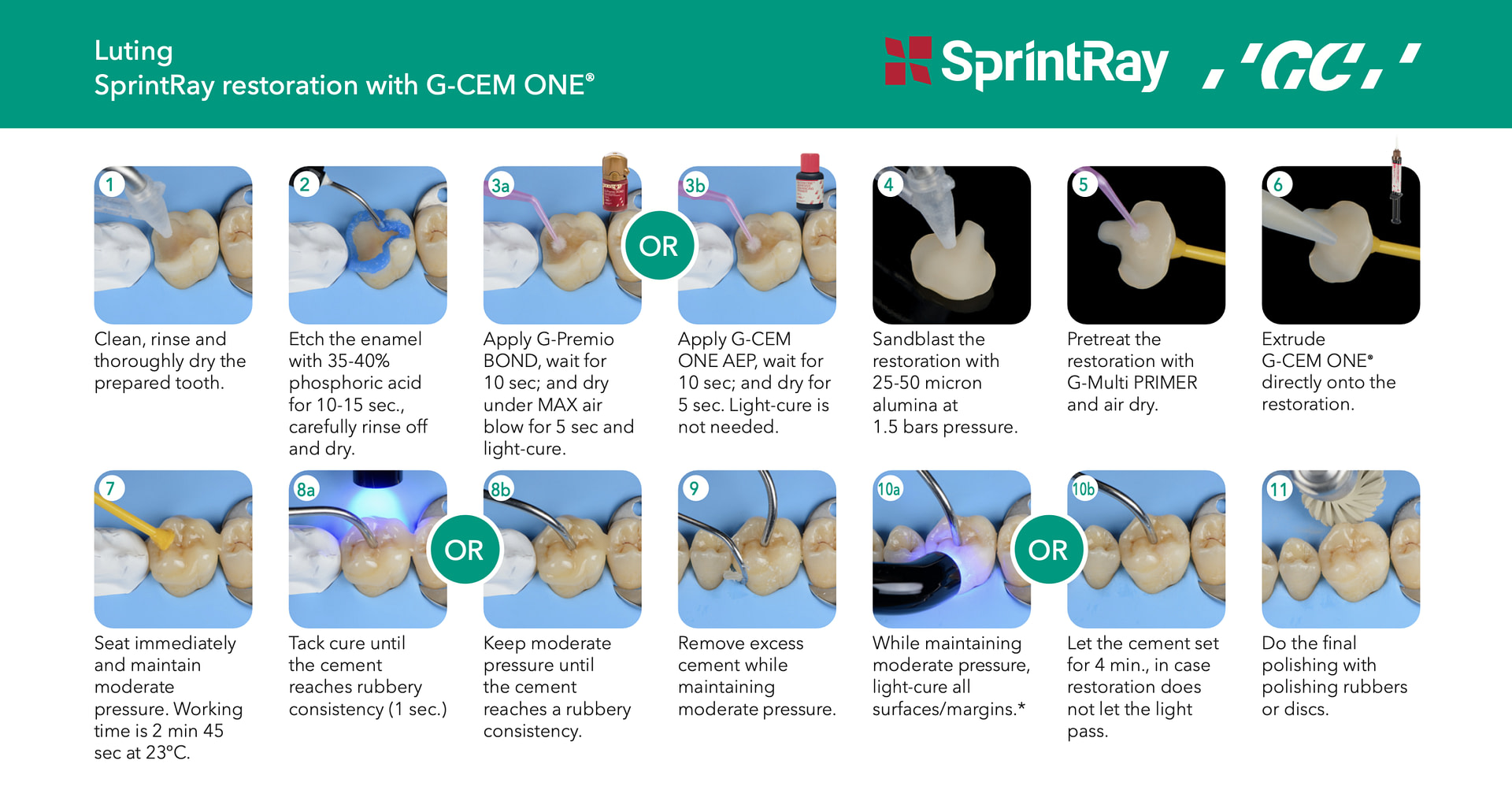
Another positive aspect of GC's approach is that the company is positioning PREMi within its broader restorative portfolio rather than treating it as an isolated printing material. Its literature references G-BOND Universal, G-CEM ONE, and OPTIGLAZE color as part of the adhesive, cementation, and finishing workflow.
This matters because the success of an indirect restoration depends on much more than flexural strength. Preparation design, surface treatment, bonding, cementation and finishing all influence clinical outcomes, and validated protocols are particularly important when introducing a new restorative material.
GC's experience in these areas is one of the reasons I find the collaboration very interesting.
Availability and My Assessment
GC's product literature indicates that ordering is expected to begin in November 2026. Final pricing and regional availability have not yet been confirmed. I was told that a 3-pack of capsules will cost around $179, or around $60 per capsule.
That may be the issue, and something these companies need to figure out to enable mass adoption of 3D-printed capsule printers. I feel, and many leading clinicians and KOLs have echoed this: the price per capsule is too high. Especially if you're just printing single units per capsule.
Either way, GRADIA PREMi is one of 3DNext's most noteworthy announcements. The involvement of a major restorative materials manufacturer adds credibility to the Midas platform, and the technical documentation suggests that GC has invested considerable development work into the product.
If GRADIA PREMi delivers the performance expected from GC's restorative composites, it could become an important material for Midas users and a meaningful development for definitive restorative 3D printing.
The SprintRay NanoPrint and NanoWash in brief
NanoPrint Overview
SprintRay also officially launched the NanoPrint, a compact dental 3D printer designed primarily for smaller, single-patient workflows.
I received the NanoPrint ahead of the event and have already covered its design, setup, and initial impressions in a separate unboxing article, so I will not repeat that review here.
The NanoPrint is meant to complement the larger Pro 2, not replace it. While the Pro 2 suits higher-volume production, the NanoPrint focuses on smaller jobs where a large build platform may be unnecessary.
It operates at a 385 nm wavelength and incorporates a heated printing platform. SprintRay has also developed a dedicated Arch Kit approach for smaller jobs of reduce material consumption and simplify the printing process.
A smaller printer can make sense for practices with limited space or those producing only a few appliances each day. However, the Pro 2 remains better suited to larger jobs and higher production volumes, so practices should choose based on intended applications rather than printer size of the printer alone.
The NanoPrint is listed at $8,995 USD.


NanoWash Overview
The NanoWash was the second major addition to the Nano range. It is a compact automated washing and drying unit designed to simplify post-processing for SprintRay's conventional resin printing workflows.
Although washing equipment receives less attention than printers, post-processing remains critical to producing consistent dental appliances. Inadequate cleaning can leave residual uncured resin, while inappropriate washing or drying protocols may affect the final properties of the printed material.
SprintRay has redesigned the washing chamber and fluid circulation system of improve cleaning efficiency and reduce processing time. The company demonstrated wash-and-dry cycles of about six minutes for supported workflows, though required processing time depends on the material and its validated instructions.
One of the more practical features is the use of interchangeable solvent tanks. This allows users to dedicate different tanks to particular materials or applications, rather than repeatedly emptying and refilling a single reservoir. SprintRay has also modified the enclosure to improve solvent containment, though adequate ventilation and solvent handling remain necessary.
The NanoWash is compatible with supported workflows on other SprintRay printers, including the Pro 2, which makes it relevant to existing users as well as those purchasing a NanoPrint.
It is listed at $1,999 USD.
Initial US fulfillment is scheduled from 2 November 2026.

At 3DNext I also saw the Nano Rack, a stand for organizing resin bottles. I have no specifications or price for it.
For the detail, including what stood out when I opened both units, read the unboxing and first look or watch the unboxing video on YouTube.
SprintRay ShakeWash – Midas Post-Processing
Another smaller announcement was SprintRay ShakeWash, which came before 3D Next, a dedicated washing solution for restorations printed with the Midas capsule system.
Unlike NanoWash, which is designed for conventional resin printing, ShakeWash meets the specific cleaning requirements of highly filled Midas restorations.
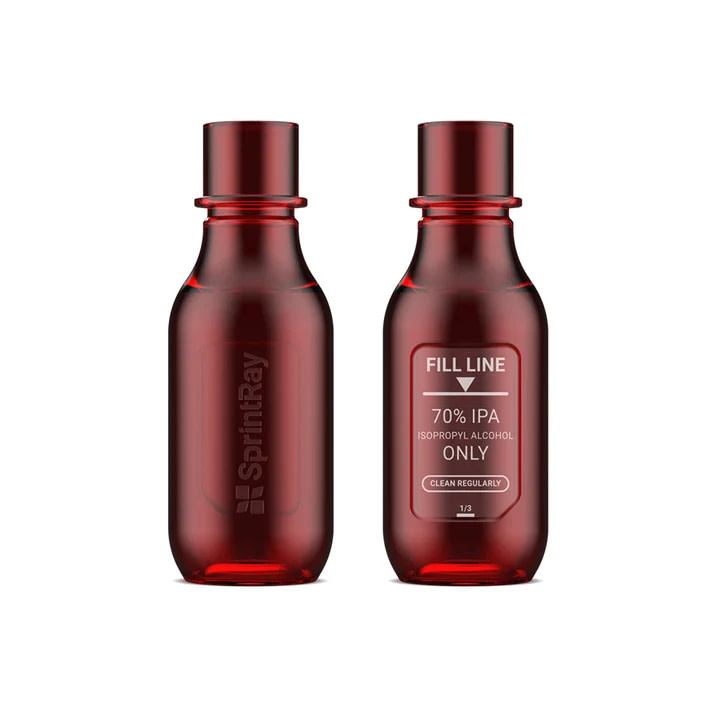
Basically, it's a small bottle where you add IPA, place the restoration inside, and shake a few times. The idea is to wash the highly filled resin restoration without submerging it in IPA, and as an alternative to spraying with IPA and wiping, which is highly variable and not a standardized technique.
These types of bottle or container washers are becoming more common for restorative resins, but I don't think this is the final solution. Post-processing of 3D-printed crowns, etc., needs a better, easier-to-delegate solution.
SprintRay lists the single-unit ShakeWash at $39 USD for a pack of six.
SprintRay Midas Single Unit Capsule ShakeWash

SprintRay Midas Multi Unit Capsule ShakeWash
NanoRack – Resin Storage and Organization
SprintRay also introduced the NanoRack, a dedicated storage solution for organizing resin trays used with the Duo Kit and NanoPrint.
One of the practical challenges in dental 3D printing is managing multiple resin trays, especially when switching between materials and clinical applications. The NanoRack provides a convenient way to store these trays when they are not in use, keeping them organized, accessible, and off the workbench.
Although a relatively minor announcement compared with the new hardware, it is a useful addition for practices regularly switching between printing materials. Dedicated storage for individual trays can help keep the printing area tidier, reduce unnecessary handling, and make day-to-day workflows more efficient.

Price and availability
Here is a summary of the pricing and availability announced at SprintRay 3DNext 2026, as of 12 October.
- SprintRay NanoPrint: $8,995 USD.
- SprintRay NanoWash: $1,999 USD.
- NanoPrint, NanoWash and NanoCure bundle: Approximately $10,000 USD as a limited-time launch promotion. Orders opened on 10 October 2026, with initial US fulfillment expected from 2 November 2026.
- SprintRay Foundation scanner: $9,995 USD promotional price offered at 3DNext, with a stated regular retail price of approximately $11,000 USD. Wider availability and regional pricing are still to be confirmed.
- GC GRADIA PREMi: Ordering is expected to begin in November 2026, initially in A1, A2, and A3 shades. Final pricing and regional availability have not yet been announced, but it appears to be $179 for a pack of 3.
- Midas ShakeWash: $39 USD for a six-pack of single-unit washing containers. Listed as sold out when checked on 12 October 2026.
- SprintRay NanoRack: Storage accessory for Duo Kit and NanoPrint resin trays. Price unconfirmed.
All prices are in US dollars. Regional pricing, promotional offers, and availability may vary.
SprintRay's Broader Strategy – From Scan to Finished Restoration
Taken together, the announcements show SprintRay is expanding its involvement across the digital workflow.
With the Foundation scanner and ScanOS, the company can now capture intraoral data directly within its own software environment. From there, clinicians can use SprintRay's design tools or services to prepare a restoration or appliance, manufacture it using a compatible printer, and complete post-processing with the company's washing and curing equipment.
For Midas restorative applications, the addition of GC materials and associated restorative protocols further extends that workflow into finishing, bonding, and cementation.
The practical appeal is straightforward: fewer software transitions, less manual file handling, and a more consistent process from scanning to delivery. This is particularly relevant for practices that want to introduce chairside manufacturing but lack extensive experience managing multiple digital systems. However, greater integration also raises interoperability questions.
One of the strengths of digital dentistry has been the ability to combine technologies from different manufacturers. A practice may prefer one company's scanner, another's CAD software, and a different manufacturer's printer, depending on its clinical requirements.
An integrated ecosystem can simplify the experience, but clinicians should still consider whether they can export their data, use third-party design software, and change equipment without disrupting their entire workflow.
I think the most successful approach will offer the convenience of integration without unnecessarily restricting flexibility.
That balance will be particularly important for SprintRay as it develops the Foundation scanner and ScanOS.
Clinical Discussions – Where Are Printed Restorative Materials Heading?
Alongside the product announcements, 3DNext featured clinical presentations from speakers including Dr John Kois and Dr Pascal Magne, who discussed restorative principles, material selection and the factors that influence long-term treatment success.
These discussions provided useful context for the growing interest in definitive printed composites.
Kois emphasised the importance of understanding the different modes of restorative failure and assessing patient- and tooth-related risks when selecting treatment. Magne's presentation explored restorative material behavior and the principles of conservative, adhesive dentistry.
The relevance to 3D printing is that material development should ultimately support better clinical outcomes, rather than simply faster manufacturing.
Printed composites are becoming more sophisticated, and the possibility of efficiently producing conservative indirect restorations is particularly interesting. However, the evidence needs to extend beyond initial mechanical strength to include fatigue performance, wear, bonding reliability, aging, and clinical longevity.
Final Thoughts
SprintRay's 3DNext 2026 event introduced a substantial range of products, but I think the announcements vary in significance depending on the type of practice and the workflows being considered.
NanoPrint and NanoWash are practical additions for clinicians seeking a compact chairside printing setup, while existing Pro 2 users may find the redesigned washing system particularly useful. The Foundation scanner is a more ambitious release, taking SprintRay into an established and highly competitive market where scanning performance, software quality and interoperability will determine its success.
The GC collaboration is arguably the most interesting development from a restorative materials perspective. Adding a manufacturer with GC's composites experience to the Midas platform is encouraging, especially as printable definitive restorative materials continue to improve. GRADIA PREMi has promising published properties and a defined commercial release plan, although independent testing and clinical evidence will ultimately determine where it fits among existing restorative options.
More broadly, SprintRay is continuing to invest in reducing the complexity of chairside digital manufacturing. The company now offers products that cover most stages of the workflow, and their integration could appeal to practices looking to adopt more in-house production.
There is still plenty to evaluate. I want to spend more time with the Foundation scanner, assess the new ScanOS workflows in real clinical cases, and test GRADIA PREMi when the material becomes available. I will also continue evaluating the NanoPrint and NanoWash in our own workflows to determine where they offer meaningful advantages over existing equipment.
Overall, 3DNext 2026 was an interesting event and demonstrated how quickly chairside digital manufacturing is evolving. The technology is becoming more accessible, the range of clinical applications is expanding, and established restorative materials manufacturers are increasingly involved in its development.
As always, the most important question is not simply what the technology can do in a demonstration, but how reliably and efficiently it performs in everyday clinical practice.
We will continue testing these products and sharing our findings here at the Institute of Digital Dentistry.