Last month, Las Vegas witnessed something special.
DS World 2025 marked not only the 40th anniversary of CEREC but also introduced us to Dentsply Sirona's new leadership and their most ambitious product lineup yet. I sat down with Dan Scavilla, the company's new CEO (just six weeks into the role), and Max Milz to discuss where digital dentistry is heading.
What struck me most wasn't just the product announcements, though those were significant, but the strategic shift happening for one of dentistry's biggest players.
Meet the new CEO - Daniel Scavilla:
From Spine Robotics to Digital Dentistry
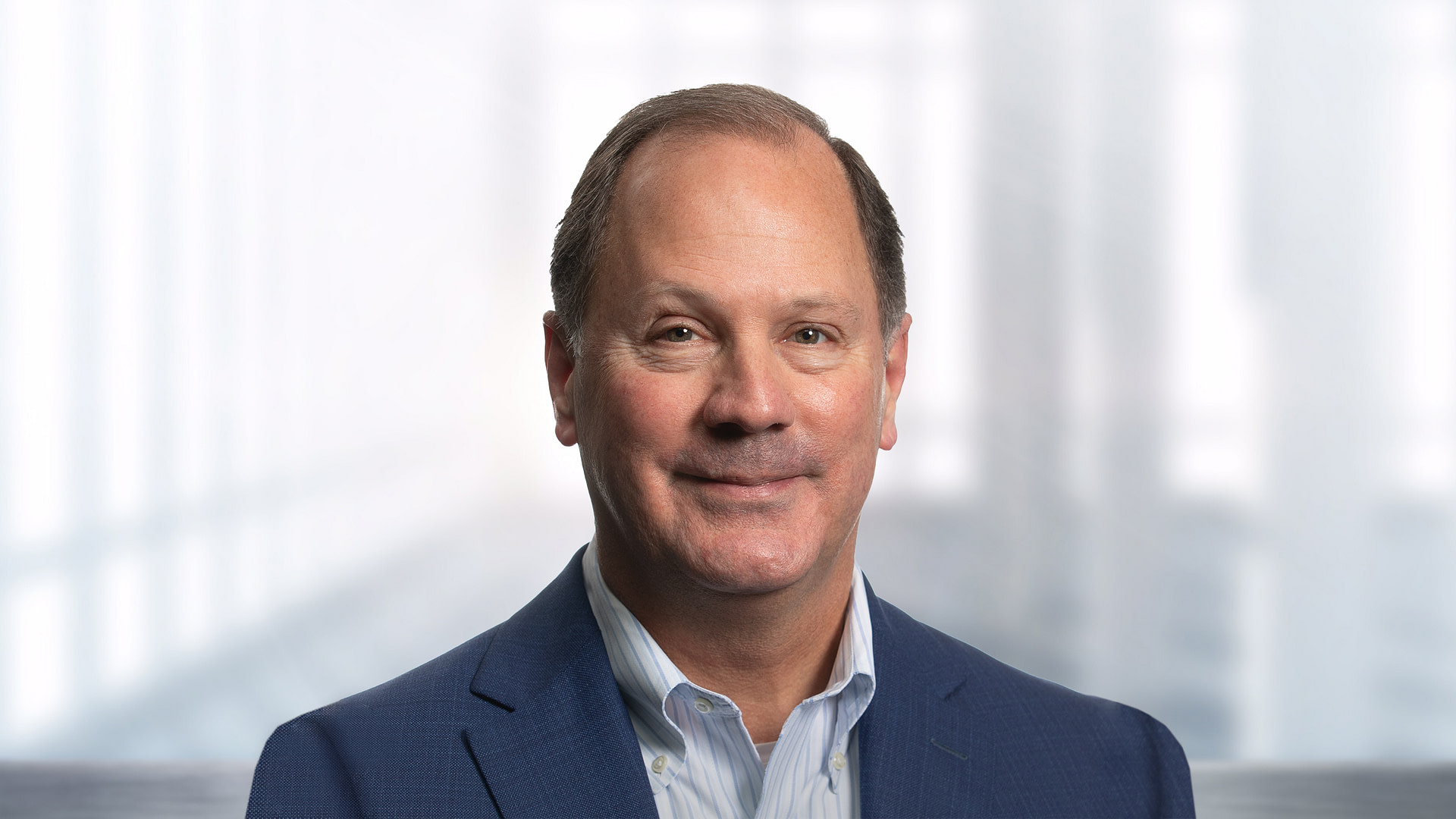
Dan has only been in the CEO seat for about six weeks at the time of DS World, but his background is very interesting, with extensive experience in the medical field. After 28 years with Johnson & Johnson, working across medical devices, pharmaceuticals, and consumer healthcare, he became CFO and later CEO of Globus Medical, a spine company where he led the charge into robotics and AI-driven proceduralization.
"I had a chance to work through many different companies for them," Dan explained. "About 10 years ago, I left, and I became a public CFO for Globus Medical. That was a small spine company, and what we did is actually not only growing spine, but launching robotics, creating proceduralization, beginning with planning, artificial intelligence, and machine learning."
What's remarkable is how Dan ended up at Dentsply Sirona. He joined the board about six months ago, started working with the team, and realized he wanted to be part of the transformation. "I met great guys like Max and a lot of team members. And I honestly wanted to become part of the team," he shared.
His experience with spine robotics, which has achieved approximately 15% market penetration, provides him with a unique perspective on the evolution of med tech. And the parallels to digital dentistry are striking.
And his fresh perspective on dentistry? Dan sees it as far more complex than spine surgery. "It is such an all-encompassing position, unlike a spine surgeon who's gonna come into an OR, and there's a hospital that has established everything and the staff from the hospital. You are building all of that," he observed. "So not only are you treating a patient, you're deciding on the treatment path, building the infrastructure and the staff and the training."
When Max demonstrated the new DS Core design capabilities, Dan actually created a CAD design himself. His reaction? "I was amazed. I really was amazed."
The Robotics Parallel: What Dentistry Can Learn from Spine Surgery
Here's something that really resonated with me. Dan shared how established spine surgeons initially resisted robotic assistance, insisting they didn't need it. Sound familiar?
"When we came up with robots that helped you place surgical screws, the first thing they say is, I don't need that. I know how to do it," Dan recalled. "Those well-established surgeons became our biggest advocates for using our robotic technology and our planning and our data and our ecosystem because the seamless flow of data from pre-planning to post-planning follow up all knitted together."
The result? Better outcomes, reduced cognitive burden, and more creative treatment options. The machine handled the standardized, repeatable tasks, freeing surgeons to focus on decision-making.
I see the same trajectory in digital dentistry. We're still in a phase where many practitioners believe they don't need digital workflows because their analog methods are sufficient. But give it time, and better integration, and those skeptics often become the biggest advocates.
CEREC Turns 40: A Family Legacy Continues
It's worth pausing to appreciate what CEREC represents.
When it launched 40 years ago, the same year Back to the Future was released, the concept of same-day crowns seemed like science fiction. Max pointed out that even eight years ago, people looked at you like you were crazy when discussing intraoral scanners.
Now? Digital scanning is increasingly seen as the standard of care. That's a remarkable transformation in a relatively short time.
Here's another great story - Max mentioned that Wolf, Dentsply Sirona's head of product management for DS Core, recently discovered his uncle was the lead engineer on the camera for the very first CEREC system. Wolf didn't even know this until recently, when they started discussing the 40th anniversary.
"He started talking with his uncle about what he actually does, and then he started talking about comparisons," Max shared. "His uncle was like, you know, DS Core and CEREC have parallels because when CEREC one came out, it couldn't do very much."
The parallel is striking. CEREC started with limited capabilities and took years to gain traction. It required people with guts to believe in the vision. DS Core is following a similar trajectory, starting basic, building foundations, and now rapidly adding capabilities.
"Change always starts with something small and basic, and then it gets built out and you have to play the long game," Max reflected.
CEREC currently has a global adoption rate of about 15%, with higher penetration in advanced markets such as Australia and New Zealand. But Max and Dan see this as just the beginning.
The DS Core Evolution: Why the Foundation Matters
I'll be honest, I've been on the receiving end of complaints about DS Core for two years. People want features, not foundations.
However, here's the thing about building a house: the foundation is often the least interesting part, yet it's absolutely critical.
DS Core supports over 50,000 practices and labs globally, with more than 60,000 connected devices. And finally, we're seeing the platform deliver somewhat on its promise.
"We built a foundation with DS Core," Max explained. "We put in imaging capabilities, we put in internal scanning capabilities, we connected stuff with it. Then we brought out Primescan, the first cloud-based scanner, and now we're actually going to the level where it gets really interesting - bringing design capabilities into it."
The Big Announcements: CEREC Design Comes to the Cloud
This was the big announcement at DS World. You can now design crowns, inlays, and onlays directly in DS Core from anywhere in the world. Not a port of the desktop software, but a reimagined, cloud-native experience.
I've been testing this for about a month, and the workflow feels more streamlined than the traditional CEREC approach. You finish scanning, and you're essentially straight into design, with no extra steps and no need to be tied to a design station.
"It also gives you additional options to delegate," Max pointed out. This matters more than you might think. In a multi-doctor practice, you can now distribute design work more efficiently. One dentist told Max that for the first time in 30 years, she could do her CEREC designs from home.
The design capabilities include:
- Improved AI algorithms for crown proposals
- Automatic margin finder
- Enhanced BioGeneric technology
- Workflow assistance throughout
- Completely redesigned user interface
As Max explained, "We did a lot of research in terms of how the UI works today so that people who are used to something which they like can follow that journey, but also how we can make it better."
Breaking Down Walls: TRIOS Now Works with CEREC
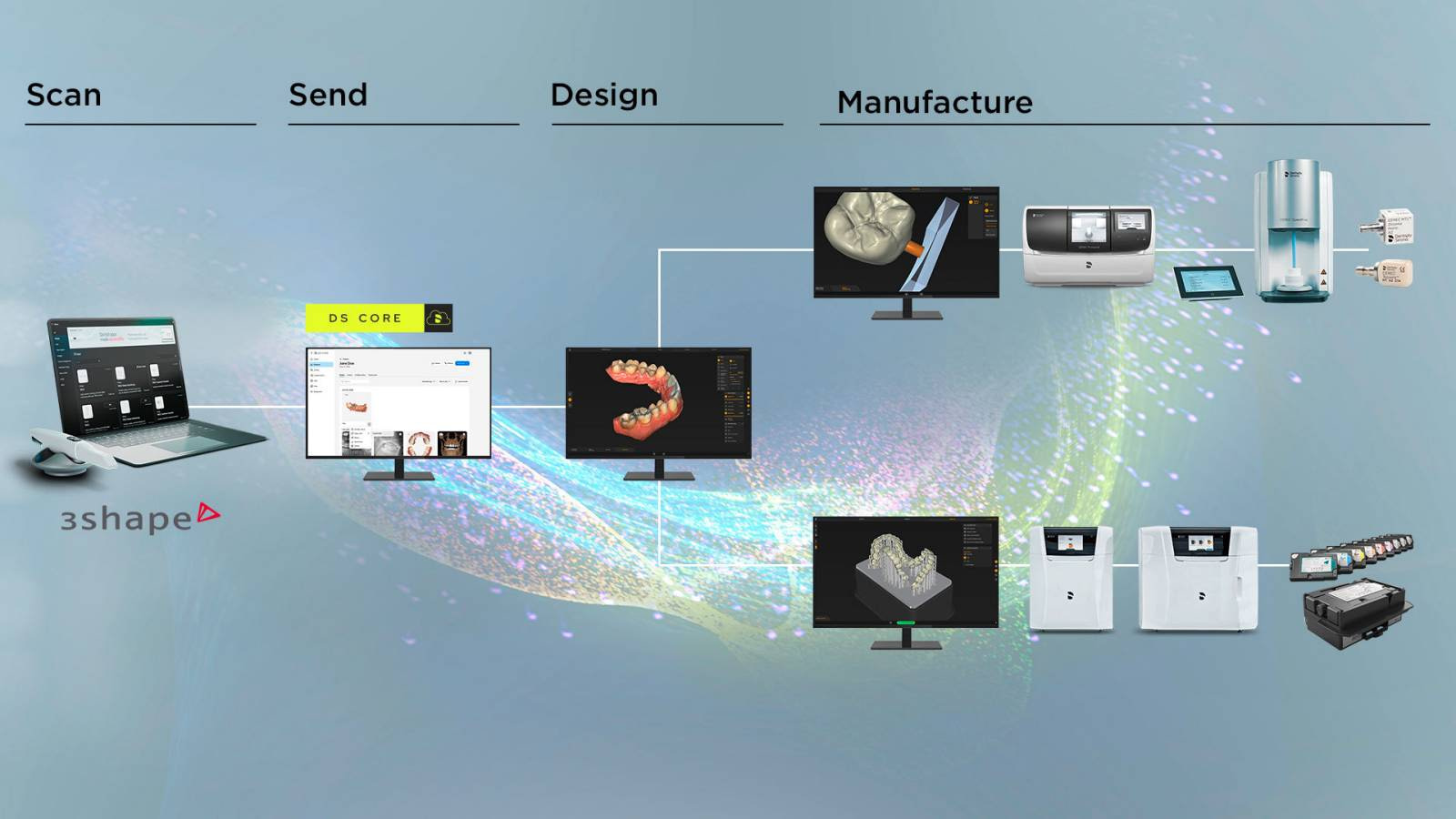
For the first time in history, you can use a TRIOS scanner with CEREC software.
CEREC has been notoriously closed for decades. This opening represents a major strategic shift. You can now also freely export STL files, work with TRIOS scanners, and integrate more flexibly with your existing digital ecosystem.
Max emphasized this point: "You can also use a TRIOS scanner with it, which is mind-blowing."
This matters because it removes one of the biggest barriers to CEREC adoption, scanner lock-in. If you've already invested in TRIOS, you're no longer excluded from the CEREC ecosystem. It will just cost you a DS Core subscription.
The Three-Tiered Milling Strategy: Expanding Access to Chairside
Dentsply Sirona announced three distinct milling options, each targeting different practice needs:
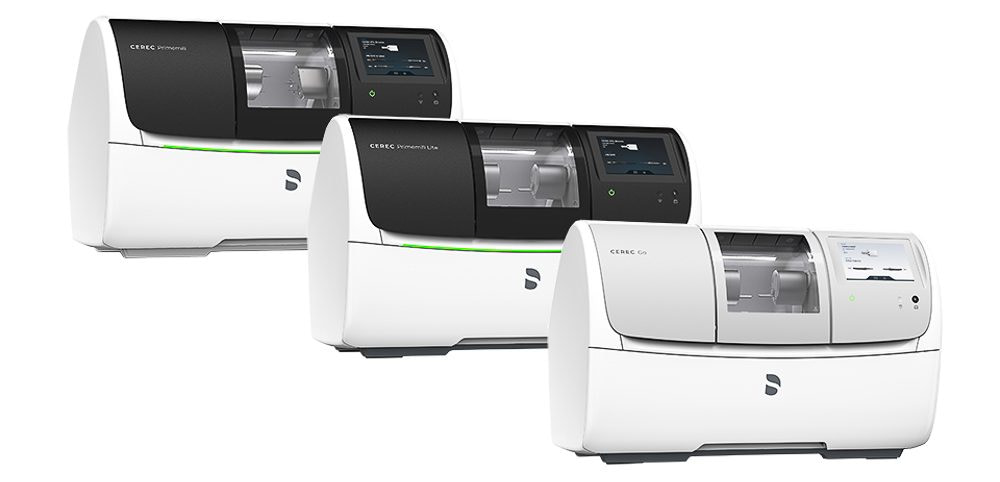
PrimeMill (4-Motor)
The flagship solution for practices doing high-volume, diverse material milling. This is your everything machine, handling e.max, zirconia, composite blocks, PMMA, and everything in between.
PrimeMill (2-Motor)
A more accessible option for practices focused on glass ceramics and less demanding materials. Still powerful, but at a more approachable price point. Those who just want a more affordable Primemill with 2 spindles.
CEREC Go
This is the potential game-changer for entry-level adoption. At $25,000 to $30,000, it's the most affordable Dentsply Sirona mill ever released. Here's the catch: it only mills composites. But that's exactly the point.
And here's a bonus that shouldn't be overlooked: you don't need to do any post-processing. No additional curing equipment, no extra investment beyond the mill itself.
I feel that this option opens the discussion for the milling vs. printing debate. Oh, so you want to print composites in your practice? Why not mill them out of blocks that have a much longer track record and higher MPA?
The Composite Milling Strategy: Taking the Battle to 3D Printing
Max and I have had endless discussions about milling versus printing. The CEREC Go represents Dentsply Sirona's strategic response to the wave of 3D printing sweeping through dentistry.
"CEREC was invented to do chairside inlays and onlays to replace class two restorations, and then it transformed into this great crown machine," Max explained. "But actually, inlays and onlays and class two, that's all composite."
The material matters too. CEREC Go utilizes research-backed composites, such as GC CERASMART, which boasts a flexural strength of 270 MPa - roughly double that of most printable resins.
For class two restorations, inlays, and onlays, this could be an interesting option to consider. Scan, design and mill in 90 seconds, place. Done.
The Milling vs Printing Debate
Dan's perspective from manufacturing was grounded in the truth - "There will be room for both in the future. They'll never be one that replaces the other."
In his previous job at spine manufacturing facilities, they utilized both technologies for various applications. Milling excelled at repeatable, high-strength components from proven materials. Printing enabled customization and complex geometries.
The same logic applies in dentistry. Modern practices will likely have both technologies, choosing the right tool for each application. Max drew a perfect analogy: "Radio didn't go away because TV came." Both found their place, serving different needs.
He also shared a fascinating perspective from his time at Siemens in 2017, where he worked on the overall 3D printing strategy across the entire company, not just Healthineers, encompassing metal sintering, powder bed fusion, tissue printing, and more.
"It's a really important technology to be invested in and to explore how it's going to evolve," Max explained. "And to know what you're using it for. It has inherited advantages for complex shapes, for something that you maybe don't wanna stock. Spare parts, for example, in other industries, are a key use case for 3D printing."
But Max posed a challenging question that we need to honestly address:
"If composite crowns were such a big hit, why does no dentist order composite crowns from a lab?"
It's a fair point. We all tick zirconia or e.max on lab forms, not composite. That tells you something about material preferences for definitive restorations.
AI Integration: From Hype to Practical Application
The AI discussion was refreshingly pragmatic. No hype, just practical implementation.
DS Core now integrates with 2D AI solutions, such as Videa and Pearl, for radiograph analysis. For 3D diagnostics, there's a new feature called DS Core Diagnosis that enables you to perform measurements, annotations, and more directly on 3D images within the platform - with an automatic pen curve proposal powered by AI.
The 3D diagnostics include SmartView, which automatically identifies bone, teeth, and nerve canals in CBCT scans. But here's what matters: the AI doesn't make diagnoses. It assists.
"The software should not make the diagnosis," Max emphasized. "What it does is, look here, look here, look there. There's a certain chance that there is inflammation or something similar. But dear doctor, it's your final judgment."
Max compared it to radiology in medical CT imaging: "What are some of the most boring things that radiologists do? How big is this lesion? How many lesions are there? Counting things, measuring them. That's not why you study radiology. You want to be a radiologist to actually do the diagnosis and not to do routine stuff."
For me, as a clinician, the key requirement is seamless integration. I'm not exporting X-rays and uploading them to a browser. The AI needs to run automatically in the background, highlighting areas of interest without adding extra steps to my workflow.
That's exactly what cloud-native design could do. As Max noted, "AI without cloud doesn't work." He pointed out that ChatGPT had just led Nvidia to invest around $100 billion in data centers. "You can only get to a seamless workflow if everything eventually runs in one system. And that cannot be achieved with silos."
Dan reinforced this: "For AI to be more effective and efficient, it has to look at thousands of images in order to tell you to look here or there. For you, having that on a local server or PC is pretty unlikely. Whereas in the cloud, you can build on this and really get a massive database that can even make this more powerful."
The focus, Max says, should be on areas where AI can make the biggest improvement. "Crown design? The crown proposals are great already," he said. "But implant planning, night guards, ortho - if it gets more complex, there's still more room to automate, to improve, to suggest."
The Customer-First Mandate
Perhaps the most significant theme was Dan's assessment of Dentsply Sirona's recent challenges.
"I think we were too internally focused, might have lost sight of our customer and patient," Dan admitted frankly. "That's gonna be a big change that we're making fairly soon. We have to look outward to the patient in the chair, through your eyes, through your hands."
This kind of honest self-assessment from a new CEO is nice to see. It signals a genuine strategic shift, not just marketing rhetoric. The focus on expanding access through affordability, opening previously closed systems, and building a true ecosystem rather than isolated products - these all point to a more customer-centric approach.
Why Single-Visit Dentistry Matters More Than You Think
We spent considerable time discussing barriers to CEREC adoption. The technology works brilliantly, yet penetration remains around 15-20% globally.
In a 2016 Dentsply Sirona survey of more than 3,700 patients in six countries, two in three said they would switch practice for single-visit treatment. Let that sink in. We believe we have goodwill with our patients, but the reality is that they would likely leave us for faster and more convenient treatment. The only thing better than free is fast.
From a clinical perspective, single-visit dentistry means:
- One injection (patients' most-hated part)
- No temporaries
- No second impression
- Immediate completion while still numb
- Reduced chair time per procedure
For practice management, it's even more compelling:
- Potential to save over 50% on lab fees
- Faster treatment turnaround
- Better patient acquisition (cutting-edge reputation)
- More attractive to quality staff
- Higher practice valuation at sale
"If you are advertising, even though it's word of mouth and you are on the cutting edge and it's a single visit, people will gravitate towards you," Dan observed, drawing on his experience with robotic spine surgery that attracted patients from hundreds of miles away.
The Consolidation Question
With over 30 intraoral scanners on the market, I asked about industry consolidation. Dan's experience is telling; he actually led the acquisition of Globus Medical's number one competitor, creating the world's largest spine company.
"Do I think that will happen in Dentistry? Of course, you're gonna have natural consolidation over time," Dan confirmed.
The conversation touched on private equity's entry into the dental industry. They've already made moves, buying Medit, for example, though that hasn't gone as smoothly as expected.
The R&D investment required to compete at the platform level, not just individual devices, creates natural barriers. Mid-tier companies can build decent scanners, but building comprehensive ecosystems is a different matter. That's exponentially more difficult.
As I pointed out, "The level of R&D and innovation you guys spend, I don't think the kind of middle-tier, low-tier guys can compete long term with what you are building."
Private equity has different motivations than companies like Dentsply Sirona. Dan made this clear: "Us standing alone and our willingness to invest is a different model than PE, and we just wanna make sure that we stay invested in the best solution, not profit-driven. When we do the right thing through you, those types of financial things follow. They're not the driver, they're the result."
Private equity has already entered the dental sector, and we can expect to see more movement in the coming years. It has been a bit of a rough year for digital dentistry; however, looking at the stock market of different dental companies.
Subscription Models: The New Reality
Here's something dentists will likely need to accept - subscription-based pricing is here to stay.
Max broke down the economics: "A lot of people pay $20,000 for CEREC software. That's a big investment to make. If you're subscribed to something that gives you those functionalities, but you avoid that big investment at the beginning, that's a better business case for many practices to actually adopt this."
He also provided context on the broader practice economics that often get overlooked: "If you look at a dental practice P&L, the biggest cost is labor, followed by what people spend on lab fees, followed by consumables, followed by rent and all the other stuff. And then there's a tiny little bit of equipment because you buy equipment and it lives 5, 7, 10 years."
The point being: if technology helps you increase revenue, grow your practice with additional procedures, or lower your costs in other key areas (such as labor and lab fees), then the equipment investment, especially when spread through subscriptions, becomes far more justifiable.
Dan framed it as a relationship shift: "The ability to spread that out over time as you're doing the procedures and getting it there is a great option for folks, especially if you're starting up a business. We're not looking for the one-off sale. We're looking for a long-term relationship."
The Road Ahead: One Year and Beyond
I asked about their vision for DS Core over the next year. Dan's response was measured: "Within the year, it's actually us not promising things, but delivering things and creating more predictable functionality that's gonna add value to you and your patients."
That's refreshing honesty. No pie-in-the-sky promises, just steady execution.
Max outlined the roadmap, which included veneers, bridges, more complex restorations, implant planning, orthodontic integration through SureSmile, and next-generation imaging with AI enhancement. However, it's about quarterly improvements, not a single massive release.
The long-term vision? Dan sees a future where you're sitting in New Zealand and can help design and produce a restoration for a patient in Colombia, with everything flowing through a global cloud platform.
We're not there yet. But the foundation is being built.
Dan added a longer-term perspective: "Within three years, getting this to be such a natural part, you can't imagine not having it, just like your smartphone. You can't live without it. That's where we wanna be with these types of things."
What This Means for Your Practice
Look, I get it. Dentists are getting numb to digital transformation messaging.
We're constantly bombarded with companies telling us to digitize, upgrade, and invest in the latest technology. However, here's the reality: digital dentistry isn't the future - it's the present. The question isn't whether to adopt digital workflows, but which systems to invest in and when.
DS World 2025 showcased a company making strategic bets on:
- Cloud-native platforms over desktop software
- Ecosystem integration over isolated devices
- Multiple price points to expand access
- AI as an assistant, not a replacement
- Opening closed systems to increase flexibility
- Long-term relationships over one-off sales
Whether these bets pay off remains to be seen. But the strategic direction is clear, and frankly, it aligns with where I think the industry needs to go.
For established CEREC users, the cloud design capabilities and TRIOS compatibility offer new flexibility in structuring your digital workflows. The ability to delegate design work or work from anywhere changes the game for multi-doctor practices.
Final Thoughts
Sitting in that room with Dan and Max, what struck me most was the alignment between leadership vision and product execution. That doesn't always happen in this industry.
Dan brings an outsider's perspective with insider credibility; he's lived through similar transformations in spine surgery and understands the adoption curves, the resistance, and ultimately the tipping points.
Max has been grinding through the DS Core foundation phase, taking criticism while building the platform that's now starting to deliver real value. Together, they're positioning Dentsply Sirona for what could be their most significant strategic shift in decades.
As Max noted, drawing a parallel to CEREC's early days: "Change always starts with something small and basic, and then it gets built out and you have to play the long game."
Forty years ago, CEREC seemed like science fiction. Twenty years from now, I suspect we'll look back at cloud-based, AI-assisted, integrated digital dentistry platforms the same way we now view those first CEREC systems, as the obvious foundation of modern practice.
The question is: will you be an early adopter, or will you wait until it becomes the standard of care?
Want to hear the full conversation?
Listen to the complete podcast episode, where we dive even deeper into these topics, including Dan's fascinating insights on robotics in spine surgery and Max's technical deep dive into DS Core architecture.
Interested in learning more about implementing digital workflows in your practice? Explore iDD's comprehensive course catalog, featuring our 3D Printing and Design Bundle and digital implantology courses.