
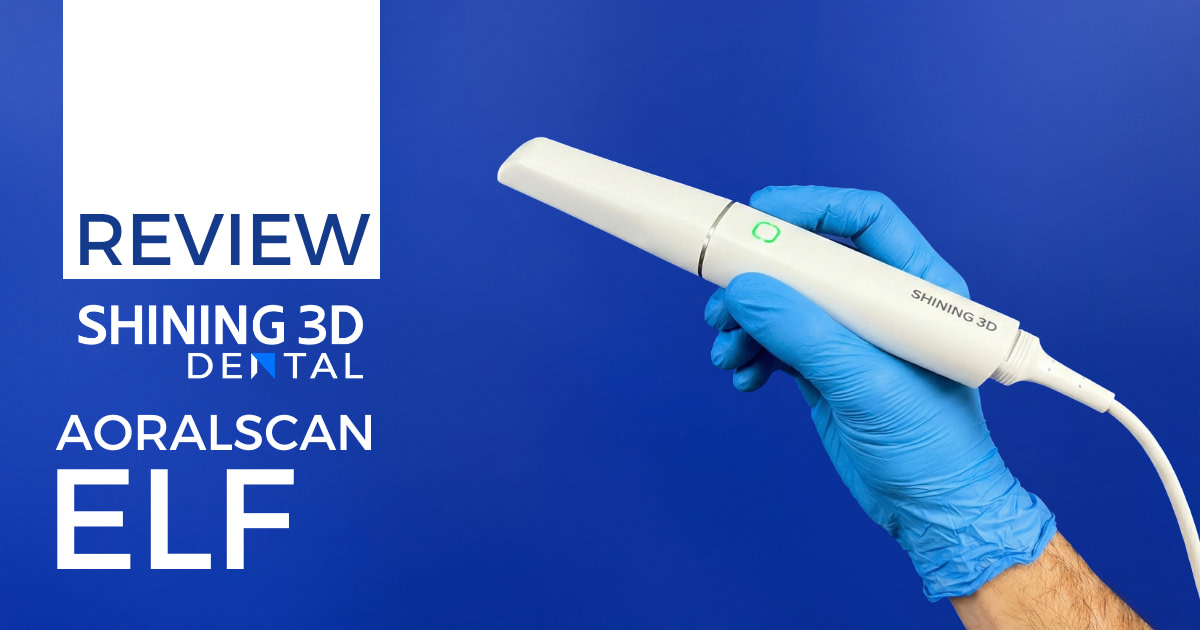

Every once in a while, a product doesn’t just enter the market - it raises the bar for everyone else.
The Aoralscan ELF from Shining 3D Dental is one of those releases. It reminds me of when Medit launched the i600 four years ago, a product that didn’t just compete, but redefined expectations around performance, accessibility, and value.
After introducing the disruptive Aoralscan Elite with its IPG photogrammetry system in late 2024, and following up with the Elite Wireless in 2025, Shining 3D has now released the Aoralscan ELF – essentially the Elite without IPG capabilities, built with plastic construction instead of metal, and priced at $11,999 USD. That's $8,000 less than the wired Elite and $12,000 less than the Elite Wireless. Wow.
Let that sink in for a moment. Shining 3D has taken its premium scanning technology, removed only a feature set that applies to a small subset of dentists regularly restoring full-arch implant cases, and cut the price nearly in half.
The result? Arguably, the most compelling value proposition in the intraoral scanner market today is one that will put huge pressure on all the other manufacturers.
This isn't a compromised budget scanner with limited features and slower performance. This is the same excellent Aoralscan Elite scanning technology and comprehensive software suite, strategically repositioned for the vast majority of dental practices that don't need IPG photogrammetry.
After testing the ELF alongside the Elite and Elite Wireless, I can confirm: this scanner delivers Elite performance at entry-level pricing. The implications for the competitive IOS landscape are significant. Every scanner in the sub-$15,000 segment will now be compared against this benchmark. How the industry responds to this pricing pressure will shape the market throughout 2026.
As always, this review is completely independent. Shining 3D has had no involvement in this evaluation, and our commitment to providing unbiased information remains unchanged.
Let's dive into what makes the ELF significant.
Download the Full PDF Review
View as a flipbook online or download a copy to read it later.
Review At a Glance
The Aoralscan ELF represents one of the most significant value propositions in the intraoral scanner market today. By taking the proven Elite technology and removing only the IPG photogrammetry system, Shining 3D has created an exceptional scanner at $11,999 USD – nearly half the cost of the Elite Wireless and $8,000 less than the wired Elite. This isn't a compromised budget scanner; it's a strategic repositioning of excellent technology for the vast majority of dentists who don't regularly restore full-arch implant cases.
Pros:
Cons:
The Strategic Positioning
Let's address the elephant in the room immediately: the Aoralscan Elf is essentially a Shining 3D Elite without IPG capabilities, built with plastic instead of metal, priced at $11,999 USD.
That's it. That's the review.
Except it's not quite that simple, because this pricing strategy has profound implications for the entire intraoral scanner market.
For years, we've seen scanner manufacturers create artificial product differentiation by limiting software features (like the Shining 3D Aoralscan Lync), reducing software FPS, or compromising workflows on "entry-level" models to justify premium pricing for flagship products.
Thankfully, it's not the case here. The ELF has the same scanning performance as the more expensive Aoralscan options.
So why is it called ELF? It's an acronym for "Ergonomic, Lightweight, and Functional," and I think Shining 3D pulled it off.
What's Different from the Elite?
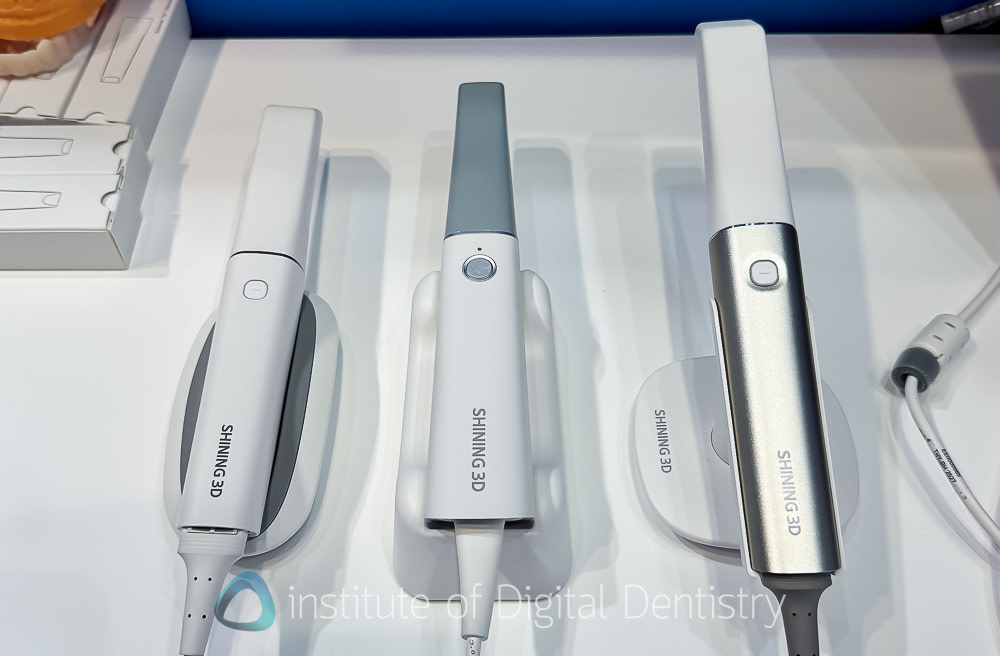
Hardware Changes Aoralscan ELF compared to Elite
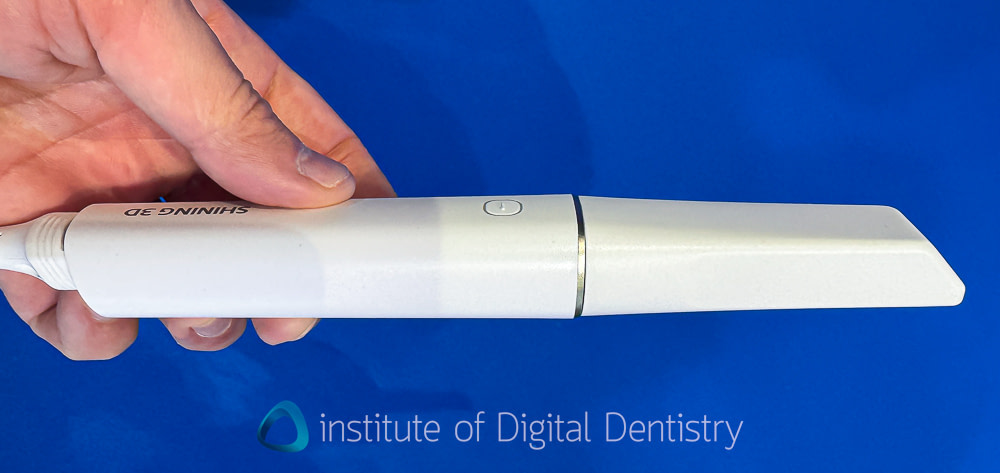
- Weight: 106g (ELF) vs 124g (Elite) – ELF is now the lightest modern scanner available
- Construction: Plastic body (ELF) vs metal (Elite)
- IPG System: Removed (no coded scan body kit, no photogrammetry workflows)
- Scanner Cradle: Basic and cheaper-looking design vs Elite's premium cradle
- Price: $11,999 vs $20,000 (Elite) / $23,999 (Elite Wireless)
What Stayed the Same
Everything else. Seriously.
- Same scanning technology and camera system
- Same three tip sizes (Mini, Standard, Large 19mm × 14mm)
- Same single USB-C connection
- Same comprehensive software suite with all apps
- Same fast scanning speeds (full arch under 30 seconds)
- Same calibration requirements (every 2 weeks)
- Same computer requirements
- NEW: IntelliBite AI occlusal technology - covered in our Elite Wireless Review
- NEW: Intelligent Plaque Management Suite- covered in our Elite Wireless Review
Clinical Performance
After testing this new scanner alongside the Elite and Elite Wireless, I can confidently say the ELF delivers identical scanning performance.
I recommend reading our comprehensive Shining 3D Aoralscan Elite Wireless review for detailed info; it largely applies here, as it's the same scanner.
Full-arch scans can be completed in under 45 seconds easily. The AI artifact remains excellent. Bite registration is fast and accurate. Deep margins, interproximal areas, and metal surfaces are captured reliably. For the vast majority of clinical indications – single crowns, bridges, implant restorations, orthodontic cases, removable prosthetics – this scanner performs exceptionally well.
The only "limitation" is that full-arch implant restorative cases will require the Elite or Elite Wireless with IPG capabilities. That said, you can use this scanner with Scan Ladder or IO Connect.
Download the Full PDF Review
View as a flipbook online or download a copy to read it later.
Weight and Ergonomics – A Standout Feature
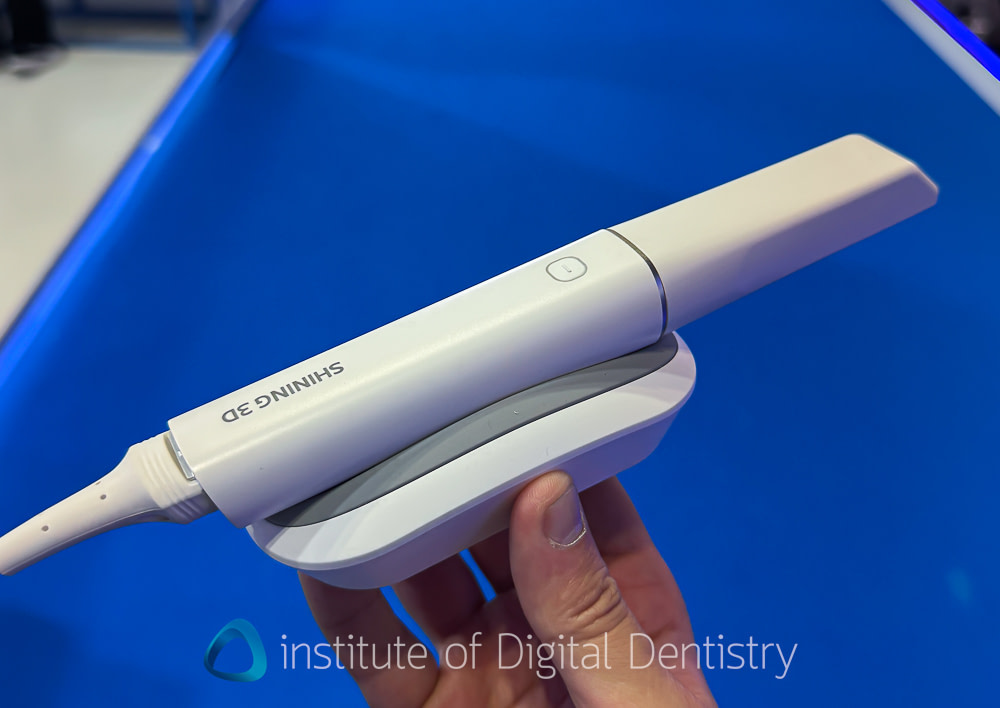
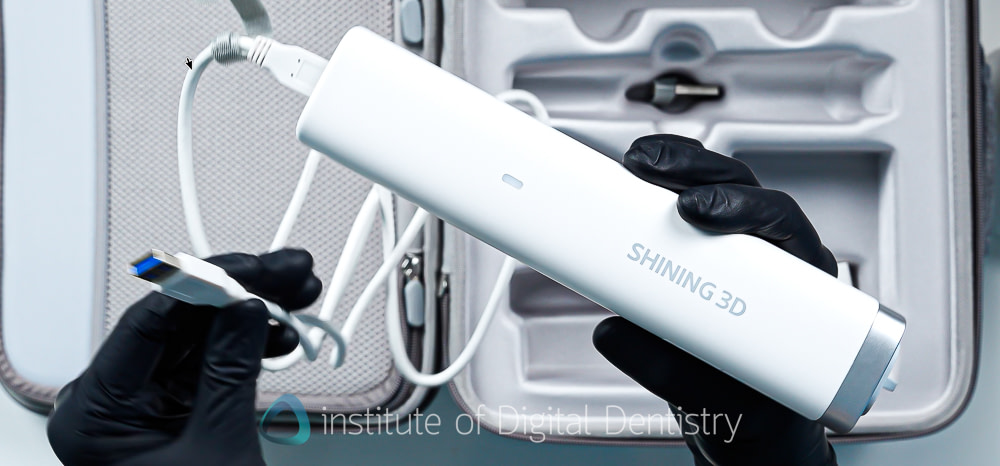
At 106 grams, the Aoralscan ELF achieves something remarkable: it's the lightest modern intraoral scanner available. This isn't marketing – it's genuinely noticeable. It feels super lightweight and small in the hand.
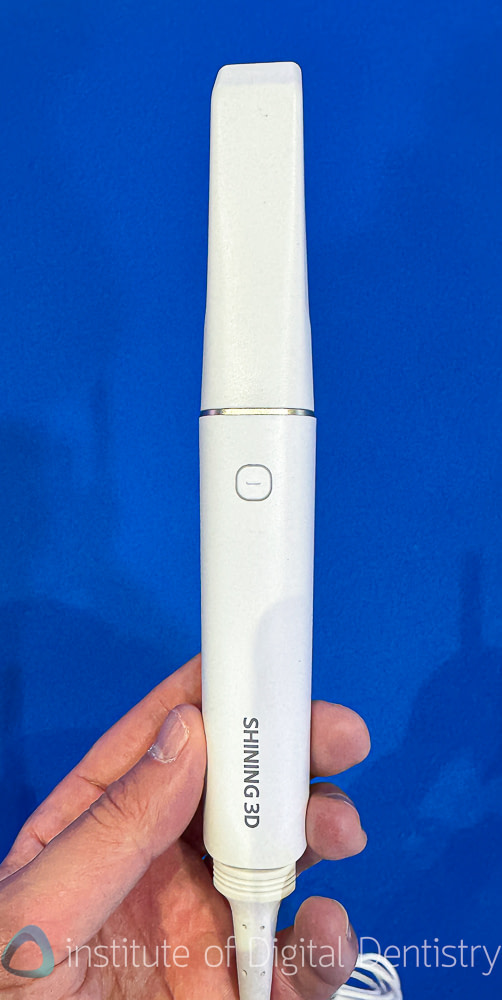
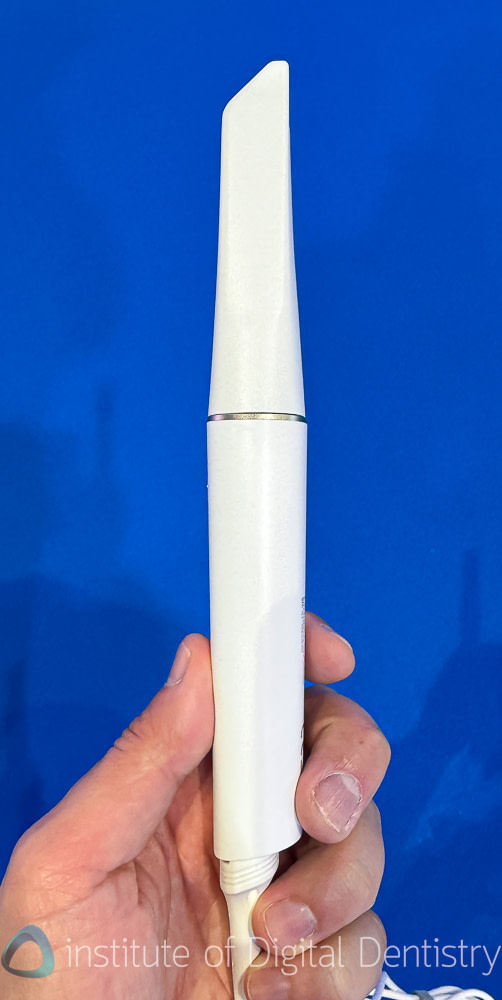
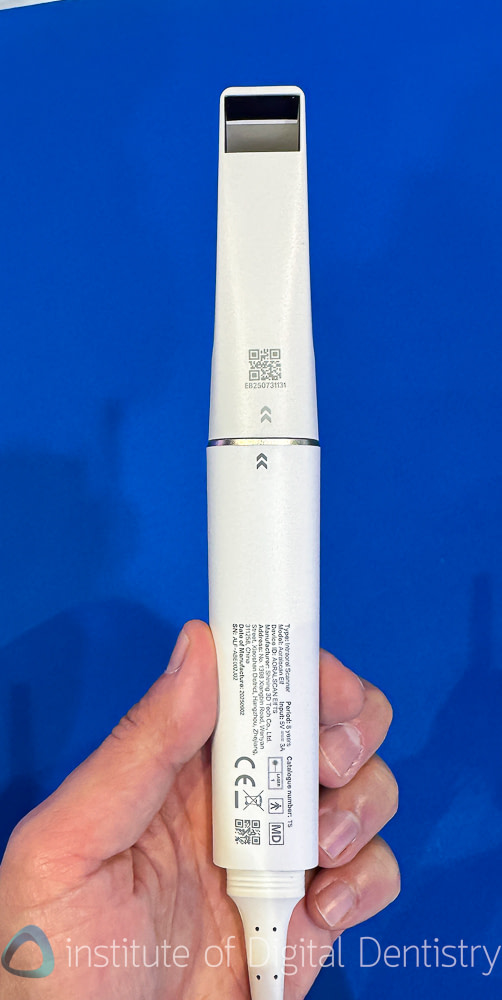
For context:
- Aoralscan ELF: 106 g
- Aoralscan Elite: 124 g
- Panda Smart: 138 g
- Medit i900: 165 g
- TRIOS 5 / 6 Wireless: 299 g
- Medit i900 Mobility: 328 g
The shift from metal to plastic construction enables this weight reduction. While the metal Elite felt more premium, the plastic ELF offers some practical advantages: it won't attract scratches as easily as the metallic body, and the weight savings are genuinely significant.
The ergonomics remain excellent with the single-button design positioned for easy reach. The 245.5mm × 27mm × 30.5mm dimensions are comfortable, making it easy for any clinician to hold.
The cable management is simple with a single USB-C connection, which has become a market norm.
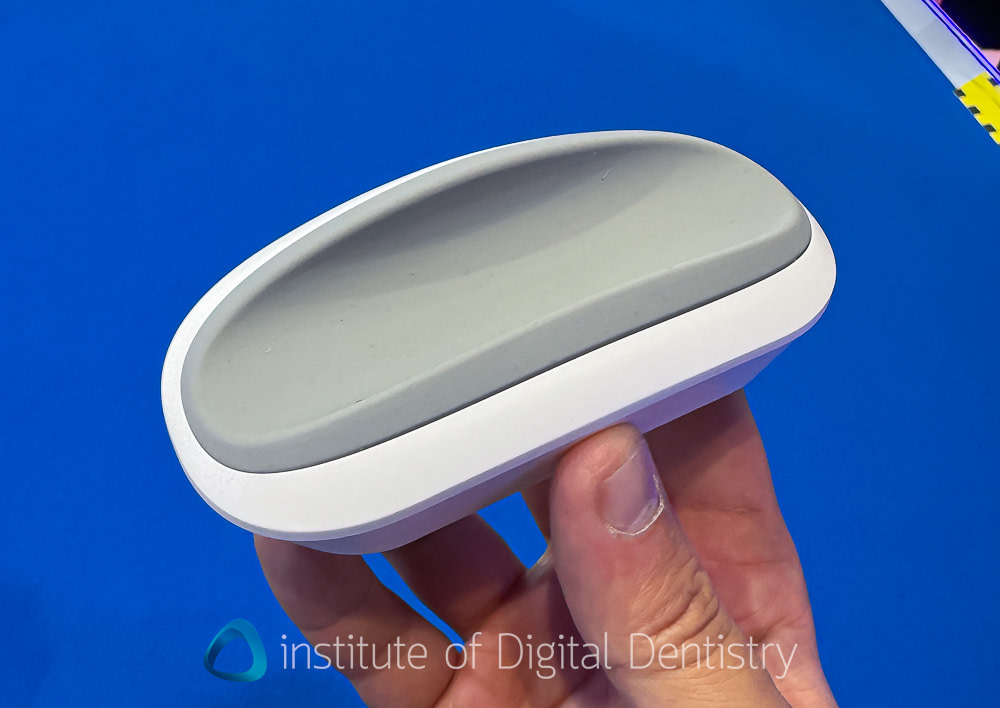
The only other difference between the Elite and the ELF is the scanner cradle. The ELF has a much more budget-friendly-looking scanner cradle compared to its expensive counterparts (especially the Elite Wireless), but this is not a deal-breaker.
Accuracy Performance
The ELF shares the proven scanning technology of the Elite, which has demonstrated reliable accuracy in both our clinical testing and independent research.
For standard restorative and prosthetic cases (single units through quadrant scans), our in-house testing shows the Elite performing comparably to all leading scanners. In fact, it is now one of the market leaders to compare with.
The Aoralscan ELF handles challenging clinical situations well, just like the Elite: deep margins, metal surfaces, and interproximal areas are captured reliably. It even scans dentures very well.
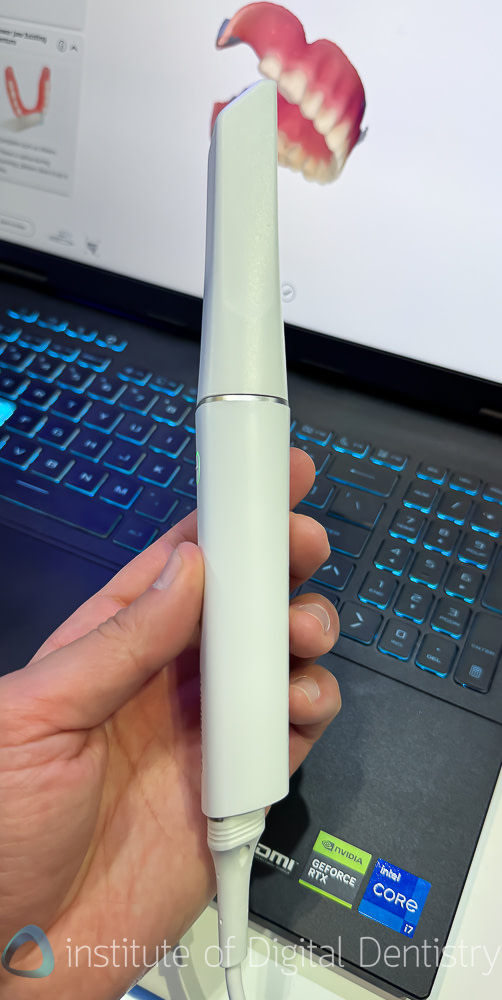
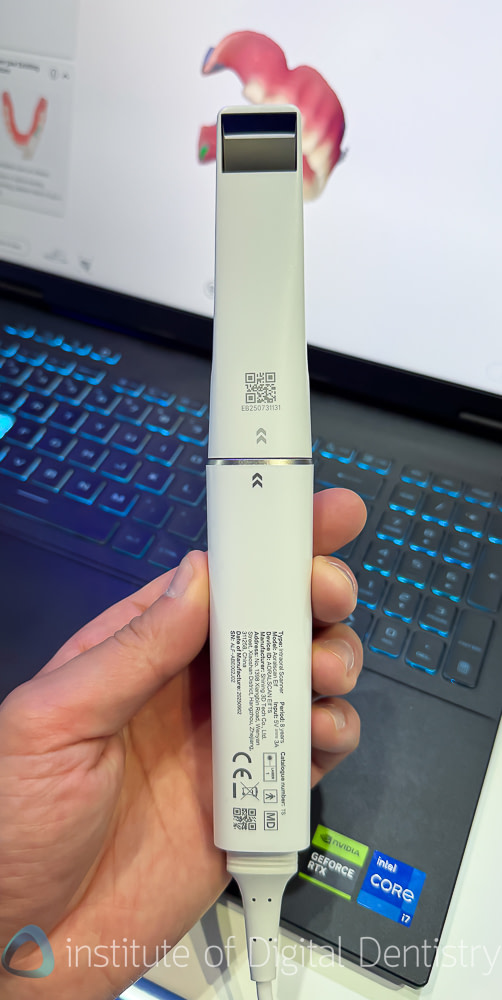
For implant work-up to quadrant cases, accuracy remains excellent. The limitation applies only to full-arch implant cases, where the IPG photogrammetry system (available only on Elite/Elite Wireless) provides advantages.
Clinical validation continues as the ELF is a recent release, but the underlying technology has been extensively tested through the Elite platform.
Shining 3D Aoralscan ELF Scanner Tips
The Aoralscan ELF uses the same three-size tip system as the original Elite:
- IPG scanner tip: 19mm × 14mm (for photogrammetry workflows) - one of the largest FOVs on the market.
- Standard scanner tip: 16mm × 12mm
- Mini scanner tip: 12mm × 9mm
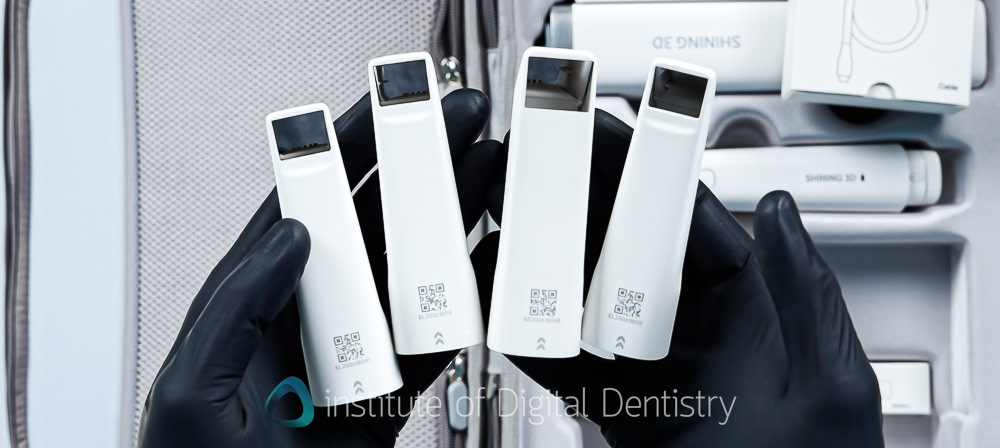
Each tip is rated for up to 100 autoclave cycles at 134°C. With replacement tips priced at approximately $50 USD each, this works out to around $0.50 per patient scan, which is about in line with the current market.
In my own workflow, I use the large IPG tip whenever possible, as I find it the fastest and most efficient option for both standard intraoral scanning and photogrammetry. While having different tip sizes is useful for patients with smaller mouths, the large tip handles the majority of cases very well. If it proves too large, I switch to the standard tip. To be honest, I rarely find a need to use the mini scanner tips.
The upgraded heating system introduced with the original Elite has been retained in the ELF model. There is virtually no pre-heating time required; the scanner is ready to use within seconds of powering on.
Shining 3D Aoralscan ELF Calibration System
The ELF maintains the same calibration system as other Aoralscan models – a large automated calibration unit requiring calibration every two weeks. The process takes 4-5 minutes and connects via USB.
While calibration-free scanners are increasingly common, the automated process is reliable and guided by clear on-screen guidance. The software provides helpful reminders and allows continued scanning when overdue (though not recommended).
For routine restorative cases, this calibration requirement is a minor inconvenience rather than a significant limitation.
Download the Full PDF Review
View as a flipbook online or download a copy to read it later.
Shining 3D Software Suite
This is where the ELF's value proposition becomes undeniable.
Unlike the Aoralscan Lync, which has limits to the software features, the ELF includes Shining 3D's complete software ecosystem at no additional cost.
The comprehensive suite includes:
- ConsulReport (AI patient communication reports)
- ConsulOS (orthodontic simulator)
- MetronTrack (patient monitoring and analysis)
- AccuDesign (model builder)
- CreSplint (night guard/splint design)
- CreRetainer (retainer design)
- CreTemp (crown design)
- CreIBT (indirect bonding tray design)
- Dynamic bite registration
- Comprehensive scan editing tools
- Cloud integration (currently free)
- Direct exocad integration
For detailed software coverage, see our full Aoralscan Elite Wireless review - saves you reading the same info again and again. Basically, the software is very good. It has a huge range of apps, although some are basic and don't quite have the same level of polish as MEDIT or TRIOS scanner apps - but they work and are free.
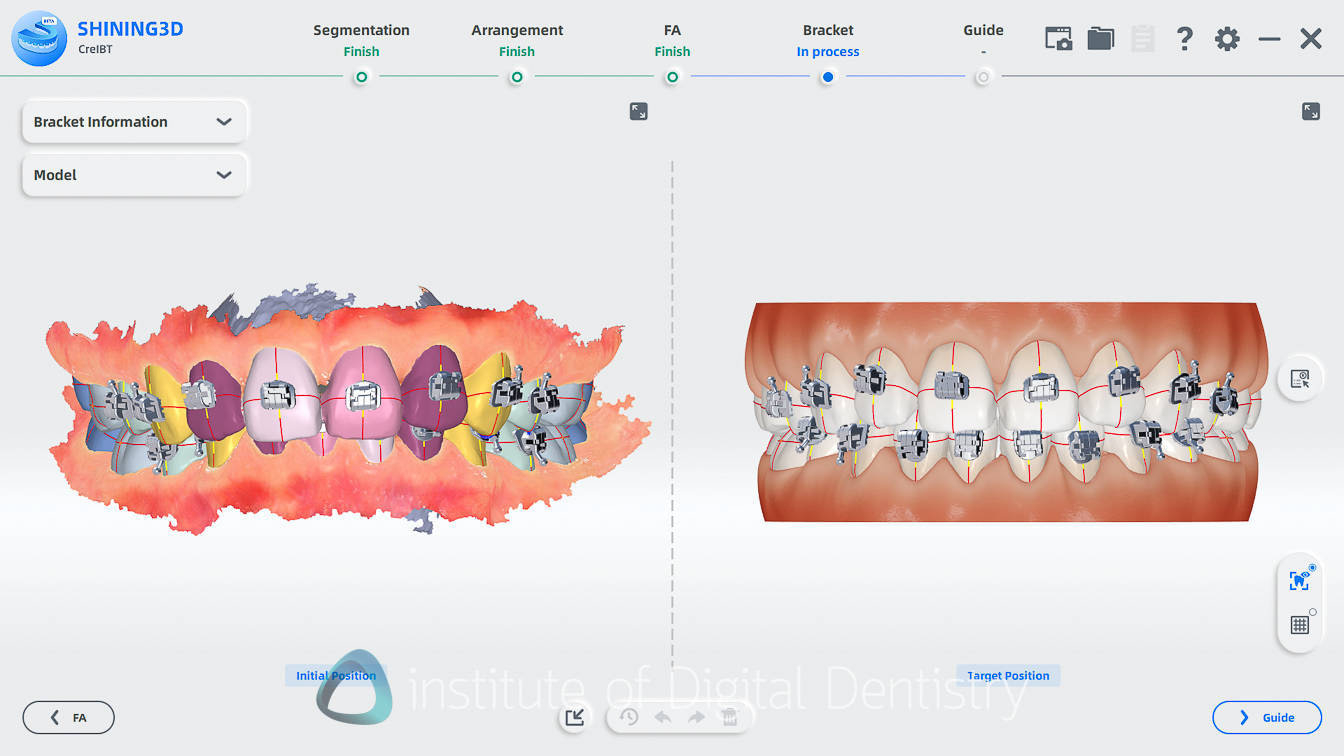
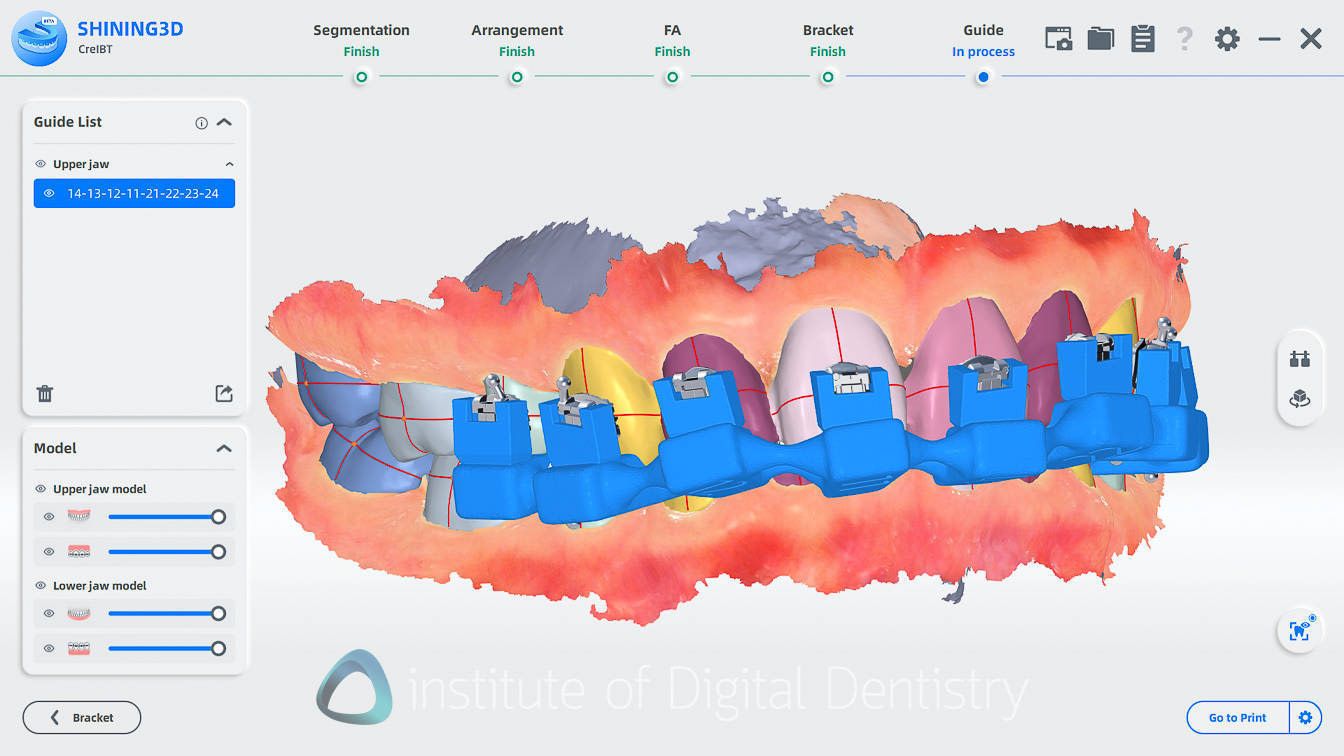
This software package alone provides tremendous value. Having this breadth of functionality included with an $11,999 scanner is excellent. Only Medit offers comparable software comprehensiveness at this price point.
The software continues receiving regular updates, and Shining 3D has demonstrated a genuine commitment to development. The platform supports both Windows and macOS, though, in my opinion, Windows is better optimized. Also, the Mac version currently does not include the following features - Plaque Management Suite, CreIBT, and CreTemp.
Export Capabilities
The ELF maintains a thoroughly open architecture, like most scanners on the market, with export options:
- STL files for routine lab communication
- PLY and OBJ formats preserving color data
- Direct exocad integration
- Batch export capabilities
Shining 3D Aoralscan ELF Cost
Shining 3D Aoralscan ELF Scanner Costs $11,999 USD
This pricing fundamentally changes the conversation in the sub-$15,000 scanner segment and, in fact, the entire IOS market.
Let's put this in context in some of the latest IOS releases in the past year:
- Aoralscan ELF: $11,999 USD
- TRIOS CORE: $12,400 USD
- Alliedstar Sensa: $13,995 USD
- Straumann SIRIOS X3: $17,995 USD
- Medit i900: $18,999 USD
- Aoralscan Elite: $20,000 USD
- Medit i900 Mobility: $21,999 USD
- TRIOS 5: $25,900 USD
- TRIOS 6: $27,900 USD
The ELF delivers proven Aoralscan Elite technology at a substantially lower price than most other scanners. For the vast majority of general practices that do not regularly restore full-arch implant cases, this represents exceptional value, especially when compared to the cost of the Elite. What a decisive move by Shining 3D.
Additional Costs:
- Scanner Tips: ~$50 USD each, autoclavable 100 times (≈$0.50 per patient)
- Computer: $2,000-3,000 if needed
- Subscription Fees: None
Recommended Computer Specifications:
- Processor: Intel Core i7-8700 or higher
- RAM: 32GB recommended
- Storage: 256GB SSD minimum
- Graphics: NVIDIA RTX 2060 6GB or higher
- OS: Windows 10 Professional (64-bit) or later
- Ports: USB Type-C and USB 3.0
The ELF maintains Shining 3D's subscription-free model. No mandatory yearly fees for scanner operation or software access. Cloud storage remains currently free (though this could change). The only ongoing costs are consumables.
Market Implications
The Aoralscan ELF's release puts immense competitive pressure on the scanner market. Every scanner in this price range will now be compared against the ELF's combination of great scanning technology, comprehensive software, and aggressive pricing.
This follows a pattern we've observed in emerging markets, where Chinese manufacturers have systematically displaced more expensive Western brands through regional adaptation and aggressive pricing. That pattern is now accelerating in developed markets.
How established manufacturers respond to this pricing pressure will be fascinating to watch. Will they match Shining 3D's aggressive pricing? Differentiate through software ecosystems or support services? Or maintain premium pricing while emphasizing brand heritage and research validation?
For practices considering scanner investments, the ELF presents a compelling value proposition:
- Comprehensive software suite with no subscriptions
- Lighweight at 106g
- Fast, reliable scanning for general practice needs
- $8,000 less than the wired Elite
- $12,000 less than the Elite Wireless
The only meaningful limitation is the absence of IPG photogrammetry. For the small percentage of practices regularly restoring full-arch implant cases, the Elite or Elite Wireless remains the appropriate choice. For everyone else, the ELF delivers the same excellent scanning experience at substantially lower cost.
Download the Full PDF Review
View as a flipbook online or download a copy to read it later.
Conclusion
The Shining 3D Aoralscan ELF is not simply a cheaper scanner. It is a deliberate market move.
Shining 3D has effectively taken the Aoralscan Elite, one of the strongest scanners released in recent years, and removed only the feature set that applies to a relatively small percentage of clinicians: IPG photogrammetry for full-arch implant restoration. Everything else that matters to everyday dentistry remains intact.
And that is precisely what makes the Aoralscan ELF so significant.
In real clinical use, this does not feel like an “entry-level” scanner. It feels like a modern, high-performance device built for the realities of general practice: fast full-arch scanning, excellent stitching, reliable capture of deep margins and interproximal anatomy, and an impressive software suite that continues to expand - all without subscription fees.
Perhaps the most striking aspect is how complete the package feels. At $11,999 USD, this is not a budget scanner that is designed to upsell you later. It is Elite-level scanning performance, intentionally repositioned for the majority of dentists who restore crowns, bridges, implants, orthodontic cases, and removable prosthetics, but do not routinely require photogrammetry workflows.
Even the physical redesign reflects this strategic shift. The move to plastic construction has reduced the scanner's weight to just 106 grams, making it the lightest modern IOS available. In hand, the ELF feels effortless and genuinely comfortable for long clinical sessions, a practical advantage that becomes more meaningful the more you scan.
Of course, there is still a clear dividing line: practices that routinely restore full-arch implant cases will benefit from the Elite or Elite Wireless with IPG. But for everyone else, and that is the overwhelming majority of the market, the ELF delivers nearly the same scanning experience at a dramatically lower investment.
What makes the Aoralscan ELF truly important is not just its specifications.
It is what it signals.
The sub-$15,000 scanner segment has now been reset. The benchmark has moved. Every manufacturer competing in this space will be forced to respond, as the ELF shows that premium scanning performance and comprehensive software no longer require premium pricing.
For dentists considering an intraoral scanner purchase in 2026, the ELF is one of the most compelling value propositions currently available, and one of the clearest signs yet of where the IOS market is heading next.
The question is no longer whether Shining 3D can compete at the highest level.
The question is: how does everyone else keep up?
Thanks for reading.
Evaluation Ratings
Evaluation Ratings
Scanning Speed
Scanning Flow
Scanner Size
Ease of Use
Scanner Software
Investment Cost
Additional Features
Wireless Scanner
USB-C connection
Caries Detection
No real caries detection via fluorescence, but it does have AI caries detection on standard scans via a software app.
Software Apps
Many including ConsulOS, ConsulReport, MetronTrack, AccuDesign etc
CAD/CAM Software
Many CAD Apps for Crowns, Splints, Retainers, Models, and IBT, etc
Subscription Requirements
None
Autoclavable Tips
100 times per tip
Thank you
My pleasure