
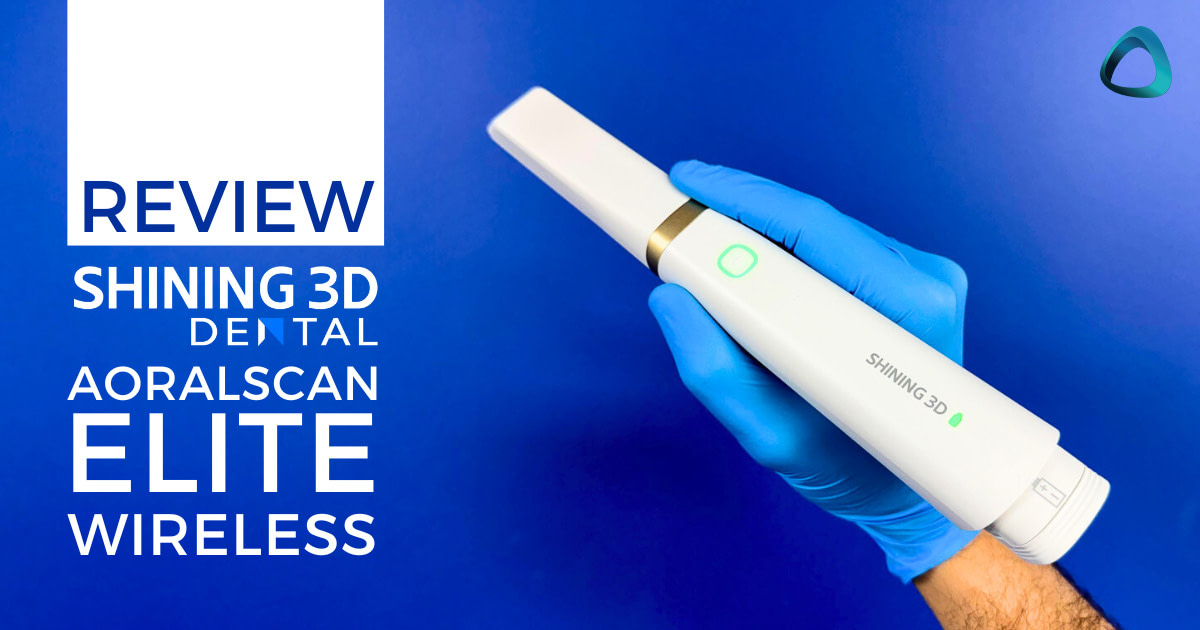

The Shining 3D Aoralscan Elite made waves in late 2024 as the world's first intraoral scanner with built-in "photogrammetry" capabilities. It was bold, innovative, and frankly, one of the best scanner releases of that year.
So, when Shining 3D announced it was releasing a wireless version, the question wasn't whether it would be good, we already knew the technology worked by now, but whether they could successfully transition the disruptive system to wireless without compromise.
After extensively testing the Elite Wireless for several months alongside the original wired Elite, I can say that Shining 3D has not only successfully transitioned to wireless but has also improved some aspects of the scanner in the process.
Let's face it, the wired Elite was already disrupting the full-arch implant market with its coded scan body IPG system. Now, cutting the cord and making it one of the lightest wireless scanners available? That's a compelling proposition for anyone doing All-on-X work. It does come with some design quirks, however...
As always, this review remains completely independent. Neither Shining 3D nor any affiliated parties have had any involvement in this evaluation. Our commitment to providing unbiased, reliable information to the dental community remains unchanged.
Enjoy the review.
Review At a Glance
The Aoralscan Elite Wireless successfully transitions the disruptive IPG technology to wireless operation while improving several key aspects of the original design of the scan bodies. At 194g with a battery, it's the lightest wireless scanner available, and the enhanced IPG kit with cap scan bodies adds genuine clinical value for immediate loading cases.
Pros:
Cons:
What's Changed - The Wireless Option
The Aoralscan Elite Wireless is essentially a wireless version of the original Elite, but it also represents a thoughtful evolution that addresses specific aspects while maintaining the revolutionary IPG capabilities that defined the original.
Key Hardware Changes
Wireless Tech:
- 194g total weight including battery
- 2 hours of continuous scanning time
- 12 hours in sleep mode, then it will automatically turn off
- 2.5 hours full charge time (using the charging case)
- 4 hours full charge time (using the charging cradle)
- Wi-Fi 6 technology is fast and stable
Design Changes:
- Polymer construction replaces the metal body
- Eliminates scratch-prone metallic surface
- Maintains a relatively premium feel while reducing weight
- Improved ergonomics through wireless design
Enhanced IPG System:
- New cassette design for scan body storage
- Cap scan bodies included for immediate loading cases
- Improved organization and presentation
- Same proven accuracy and workflow that disrupted photogrammetry
What Stayed the Same
The Elite Wireless maintains the core capabilities that made the original exceptional:
- Same proven IPG photogrammetry accuracy
- The comprehensive software suite
- All standard Elite scanning modes and features
- Compatible with existing coded scan body kits
Download the Full PDF Review
View as a flipbook online or download a copy to read it later.
Company Context
Shining 3D's trajectory in the dental scanner market continues to impress. When I first reviewed their original Aoralscan in 2019, it was frankly bad - overheating after 20 seconds of scanning, clunky software, and basic performance. To be honest, it was hard to imagine them competing with established players at that time.
Fast forward to 2024, and the company released the Elite with its world-first IPG system. That scanner changed the conversation around full-arch implant workflows and positioned Shining 3D as an innovation leader rather than just a budget alternative. It was, I believe, the single best move the company has made, and no doubt thanks to years of development and learning.
Now, less than a year later, they've released the Elite Wireless. Something we all expected to come eventually, as we saw wireless versions of their previous scanner. However, the speed of development and refinement shows a company that's listening to users and moving quickly to address market demands. The wireless trend has been clear for years, and Shining 3D hasn't waited around; they've executed quickly while maintaining the technology that made the Elite special.
Scan Speed - Shining 3D Aoralscan Elite Wireless
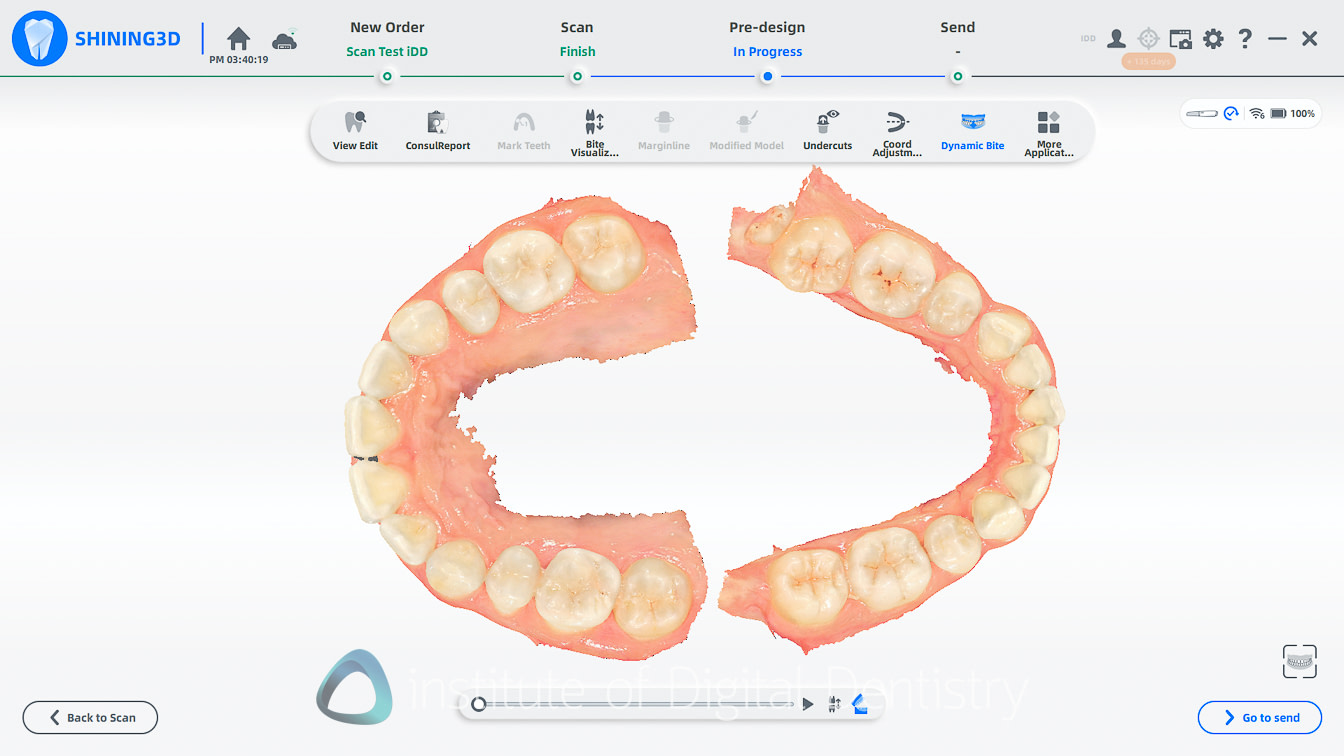
The Elite Wireless maintains the excellent scanning performance of the original Elite across both standard and IPG photogrammetry modes. In standard scanning mode, full arch scans consistently complete in under 30 seconds, matching the performance of industry-leading scanners.
The wireless implementation introduces no penalties in scanning speed. The Wi-Fi 6 connectivity provides stable, lag-free data transfer that feels identical to the wired Elite during actual scanning. I can't detect any meaningful difference in responsiveness or speed between the two models during clinical use.
There is still this quirk that the software feels a little behind how fast your hand moves. This has been the case for some time. Not immediately obvious for new users, but if you have used other scanners, you'll notice the difference. It never disrupted my scanning in saying that.
Dual Scanning Modes
Like the original Elite, the wireless version has two distinct modes:
Standard Scanning: For routine restorative, orthodontic, and prosthetic cases, the scanner performs excellently. The AI handling of soft tissue artifacts remains impressive, and the software provides numerous options for controlling scan behavior. from depth of field to AI filtering aggressiveness.
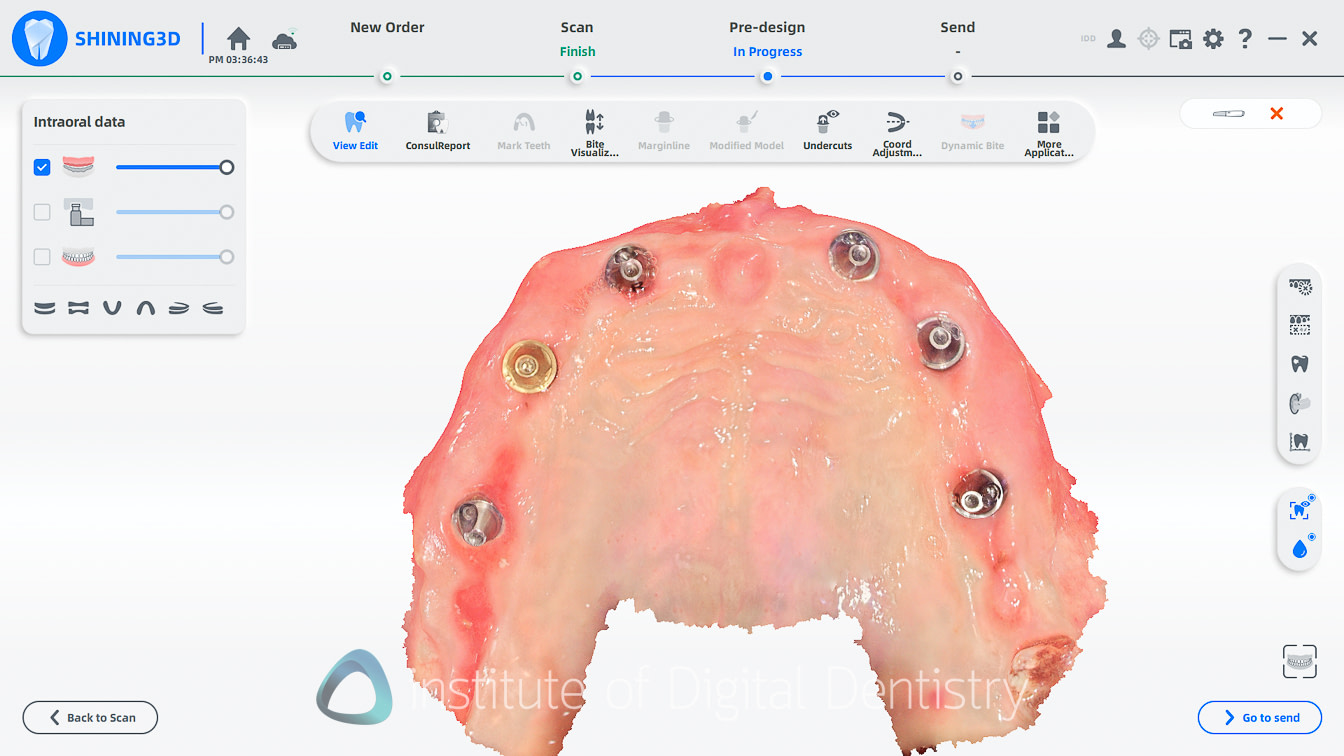
IPG Photogrammetry Mode: For full-arch implant cases using coded scan bodies, the scanner switches to its specialized photogrammetry workflow. This mode captures the unique dot patterns on coded scan bodies for precise recording of implant positions. One of the best workflows for full arch implants on the market.
Clinical Performance
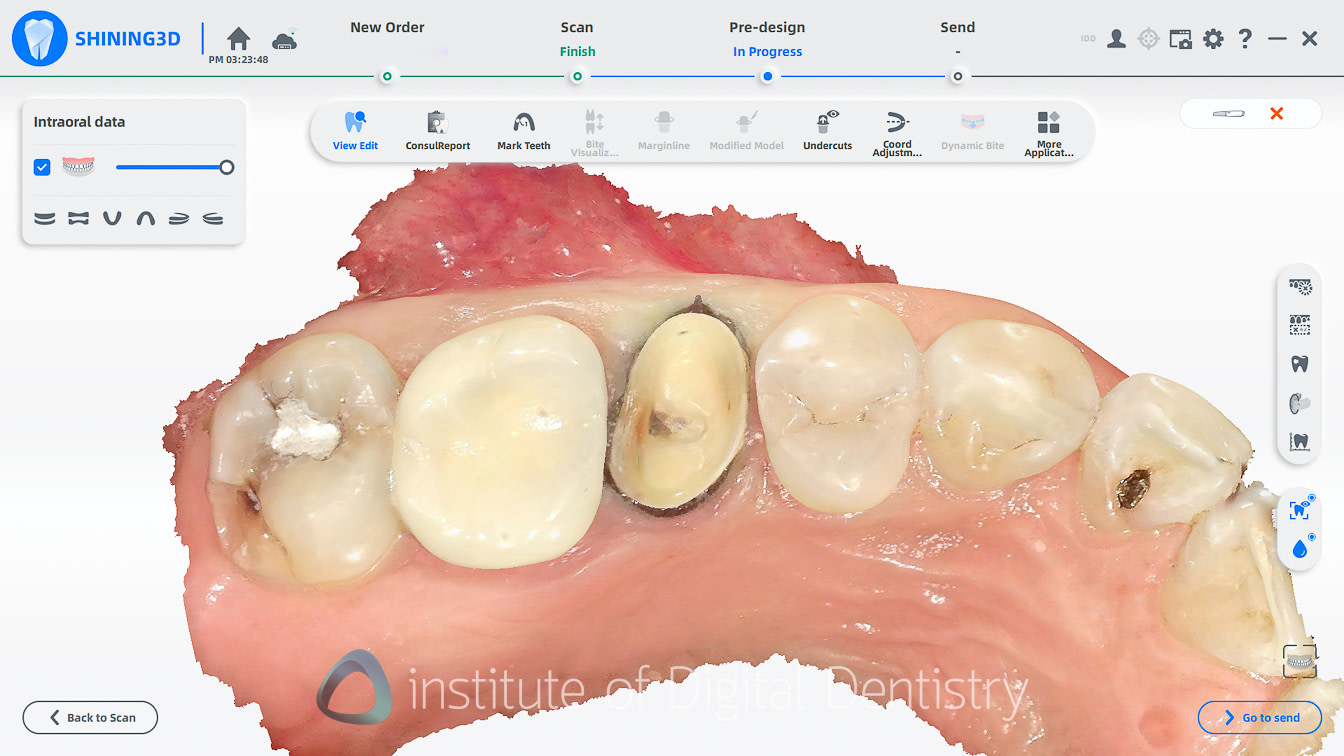
The scanner handles all standard clinical indications with ease: single crowns, bridges, implant restorations (both single and multiple units), orthodontic cases, and edentulous scanning. Metal surfaces, deep margins, and interproximal areas are captured reliably.
One area that continues to show the Elite's Chinese heritage is scan texture resolution. While the scans are photorealistic after post-processing, they appear somewhat lower resolution when zoomed compared to premium scanners like TRIOS, iTero Lumina, or Medit i900. For clinical accuracy, this doesn't matter, but for those who prioritize scan aesthetics, it's worth noting.
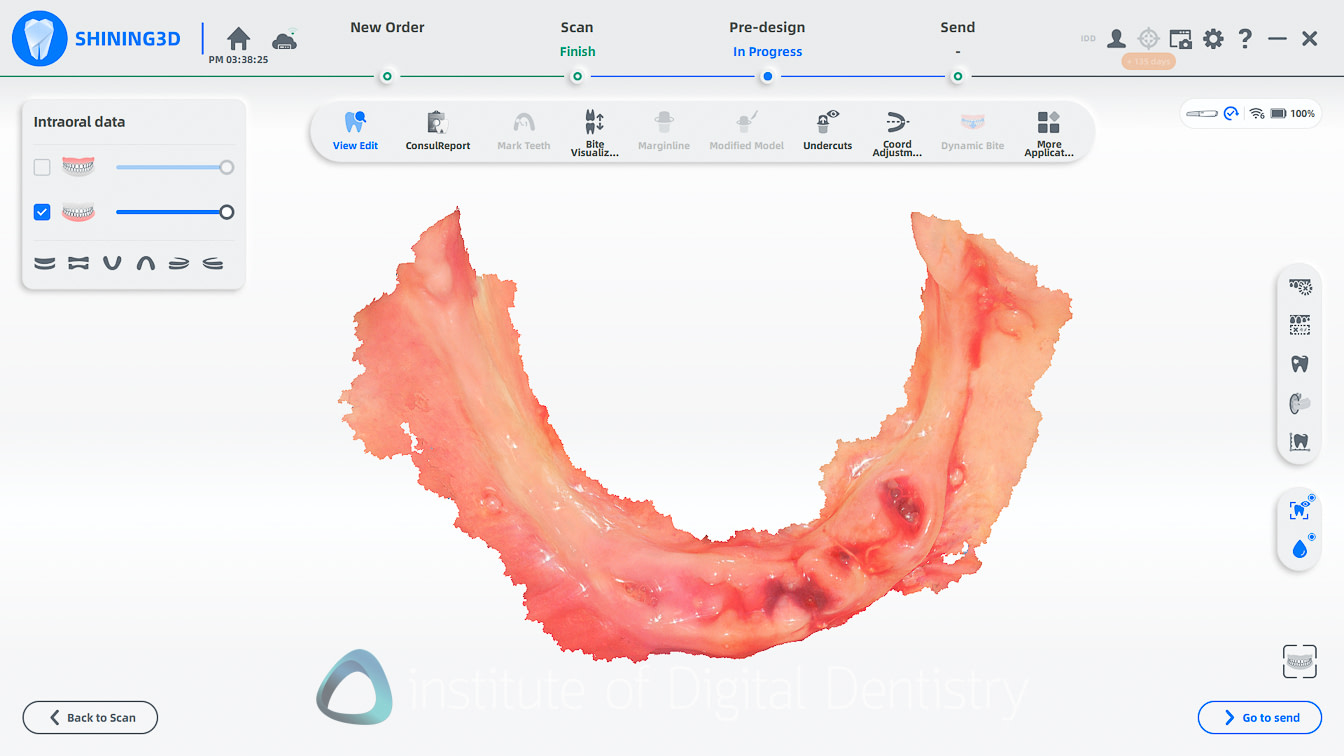
The bite registration remains fast and accurate, with the usual useful features such as occlusal heat maps that display potential issues before scan completion. They have a huge number of apps as well, but more on that later.
Design, Weight and Build Quality - Elite Wireless
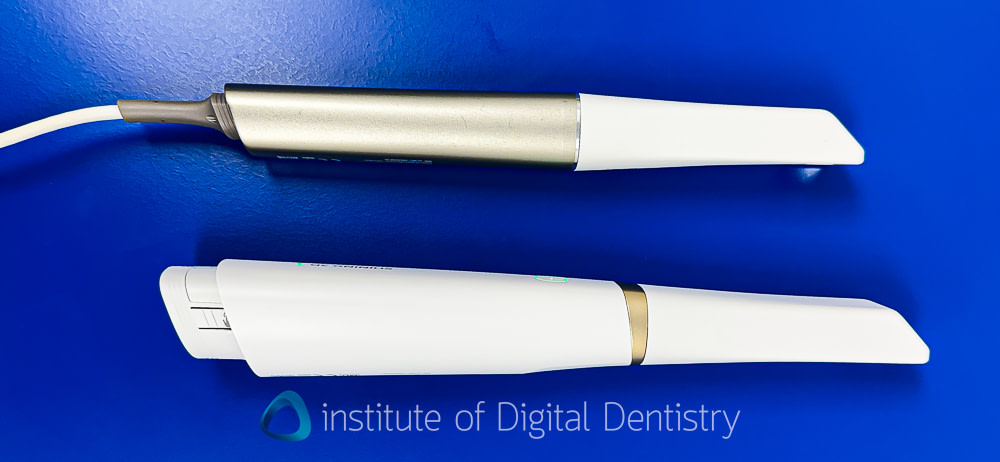
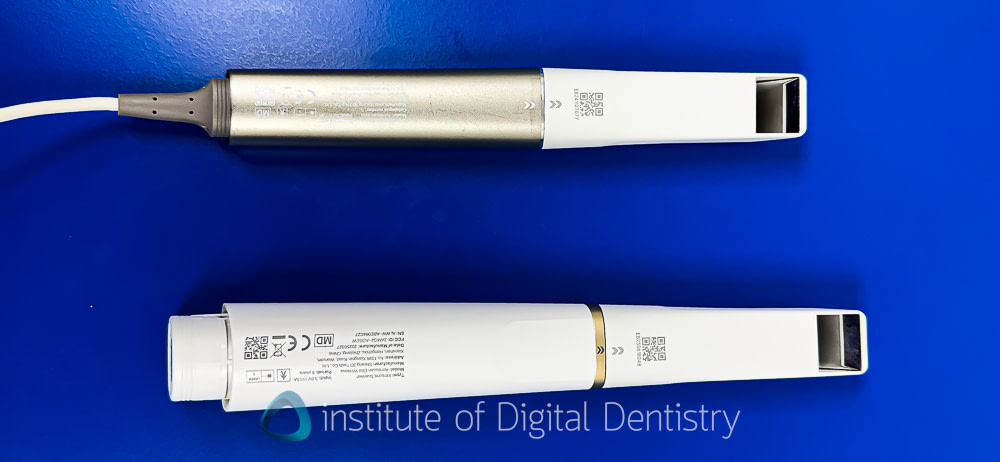
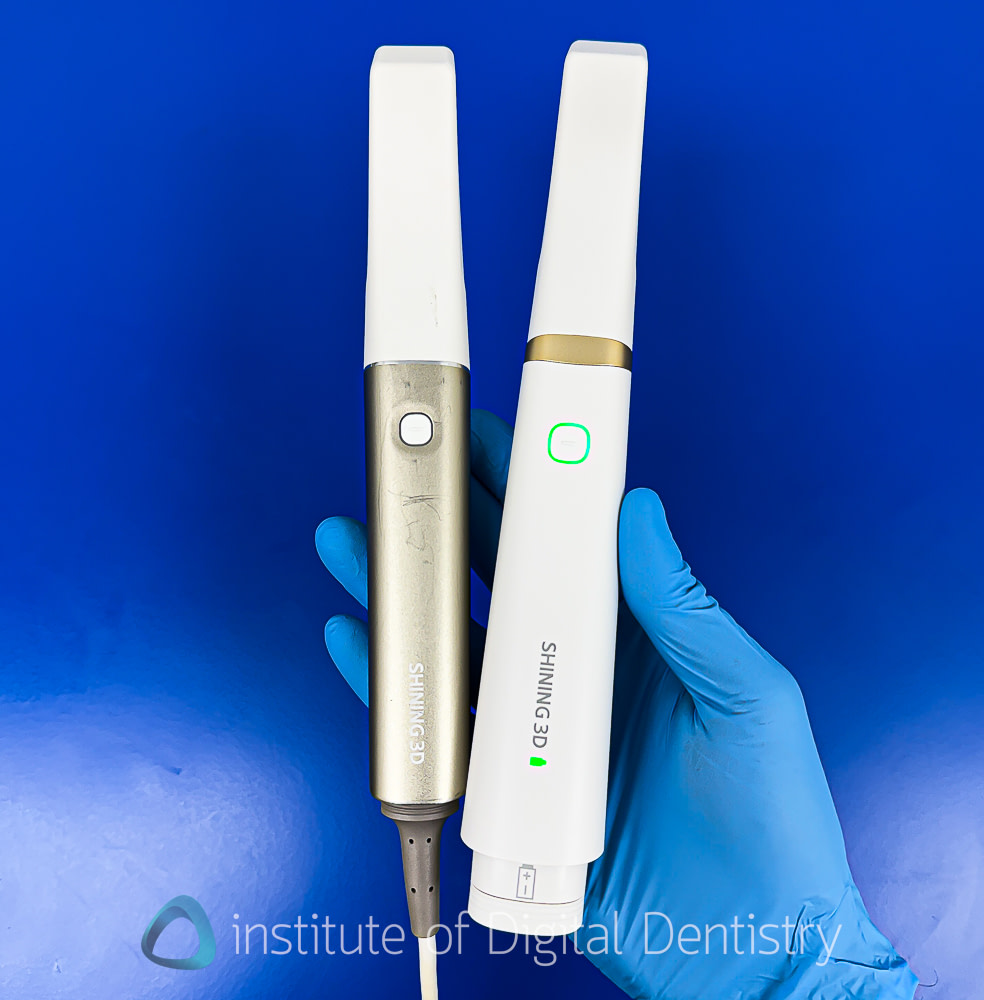
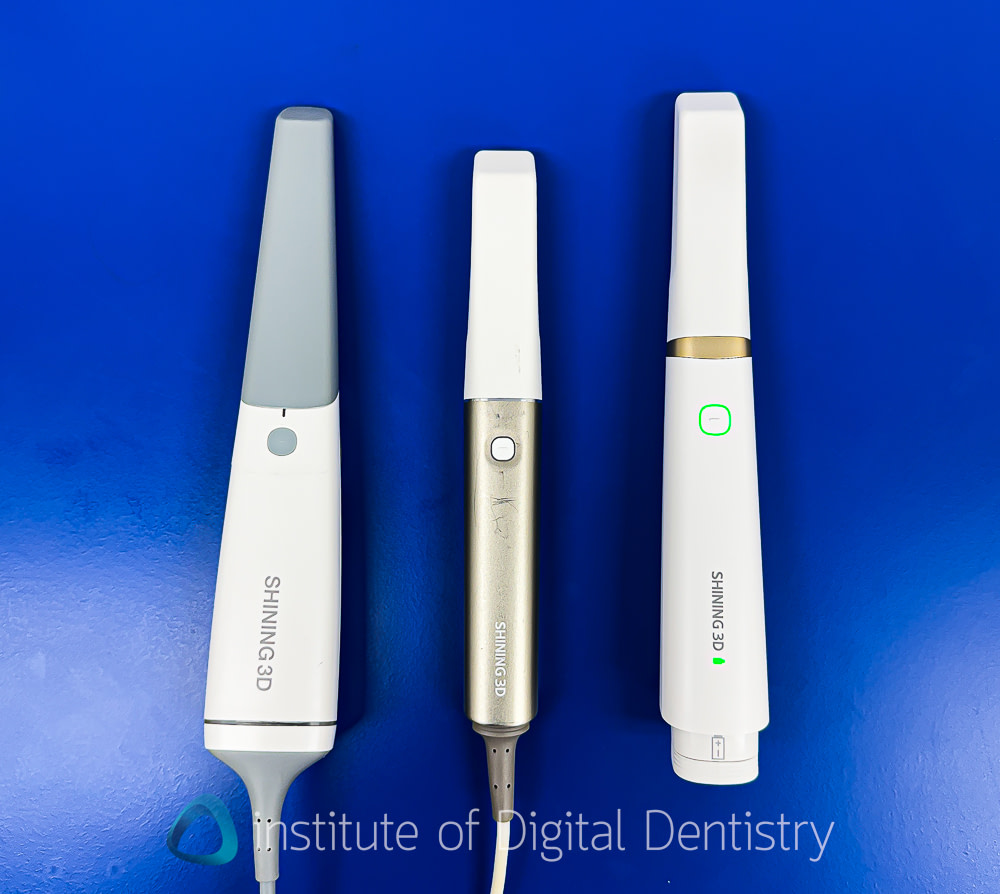
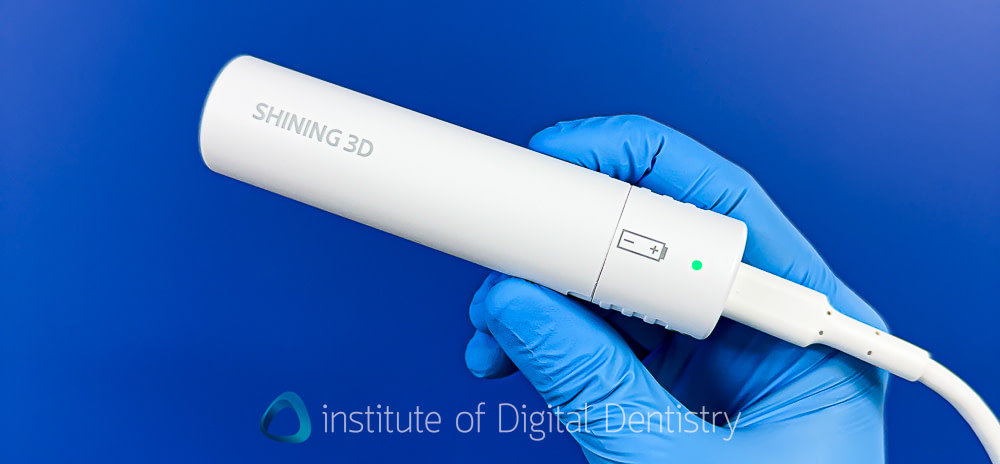
Apart from being wireless, one of the main standout differences between the original Aoralscan Elite and the Wireless version is the shift from metal to polymer construction. While some might initially see this as a downgrade from the premium-feeling metallic body of the original Elite, I initially felt the same way. However, the polymer design brings practical advantages that likely outweigh any perceived loss of luxury.
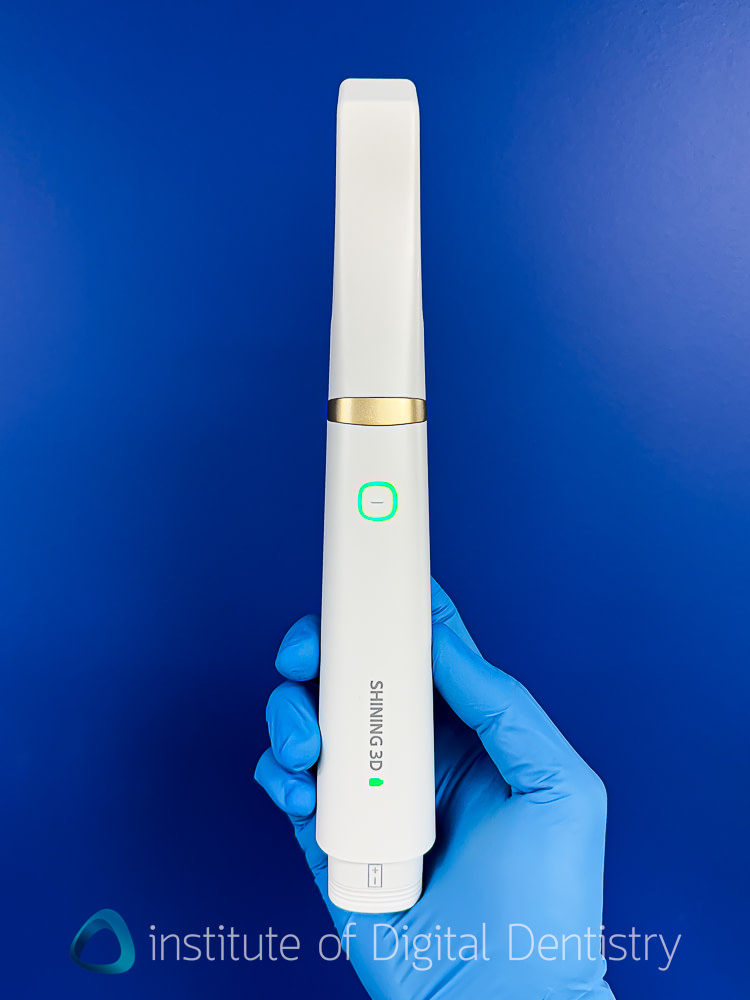
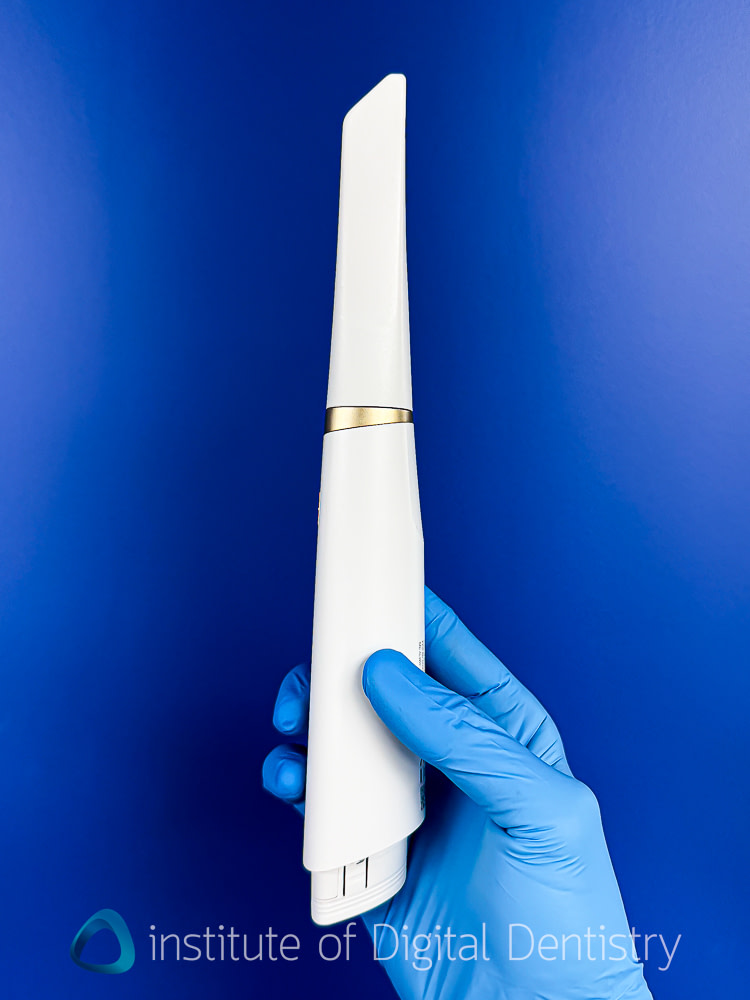
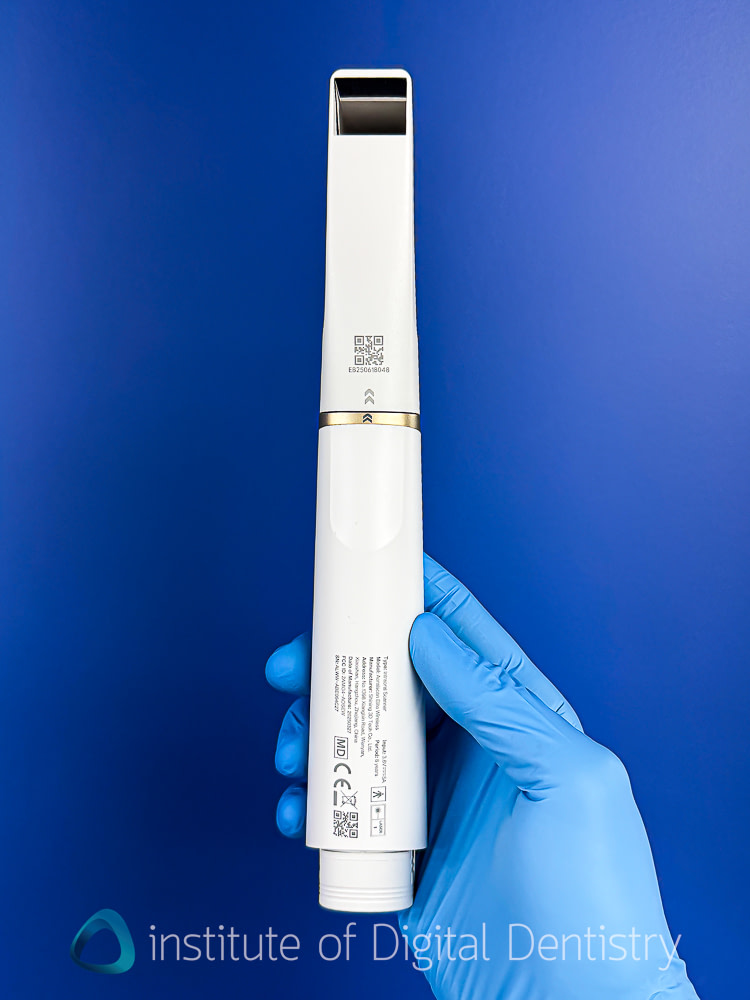
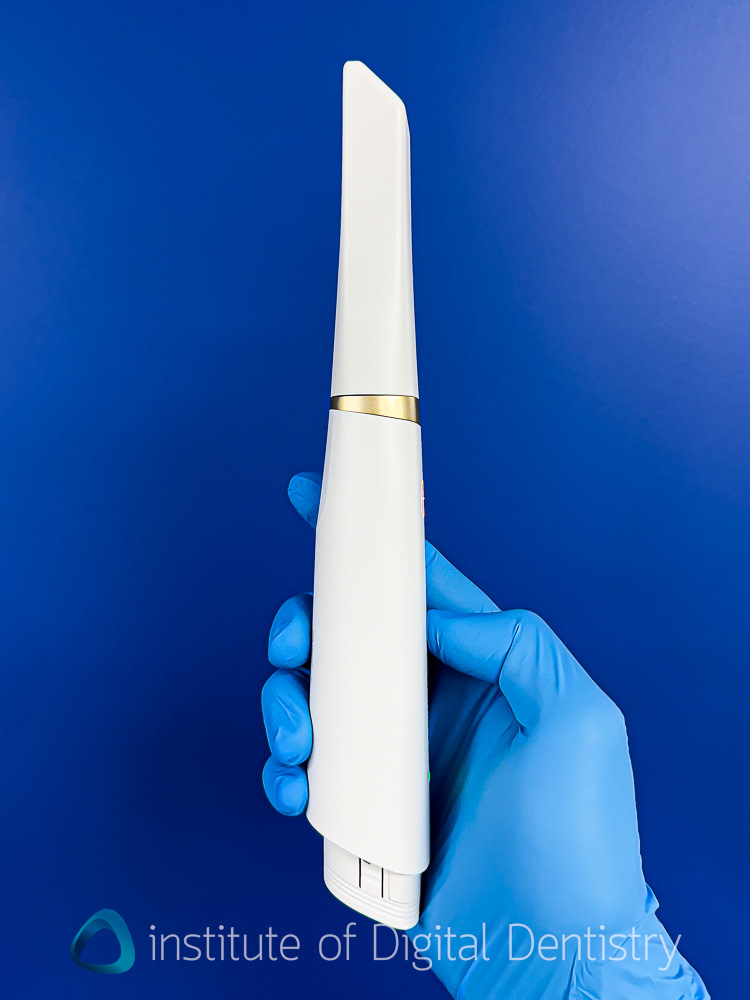
At 194g with battery, the Elite Wireless achieves one of the lightest wireless scanner weights available, remarkably close to the wired Elite's 124g, considering a complete wireless system has been integrated. For context, the Medit i700 Wireless weighs 328g, the TRIOS 5 weighs 299g, and most other wireless scanners weigh between 250g and 350g. The 70g weight increase is minimal, resulting in a wireless scanner that actually feels lighter than almost every competitor during extended clinical use.
The polymer construction solves a practical problem with the original Elite. The metallic body, although feeling premium, was prone to attracting scratches easily. After a year of clinical use in my practice, visible scratches have appeared on the surface of mine. The polymer wireless model eliminates this issue while maintaining a quality feel. Frankly, I think I prefer this change. The scanner will look better longer, and the weight savings are genuinely noticeable for a wireless device.
Another interesting choice is the lack of a dummy battery. This is wireless only. A common trend in the market now is that companies do not offer wireless scanners with a wired backup solution; wireless is deemed sufficient.
Ergonomics and Wireless Performance
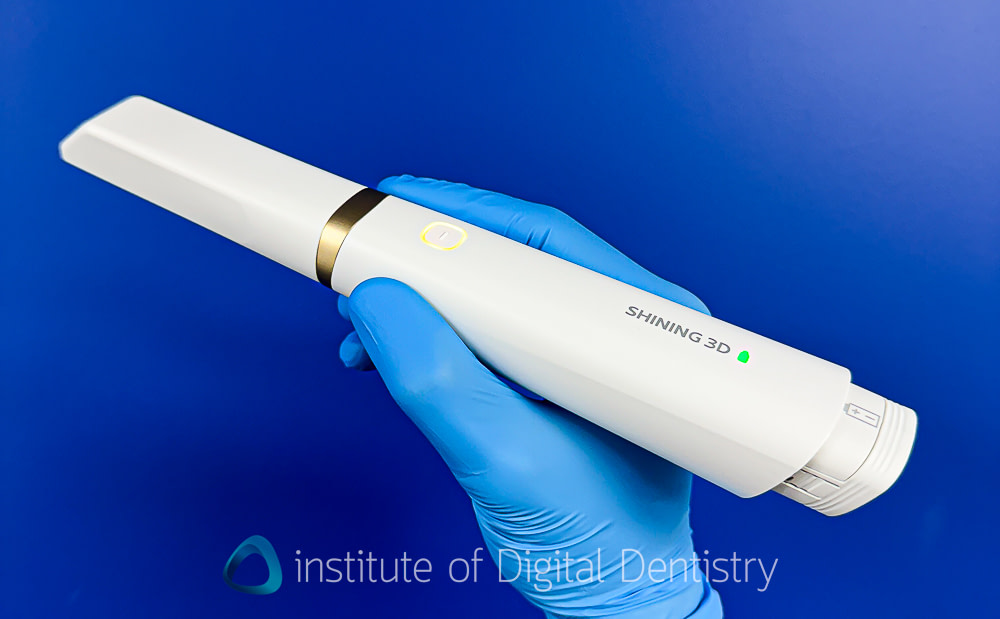
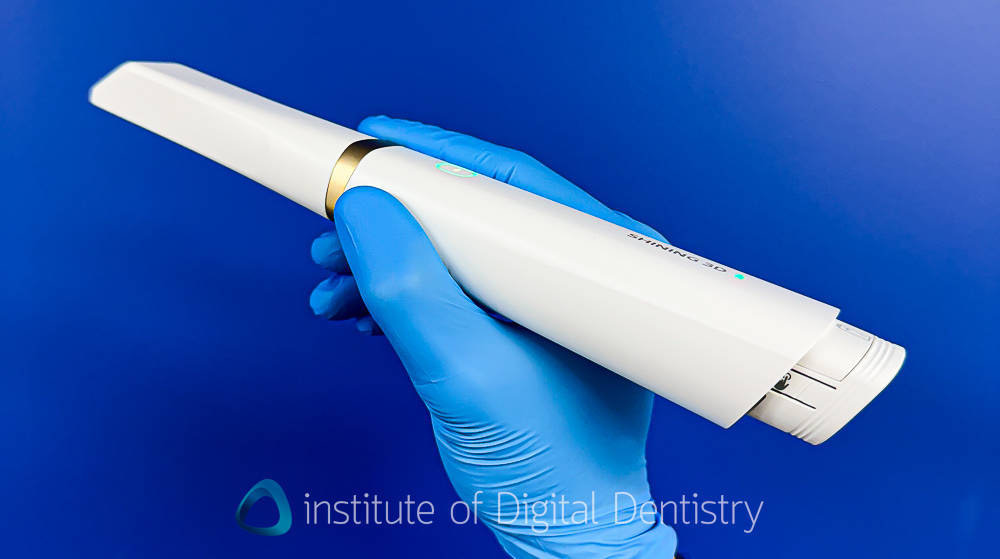
Despite the battery, the Elite Wireless maintains great ergonomics. The weight distribution eliminates the back-heavy sensation commonly found in earlier-generation wireless devices, making it comfortable to use. The scanner dimensions (247mm x 38mm x 37mm) are larger than those of the original Elite, accommodating wireless components, but it remains easy to handle.
A lot of other wireless scanners, when compared to their wired counterpart, are much heavier, so it is impressive that they kept it so compact. The single-button design continues, positioned for easy reach during scanning.
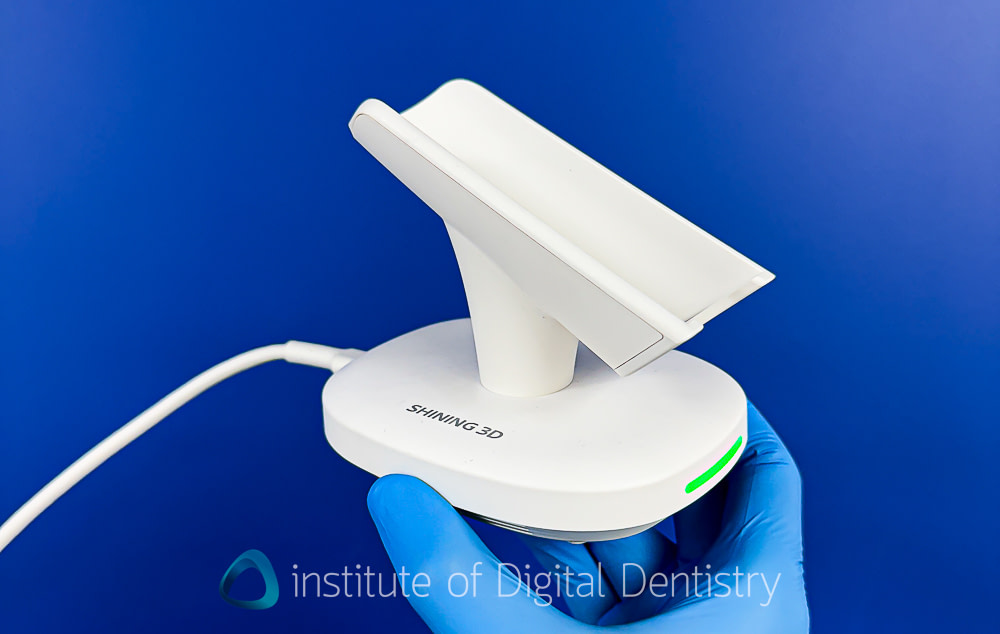
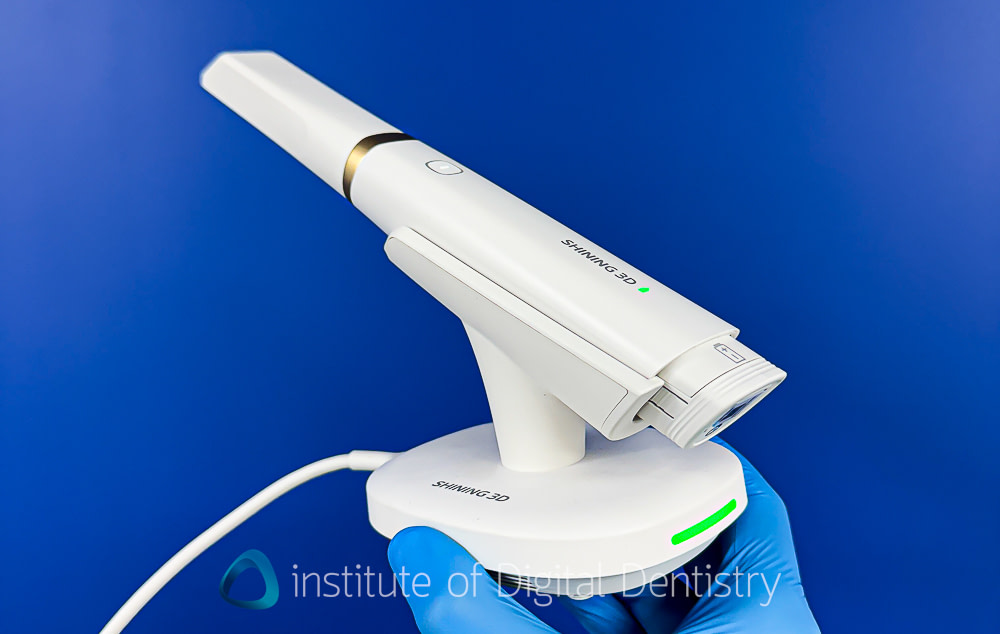
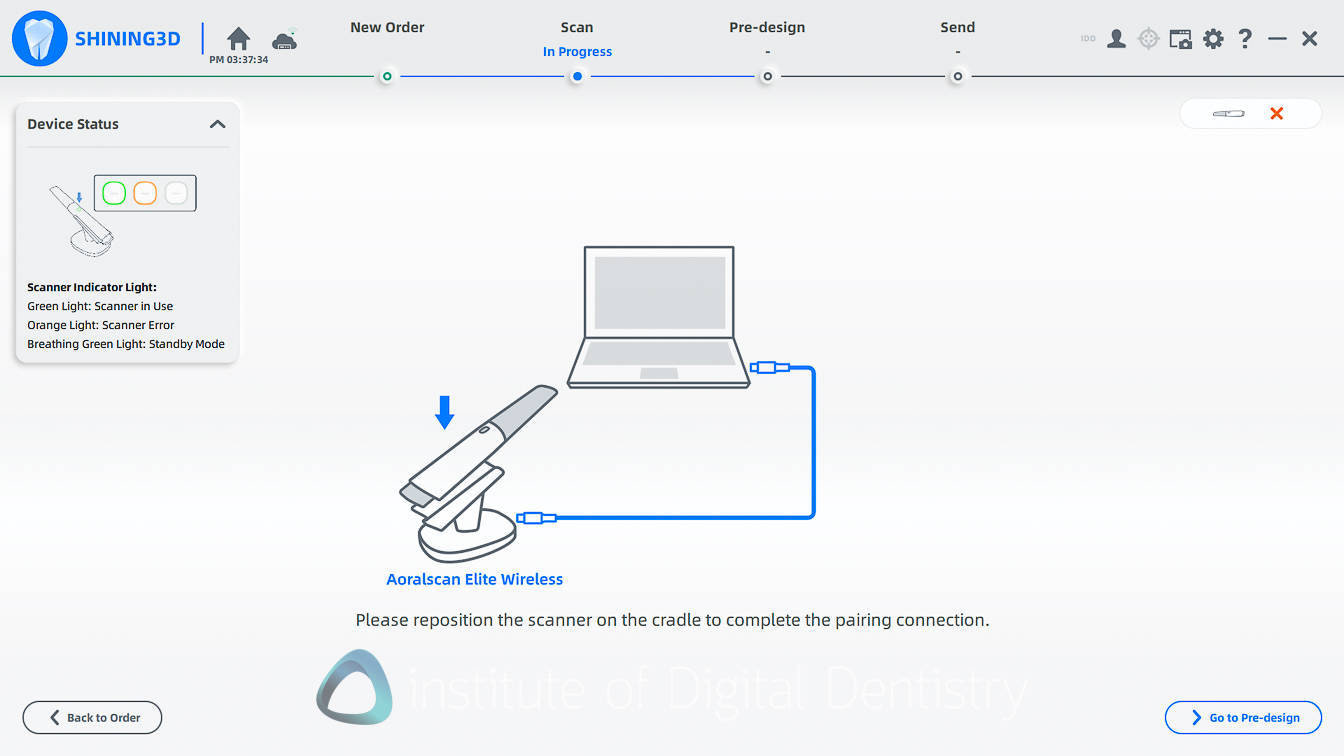
The wireless implementation uses Wi-Fi 6 technology, providing fast and stable connectivity throughout testing. The Wi-Fi dongle is built into the charging cradle, which is also nicely designed and looks premium. So no extra dongles or TP-Link devices. It does mean that the cradle has to be plugged into your computer at all times for use. There is an LED at the back of the cradle that goes from orange to green when a connection is established. It all feels very well done.
I experienced no significant of lag during scanning sessions, and the wireless range proved adequate for typical dental office layouts. The LED ring around the scanning button provides clear visual feedback on scanner connection status and tracking when the scanner loses its place during scanning (indicated by an orange color), as well as battery status during charging.
Download the Full PDF Review
View as a flipbook online or download a copy to read it later.
Battery System and Charging
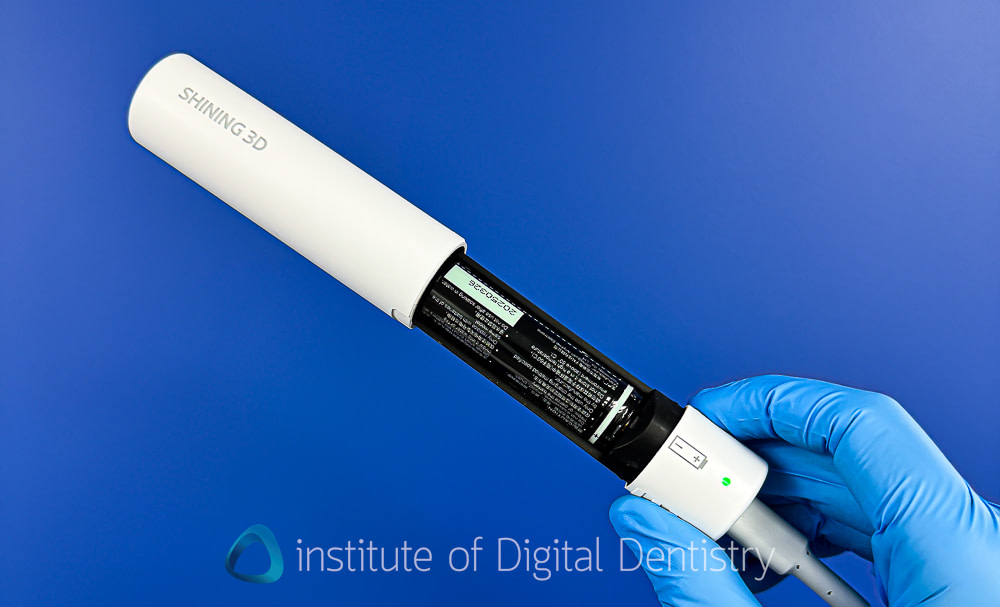
The company states that the battery offers 2 hours of continuous scanning time or 12 hours in sleep mode before automatically shutting down. This should easily cover a typical clinical day, especially considering it charges when not in use and on the scanner cradle.
You can charge the batteries in two ways: a charging cradle (4 hours for a full charge) or a charging case (2.5 hours for a full charge). However, the battery system reveals some cost-saving measures that affect the premium feel.
The Elite Wireless utilizes universal wireless batteries, which are common in Chinese intraoral scanners, rather than custom-designed or integrated batteries. While not a major functional issue, it gives the system a slightly more economical feel compared to scanners with proprietary battery solutions. You can't swap batteries during use as quickly as other wireless scanners, as it is more like changing your batteries on your DSLR flash. It is a minor grievance, but definitely noticeable for a premium device.
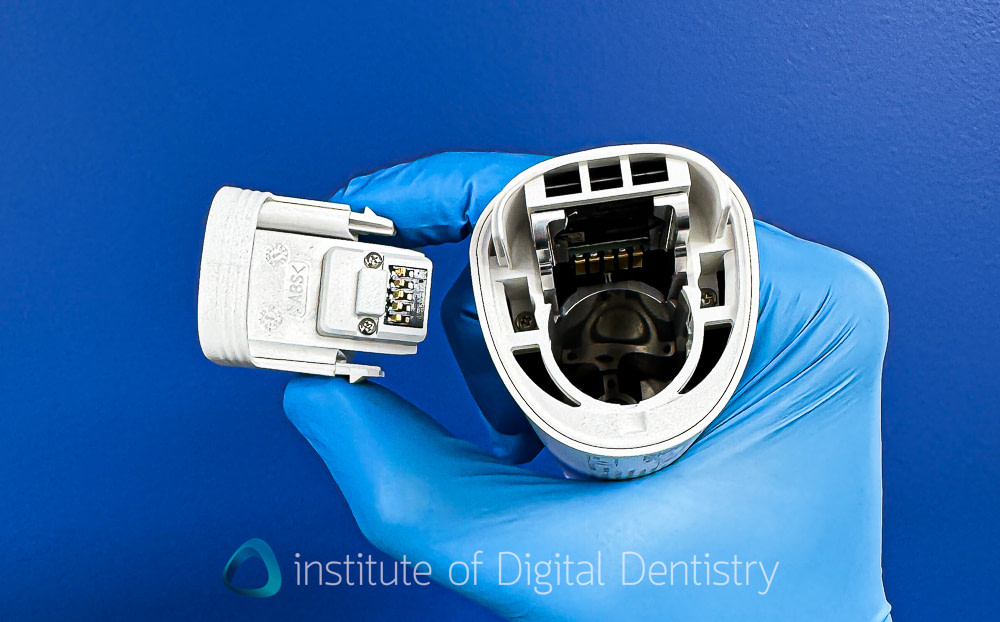
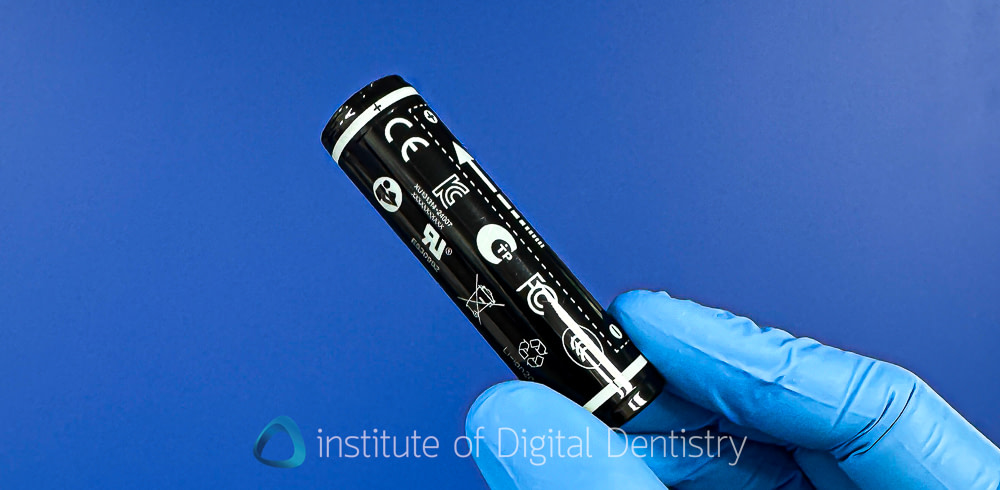
Apart from the charging scanner cradle, the company also gives you a charging case for the spare battery. This design also feels somewhat rushed, like the batteries. Unlike the elegant charging cradle that holds the scanner upright, the tubular charging case for spare batteries has no stand or base; it simply sits on your desk.
You insert one battery into this tube-like case, and it charges independently. It works, but the presentation and design feel less refined than the rest of the system. Another minor gripe in an otherwise well-executed package, but worth noting for those expecting premium touches throughout.
Shining 3D Aoralscan Elite Wireless Scanner Tips
The Elite Wireless uses the same three-size tip system as the original Elite:
- IPG scanner tip: 19mm × 14mm (for photogrammetry workflows) - one of the largest FOVs on the market.
- Standard scanner tip: 16mm × 12mm
- Mini scanner tip: 12mm × 9mm
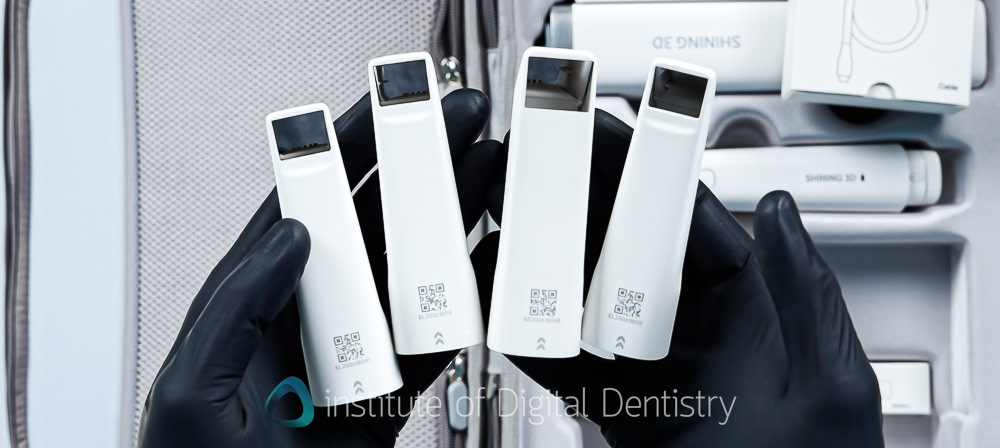
Each tip can withstand up to 100 autoclave cycles at 134°C. Replacement tips cost approximately $50 USD each, translating to about $0.50 per patient scan. About the right price on this market.
I personally use the large IPG tip for everything when I can, finding it the fastest and most efficient for both standard and photogrammetry scanning. The option of different sizes is nice for smaller mouths, but the large tip handles most situations excellently. If the large tip is too big, I use the standard tip. Rarely do I find myself using mini scanner tips, to be quite frank.
The improved heating system from the original Elite carries over to the wireless model, with virtually no pre-heating time required. The scanner is ready to use within seconds of powering on, with no fogging issues.
Shining3D Aoralscan Elite Wireless Calibration System
The Elite Wireless maintains the same calibration requirements as the original Elite, using the same large calibration unit. This represents one area where no improvements have been made - calibration is still required every two weeks, and the process still takes a relatively long time to complete.
The automated calibration process works reliably, with clear on-screen guidance throughout. The software provides helpful reminders when calibration is due and allows continued scanning when overdue, though this isn't recommended.
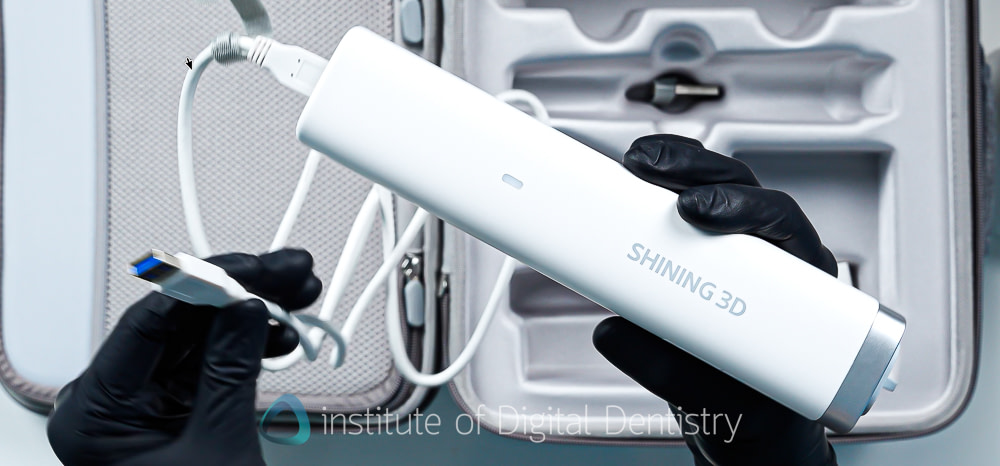
Calibration-free scanners are becoming the norm, and I hope future Aoralscan generations will eliminate this requirement. For complex implant cases with photogrammetry, however, the ability to verify scanner accuracy through regular calibration provides some reassurance.
Intraoral Photogrammetry - Enhanced IPG Kit
The Elite Wireless maintains the revolutionary IPG photogrammetry workflow that defined the original Elite while introducing meaningful improvements to the scan body system.
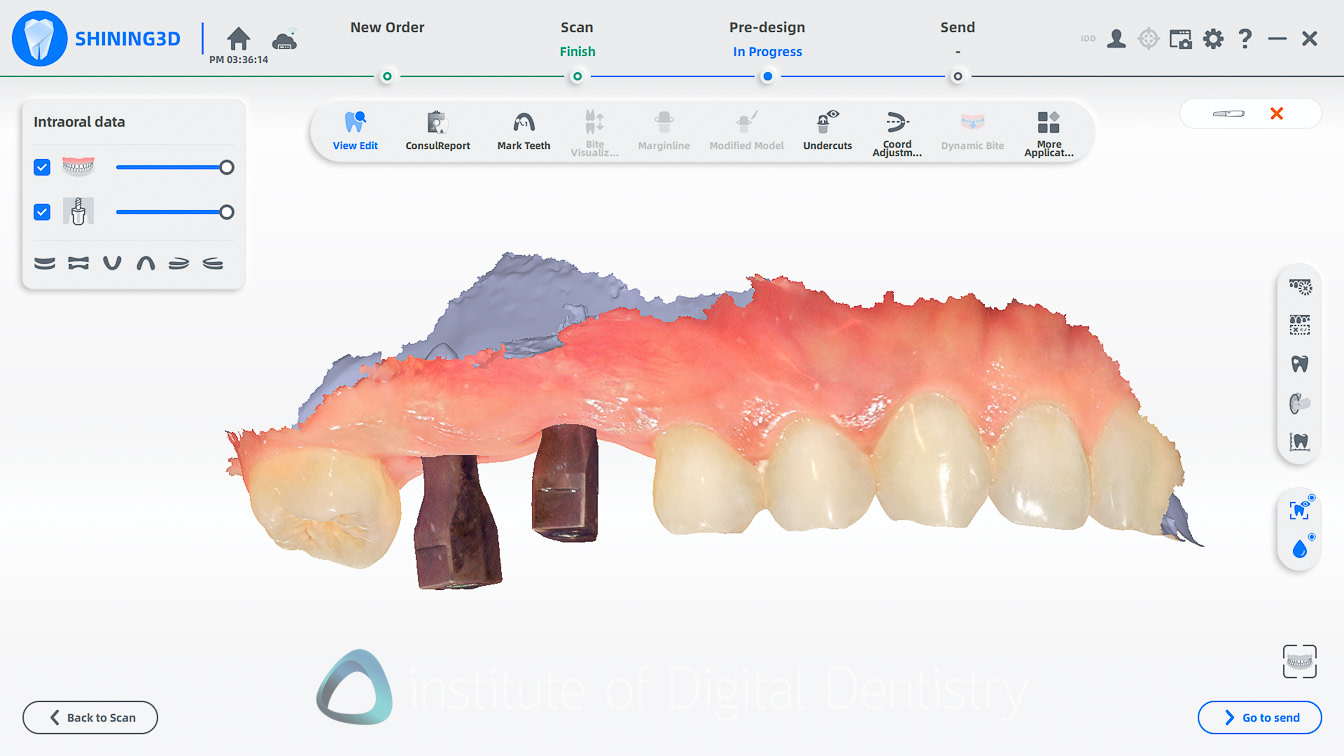
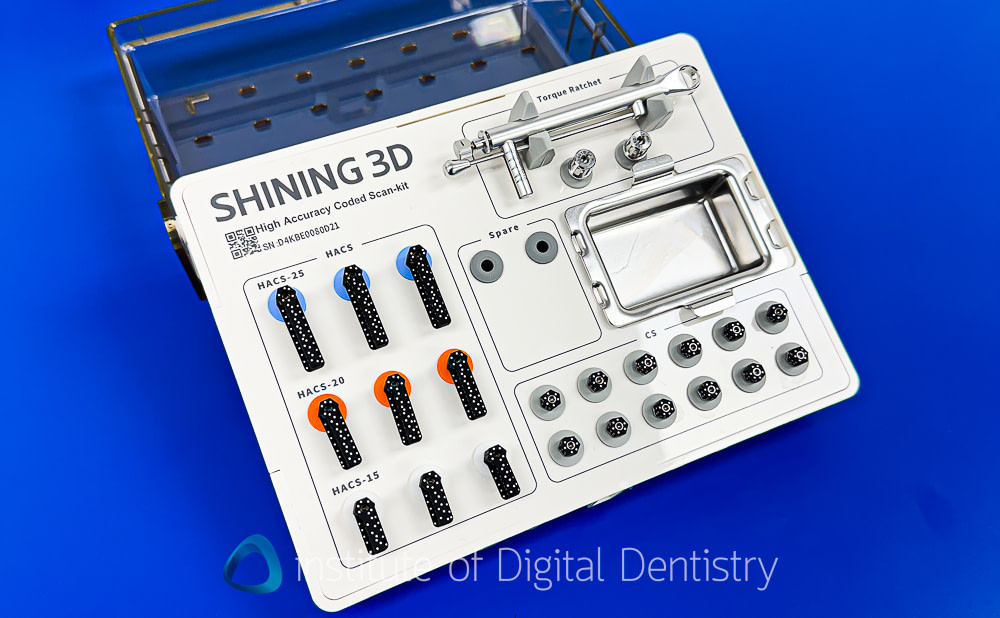
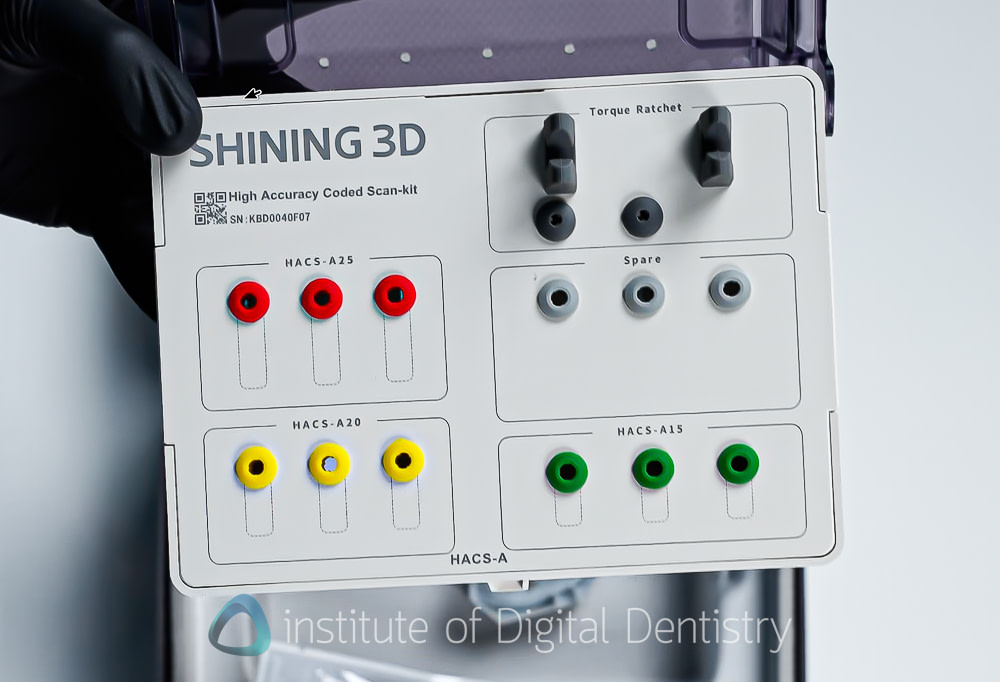
Since our review of the original Elite, we now have cap scan bodies, and the cassette with the new wireless scanner is significantly nicer than the original one shown below. The proof of concept obviously worked with incredible success with IPG, and now they are refining it.
Enhanced Scan Body Kit
The new IPG kit represents a genuine upgrade over the original:
Improved Cassette Design: The scan body storage system is more organized and features a premium look. The presentation and organization make the kit feel more professional.
Cap Scan Bodies Included: This is a significant addition. Cap scan bodies address immediate loading scenarios where blood and saliva can complicate tissue-implant alignment. The cap scan body provides stable positioning of the coded scan body within surrounding soft tissue, enabling reliable outcomes even in challenging immediate loading cases.
Proven Accuracy: Despite the enhanced kit presentation, the fundamental photogrammetry technology remains unchanged - which is exactly what you want. The system consistently achieves sub-30-micron accuracy in full-arch implant cases, as confirmed by our testing and the literature. In our clinic, we have used IPG for over 50 cases, and it is effective when performed properly. Training is required, but it is not as steep of a learning curve as using traditional photogrammetry.
IPG Workflow Overview
For those unfamiliar with the Elite's IPG system (full details in our original Elite review), here's the essential workflow:
- Scan the edentulous arch
- Place coded scan bodies on multi-unit abutments (torqued to 10 Ncm)
- Capture dot patterns on scan bodies
- "Splice" the scan body data with the tissue scan
- Software automatically converts to implant positions
The workflow remains intuitive and efficient, typically only taking around 5 minutes for full-arch implant scan procedures. The real-time feedback through color-coded indicators ensures adequate data capture. In my experience, it is a lot faster than using traditional photogrammetry.
Market Impact
Nearly a year after the original Elite launch, it's clear this technology has disrupted the photogrammetry market. Other companies are scrambling to respond; Medit released SmartX for horizontal scan bodies, and 3Shape announced TruAbutment partnerships. The Elite's approach of in-house, coded scan bodies with specialized algorithms, rather than other horizontal scan body units from different companies, remains unique in the market.
Elite Wireless Accuracy
The Elite Wireless maintains the proven accuracy of the original Elite across both standard scanning and IPG photogrammetry modes. In our in-house testing, which compares the Elite Wireless against other premium scanners for standard restorative cases, it demonstrates comparable accuracy for single-unit and quadrant scans. The scanner performs reliably across the full spectrum of routine clinical applications.
IPG Photogrammetry Accuracy
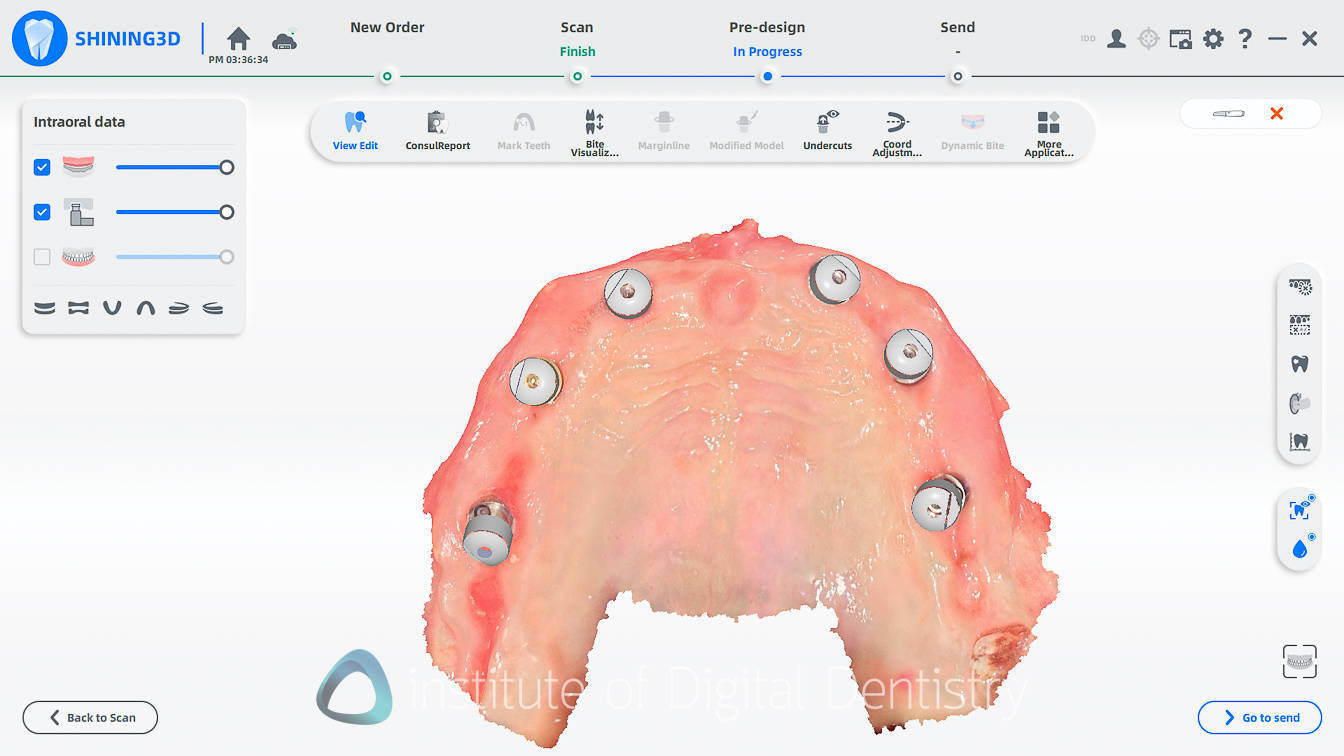
The photogrammetry mode continues to show impressive accuracy for full-arch implant cases. Our testing, including data collection for research comparing photogrammetry systems, found that the Elite Wireless achieved inter-arch implant discrepancies of under 30 microns - matching the performance of the original wired Elite.
The coded scan body system's approach of capturing specific dot patterns from multiple angles appears to minimize the impact of scanning angle on accuracy compared to traditional geometric scan body systems. Real-time feedback during photogrammetric capture helps ensure the quality of the data.
Clinical Validation
As mentioned, we have now used the Elite Wireless system for over 40 full-arch implant cases, and the results continue to impress. The accuracy proves sufficient for passive-fit prosthetics, and the workflow efficiency makes it practical for routine clinical use. It's worth noting that accuracy depends significantly on adhering to proper protocol. Scan body placement, proper torque values, and verification radiographs remain essential for accurate results. Even the most accurate scanning technology can't compensate for improper component placement.
Shining 3D Software Updates and Ecosystem
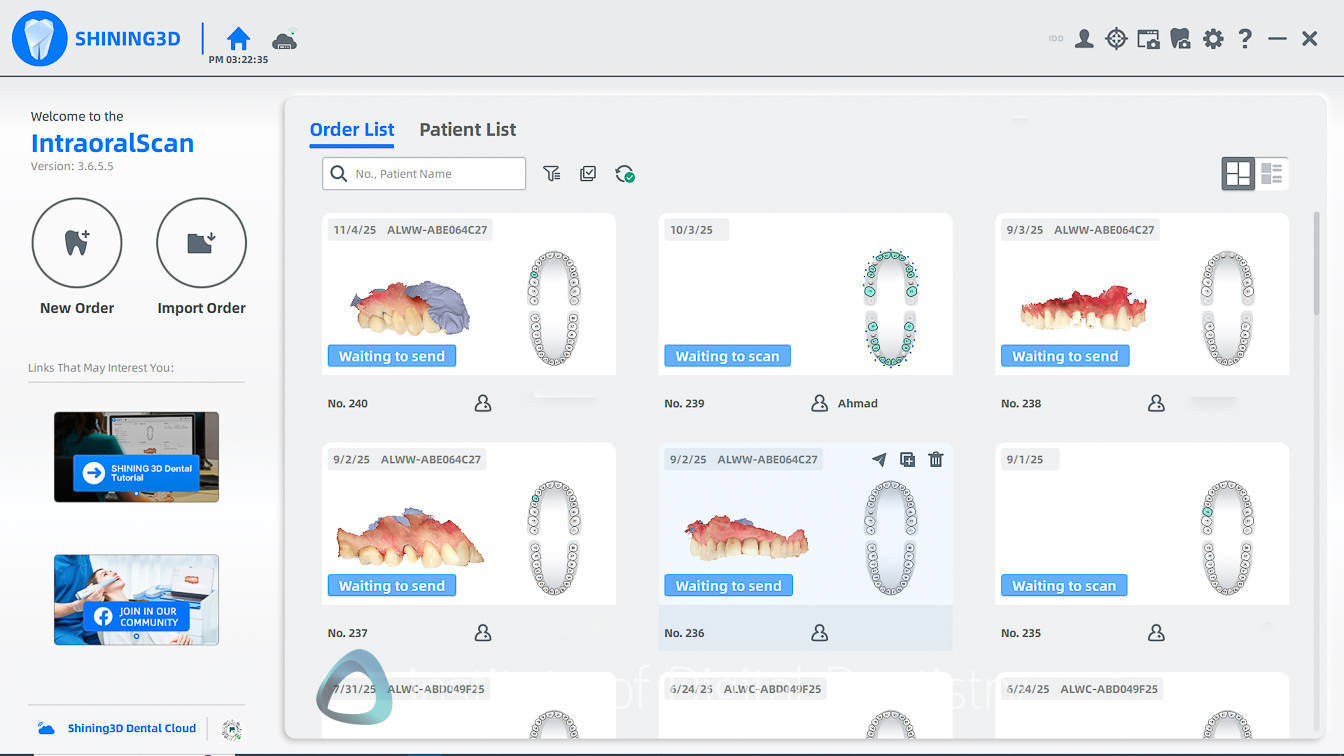
Since the original Elite review in December 2024, Shining 3D has continued aggressive software development. The Elite Wireless ships with the latest software version, which incorporates numerous improvements and new features.
Core Software Enhancements
The Dental Launcher platform continues to evolve, now offering:
- Enhanced AI processing algorithms
- Improved artifact handling
- Refined user interface elements
- Additional workflow customization options
- Expanded integration capabilities
The software maintains comprehensive workflows for virtually every clinical indication, from single crowns to complete dentures. something still uncommon in the scanner market. It is also one of the few scanners that continues to support macOS, setting it apart in a market where most scanners remain Windows-only. Although I must say, when I tried it, it does feel less optimized compared to the Windows version, so I use that instead.
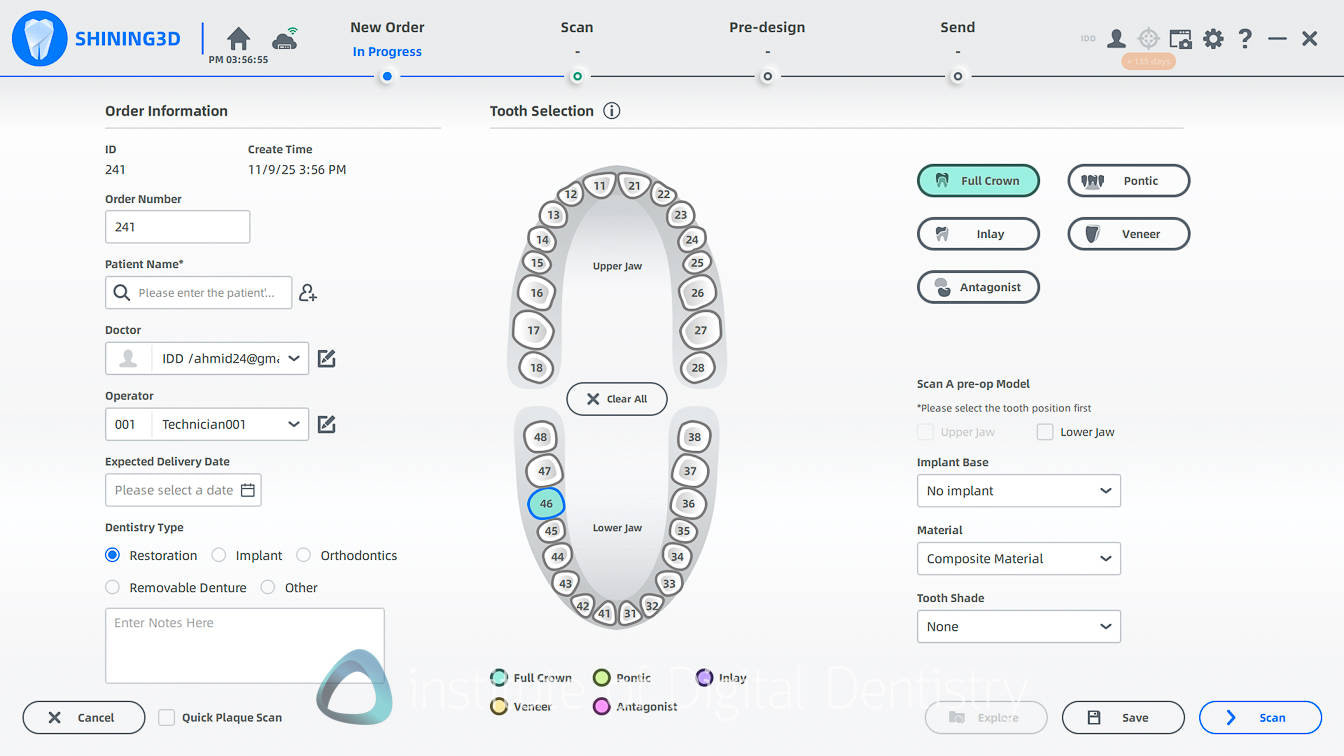
The scanning software itself is also very comprehensive, offering numerous tools for bite registration, dynamic bite, mesh editing, one-click removal of isolated data, hole filling in the scan, adding margin lines, and regular analysis tools such as occlusal heat maps and undercut analysis.
The software also operates on a cloud platform, which remains optional and is currently free; however, as I mentioned in the original review, who knows how long that will last? The system allows easy case sharing while maintaining local storage, providing flexibility in data management. Nice feature and becoming a market norm.
Export Capabilities
The Elite Wireless maintains a thoroughly open architecture like most scanners on the market with export options:
- STL files for routine lab communication
- PLY and OBJ formats preserving color data
- Direct exocad integration
- Batch export capabilities
Download the Full PDF Review
View as a flipbook online or download a copy to read it later.
The Software Apps - the Chairside Digital Toolkit
The Shining 3D application suite has continued to expand since the original Elite launch, maintaining Shining 3D's position as offering one of the most comprehensive software packages among any intraoral scanner company.
As of 2025, the Elite Wireless ships with nine distinct applications spanning patient communication, analysis, and design workflows. While individual tools may not match the polish of premium software from established players, the breadth of functionality included at no additional cost provides significant value.
Patient Communication Applications
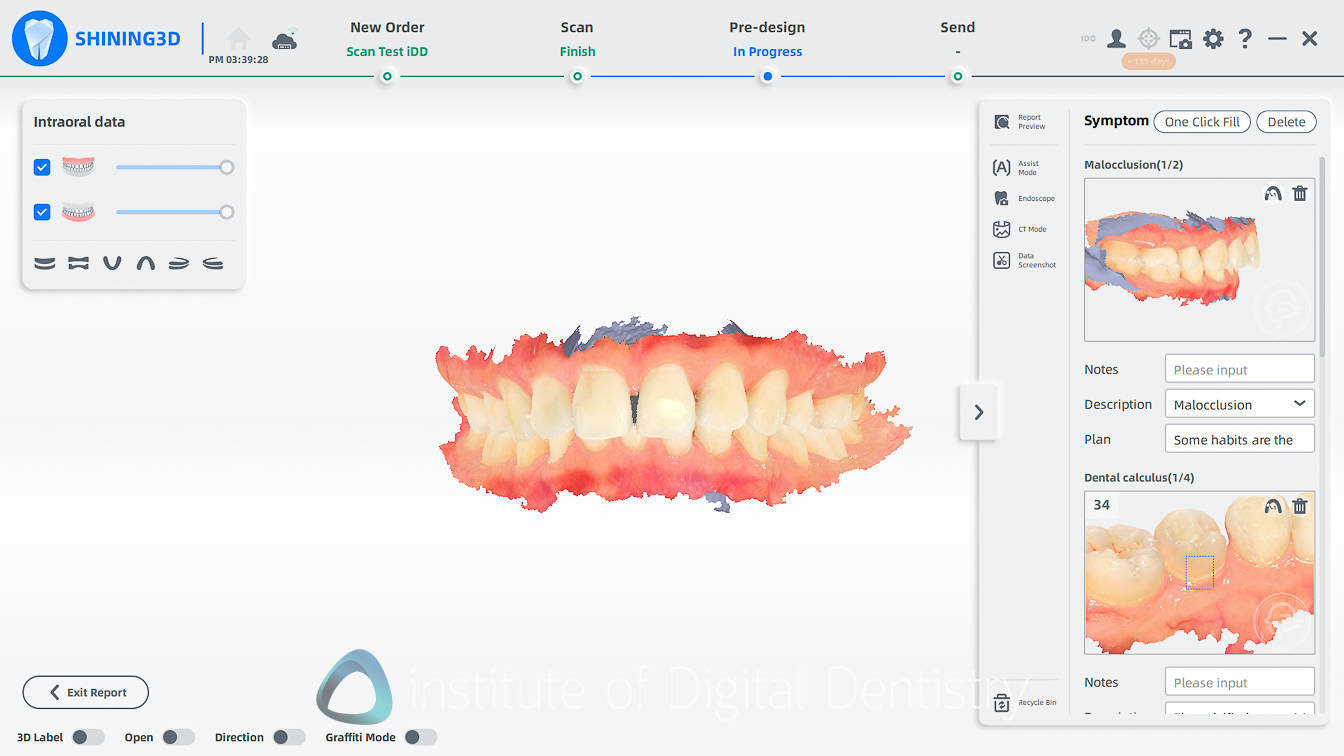
ConsulReport remains a valuable tool for patient education. After scanning, the AI automatically generates comprehensive oral health reports with detailed condition identification, treatment recommendations, visual documentation, and customizable annotations. The system identifies various oral conditions, such as caries, wear patterns, and periodontal issues. However, it's essential to remember that this is a communication tool rather than a diagnostic replacement; it doesn't always provide findings with 100% accuracy. You can easily add or remove any diagnostics before exporting a PDF report for the patient.
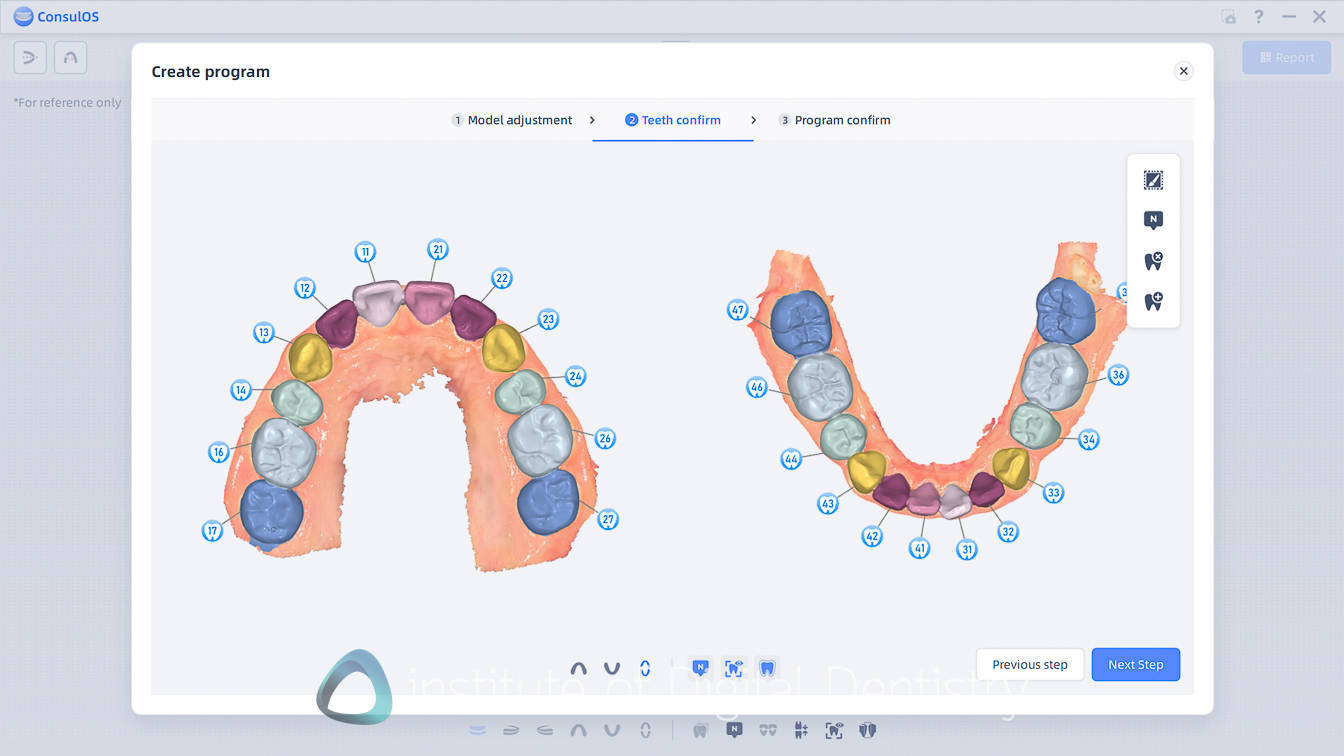
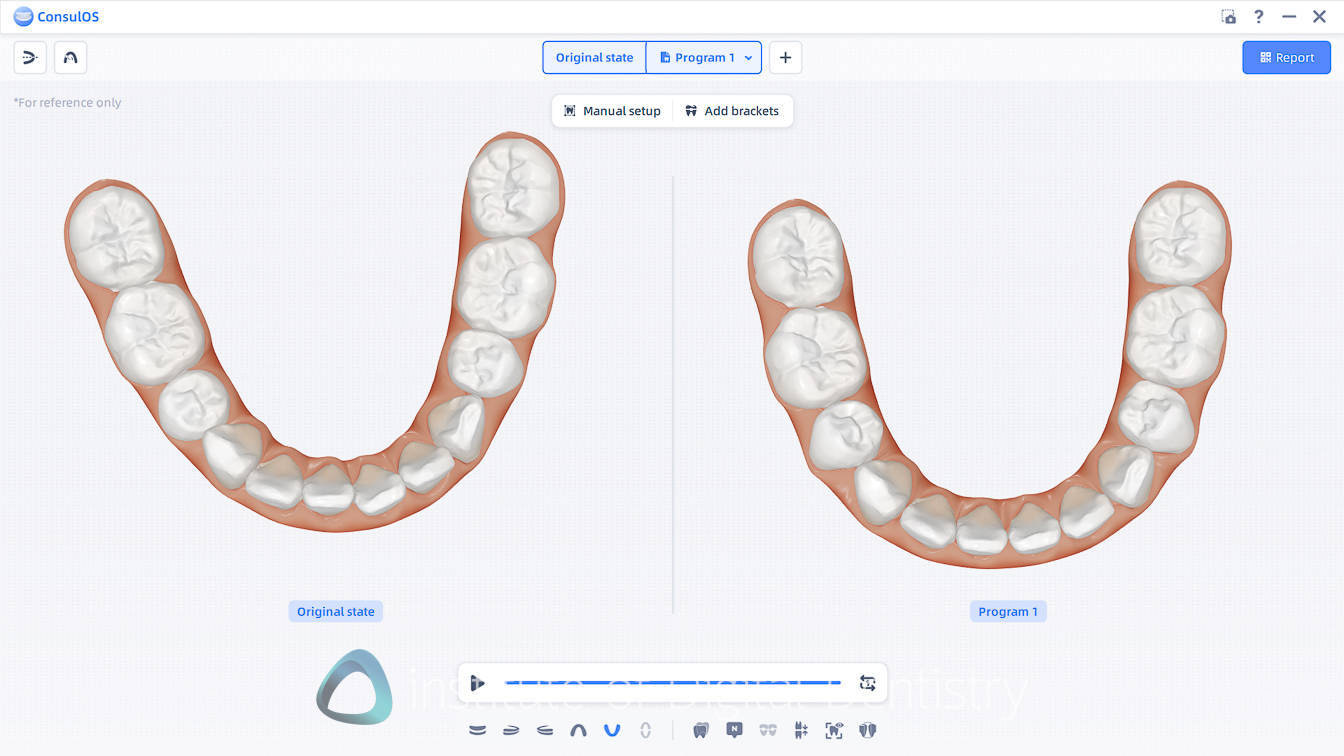
ConsulOS is the company's orthodontic simulator, has matured since the original Elite launch. The software automatically segments teeth accurately and predicts movement patterns, creating visual treatment simulations for patient communication. It goes beyond basic tooth movement prediction by incorporating traditional bracket visualization and enabling the comparison of multiple treatment approaches.
One standout feature is its integration with the MetiSmile facial scanner, which enables the visualization of both dental changes and their impact on facial soft tissues. While the AI handles standard cases efficiently, more complex orthodontic situations may require manual refinement to achieve optimal results. When used within its limitations as a communication tool rather than a definitive treatment planner, ConsulOS provides valuable visualization capabilities.
Analysis Applications
MetronTrack serves as the company's patient monitoring and analysis toolset, allowing you to track changes in dentition over time. This makes it particularly valuable for monitoring tooth wear, orthodontic progress, or periodontal changes. The software allows precise measurements of tooth movement, wear patterns, and tissue changes, while offering intuitive before-and-after comparisons that help illustrate treatment progress to patients. Users can overlay digital models to visualize changes, and the system provides documentation features for tracking progress over extended periods, which is especially useful for patients with bruxism, orthodontic treatment, or periodontal cases. While similar to monitoring tools found in premium systems like TRIOS and iTero, it's nice to see these features at this price point.
Design and Manufacturing Applications
The "Creator Applications" represent Shining 3D's venture into CAD territory, blurring the line between scanning and design software. While not replacing full CAD software, these applications provide efficient workflows for common clinical needs, particularly suited for practices with in-house 3D printing capabilities. Most of these applications are one-click solutions, which is quite a nice workflow.
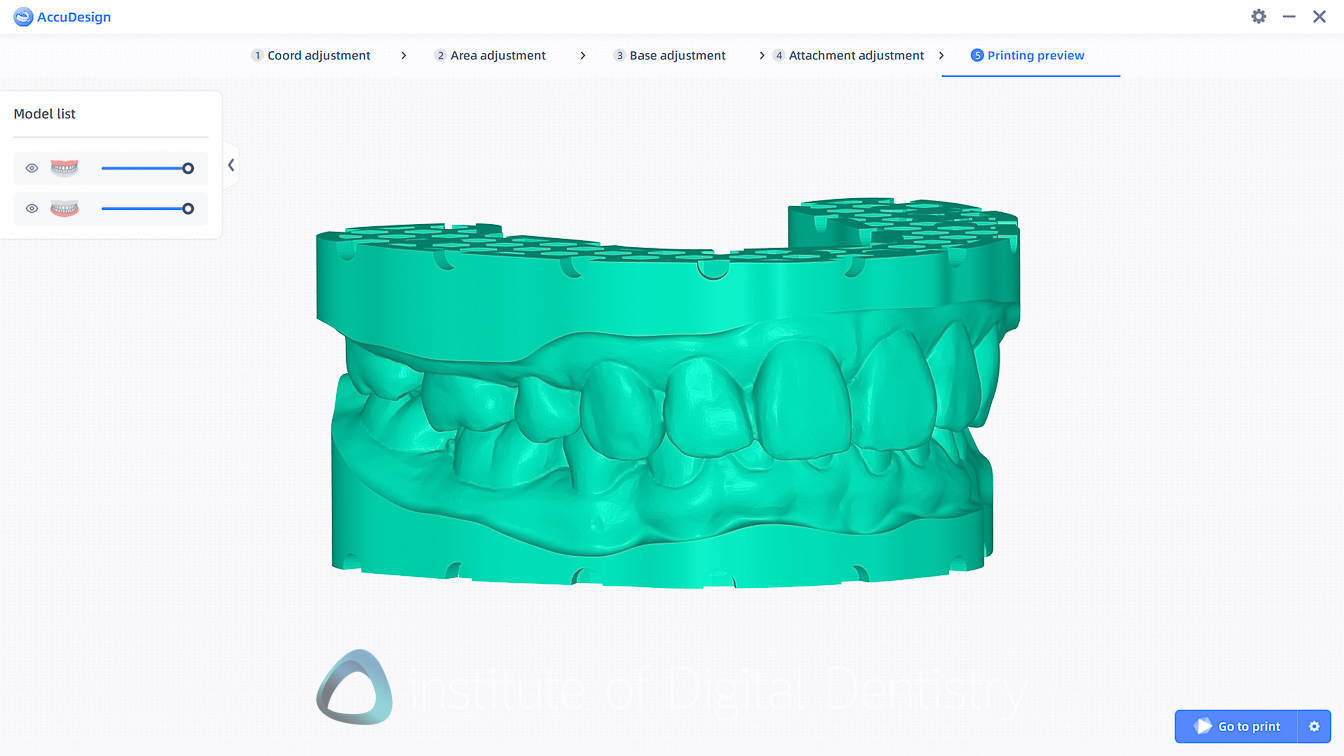
AccuDesign is the company's model builder, handling everything from basic study models to articulated designs. Users can choose between hollow and solid models, add various base designs, incorporate articulator indexing, and add text labels. The software optimizes designs for 3D printing, including features like drain holes and support structures. While not offering the extensive options found in Medit's model builder, it competently handles most clinical model needs in a single click.
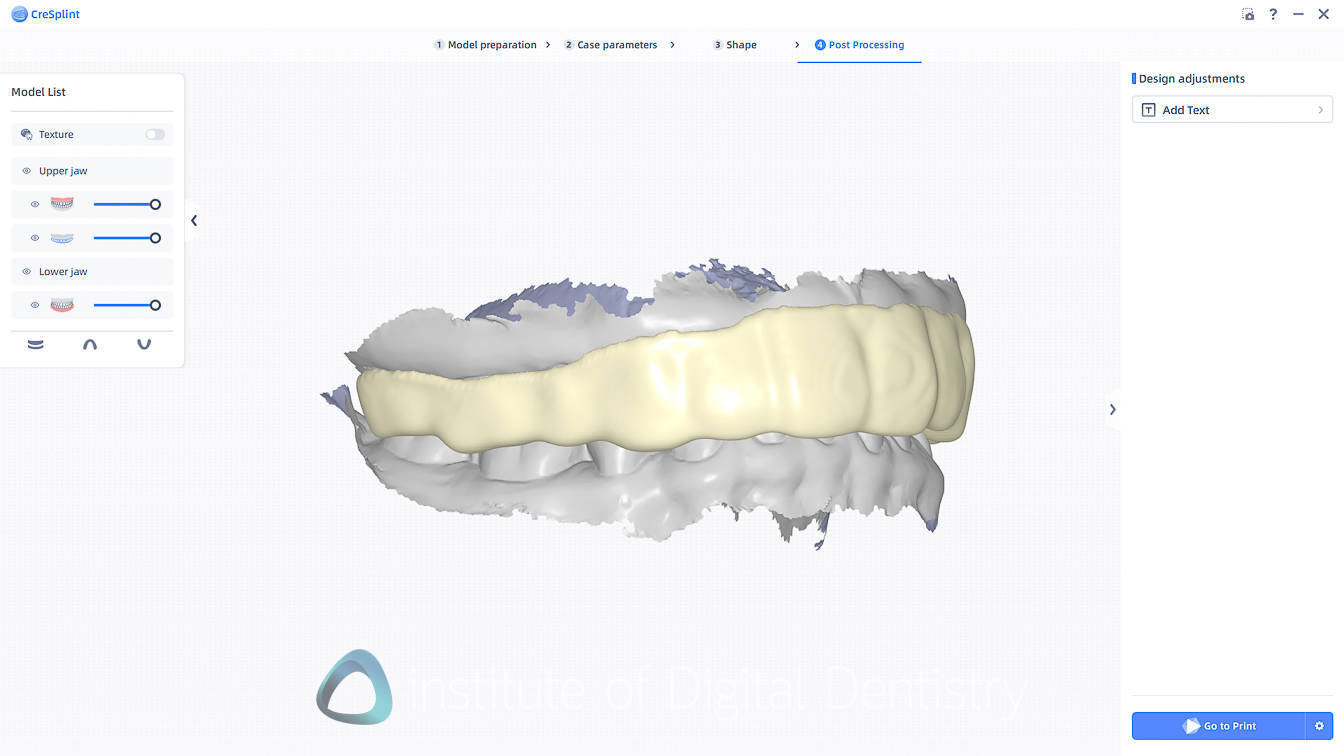
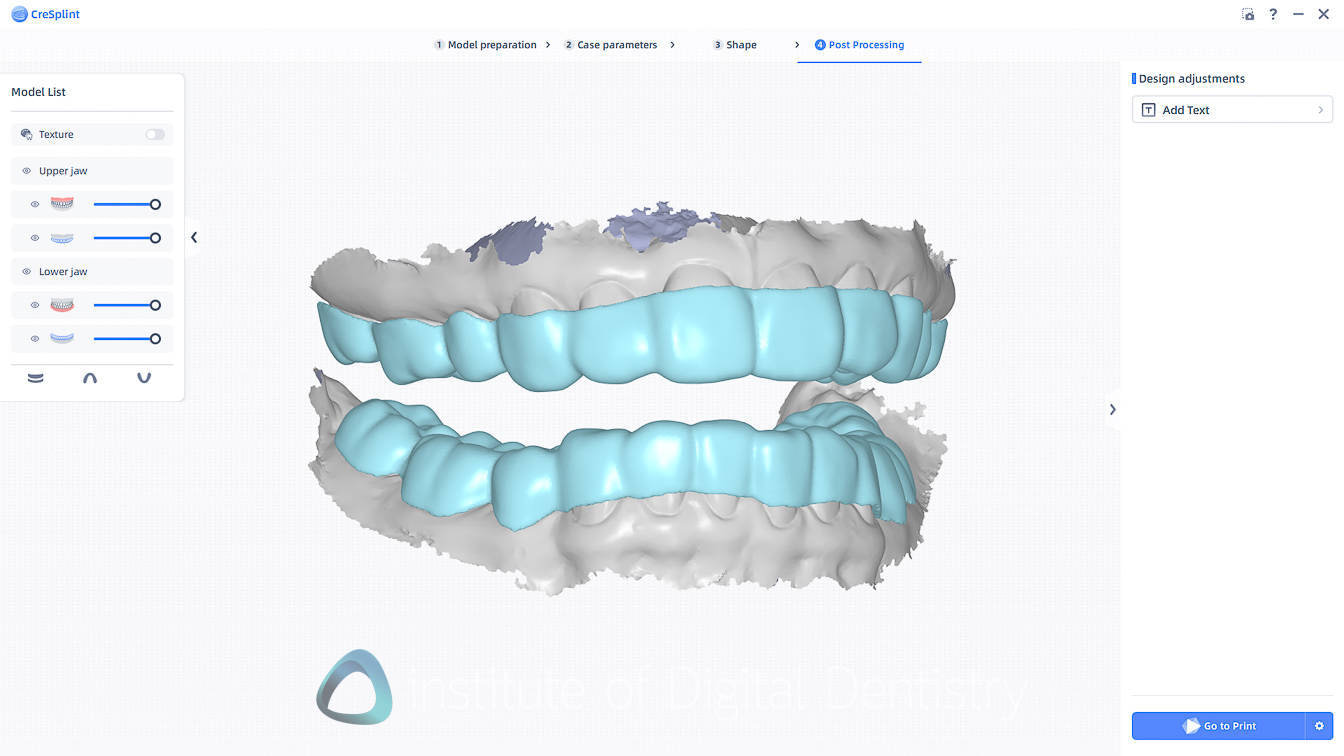
CreSplint offers a streamlined approach to designing night guards and splints. The software employs AI algorithms to automate the design process, generating appliances with minimal user input. Users can adjust the thickness, modify articulation parameters, and customize designs to meet the specific needs of individual patients. While currently limited to basic flat-plane designs, the automation and efficiency make it practical for routine cases, particularly useful for practices offering same-day appliances. The designs are passable.
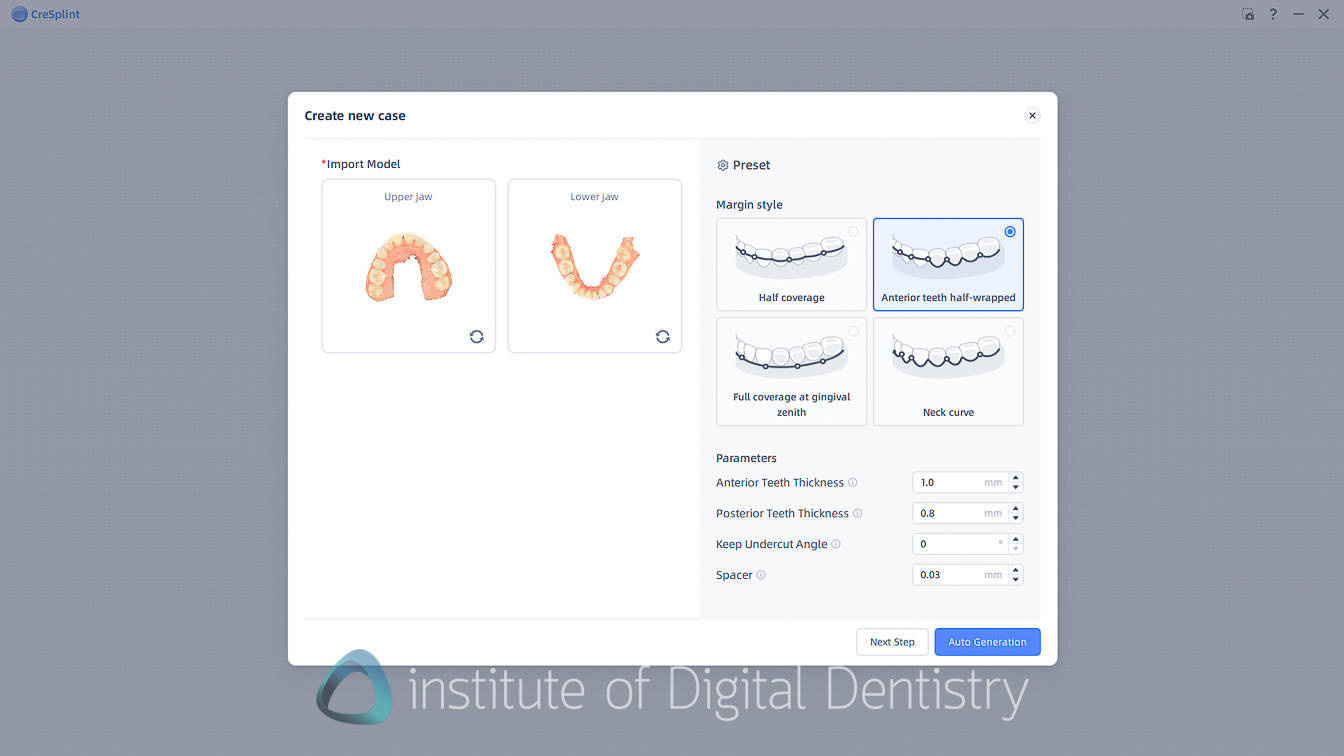
CreRetainer provides dedicated retainer design functionality, complementing CreSplint by offering specific workflows optimized for orthodontic retention appliances. It works in a very similar way to CreSplint, but this separation allows for more specialized design approaches for different retainer types (especially considering material thicknesses). After choosing the type of retainer you like and its thickness, simply click 'Generate,' and it will do the rest for you.
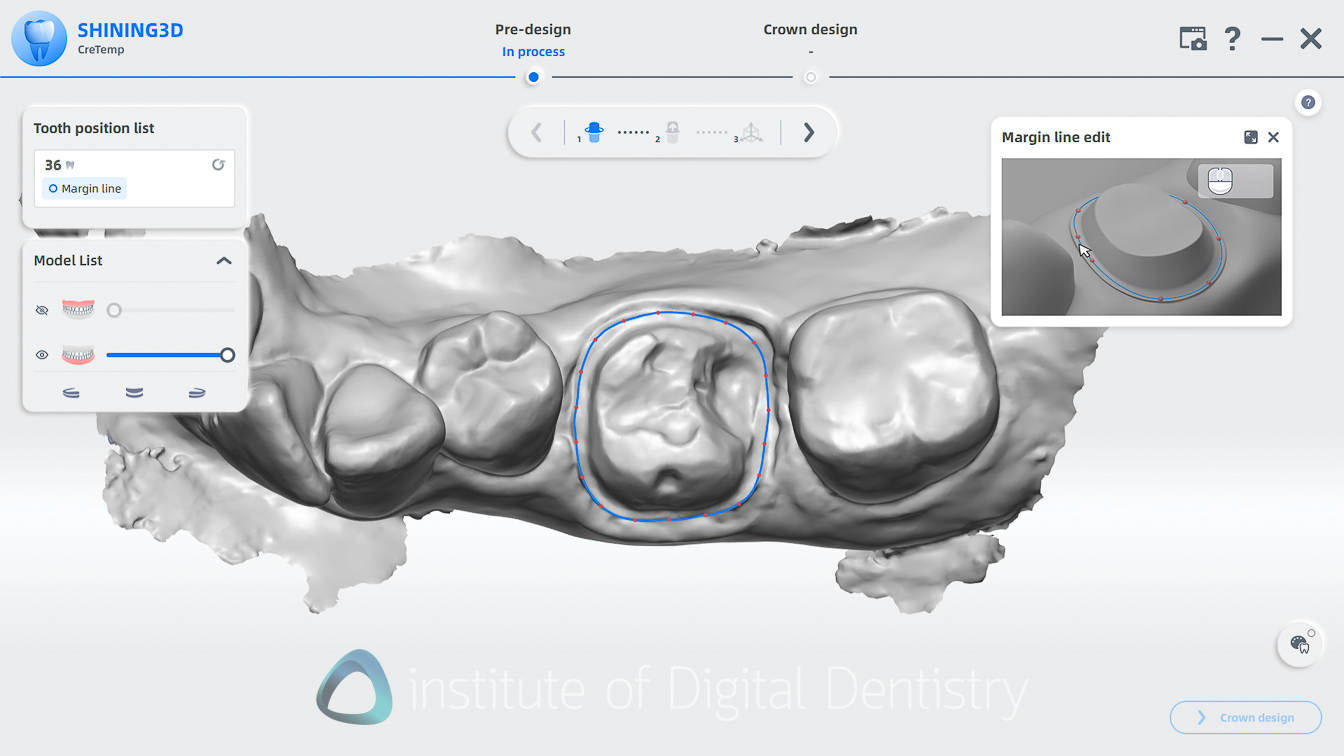
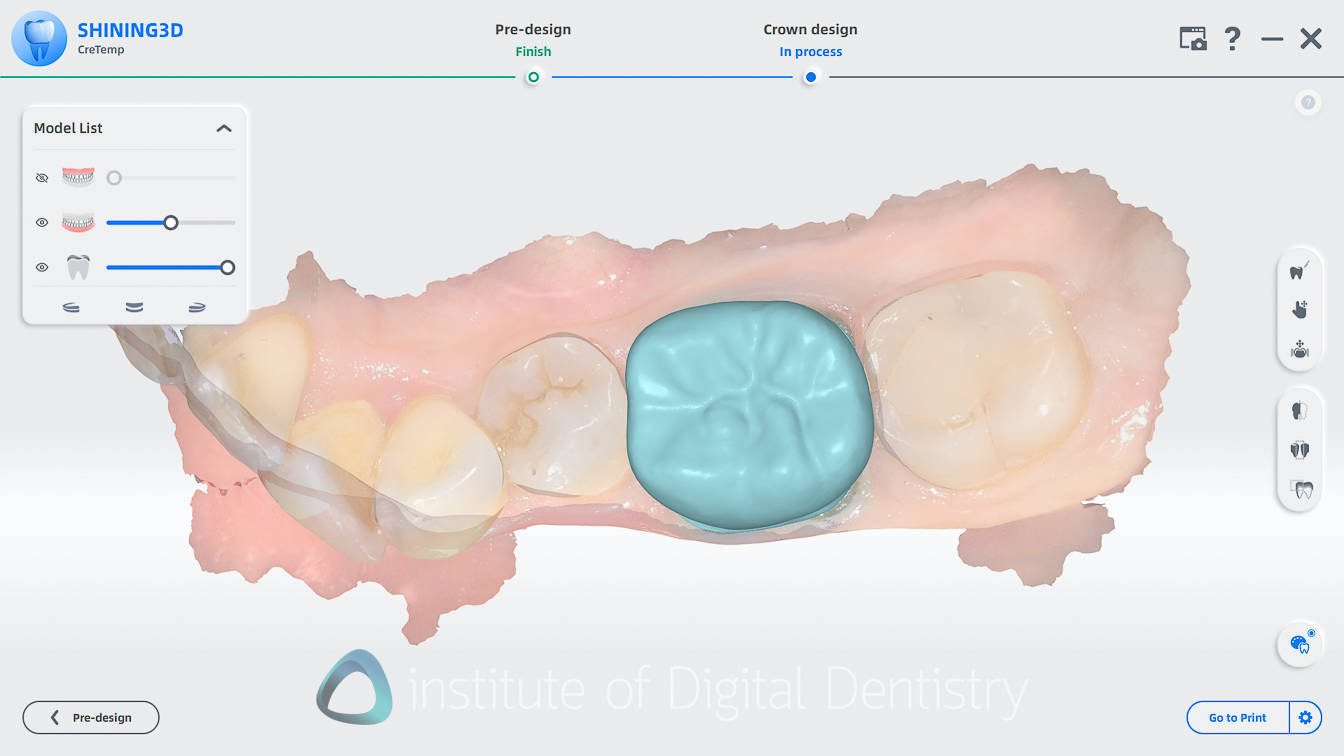
CreTemp is the company's approach to crown design, and it's interesting that they refer to it as "Temp" when it's actually a CAD software for creating restorations. The software guides users through a straightforward workflow, from automatically placing margin lines with impressive accuracy to the final design. The AI-driven system generates anatomically designed proposals that are OK at best. Not amazing. Additionally, the editing tools remain basic compared to dedicated CAD software, such as exocad, but they provide reasonable functionality for temporary restorations. Not bad for a free included application.
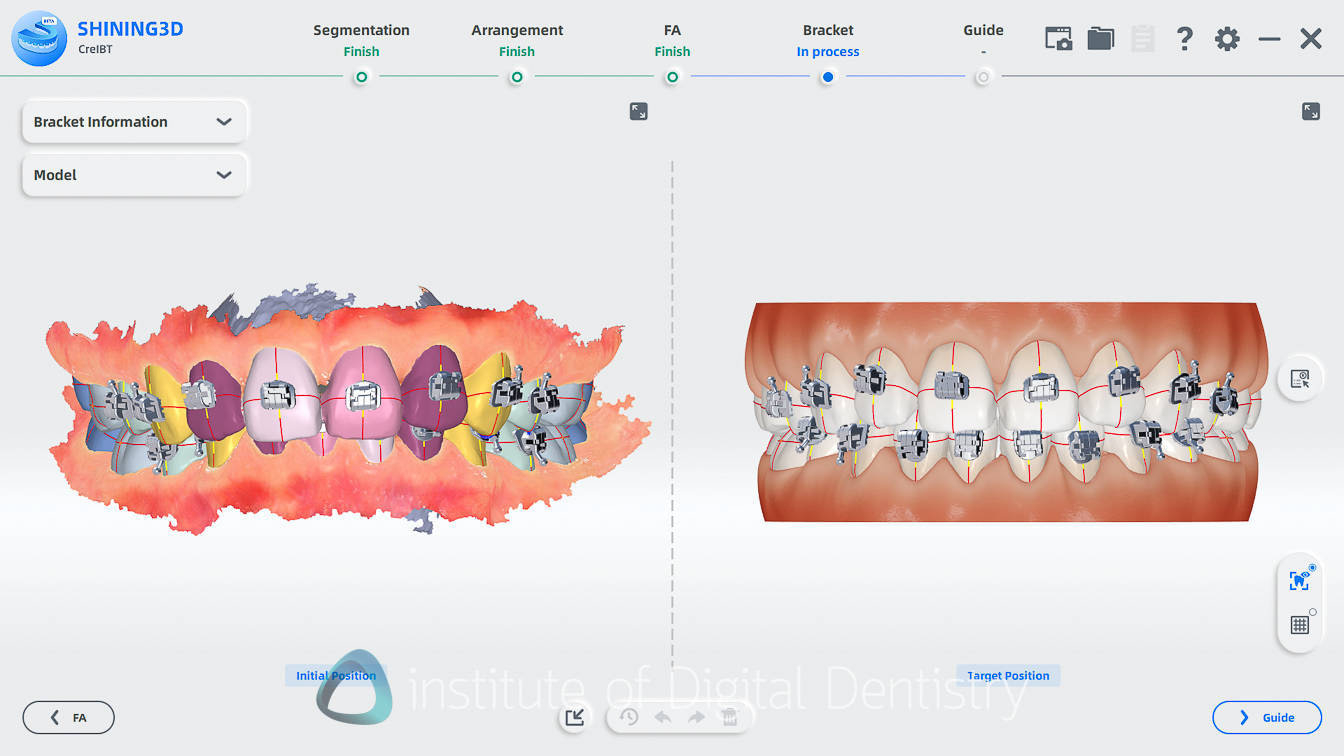
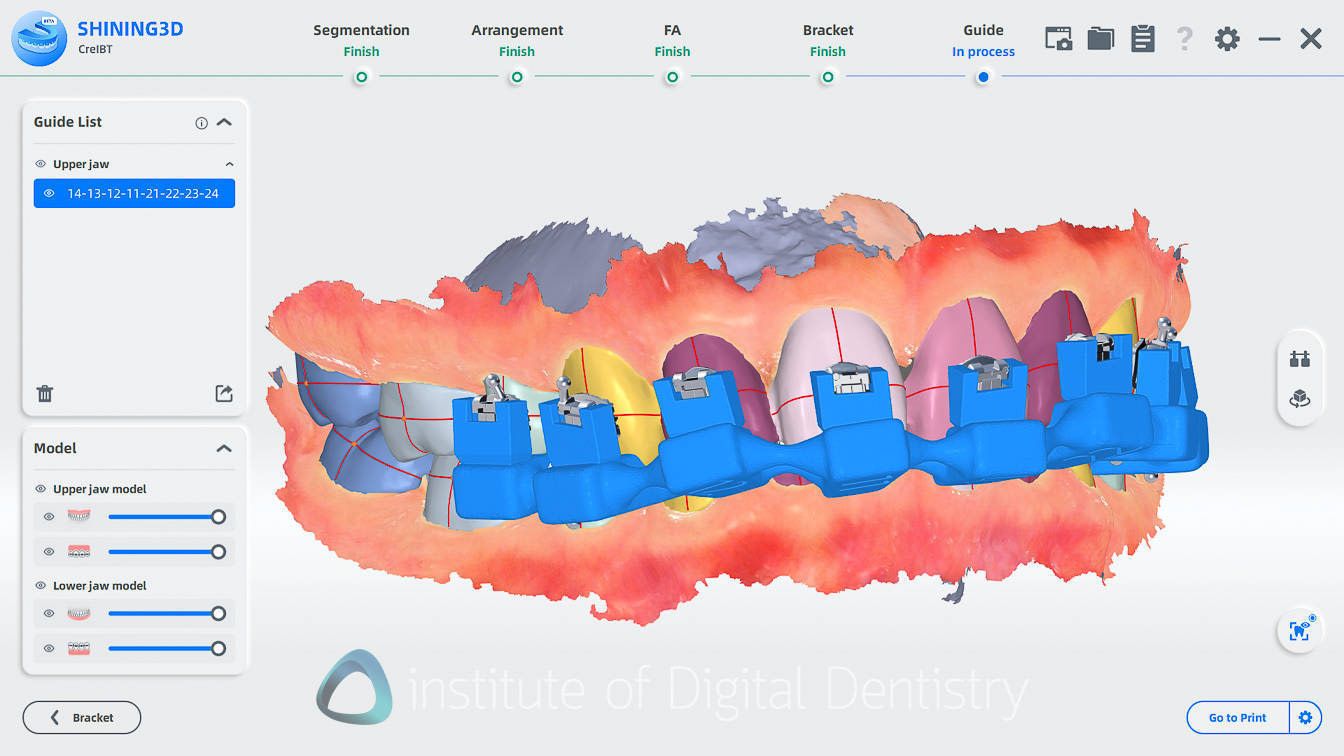
CreIBT (beta) handles indirect bonding tray design, integrating bracket positioning tools with automated tray generation. Users can work with various bracket systems, customize positioning, and verify placement before generating the final design. The software analyzes insertion paths and optimizes tray design for clinical use.
AccuWare serves as the bridge between design and manufacturing, functioning as Shining 3D's data preparation software for its AccuFab 3D printers. The application handles the entire digital manufacturing process from preparing 3D models to sending them to the printer, including automatic layout, support generation, and "one-click printing" that automates arranging, supporting, and slicing models. It's particularly useful for dental models, surgical guides, and splints, streamlining the CAD-to-CAM workflow. For practices using Shining 3D printers, this integration eliminates the need for separate slicing software.
The Overall Philosophy
The general vibe across all these applications emphasizes automation and efficiency over extensive customization or lab-quality outputs. This approach makes them suitable for chairside use, where speed and simplicity often take precedence over intricate design control that labs require. Regular software updates continue to expand capabilities, and while these tools won't replace dedicated CAD software for complex cases, they provide valuable chairside design options without additional cost. All free. For practices seeking to explore in-house workflows without significant software investments, this comprehensive suite offers a genuine pathway into digital manufacturing. There are a lot of loading screens across the board; just be aware of that, as most of it is AI-driven.
Shining 3D Aoralscan Elite Wireless Cost
The Elite Wireless enters the market at $23,999 USD (€23,999), representing a $4,000 premium over the wired Elite's $20,000 price point.
This positions it well in the premium scanner segment, notably less expensive than the TRIOS 5 or 6 at $25,900 USD, substantially lower than the iTero Lumina's range, yet commanding a premium over options like the Medit i900 at $18,999 USD.
At $23,999 USD, the Elite Wireless offers value for practices performing extensive full-arch implant work. The wireless freedom, lightweight design, and proven IPG accuracy create a package that may be hard to match at this price point. When you factor in the elimination of a separate photogrammetry unit, the math becomes even more favorable.
For practices comparing options:
- Versus Traditional Photogrammetry: Eliminates the need for a separate photogrammetry unit ($15,000-30,000)
- Versus Other Premium Wireless Scanners: Provides IPG capability at a lower cost
- Versus Other Horizontal Scan Body Systems: Comparable accuracy with a scanner included
Now, the question becomes: is the extra $4,000 worth it for wireless? That really comes down to your preferences.
Additionally, if you haven't already heard, Shining 3D has also recently released the ELF. Essentially a wired Shining 3D Elite with no IPG and at a lower cost than the original. So, as it stands now, this is the cost of the Elite range:
- Aoralscan Elf - $12,000 (entry level without IPG)
- Aoralscan Elite - $20,000 (wired Elite with IPG)
- Aoralscan Elite Wireless $23,999 (wireless Elite with IPG)
Lastly, if you don't already have a suitable computer, expect to spend $2,000 to $ 3,000 on a laptop that meets the recommended specifications. The computer requirements are the same as those of the original Elite: an Intel Core i7-8700 or higher processor, 16 GB or more RAM, 256 GB or more SSD storage, and an NVIDIA RTX 2060 6 GB or higher graphics card. At least one USB-C port is required, and touch screen capability remains optional but useful.
Ongoing Costs
The consumable costs remain reasonable for a premium scanner. Scanner tips cost approximately $50 USD each and can withstand 100 autoclave cycles at 134°C, resulting in a cost of about $0.50 per patient scan. The Elite Wireless comes with five tips in the box (two large IPG tips, three standard tips, and one mini tip), providing a solid starting point for managing autoclave rotation.
The enhanced IPG kit represents the more significant ongoing investment. Replacement or additional coded scan body kits cost $2,250 USD, though each kit can be autoclaved up to 300 times. Notably more expensive than the scan ladder, but with arguably better construction and a more premium feel. Yet, it is cheaper than the TruAbutment IO Connect, but that can be used with any scanner. In contrast, the IPG system is Elite only.
For practices using multiple implant systems or requiring spare kits, this cost can add up.
One critical thing I will mention is that you make sure you follow the cleaning instructions of the IPG kit correctly. If cleaned with the wrong solvents, the dots on the scan bodies lose their shine. This makes them useless and unreadable by the scanner. Ask me how I know. Thankfully, Shining3D allows you to buy individual replacements, rather than whole kits, in a move that is kind to the clinician.
No Subscription Model
Shining 3D maintains its subscription-free approach with the Elite Wireless. Currently, there are no mandatory yearly fees for scanner operation or software access. Cloud storage remains free, though this could change in the future. The only ongoing costs are consumables, including replacement scanning tips and additional scan body kits for various implant systems or replacement needs.
Download the Full PDF Review
View as a flipbook online or download a copy to read it later.
Conclusion
The Shining 3D Aoralscan Elite Wireless represents a successful evolution of an already groundbreaking scanner. By addressing the primary limitation of the wired Elite while maintaining all the revolutionary IPG capabilities, Shining 3D has created what is arguably one of the most compelling wireless full-arch implant scanning solutions available.
The transition to wireless feels natural and well-executed. At 194g, it's one of the lightest wireless scanners on the market, a remarkable achievement, considering the battery and all the technology packed into this device. The Wi-Fi 6 connectivity proves reliable, battery life meets clinical needs, and the overall wireless implementation introduces no compromises to scanning performance or IPG accuracy.
The shift from metal to polymer construction initially seemed like a downgrade to me, but in practice, it has proven to be arguably an improvement. The elimination of scratch-prone metallic surfaces means the scanner will maintain its appearance better over time, and the weight savings contribute to excellent ergonomics for a wireless intraoral scanner.
The enhanced IPG kit, featuring cap scan bodies and an improved cassette, adds genuine clinical value, particularly for immediate loading protocols. The organization and presentation feel more premium, addressing one of the few areas where the original Elite could have been better.
The main downsides I found are with the batteries and battery charging case, which feel a little rushed to get to market. I am not a big fan of premium scanners using universal batteries.
From a software perspective, Shining 3D continues to aggressively develop, regularly adding features and refinements. The comprehensive application suite provides great value, and the subscription-free model means the scanner delivers long-term without ongoing fees.
Let's face it, the full-arch implant workflow market needed disruption. Traditional photogrammetry units are expensive, cumbersome, and often require separate equipment and workflows. The Elite Wireless eliminates all that complexity while delivering accuracy that matches or exceeds traditional methods in our testing.
At $23,999 USD, the Elite Wireless positions itself competitively in the wireless scanner market, offering All-on-X capabilities that no other scanner can match without horizontal scan bodies from third-party companies. For practices performing regular full arch work, the value proposition is compelling; you get a capable, general-purpose scanner that also features the IPG system built in. That is, of course, if you want to pay the premium for wireless. Otherwise, the wired Elite is still great.
Shining 3D's journey from the overheating original Aoralscan to the Elite Wireless in just six years remains remarkable. They've gone from being a budget option struggling with basics to an innovation leader introducing technology that other companies had to match. That's impressive, and it suggests that this company will continue to push boundaries in digital dentistry.
Mark my words - the traditional photogrammetry business is fundamentally disrupted. The Elite Wireless demonstrates that sophisticated full-arch implant scanning can be seamlessly integrated into standard intraoral scanners without compromise. Other companies will follow, but Shining 3D did it first.
Evaluation Ratings
Evaluation Ratings
Scanning Speed
Scanning Flow
Scanner Size
Ease of Use
Scanner Software
Investment Cost
Additional Features
Wireless Scanner
Wireless connection via cradle
Caries Detection
No real caries detection via fluorescence, but it does have AI caries detection on standard scans via an app.
Software Apps
Many including ConsulOS, ConsulReport, MetronTrack, AccuDesign etc
CAD/CAM Software
Many CAD Apps for Crowns, Splints, Retainers, Models, and IBT, etc
Subscription Requirements
None
Autoclavable Tips
100 times per tip