
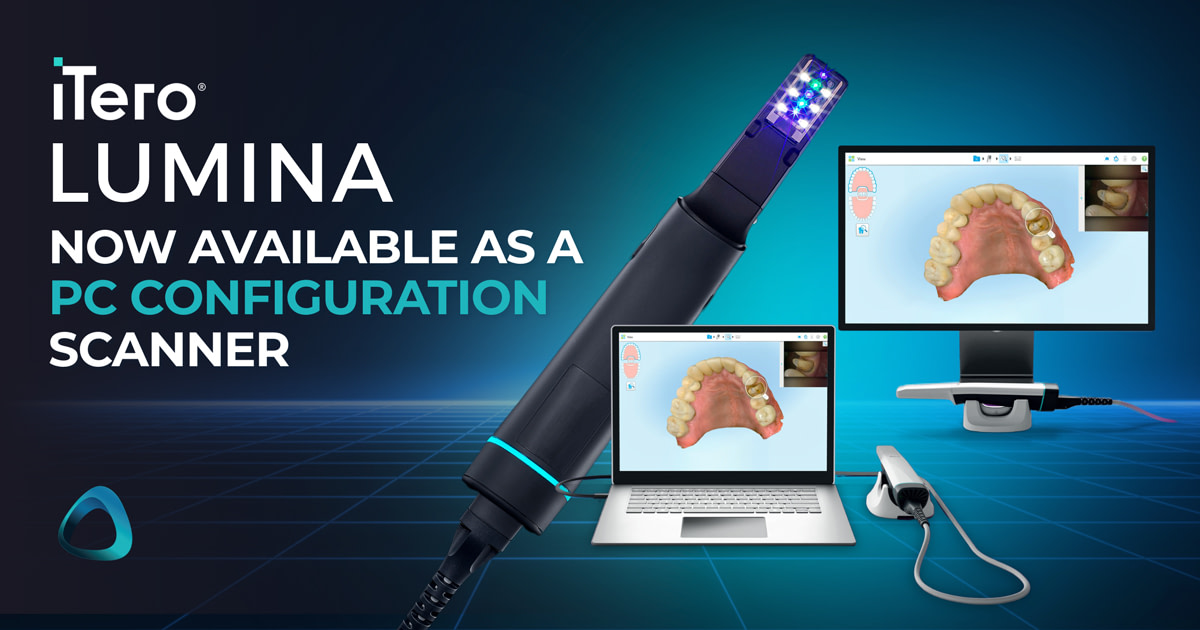

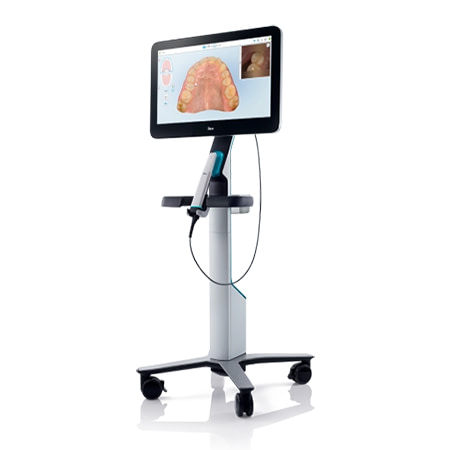
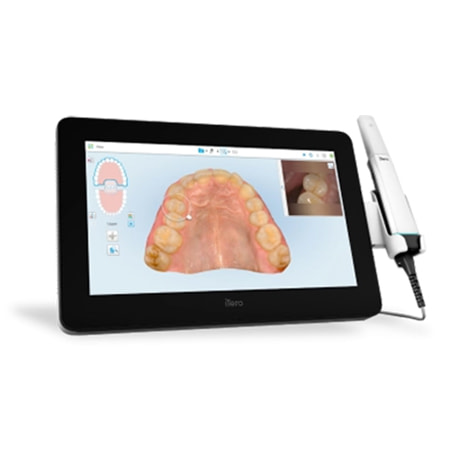
Align Technology has expanded the iTero Lumina lineup with a third configuration — a laptop-based one. The Lumina is now available as a Cart, Tablet, or PC configuration, giving practices three distinct ways to use the same scanning platform.
If you're unfamiliar with the iTero Lumina, it's Align Technology's flagship intraoral scanner, launched in 2024. You can read our full iTero Lumina review here.
Until now, the Lumina has been available in two configurations: a cart version and a mobile tablet version. Both are fully integrated, medical-grade systems with built-in displays and everything you need out of the box.
The new PC configuration adds a third deployment option to that lineup.

A Third Way to Deploy Lumina
The core proposition here is deployment flexibility. If your practice has an existing compliant PC setup, or if you want to run the Lumina across multiple clinics in different sites without investing in multiple full systems, the PC configuration makes that easier.
Align has partnered with Contec as their authorised third-party integrator for the laptop option. Contec offers pre-configured and validated laptops, such as the Dell Precision 3591, that come with the iTero software already installed, paired with the scanner, and backed by a three-year warranty with replacement services. The validated laptop through Contec is priced at $2,249 USD.
You don't have to buy through Contec. If you already have a laptop or desktop that meets Align's published specifications, you can use that. However, Align requires that the computer either be purchased through their authorised vendor or be fully compliant with their published specifications, as an incompatible system could affect performance and support coverage.
What Are the PC Hardware Requirements?
The Lumina PC configuration has specific hardware requirements. You'll need a machine with at least an Intel Core i5 14th-generation (or newer) processor and a dedicated NVIDIA GPU — necessary for the real-time processing and scan stitching that the Lumina's capture technology demands. Align has published a full list of compatible CPUs and GPUs on their specifications page.
This isn't a scanner you can run on any general office machine. A modern processor and dedicated graphics card are required, consistent with most professional intraoral scanners that operate on external PCs.
Same Scanner, Different Environment
This is worth making clear: the scanning performance across all three Lumina configurations is identical. Same wand, same capture technology, same clinical capabilities, same output. The differences between configurations relate entirely to the hardware environment surrounding the scanner, not the scan quality or clinical outcomes.
What the PC configuration doesn't include is the integrated hardware package of the cart or mobile versions: no calibrated medical-grade display, no built-in touchscreen, and none of the streamlined cabling of an all-in-one system. The cart and mobile configurations are also built with biocompatible materials designed to meet clinical cleaning and disinfection standards.
With the PC configuration, you're managing your own hardware in the clinical environment: cable management, placement, and workflow integration are all things you'll need to think through.
Whether that tradeoff suits your practice depends on how you work, not on clinical performance.
Where is it Available?
As of March 2026, Align is rolling the PC configuration out progressively. It is planned to be available in the United States, Canada, Brazil, Singapore, India, Japan, Australia, New Zealand, Vietnam, Thailand, Taiwan, Hong Kong, Macao, and South Korea, with further expansion planned later in 2026.
Availability may vary by market; check with your local Align representative for the latest in your region.
What Does This Mean for the Market?
The core Lumina technology remains unchanged, but recognition that offering the platform in a format compatible with external PC setups could expand reach without changing what the scanner actually does.
It also puts the Lumina in more direct format competition with scanners that have always operated this way: the Medit range, the 3Shape TRIOS series, and Shining 3D brands. Whether the PC configuration Lumina will be price-competitive with these remains to be seen, as Align hasn't publicly released full pricing at the time of writing.
For practices already in the Invisalign ecosystem, the Lumina PC configuration offers a way to access the platform, including the iTero Design Suite and its cloud-based exocad CAD capabilities, within their existing hardware infrastructure.
I'm curious whether this will succeed. It's worth noting that Dentsply Sirona launched its own laptop port, the Primescan Connect, a few years ago, and it didn't exactly set the market alight. The PC format hasn't historically been a game-changer in this segment. We'll see if Align's broader ecosystem pull makes the difference.
I'll keep an eye on official pricing and update this article once details are available.
What are your thoughts — is the PC configuration a useful addition to the lineup, or is the all-in-one experience still the way to go? Leave a comment below or check out our full iTero Lumina review.
Great addition. But now they have to bring the design suite to the cart aswell… Loved being able to design a crown in front of my patient with the Primescan Concept, so why not with itero as well? It’s cloud based after all. But maybe with the new update to exocad 3.3/design suite 1.2 some more changes will happen.
Totally agree! That would be epic.
Design Suite being better integrated into iTero or more seamlessly in the software is something I am hoping for too.