

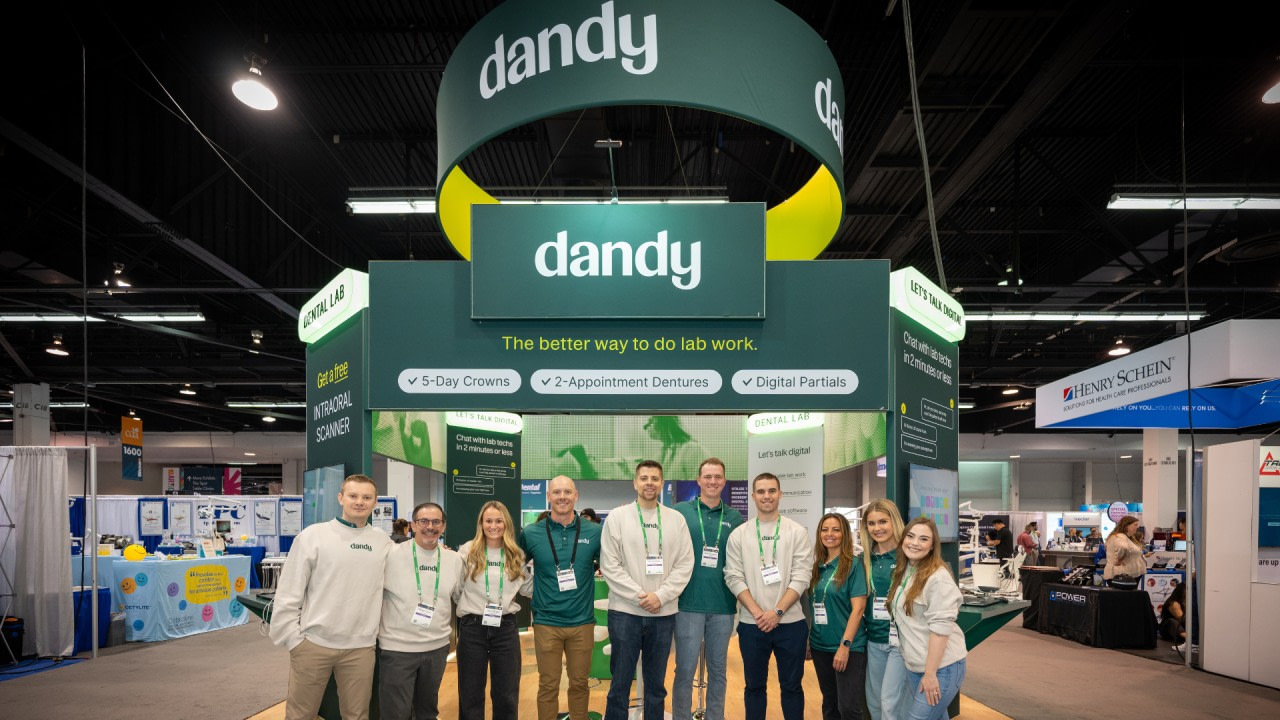
At the Chicago Midwinter Meeting 2026, one of the busiest booths wasn't a scanner manufacturer or a materials company. It was Dandy, a venture-backed digital dental lab based in New York, running an aggressive campaign to get as many dental practices as possible to sign up for its lab.
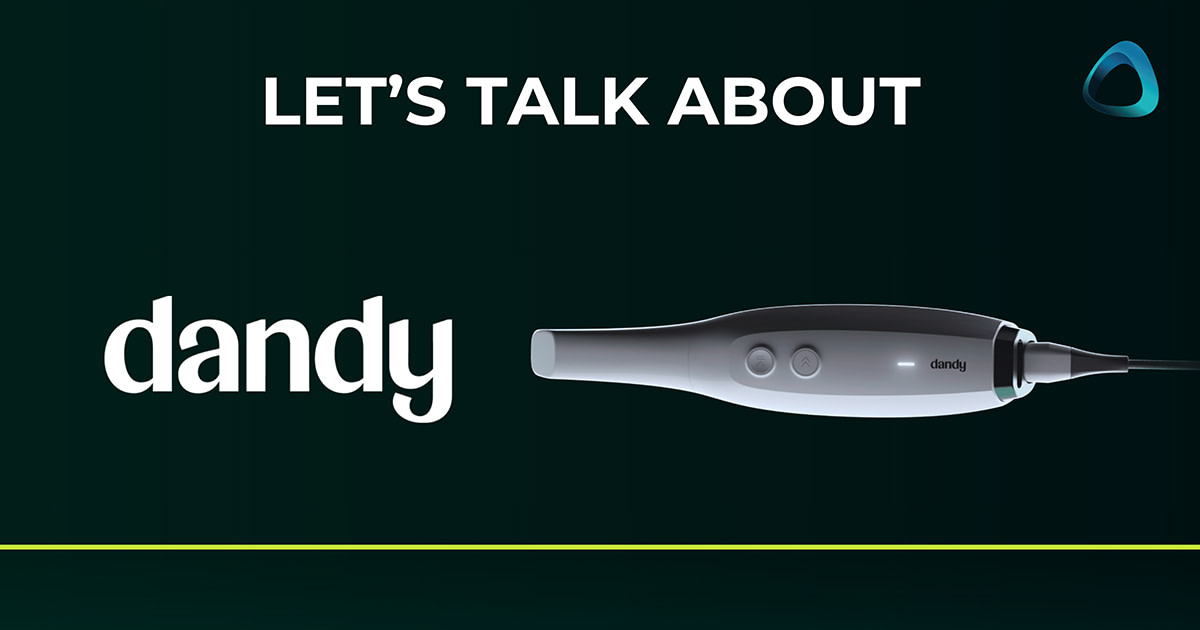
Their pitch is simple: sign up with Dandy as your lab, and they'll give you a free intraoral scanner. This IOS is a rebranded Dandy scanner with some unique features, such as an AI preparation/scan checker, 24-hour chat support, and quite a nice UI/UX.
It's a bold strategy. And whether you think it's brilliant or concerning depends on which side of the lab-practice relationship you sit on.
I've been observing this Dandy scanner for a while now, and at this point, they're impossible to ignore. They're likely one of the most disruptive forces in the dental lab and IOS space right now. So let's take an objective look at who they are, what they're offering, how the business model works, and what it all means for dentists and labs.
Who is Dandy?
Dandy was founded around 2020 by Toni Oloko and Daniel Hanover. Both studied at the University of Pennsylvania, with time at the Wharton School of Business. Oloko's background is in business and entrepreneurship. Hanover's is in technology, statistics, finance, and computer science.
Neither founder is a dentist nor a dental technician. Fascinating how disruption comes from outside.
That's not a criticism. It's context. Dandy was built from day one as a technology company that happens to operate in dentistry, not a dental company that adopted technology. That distinction matters because it explains a lot about how they operate, from their aggressive growth strategy to the way they've built their software ecosystem and their willingness to give away hardware to acquire customers.
Dandy is heavily venture-backed. Their most recent funding round was a $95 million Series C led by General Catalyst in September 2025, with other investors including Greenoaks, Addition, Inspired Capital, and Primary Venture Partners. CB Insights reports total raised funding of approximately $47 million across multiple rounds. The company has around 379 employees and is headquartered in New York City, where they recently signed a 37,000 square foot lease at 22 Cortlandt Street.
They also acquired Neem, a dental practice management software company, in December 2025. This signals that Dandy's ambitions go well beyond just lab work. They want to be, in their own words, "the modern operating system for dentistry."
What Does Dandy Actually Offer?
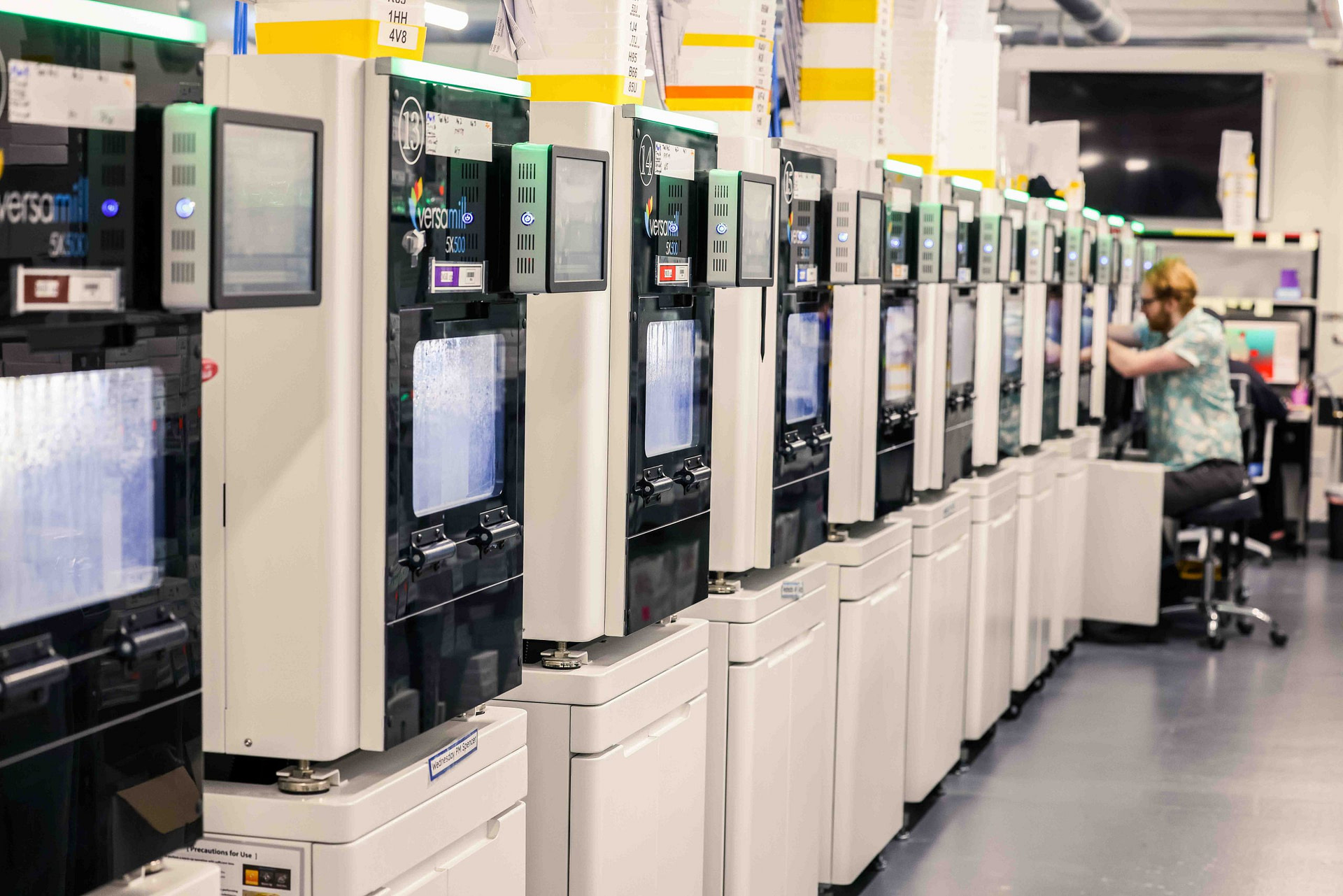
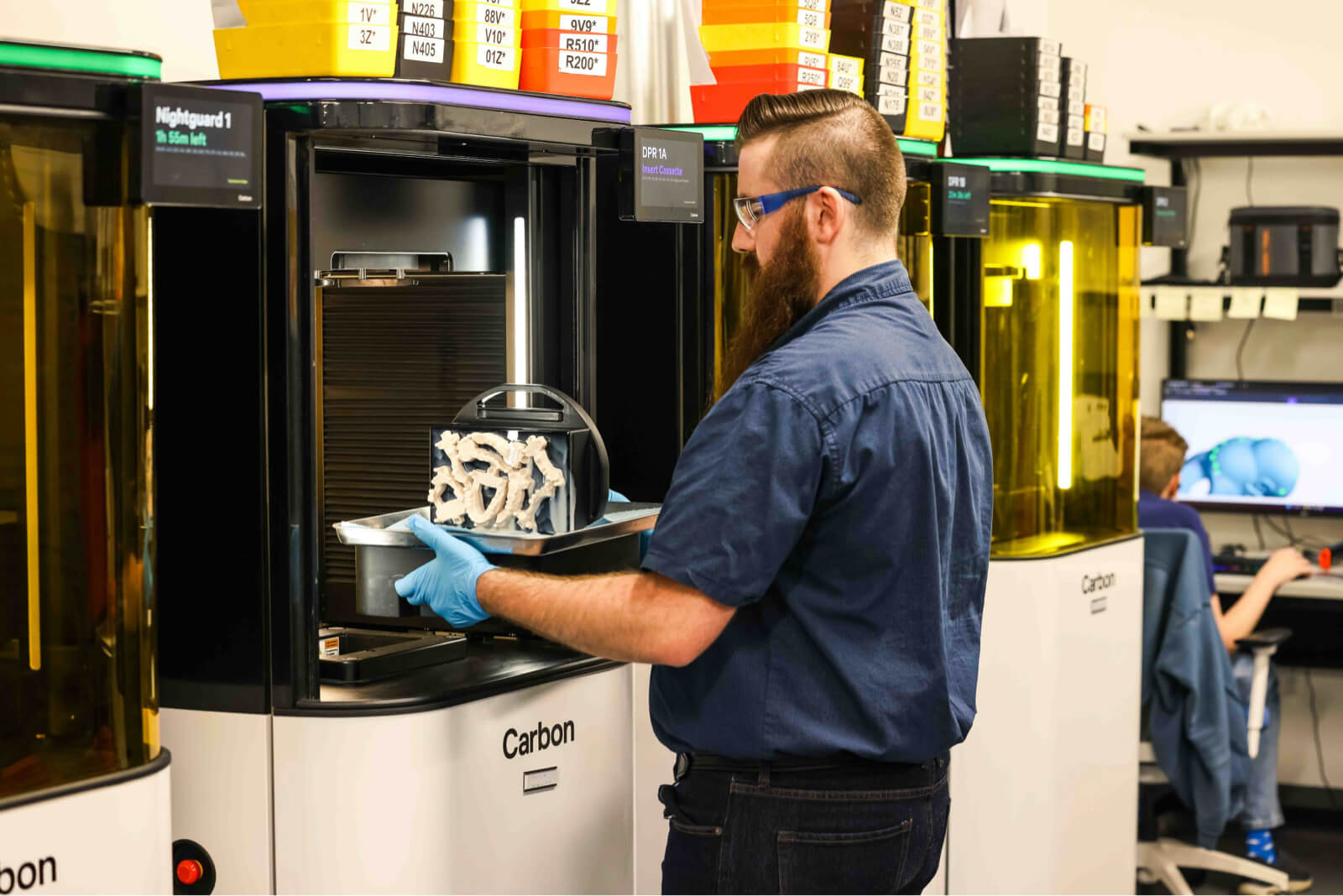
At its core, Dandy is a fully digital dental lab. They offer a full range of services, including zirconia crowns (5-day turnaround), eMax crowns, PFM crowns, dental bridges, veneers, implant solutions, full dentures (2-appointment workflow), partial dentures, clear aligners, splints, guards, and sleep apnea appliances.
What makes them different from a traditional lab is the technology layer built on top of the lab work. This includes their Chairside software (for scanning and ordering), a case management portal for real-time tracking, live scan reviews with lab technicians (reportedly in under 60 seconds), 3D digital design previews within 24 hours, and around-the-clock chat support for lab cases. They claim to have processed over 11.5 million scans and state that over 2 million people have a Dandy product in their mouths.
For a lab, that level of software integration and real-time clinical support is genuinely impressive. The fact that a dentist can launch a live video call with a lab technician while the patient is still in the chair, get a scan reviewed, and confirm it's lab-ready before the patient leaves is a meaningful workflow improvement that many traditional labs simply cannot match.
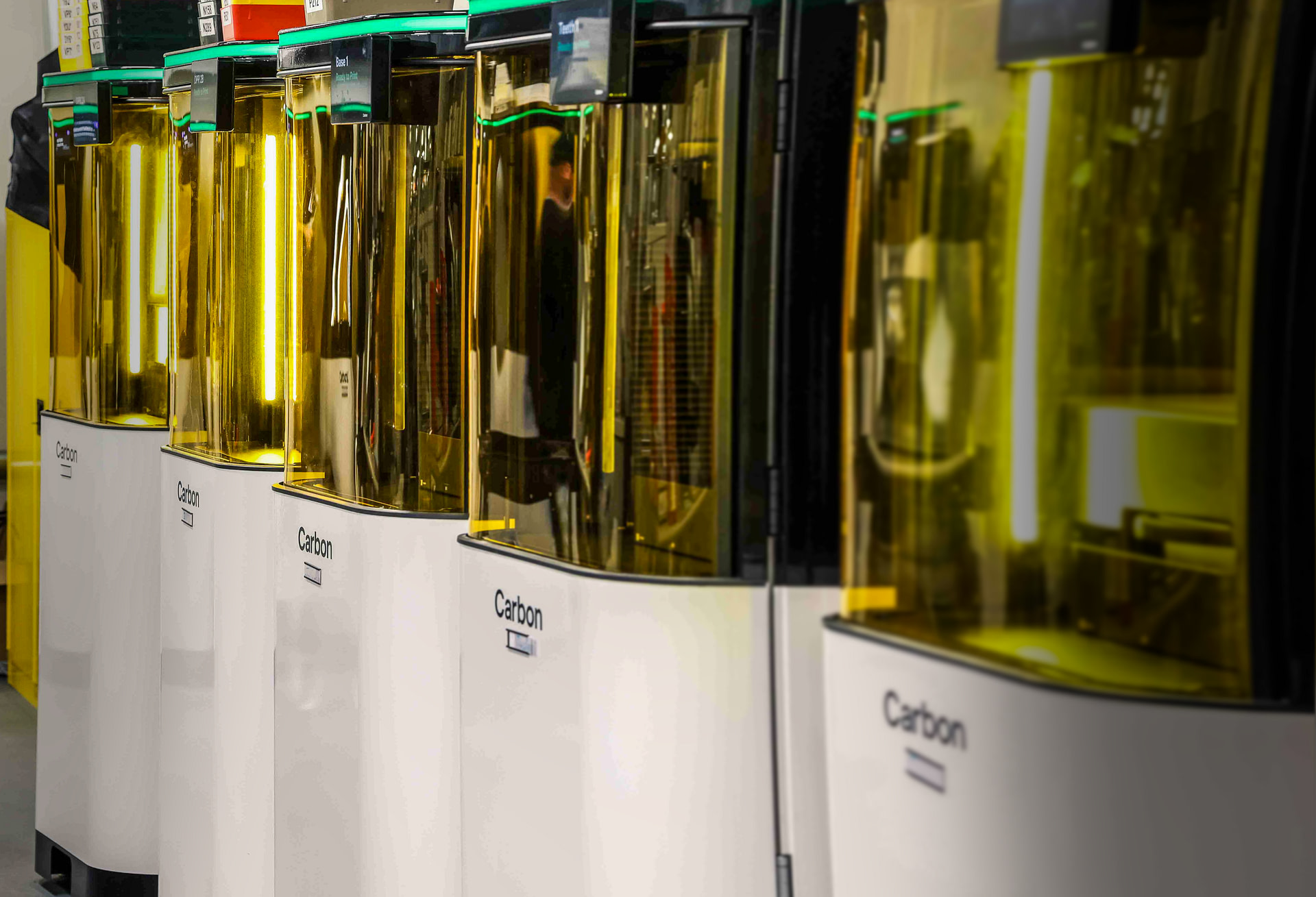
The Dandy Vision Scanner
In October 2025, Dandy launched its branded Dandy Vision intraoral scanner. This was followed in February 2026 by the DandyCart, an all-in-one touchscreen workstation designed to pair with the scanner. The OEM for the scanner is Alliedstar, which I have reviewed many times and is, frankly, great scanner hardware.
Here's what Dandy claims about the Vision:
- 24.9% faster scanning than leading competitors
- Wide field of view and deep depth of field
- AI-powered instant issue detection
- Real-time crown prep analysis during scanning
- Trained on data from over 11.5 million scans
- Free mirror tips for life
- No software fees, no long-term contracts
On paper, these are bold marketing claims.
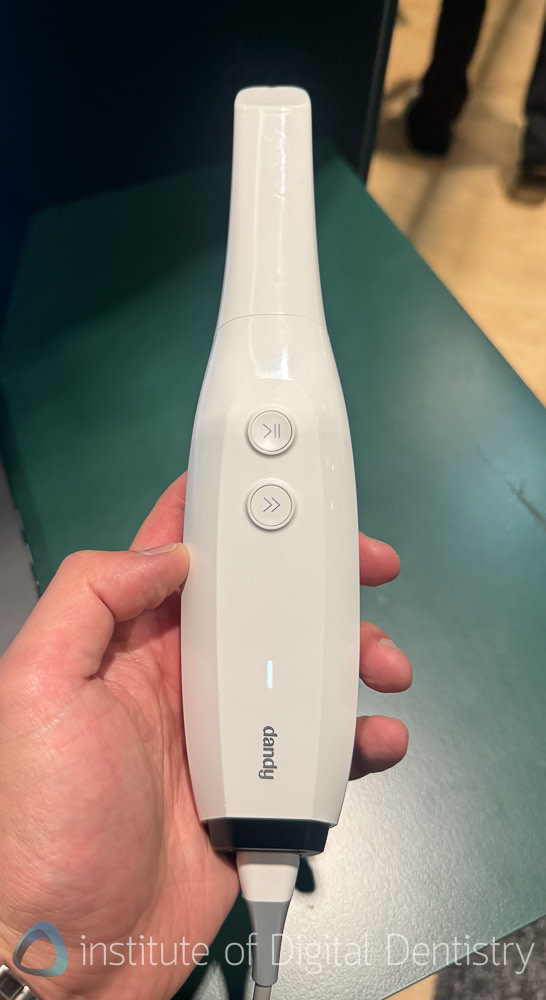
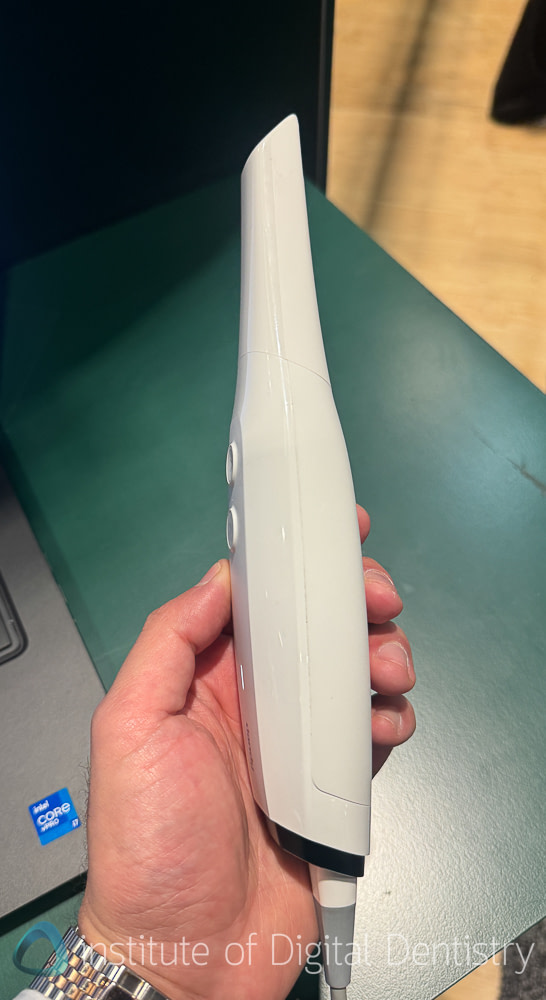
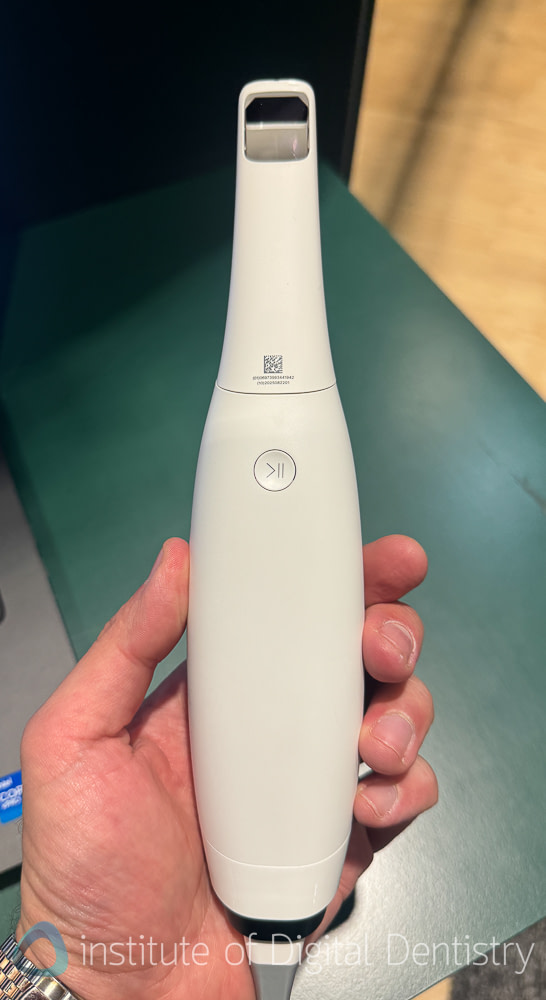
I have personally tried the Dandy Vision scanner at Chicago Midwinter, and like every other modern scanner, it is fast and works well, much like what we expect from any modern intraoral scanner in 2026.
To me, what is interesting is the AI-powered issue detection and the UI they have built around this scanner to make it as simple as possible. It is one of the most user-friendly UI I have seen, and the free mirror tips for life are a bonus. Just give them your lab work.
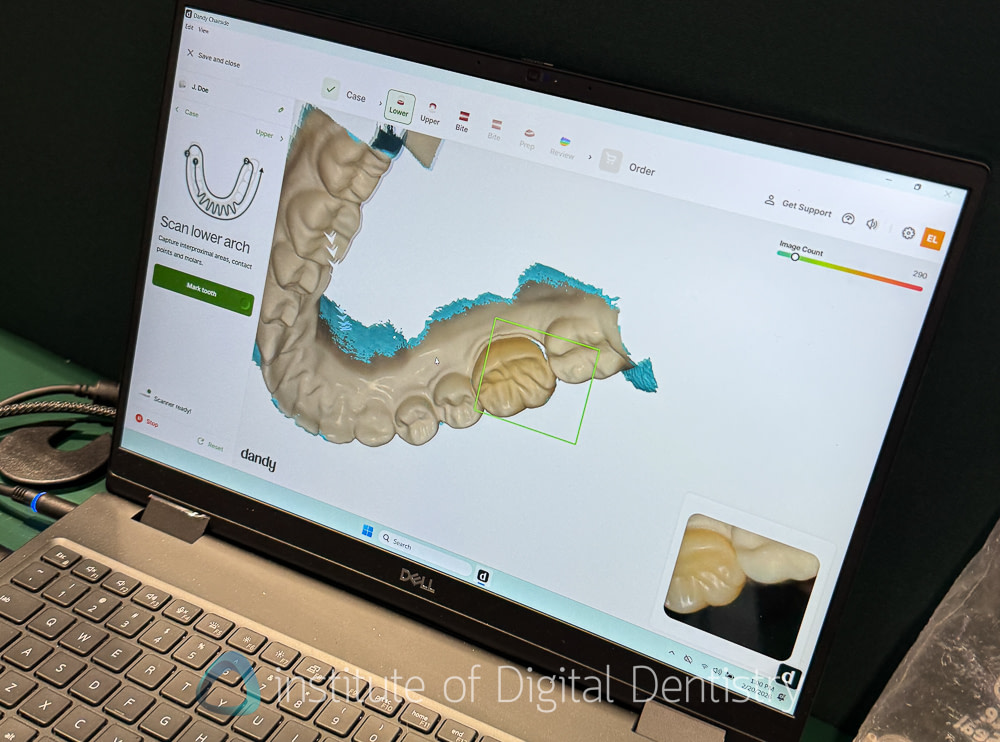
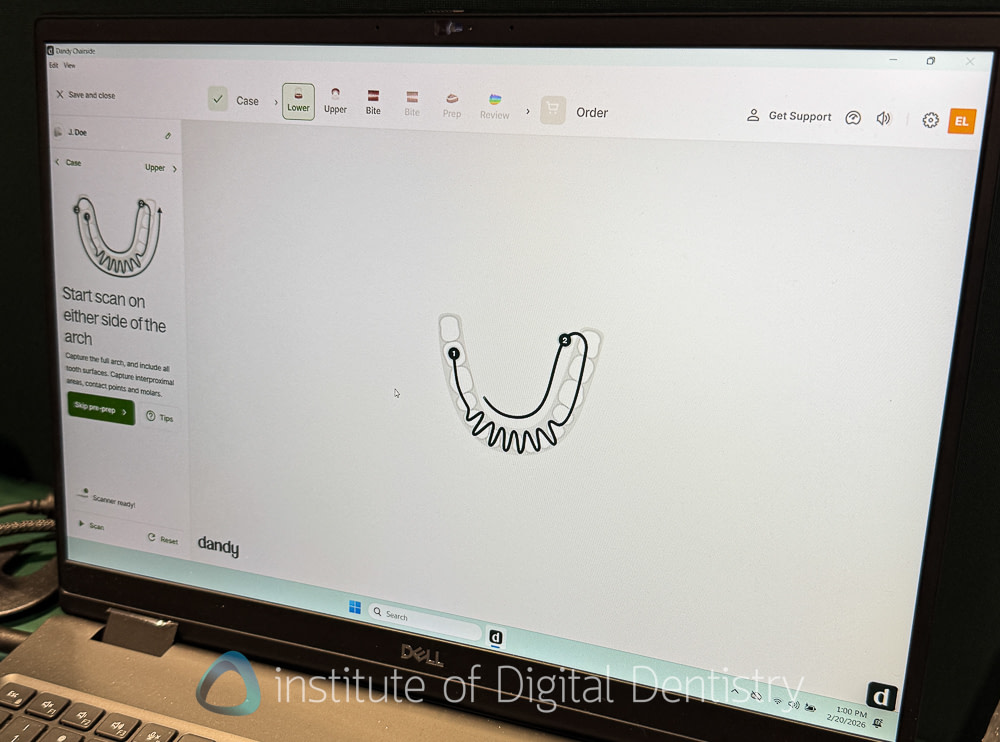
The DandyCart is a 21.5-inch HD touchscreen workstation on wheels. Dandy describes it as a "$40K value" that's included with their partnership at no additional cost. It's designed for patient interactions, smile simulations, and patient education. It is crazy how much they are giving away just for your lab business.
The Business Model - This is the Important Part
Let's address this directly, because the business model is really the story here.
Dandy provides the scanner, the cart, and the software (+ updates) for free. There is a one-time $800 shipping and setup fee. In exchange, practices commit to a monthly lab minimum spend. If you don't meet the minimum in a given month, you're automatically charged the difference.
The partnership is described as month-to-month with no long-term contracts, and Dandy says you can return the equipment if its quality doesn't meet your expectations.
So what is the monthly figure? I heard at the Greater New York meeting that the monthly lab contract for the Dandy Vision IOS is around 1000 USD. So, within about one or two years, you have essentially paid for the total cost of a typical intraoral scanner, but in lab bills, and you still don't own it. On the other hand, as long as you like Dandy Lab's work or send work to them anyway, you have essentially been given a free IOS to use, with free mirror tips and software. Interesting. Is it important for you to own the intraoral scanner in your practice? That is what it really comes down to.
They also offer a BYOD (Bring Your Own Device) program for practices that already have other scanners, such as 3Shape TRIOS, and, in some cases, still provide a TRIOS 5 to new customers instead of the Dandy Vision.
The question becomes: is the scanner truly "free"?
The honest answer is that it's free in the same way a mobile phone is "free" on a contract. You're not paying for the scanner directly. You're committing to sending a minimum volume of lab work to Dandy every month, and the cost of the scanner is effectively built into that arrangement. If you're already sending that volume to your current lab, the economics might work out. If you're not, you're paying the difference.
This is an aggressive customer acquisition strategy funded by venture capital. Dandy is spending significant money to install scanners in practices because each practice that commits becomes a recurring revenue stream for labs. The scanner is the hook, not the product.
And that's the key insight. Dandy isn't primarily a scanner company. They're a lab that uses scanners as a distribution channel. It's a means to get as many lab customers as possible, as quickly as possible.
What the Software Ecosystem Looks Like
Where Dandy has invested heavily, and where credit is due, is in their software and support infrastructure. The Chairside software guides dentists through the scanning and ordering process step by step.
The portal provides real-time case tracking with delivery estimates. You can make modifications through the software without calling the lab.
Their live scan review feature, which allows a lab technician to review your scan in real time while the patient is in the chair, is a genuinely useful tool for practices new to digital workflows. It reduces the risk of sending an inadequate scan to the lab and waiting days to find out it needs to be redone - especially for beginners.
They also offer what they describe as 24/7 support via phone, text, email, and live chat, claiming response times of two minutes or less.
For a practice that has never scanned before and is intimidated by the transition to digital, this level of handholding is significant. Dandy is essentially saying: we'll give you the hardware, teach you how to use it, review your scans in real time, and handle the lab work. You just need to keep sending us cases.
Want more of the latest in dentistry?
Join the RAPID community
and get insights straight to your inbox.
The Lab Industry Perspective
Here's where things get more nuanced.
Dandy's model is not exactly universally welcomed. Within dental lab communities, the reaction has ranged from curiosity to alarm. Forum discussions on platforms like Dental Lab Network include comments from lab professionals describing the model as "the death of our industry" and questioning the sustainability of a company using venture capital to subsidize scanner giveaways. One lab professional put it bluntly: "The only difference between Dandy and a traditional lab is the venture capital buying everyone a new intraoral scanner."
Fascinating what is happening in the lab space. When you strip away the technology and marketing, Dandy is a dental lab competing for the same crown-and-bridge and denture work as every other lab. The difference is that they're funded to operate extremely aggressively while acquiring market share, which is a classic venture-backed growth playbook. Traditional labs, many of which are small family-run operations, simply cannot afford to give away $10,000+ scanners to win accounts.
Eitherway, without a doubt, Dandy is here to stay, and it seems to be one of the most disruptive forces in the industry today.
The Bigger Picture
What Dandy represents is a broader shift I've been observing across the industry. The traditional model of a dentist choosing a local lab, building a relationship, and managing cases over the phone and via shipping boxes is being challenged by centralized, tech-driven platforms that promise speed, simplicity, and a fully digital workflow.
The question Lab Day always prompts (and this year it felt more pressing than ever): what will the dental lab look like in ten years?
Whether these centralized services can match the quality and customization of an experienced human lab team remains the real question. But the direction of travel is clear.
My Take
Dandy is a genuinely interesting and impressive company, and the founders are frankly geniuses.
They've built a great software ecosystem, their support infrastructure is ahead of what most labs offer, and they're making digital dentistry accessible to practices that might never have adopted it otherwise. The fact that neither founder has a dental background is, in some ways, an advantage. They're approaching the industry's problems with fresh eyes and a tech-first mindset that traditional dental companies have struggled to adopt.
That said, the free scanner model should be understood for what it is: a customer acquisition tool, not a gift. You're trading lab flexibility for hardware. If Dandy's lab quality, turnaround, and pricing meet your needs, it could be a smart arrangement. If they don't, or if they change their terms down the road, you could find yourself without a scanner once you stop providing work to them.
For practices considering their first intraoral scanner, I'd encourage you to consider whether you want your scanner to be tied to a single lab. Scanner independence is somewhat valuable. The ability to work with any lab, switch providers, and maintain control of your digital workflow is something you give up (at least partially) in a bundled arrangement.
Dandy is worth watching. Whether they're the future of dentistry or a well-funded growth experiment that disrupts traditional labs before finding its own equilibrium, only time will tell.
What are your thoughts? Please leave them below.
Thanks for reading.
This article was very helpful. I am a patient and my dentist has signed up with Dandy without communicating my denture process has changed and timeline is double. Dandy provided a Wax try-in that is in no way what a wax try in is, not thickness of base, no teeth, no clasps. Horrible and waste of time. Understanding what Dandy’s business model is cleared up why my dentist sprung this on me and proceeded without informing me of costs, timeline and what the process entails. I’m cutting my losses, finding a new dentist, but unfortunately need to pay out of pocket for work performed to date.
Hi Lisa — Thank you for sharing this, and we’re sorry to hear about your experience! You should not be experiencing a longer treatment time. In fact, dentists choose Dandy specifically to deliver dentures in half the appointments they normally require.
That’s not the experience we want for any patient, and we’d genuinely love the chance to make this right. Please email me directly at an************@*******dy.com — we’ll take care of your denture for you!
Thanks for sharing your experience Lisa, I’m sorry to hear the process has been frustrating for you.
One of the reasons I wrote this article was to help explain how these newer digital lab models work, because many patients and even dentists are still learning how their workflows differ from those of traditional labs.
It’s great to see Andrew and the Dandy team responding so promptly here and offering to look into it. Hopefully, they can help resolve things for you.
For dentists reading this thread: experiences can vary depending on the workflow, communication with the lab, and the specific case. As with any lab or digital system, the key is understanding the process and setting clear expectations with patients.
Appreciate everyone sharing their perspectives.
Great piece Dr. Ahmad, you’re spot on! I’ve been watching Dandy since inception and have been impressed with their success. I give them great credit for disrupting a fragmented and somewhat complacent industry primarily lead by mom & pops who lack capital to invest in such strategies. However, I’ve been surprised by the fact that dentists are willing to sacrifice lab flexibility in exchange for a free scanner. All loyalty went out the window when offered a free scanner apparently! Moreover, prices on IOS have come down tremendously, and with the use of the section 179 tax deduction, the cost to go digital is not material at all. Not clear to me that placing a “free” IOS is a sustainable competitive advantage. However, offering their own (admittedly white labeled) scanner now drives down the customer acquisition costs (CAC) by capturing back margin on the scanner – very shrewd move. They’ve also done a good job developing other sticky tech features and services which may enable them to keep their customers longer term. To your point, the IOS placement strategy is a creative customer acquisition strategy. Like all tech firms, they’re losing money initially to acquire customers. Once they’ve captured material share and drive other labs out of business, they’ll raise prices. Classic tech strategy. (Have you noticed how much an Uber or Netflix costs these days?) The other thing I can’t quite figure out is how they’re getting around the anti-kickback laws and the physician’s right to choose statutes. You generally can’t give anything away to physician for “free” if they’re seeing Medicare patients. They have plenty of money and attorneys, so presumably have figure that out. Will be interesting to watch this story develop! Please keep us updated!
Thanks for your comment Bailey, you make some excellent points.
I agree that the scanner itself isn’t really the moat anymore given how much IOS prices have fallen and the fact that most of them work quite well today. For companies like Dandy, the scanner is really more of a customer acquisition tool.
You’re also right that it’s surprising how quickly lab loyalty can shift when a free scanner is offered. Historically, dentists had long-standing relationships with labs, but economic incentives and the push toward digital workflows clearly change that dynamic. And honestly, these relationships dont really seem as strong anymore. In fact, relationships in general are not really as strong haha, different story.
Where Dandy becomes more interesting is the ecosystem around it. The longer-term advantage will likely come from the software, workflow integration, ordering systems, and other services they’re building around the lab offering. If those become embedded in the daily workflow of practices, that’s where the real stickiness comes from.
And yes, the regulatory aspect is definitely an interesting question, clearly something their legal team has thought through carefully.
It will certainly be fascinating to watch how this strategy plays out over the next few years.