
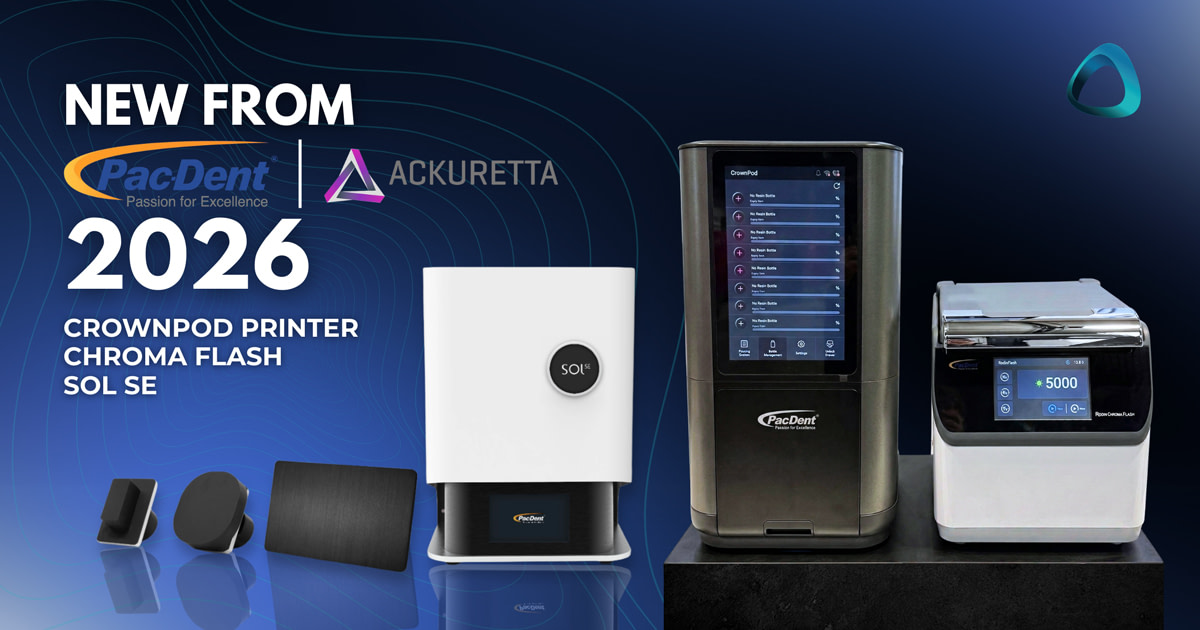

Since Pac-Dent acquired Ackuretta in late 2025, there's been plenty of speculation about what the combined company would do next. At the Chicago Midwinter Meeting and LMT Lab Day 2026, we got our first real look at the answer.
Three new products were on display: the CrownPod, a pod-based chairside 3D printer with a built-in resin changer; the Chroma Flash, a modern curing unit positioned as a direct competitor to the popular Otoflash; and the Ackuretta SOL SE, a speed-focused update to the existing SOL printer.
Combined with the full Rodin resin ecosystem, it's clear Pac-Dent is building a comprehensive digital workflow, from printing, materials, and post-processing, all under one roof.
Let me break down each product and what it means for practices and labs.
PacDent CrownPod - Pod-Based Chairside Printing
One of the more interesting launches from PacDent is the new CrownPod, a pod-based 3D printer designed around the principle of maintaining resin at optimal conditions before printing while delivering a seamless user experience. This makes it the third ‘pod’ or cartridge printer to enter the chairside dental market.
Although only a demo unit was shown and it is not yet for sale, what is interesting is that the printer features a built-in mechanism for switching between different resin pods, almost like a disc changer in a milling machine. This means you can queue different materials without manual intervention, aiming to streamline the workflow
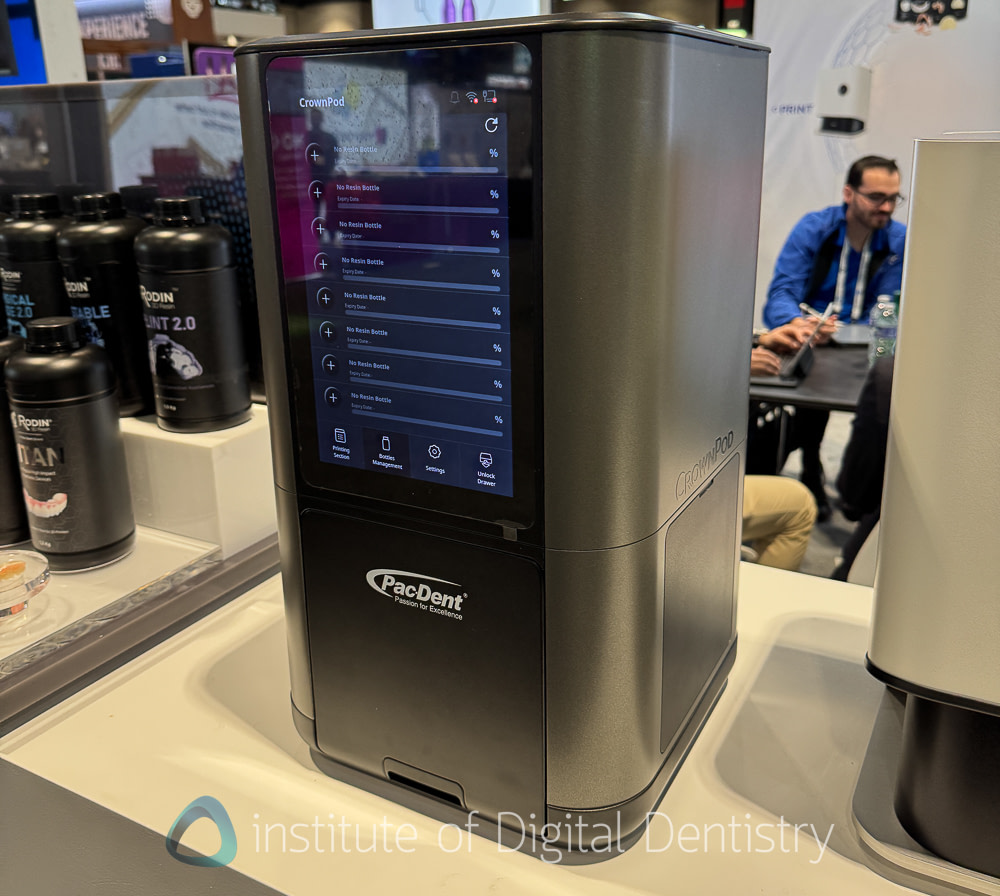
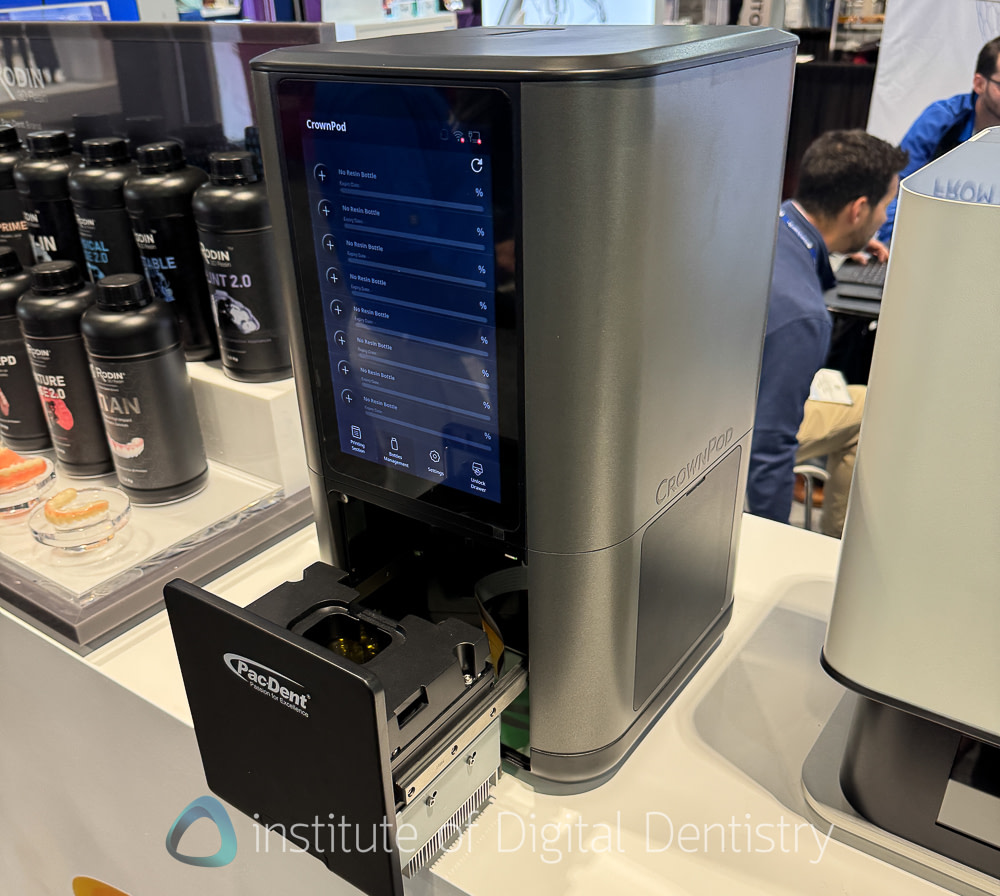
I believe the pod printing phenomenon will become a market trend in chairside printing this year. We saw MIDAS do it first with their capsule system, then Asiga with their PrintPods, and now Pac-Dent with the CrownPod. The appeal is obvious, especially for inventory and ease of use.
The company also showcased prefabricated pediatric crown printing software using this machine, which is a niche application I'm personally less focused on, but it is interesting how it was all done on the printer itself. I'm curious to see how this one is received once it officially launches.
No confirmed release date or pricing was shared at the show.
Chroma Flash - A Modern Alternative to the Otoflash
Alongside the CrownPod, Pac-Dent showcased the Chroma Flash, which is essentially a modern, arguably improved version of the Otoflash, the popular third-party curing box widely known for its depth of cure.
Compared to conventional UV curing, this flash post-curing technology plays an important role in bringing out the best mechanical and aesthetic properties of these materials.
This is an interesting move. The Otoflash has been around for a long time and has built a loyal following, but it hasn’t seen significant innovation in recent years. Pac-Dent clearly sees an opportunity to offer a curing solution that enhances the user experience while integrating more naturally into its growing ecosystem of printers, resins, and post-processing devices.

For labs and practices already invested in (or considering) the Ackuretta/Pac-Dent ecosystem, having a curing unit from the same company, with validated profiles for all Rodin resins, removes a variable from the workflow. You know the curing parameters are optimised for the materials you're using, and support comes from a single source.
Details on specifications, pricing, and validated material profiles were limited at the show, but this is another interesting addition to Pac-Dent's growing hardware portfolio.
Download the Full PDF Overview
View as a flipbook online or download a copy to read it later.
Ackuretta SOL SE - A Speed-Focused Update to the SOL Platform
Ackuretta has also launched the SOL SE, the first announcement since the acquisition.
This isn't a fundamental redesign. It's a speed-optimised iteration of the existing SOL printer that delivers meaningful yet incremental improvements while sidestepping some design choices that continue to set it apart from certain competitors.

What Actually Changed
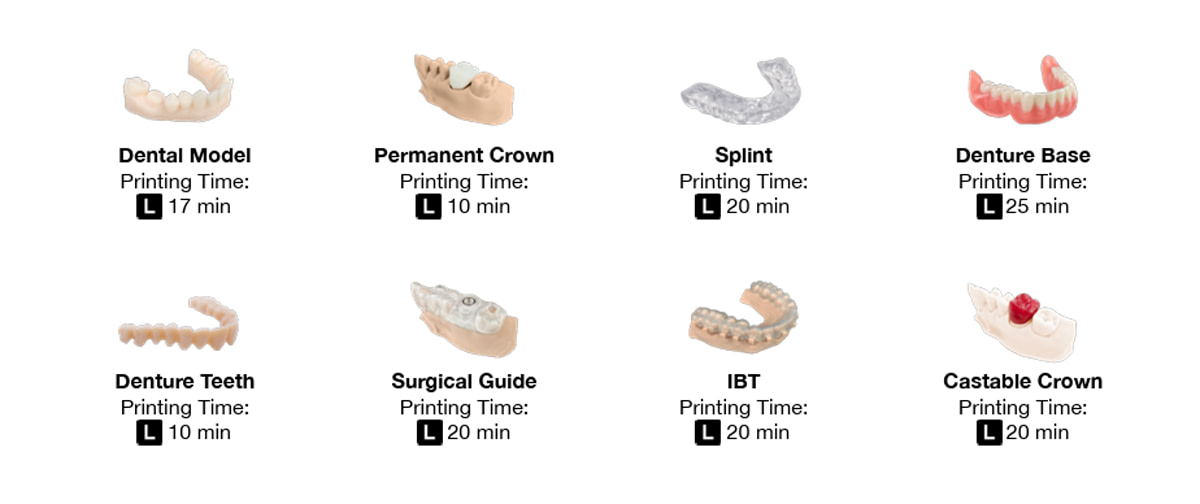
According to the company, the SOL SE delivers 40-60% faster print speeds than the original SOL, translating to concrete workflow improvements: a dental model now prints in 17 minutes, permanent crowns in 10 minutes, and splints in 20 minutes.
The hardware foundation remains unchanged: the same 49 micron XY resolution, monochrome LCD screen, 385-405nm wavelength system, and dynamic backlight technology that reduces consumable needs and maintenance requirements.
The 5.1" x 3.1" x 4.7" build volume continues to accommodate multiple build platform sizes (large, medium, small) for optimising print times based on case requirements.
The Heating Situation
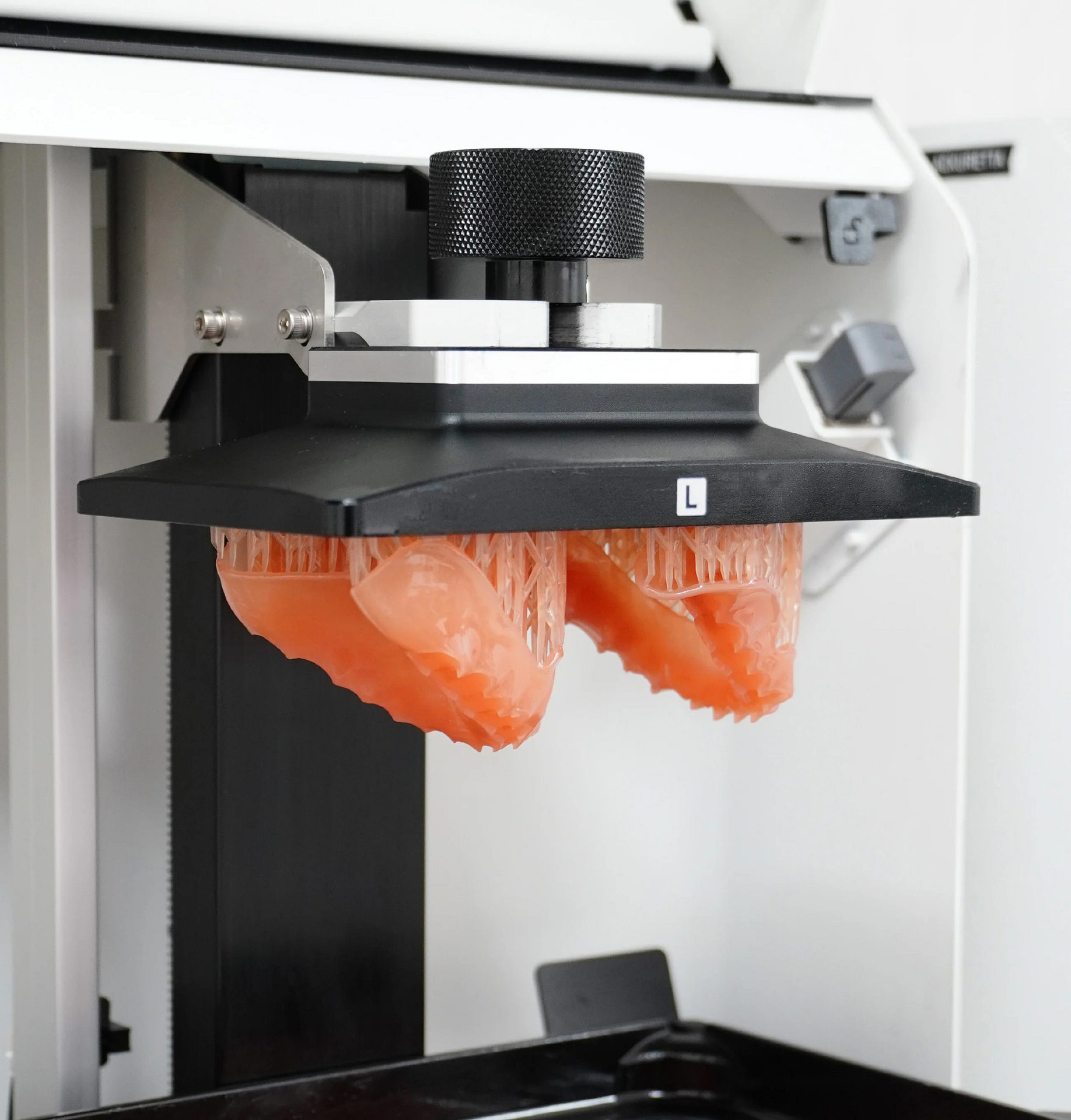
Previous versions of the SOL shipped without any heating functionality, which was a genuine limitation for temperature-sensitive materials. With the SOL SE, Ackuretta has addressed this. A heater is now included as standard with new SOL SE purchases.
According to Ackuretta's own product page, the heater is designed to reduce resin viscosity and maintain an ideal temperature for each resin profile. It's described as "customizable," which suggests some degree of resin-specific temperature control.
Now, what's not entirely clear yet is the exact type of heater included. It is likely a third-party heater that is retrofitted.
Regardless, the fact that a heater is now bundled as standard is a meaningful improvement over the original SOL. For most dental applications, particularly highly filled resins, it is critical.

Material Ecosystem - The Real Strength
Where the SOL SE does well is material flexibility - over 200 validated dental resins with automatic library updates when connected to the internet. This open-ecosystem approach, working with materials from Keystone, NextDent, BEGO, and dozens of other manufacturers, provides practices with material-cost optimization options and application flexibility that proprietary systems can't match. Ackuretta was always one of the most open printers, like Asiga.
And now, with the Pac-Dent acquisition, the full Rodin resin lineup is naturally integrated into this ecosystem. Rodin resins, including the popular Rodin Sculpture for permanent restorations and Rodin Titan for crown and bridge work, are already validated on the SOL platform.

Know what’s next in dentistry. Before everyone else.
The innovations, clinical insights, and digital trends that matter - curated by iDD and delivered straight to your inbox every week.

The Bigger Picture - Pac-Dent's Growing Ecosystem
What makes all three of these products more interesting together than separately is the ecosystem story. Pac-Dent is clearly building toward becoming a one-stop shop for dental 3D printing: Rodin resins for materials, Ackuretta printers (SOL, SOL SE, SOL Plus) for production, the CrownPod for chairside workflows, Chroma Flash for curing, CLEANI for washing, and ALPHA AI software tying it all together.
That's a decent portfolio, and it mirrors what we've seen from companies like SprintRay and Formlabs in building out complete printing ecosystems. The key differentiator Pac-Dent continues to emphasise is openness. The Ackuretta printers work with hundreds of third-party resins, not just Rodin materials, and the company has stated that it intends to continue validating materials from other manufacturers.
It will be interesting to see how this plays out.
The SOL SE represents one of the very few "new" printer releases in the past 12 months, and that signals something about the current 3D printing market: major manufacturers are focusing on software optimisation, material development, and ecosystem integration rather than hardware revisions. The SOL SE fits this pattern. It's a production efficiency update, not a technology leap.
The CrownPod, on the other hand, represents Pac-Dent's own branded hardware, not inherited from Ackuretta. That's a signal that the company isn't just maintaining the acquired product line but actively developing new form factors and features. The pod-based resin-changing concept is likely to stick around in the industry.
I'll be watching closely for the CrownPod's official launch and will provide a full review when it becomes available.
If you have any questions, please leave them below.
Thanks for reading.