Why 95% of Bite Scans Fail (And What to Do About It)
Bad bites have been plaguing dental labs since the moment intraoral scanners became mainstream. Every dentist has felt it. A crown comes back needing 45 minutes of adjustment, and somehow it's always the scanner's or the lab's fault.
In this episode of Digital Dentistry Decoded, I sat down with Björn Zäuner, CEO of Bite-Finder, to dig into what is actually going wrong with digital bites, what the data show, and what we, as clinicians, can do about it.
It's one of the most practically useful conversations I've had on this podcast.
Who Is Björn Zäuner?
Björn grew up in a dental family. His grandmother worked in a dental lab. His father was a dentist who ran an in-house lab with seven technicians. So unlike a lot of the tech entrepreneurs who try to "disrupt" dentistry without ever having set foot in a clinic, Björn knows the industry from the ground up.
He started in sales, moved into production, opened a milling center, and eventually built an orthodontic and restorative lab. Out of sheer necessity, he began developing software to solve problems he faced daily.
One of those problems was the bite.
How Bite-Finder Was Born
Bite-Finder wasn't built in a boardroom. It was built because Björn's lab stopped pouring stone models about five years ago and moved to scanning physical impressions instead.
When you scan two impressions, you have two jaws sitting in space. You still need to articulate them. The old workaround was to 3D-print models from those scans, hand-articulate them, and rescan them. Björn's team asked a logical question: can we just teach the software to do what our hands feel?
That's exactly what they did. They built a computer vision system to simulate how two jaws fit together, removing the need for physical articulation entirely.
The internal results were so strong that they decided to release them publicly. That was March 2023 at IDS. Today, Bite-Finder has over 12,000 users worldwide.


The Three Reasons Bite Scans Fail
This is where things get interesting, because Björn's data gives us insight that most of us simply don't have access to.
Bite-Finder has processed data from more than 200,000 scans over the past three years. And he breaks bite scan failures down into three categories.
1. The scanner itself
Every intraoral scanner captures a bite the same way, regardless of brand. You scan the upper arch, scan the lower arch, ask the patient to bite into occlusion, and scan one or both sides. The software then matches the single-arch scans to the bite scan. That matching process introduces error. It's a fundamental limitation that applies across the board.
2. The operator
The dentist or assistant performing the scan is tired, busy, or undertrained. Sometimes they genuinely don't care enough. Björn put it plainly: some people just scan without looking and hit send. That's the reality, and any system worth building has to account for it.
3. The patient
This is actually the biggest factor, according to Björn. Patients have no idea what "bite into occlusion" means. They're anxious. They may be numb. They may be in pain and compensating by loading one side. Elderly patients and those with cognitive impairments present even greater challenges.
The solution Bite-Finder built around this is to remove the bite scan entirely from the equation. They take the upper and lower arch scans and simulate the occlusal relationship computationally, eliminating most of the error sources in a single step.
The 95% Statistic
Here's an interesting number. Across millions of scans, Björn's data shows that approximately 95% of bite scans do not meet quality standards. Across all brands. Across all markets.
That's a number worth sitting with for a moment.
Before anyone rushes to blame their scanner, Björn makes a key point: all scanners produce some form of faulty bite data. The brands differ in how they fail, whether that's over-occlusion, open bites, or Z-axis compensation artifacts, but none of them are consistently producing reliable bites. The scanner is essentially a camera. What matters is what happens to the data after capture.
He is selling the solution, so keep that in mind :).
Which Scanner Is Best for Bites?
I pressed Björn on this because he genuinely sees the data from every major brand.
His honest answer: There is no meaningful difference in overall bite quality across scanner brands. He compared choosing a scanner to choosing a laptop. Whether you buy a Dell or an HP doesn't change the fundamental computing capability. The scanner is an entry point into the digital workflow, and once you have decent hardware, the differentiators are software and workflow, not the device itself.
That's a fairly bold position coming from someone who sees millions of scans. I personally do think some scanners perform better than others.
Practical Tips for Better Bites Chairside
So what can we actually do? Björn offered some straightforward clinical guidance.
Full-arch scans are the starting point. In the US, some labs receive up to 80% quadrant scans. That's a problem. Without full-arch data, you simply don't have enough context to accurately determine occlusal stability. Make full-arch scans standard practice. It is very fast to carry out these days.
If you do take a bite scan, scan both sides. Adding a second bite scan introduces another variable, so it's not a perfect fix, but it helps.
The Transparency Problem No One Talks About
One of the most interesting parts of our conversation was around transparency and why the dental industry tends to avoid it.
When a lab receives a scan with a bad bite, they rarely call the dentist and say so. If they do, the dentist often switches labs. That feedback loop is broken. Problems are quietly absorbed on the lab side, and nothing changes clinically.
Björn made a sharp point here. Bite-Finder can act as a neutral third party. The software can flag a poor bite and provide guidance on how to improve it, without turning it into a confrontation between the dentist and the lab technician. It removes the human dynamic from a technically objective problem.
I agree with this framing. Dentists need that feedback loop. The fact that labs repeatedly see the same prep and bite issues without being able to communicate them is a genuine structural problem in how we work together.
Beyond Bites - The Broader Quality Platform
Bite-Finder started as a bite correction tool, but it has grown significantly since then.
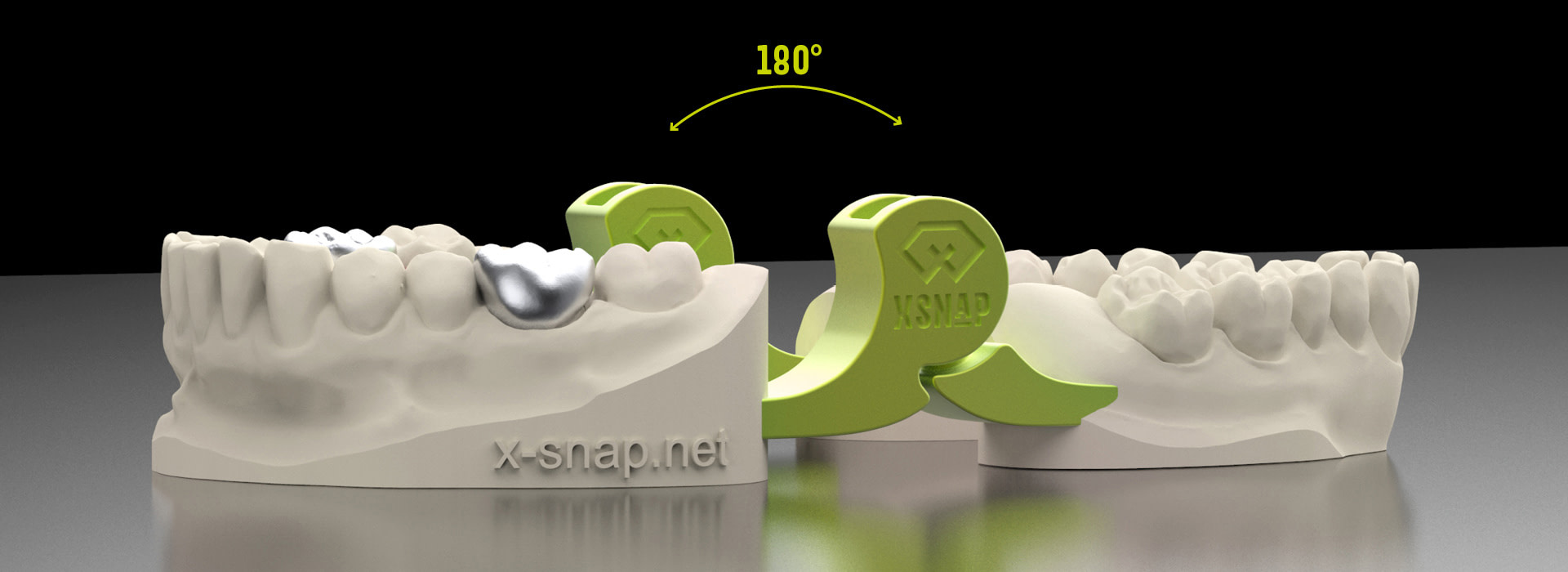
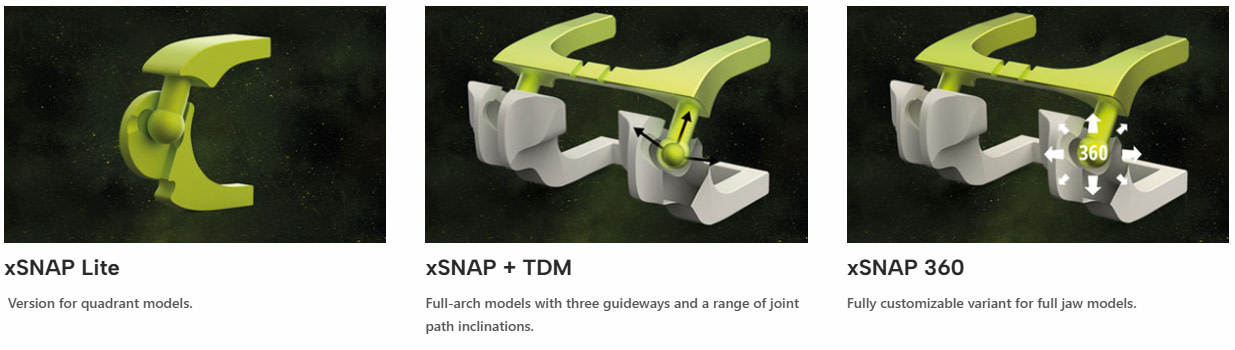
They acquired xSNAP, which allows them to generate patient-specific articulators with individual condylar paths and incisal tables based on anatomical data rather than average values. Their second company slogan is "No human is average," which is apt.
Using generic average-value articulators to simulate jaw movement for every patient was always a compromise. The xSNAP integration moves toward something more individualized. I have used X-Snap and it is a popular for 3D printed models.
The platform now also covers broader scan quality control, including detection of holes, artifacts, stitching errors, over-scanning, and under-scanning. They have developed Margin Finder, which attempts to identify margin quality at the point of scanning. And they are integrating CBCT and face scan data to build a more complete picture of each case.
On the margin front, Björn's data is sobering. The use of tissue management protocols at the point of scanning is, in his words, "not even recognizable in the data." That tells you something about how common proper margin management actually is in everyday practice.
The Bigger Picture
Björn closed our conversation with something that stuck with me. There are 40 million edentulous people in the United States alone who cannot access prosthetic treatment because it is too expensive and too time-consuming to deliver. The average dentist still needs around six appointments to deliver a complete denture.
His argument is that by improving data quality upstream, starting with the scan, you create the conditions for more efficient and more affordable treatment downstream. The margin pressure that is currently squeezing labs and clinics is partly a consequence of inefficiency, of producing things twice, adjusting things that should have fit, and absorbing internal remake costs that never show up on any invoice.
That's a long-term vision for what quality data control could mean for the profession. Whether the industry moves fast enough to realize it is another question.
Final Thoughts
This was one of the more practically grounded episodes we've done. Björn is not just an entrepreneur who wandered into dentistry. He built something because he was experiencing a specific, measurable problem in daily lab operations.
The bite failure rate is the kind of data point that deserves broader attention. Not because it means scanners are useless, but because the way we capture and handle bite data needs to change. Software like Bite-Finder is trying to solve that.
The other part is what happens chairside. Spending an extra minute on your bite scan, consistently performing full-arch scans, and managing tissue before scanning remain foundational habits that no software can fully compensate for.
If you're struggling with bites on your digital cases or if your crowns are coming back needing excessive adjustment, I'd recommend checking out Bite-Finder. They offer free demos directly through their website.
If you have any questions, leave them in the comments below.