
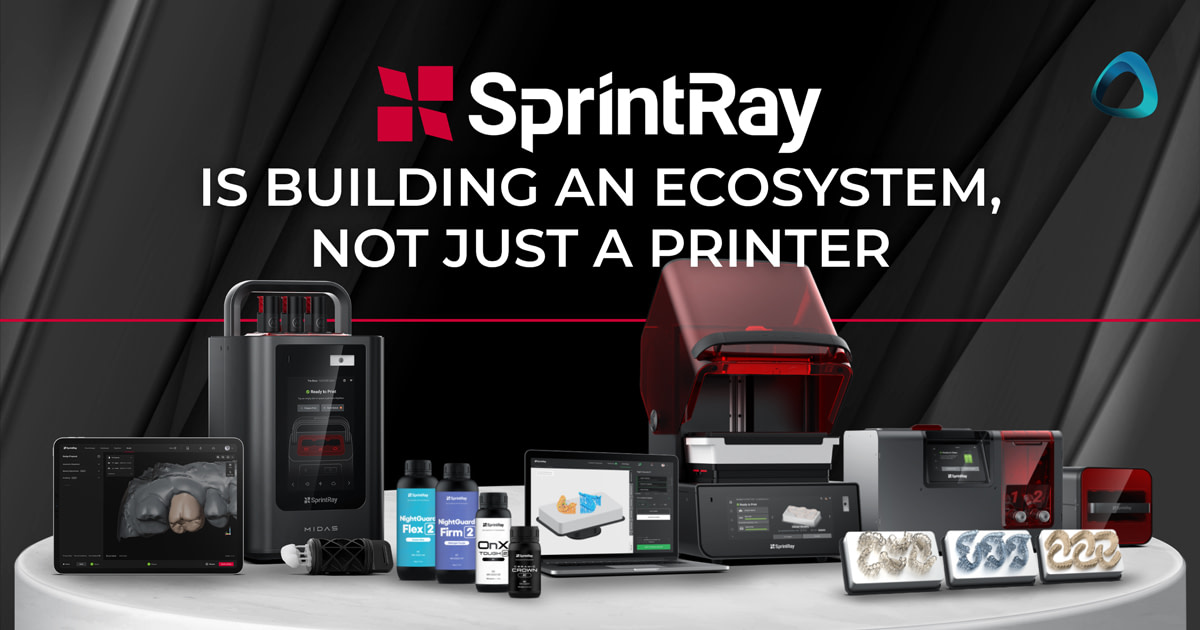

SprintRay has been busy.
Between the Multi-unit Midas Capsules and the new resins previewed at Chicago Midwinter 2026, and a growing list of major industry partnerships (most recently GC), SprintRay is clearly making a play to remain the center of the chairside 3D printing workflow. And honestly, looking at the pieces they're putting together, it's an interesting strategy.
Let me break down everything that's happened recently and what it actually means for you.


Know what’s next in dentistry. Before everyone else.
The innovations, clinical insights, and digital trends that matter - curated by iDD and delivered straight to your inbox every week.
The Multi-Unit Midas Capsule Changes Things
When SprintRay launched the Midas, it was a brilliant concept and arguably created a market trend of capsule-based printers.
The capsule system made printing restorations very simple, and the speed (three crowns in under 10 minutes) was genuinely impressive. I've called it "the Nespresso of 3D printing" before, and I stand by that.
But there was one obvious limitation. The Midas was a single-unit machine. One crown, one or two inlays, and maybe a few veneers per capsule. The capsules are single-use. That's fine for straightforward cases, but it kind of limits Midas's ability to do multi-unit work, even though you can put in 3 capsules at once.
SprintRay has now addressed this head-on with the new Multi-Unit Capsules. These capsules feature more than three times the build area of the existing single-unit capsules and will be available across their key restorative materials, including Ceramic Crown and Digital Temp. Note - they are still single-use, so only use multi-unit to print multiple units - it's in the name.
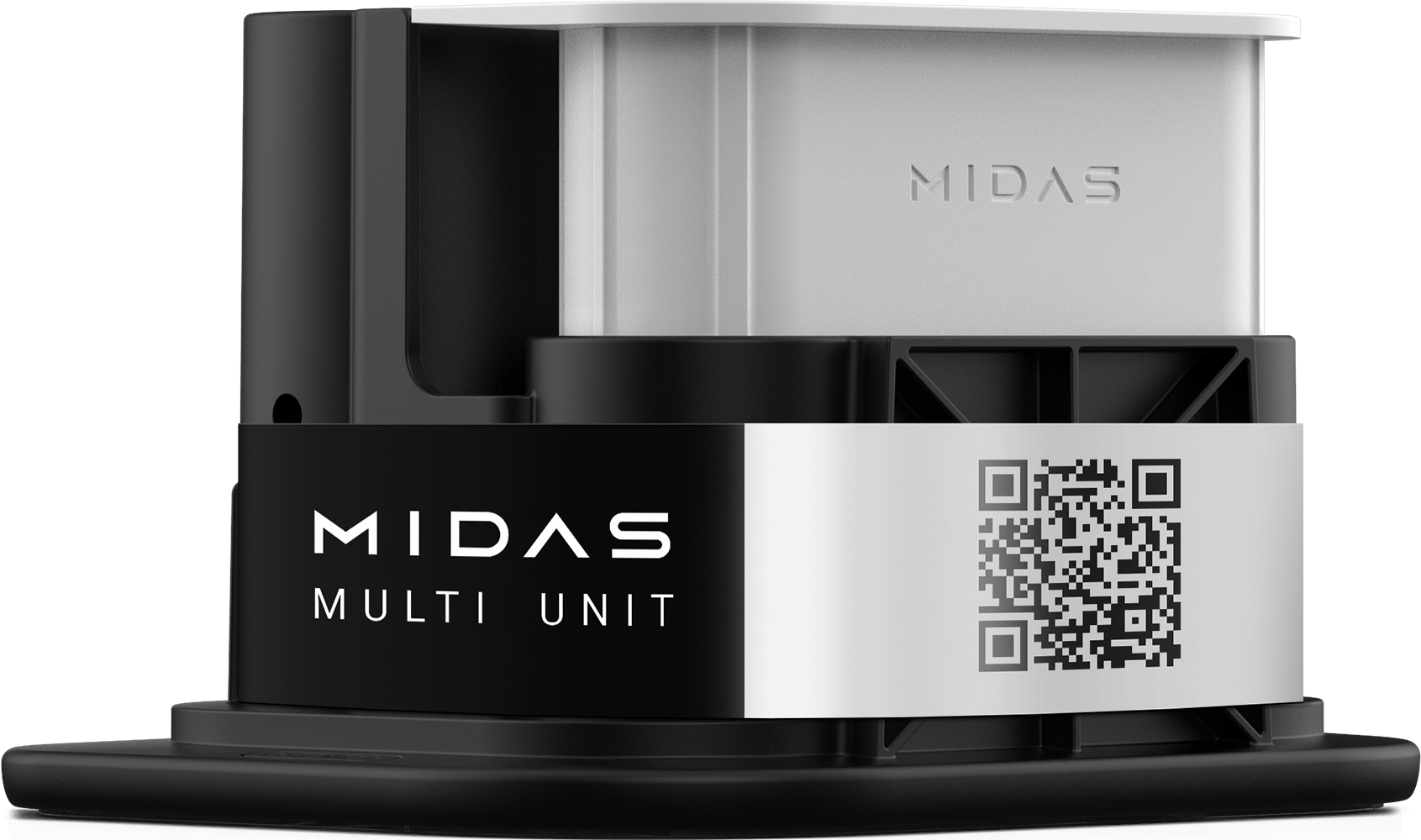
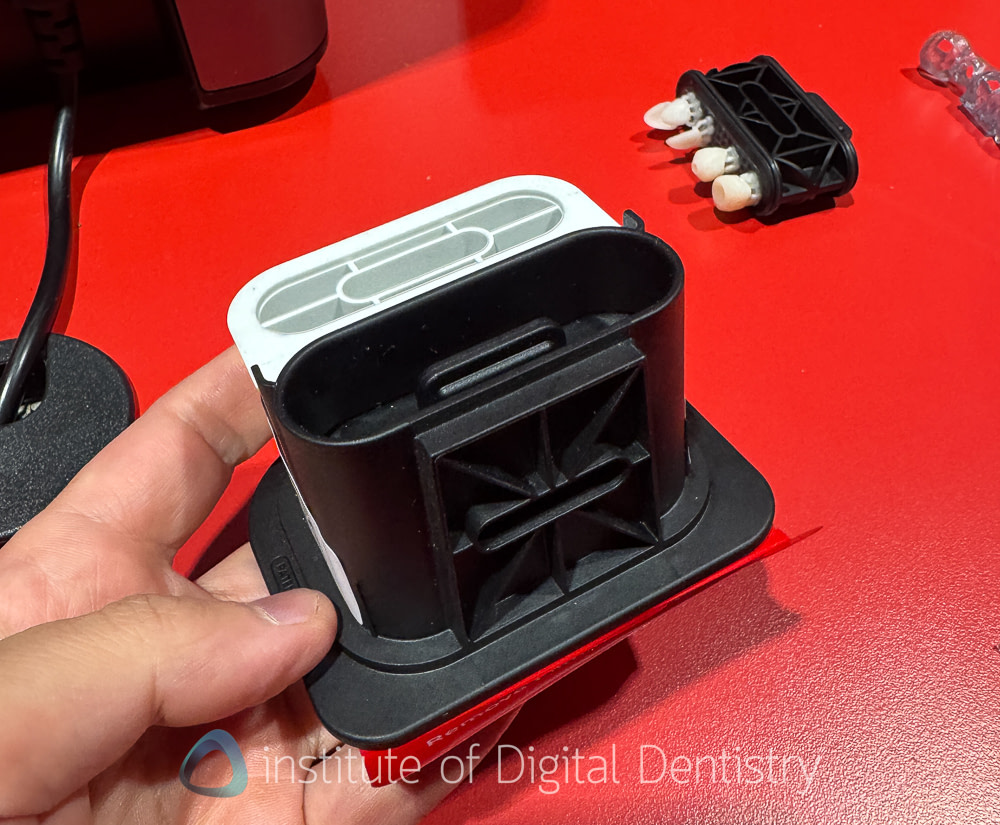
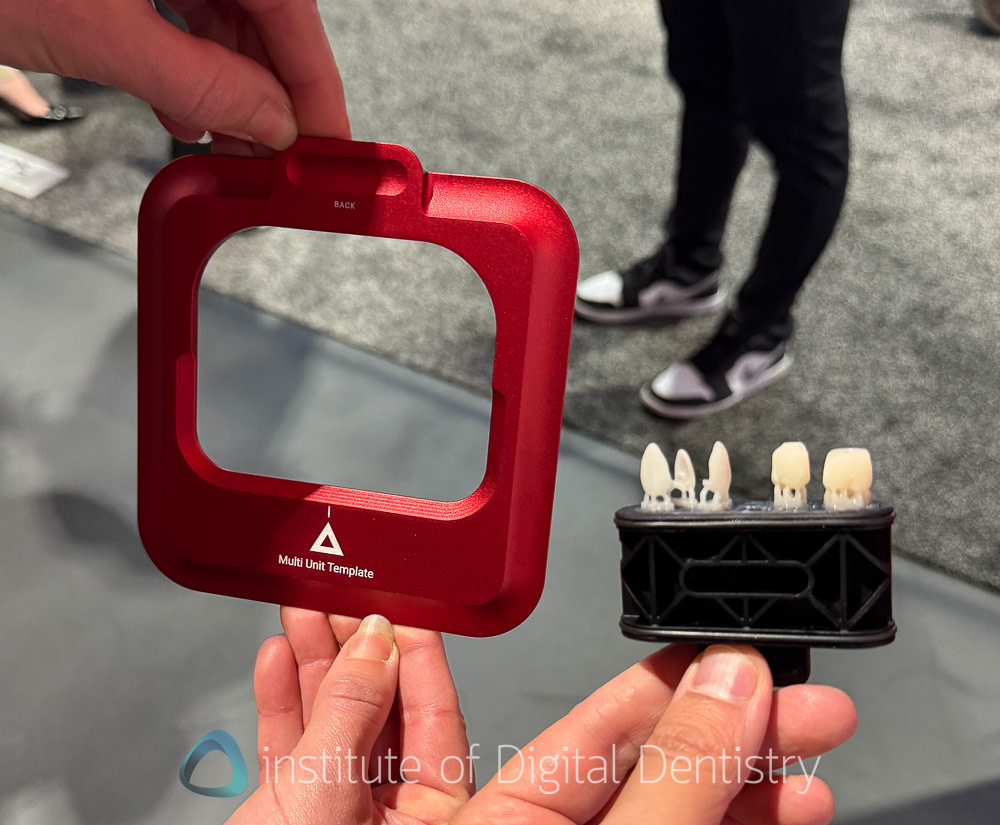
The idea is to transform Midas into a chairside restoration platform capable of handling multiple crowns, inlays, onlays, veneers, and smile designs in a single production run. If you want a refresher on how the Midas and Pro 2 platforms were originally launched, read our full coverage from 3DNext 2024 here.
The Multi-Unit Capsules are expected to begin shipping in Spring 2026 following regulatory clearances. So they're close, but not available just yet.
New Pro 2 Materials and SportsGuard
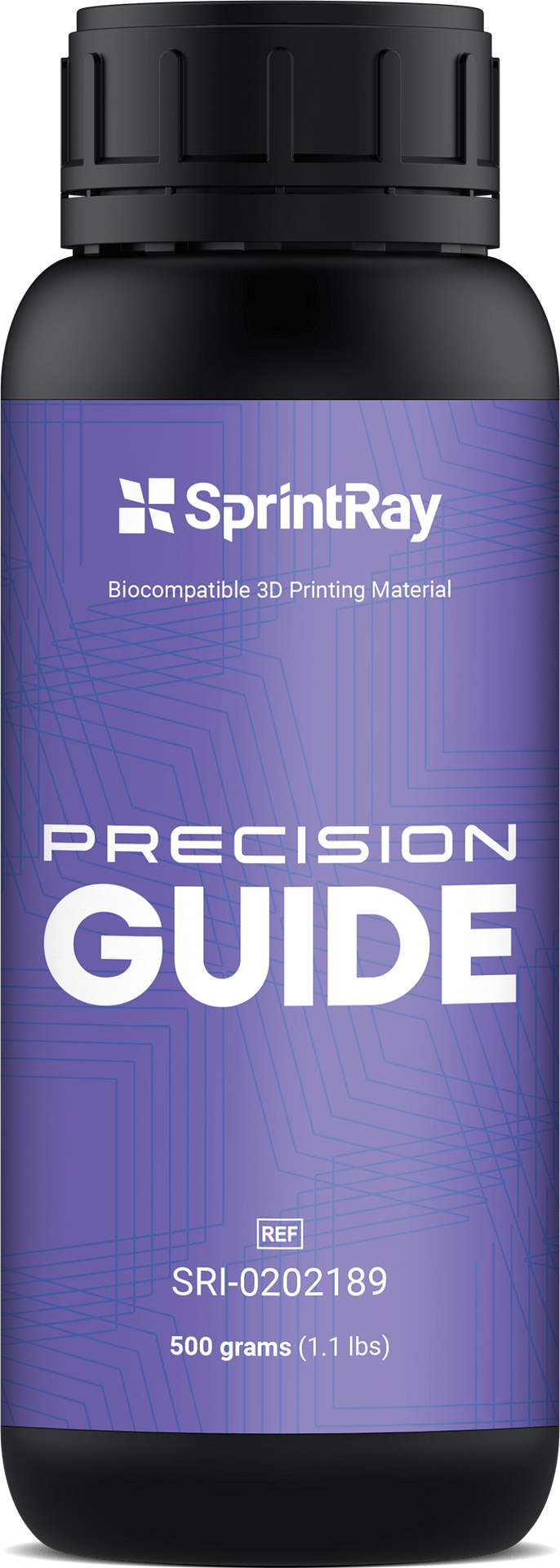
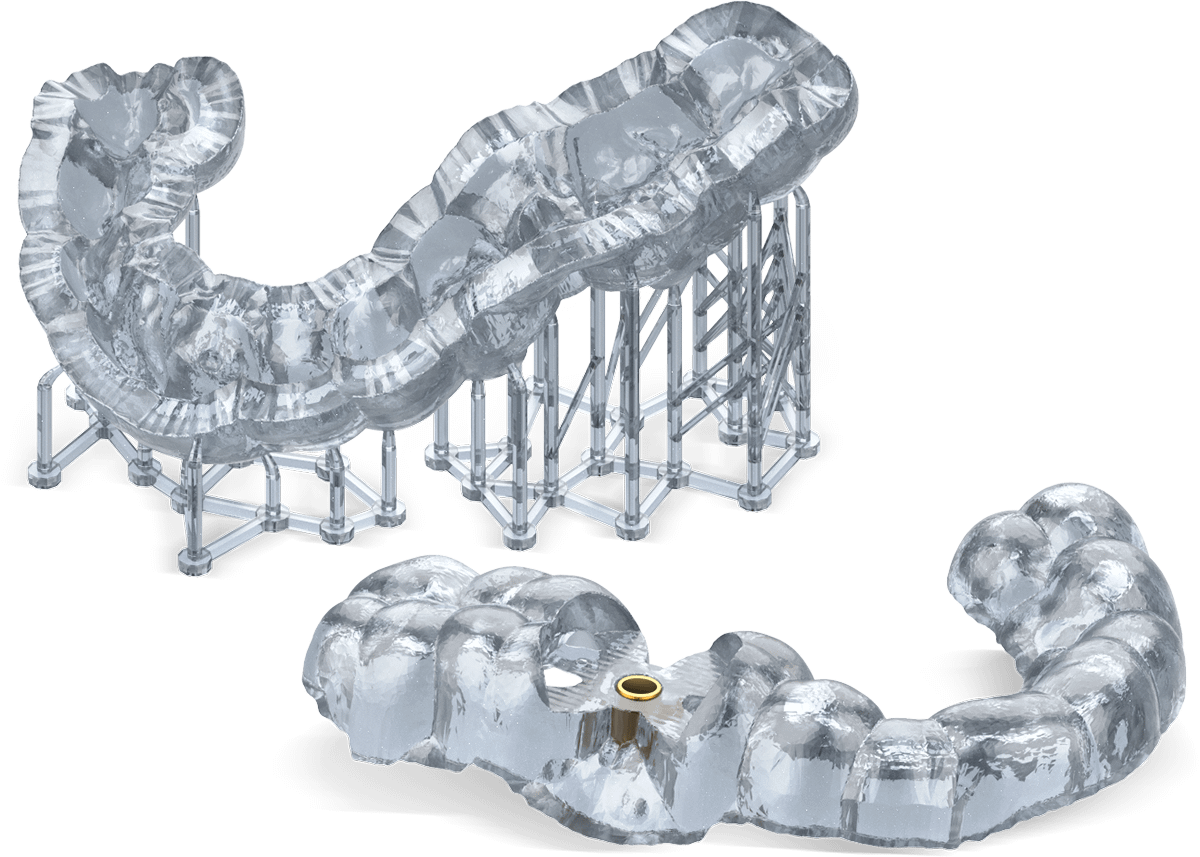
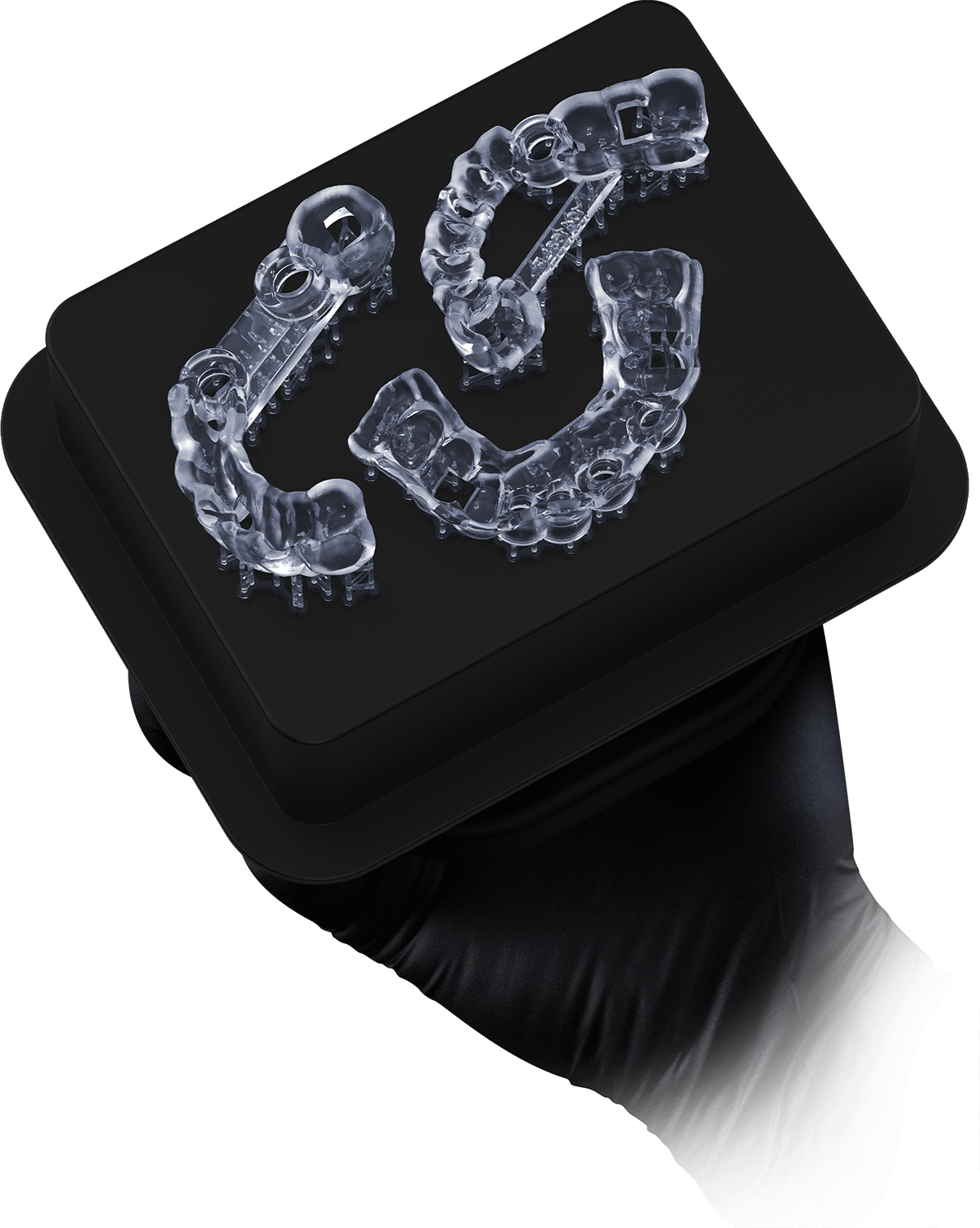
SprintRay also previewed new materials for the Pro 2 platform. These include a Precision Guide surgical guide resin designed to improve drill-site accuracy, stackable guides, and updated retainer materials. This continues the pattern we've seen from SprintRay of constantly expanding their resin library, which is one of the things that sets this 3D Printer company apart in this market - it's all about materials.
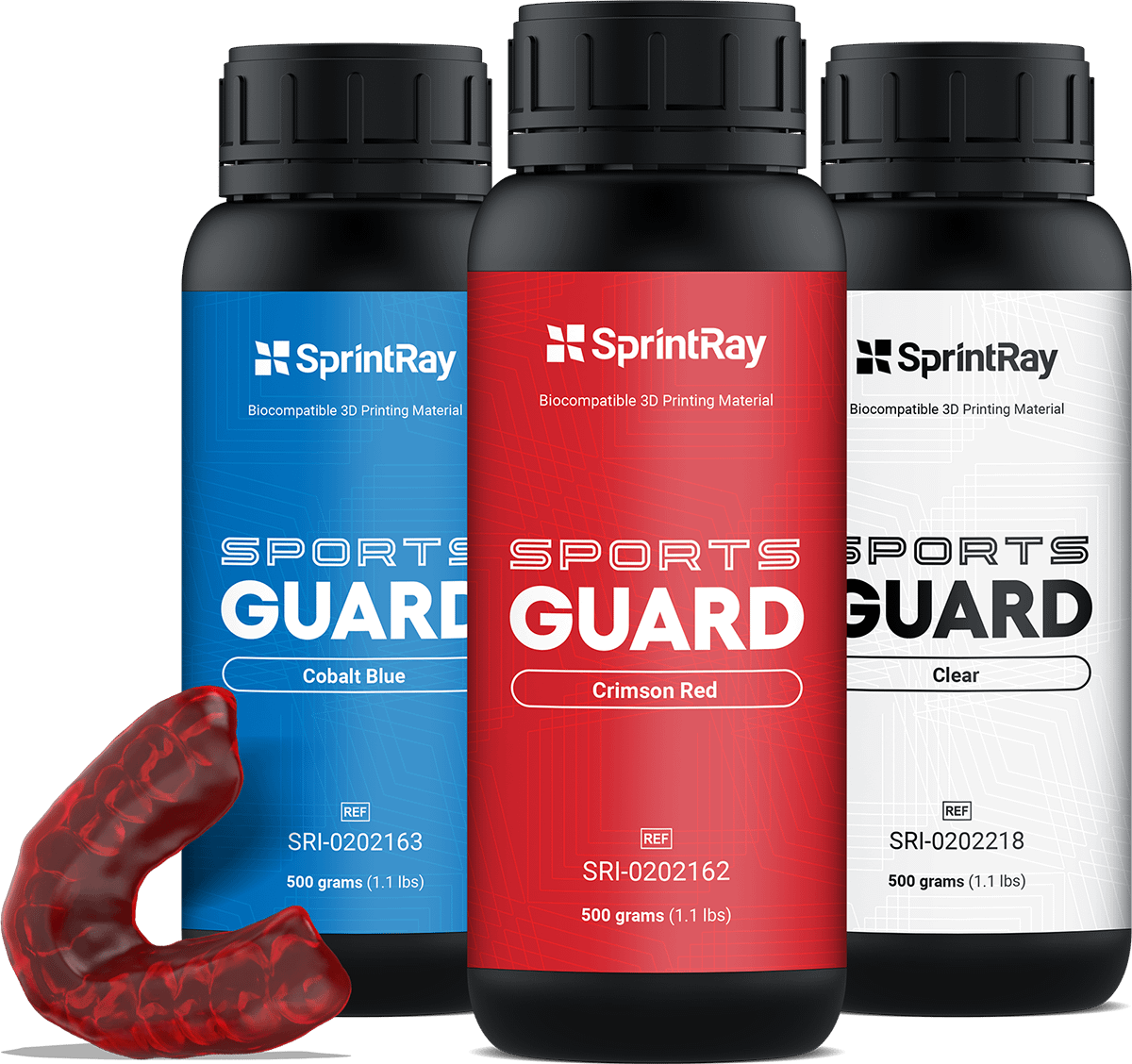
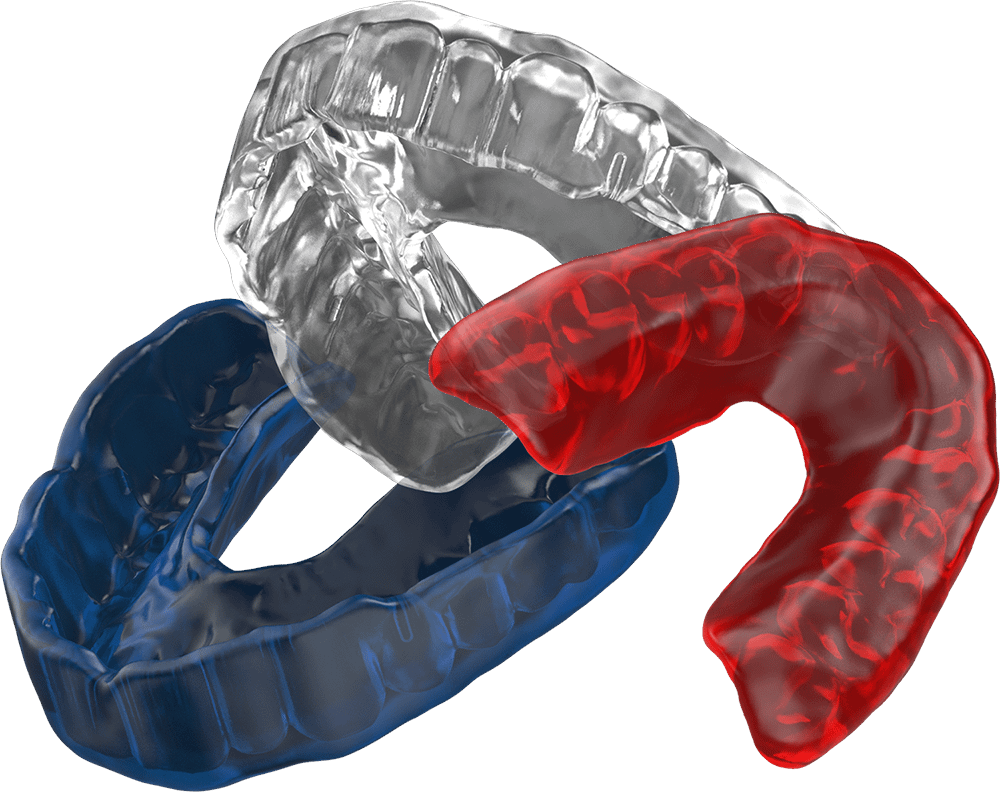
Another interesting addition is a new SportsGuard formulation, a biocompatible resin for custom athletic mouth guards, which now comes in clear, blue, and red. Using SprintRay AI Design, clinicians can generate upper and lower guard designs in about five minutes, with thickness control to ensure fit and retention. SportsGuard is aimed at practices looking to bring sports dentistry in-house. All of these are also expected to ship following regulatory clearance in Spring 2026.

Know what’s next in dentistry. Before everyone else.
The innovations, clinical insights, and digital trends that matter - curated by iDD and delivered straight to your inbox every week.
The GC America Partnership and Midas World Tour
Here's where SprintRay's strategy gets interesting.
On March 11, 2026, SprintRay officially announced the Midas World Tour, a global education program developed in collaboration with GC America, Align Technology, and Meisinger Dental. You can read GC America's full partnership announcement here. It's a structured, hands-on training program with seven continuing education credits across 40 stops in 12 countries.
The concept is a fully integrated chairside workflow. Align Technology provides the iTero intraoral scanner data. SprintRay handles the AI-powered design and Midas printing. GC America contributes its materials science expertise (characterization, glazes, cementation, and bonding protocols). And Meisinger Dental provides the rotary instruments for the preparation and finishing of 3D printed restorations.
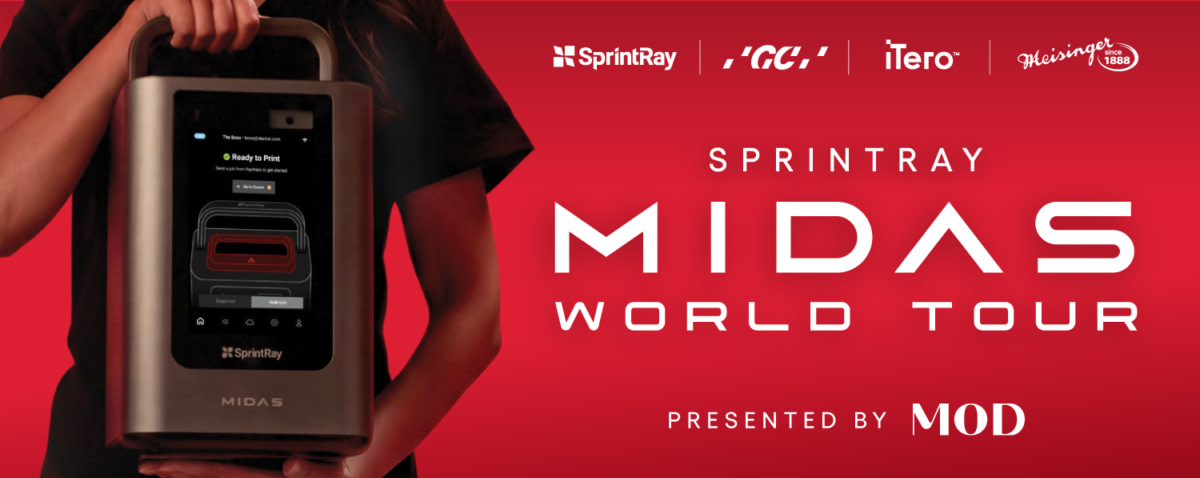
In other words, SprintRay is assembling the entire same-day restorative workflow under one education program. Scan to seat, all in one visit. Each partner owns a piece, and together they fill in the gaps.
It's great to see an education-first approach here. One of the biggest barriers to 3D printing adoption has always been workflow knowledge, not the hardware itself. Training clinicians on the complete process (from scan to bonded restoration) addresses a real pain point. If you're new to 3D printing restorations and want to understand the full workflow, we've covered the step-by-step crown printing process here.
That said, I'll be curious to see how well these partnerships translate into actual clinical protocols. Trade show partnerships and press releases are one thing. Real-world, validated workflows that hold up under daily clinical use are another. The proof will be in how these products and materials perform together once clinicians start using them independently.
The Ivoclar Situation
SprintRay also has a partnership with Ivoclar that's been in place since mid-2024. At the time, both companies announced it with big ambitions, talking about "setting new standards" in 3D printing. You can read Ivoclar's latest media release on the partnership here.
Since then, the main tangible output has been the validation of Ivoclar's Ivotion Base Print denture base material for the SprintRay Pro 2. Ivoclar printing profiles are available in North America, with more markets planned.

But beyond that? It's been relatively quiet. We haven't seen new Ivoclar materials validated for SprintRay systems, and the partnership hasn't generated the kind of visible momentum you might expect given the initial announcements. SprintRay's own IDS 2025 press release still lists Ivoclar as one of its key partners, so the relationship clearly continues.
But compared to the GC America collaboration (which now has a concrete global tour attached), the Ivoclar partnership still feels like it's finding its feet. I was expecting the next generation crown materials from a legendary company like Ivoclar, but I guess we have to wait.
To be fair, material validation takes time. It will be interesting to see whether this partnership ramps up in 2026 or whether GC and Solventum become SprintRay's primary materials partners going forward.
The Bigger Picture - SprintRay's Partnership Strategy
Step back and look at what SprintRay has assembled in the past 18 months.
GC America for restorative materials and cementation
Ivoclar for denture base materials
Solventum (formerly 3M) for the development of the first permanent chairside 3D printed crown
Straumann Group for implant workflows, including a co-branded "Signature Midas" integrated with the Straumann AXS platform
Align Technology for iTero scanner integration
Meisinger Dental for preparation and finishing instruments
Nobel Biocare is distributing the Midas in North America
And don't forget last year's acquisition of EnvisionTEC's dental portfolio, which gave SprintRay over 200 patents and an entry into the dental lab market. We sat down with SprintRay CEO Amir Mansouri to discuss that move in detail on our podcast.
This is clearly a platform play. SprintRay is positioning itself not just as a printer manufacturer, but as the hub around which the entire chairside digital workflow revolves. Scan with Align. Design with SprintRay AI. Print with Midas or Pro 2. Finish with Meisinger. Bond with GC.
What This Means for You
If you already own a Midas, the Multi-Unit Capsule upgrade is the biggest news here. It addresses the main limitation of the platform and should ship within the next few months.
And if you're watching the dental 3D printing space more broadly, pay attention to how these partnerships evolve. SprintRay's approach of building a coalition of partners rather than trying to do everything in-house is interesting. Whether it creates a genuinely seamless clinical workflow or a patchwork of products from different companies remains to be seen. But the direction is clear, and the investment is significant.
Worth noting is that we are still waiting for the ‘next generation’ crown resins. There are whispers of this coming soon, with a thick paste-like restorative resin coming that is only possible to print on the press system. It will be interesting to see how that unfolds.
For more on SprintRay's trajectory and CEO Amir Mansouri's vision for dental 3D printing, you can also listen to our earlier Digital Dentistry Decoded podcast episode with Amir.
Dr. Ahmad Al-Hassiny Institute of Digital Dentistry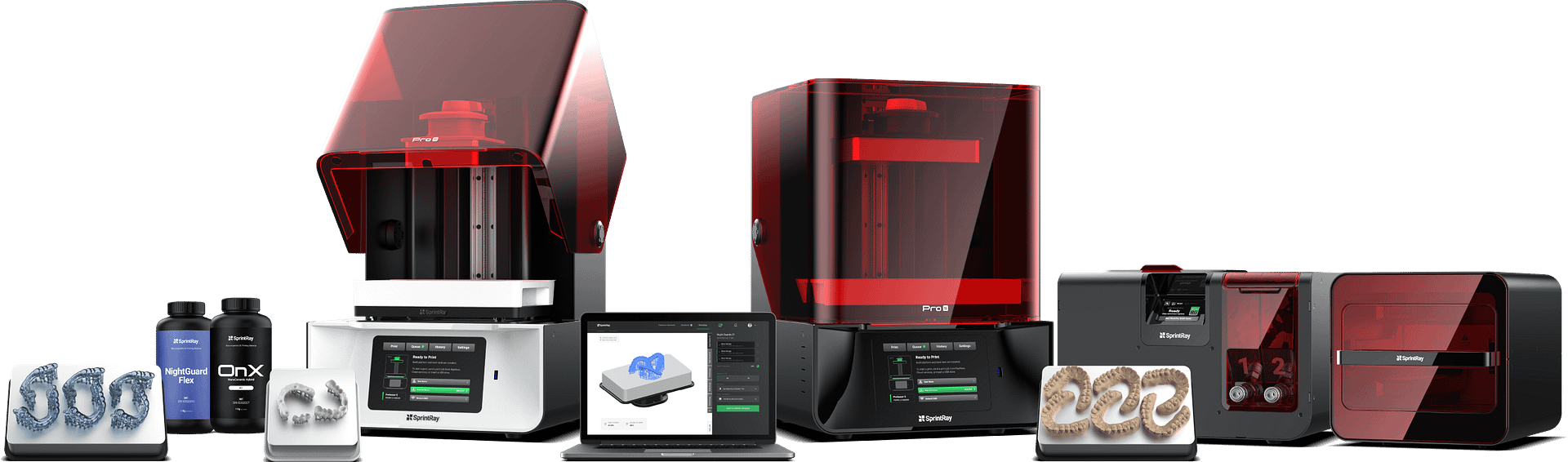
We'll continue to cover SprintRay's releases as they ship and become available for clinical evaluation.
If you have any questions, please leave them below.
Thanks for reading.