I recently sat down with Ayush Bagla, the former CEO of Ackuretta and now the Managing Director at Pac-Dent, for an honest conversation about where 3D printing in dentistry actually stands.
Ayush has been in this game for over 12 years. He built a printer company, navigated an acquisition, and now sits at the intersection of digital hardware and dental materials.
Here's what we covered. Listen below or keep reading for the summary of this episode of the iDD Podcast.
Adoption vs. Utilization - Two Very Different Things
We talk a lot about 3D printer adoption in dentistry. But adoption and utilization are not the same thing, and the gap between them is bigger than most people in the industry want to admit.
In mature lab markets, Ayush says around 70–80% of labs now use 3D printing in some form. Chairside, in a market like the US, adoption sits closer to 18%. And even among those chairside users, the majority are still only printing models. The data suggests that roughly 80% of dentists with printers rarely move beyond that into biomaterial applications like splints, surgical guides, dentures, provisionals, or crowns on a consistent basis.
In other words, many practices bought a printer, but relatively few fully integrated digital manufacturing into everyday clinical workflows.
Why? Ayush believes the biggest bottleneck is still CAD. The hardware has matured. Print quality is excellent. Materials are faster, stronger, and more validated than ever before. But the software workflow between scanning and printing still requires a level of design skill, confidence, and time investment that many clinicians simply don’t have.
That’s where AI could fundamentally change the equation — and why I’m optimistic about the next phase of digital dentistry.
The real opportunity isn’t just making printers better. It’s removing the complexity between scan and final appliance. As AI-driven design tools become more automated, intuitive, and clinically aware, the barrier to creating splints, guides, provisionals, and eventually definitive restorations drops dramatically. The moment clinicians no longer need to become CAD experts to produce high-quality outcomes, utilization will rise — and that’s when adoption numbers will finally start to mean something.
Know what’s next in dentistry. Before everyone else.
The innovations, clinical insights, and digital trends that matter - curated by iDD and delivered straight to your inbox every week.
What's New From Ackuretta/Pac-Dent
At Chicago Midwinter this year, Pac-Dent launched three new products that we discussed together.
SOL SE
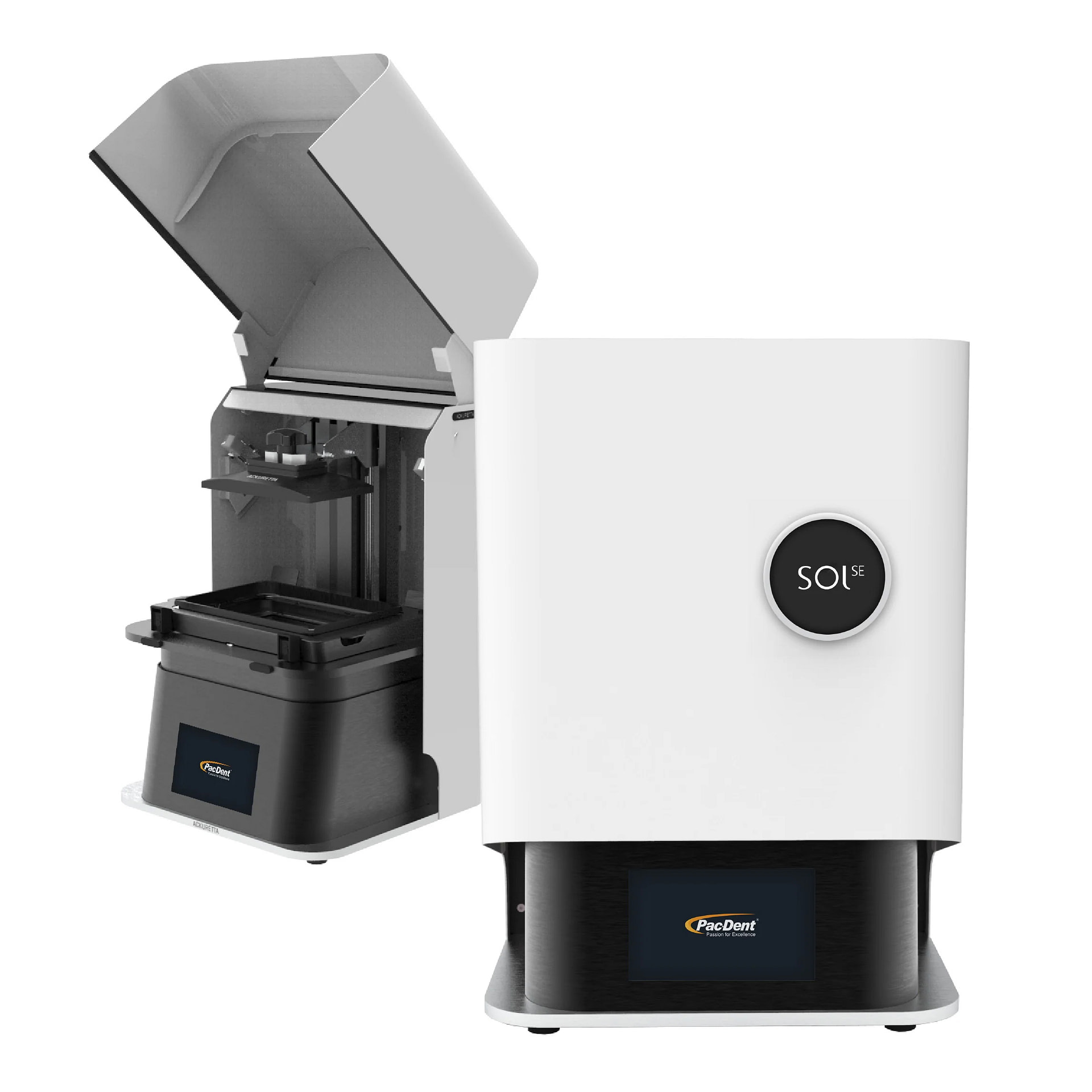

The SOL SE is an incremental upgraded version of the original SOL. The headline improvement is speed, driven by an enhanced Z-axis motor, improved backlight power, and new resins engineered specifically for LCD printing. The firmware and software have also been refined based on years of real-world support data. SE stands for Special Edition, not a full generational leap, but a meaningful step up from the original platform.
Chroma Flash
This one is worth paying attention to.
Most people don't think too much about their curing unit. They buy one, they use it, and they mostly forget about it. But here's a fact that surprises a lot of dentists: only about 20% of the curing of a printed part happens on the printer itself. The other 80% happens in the post-curing unit.
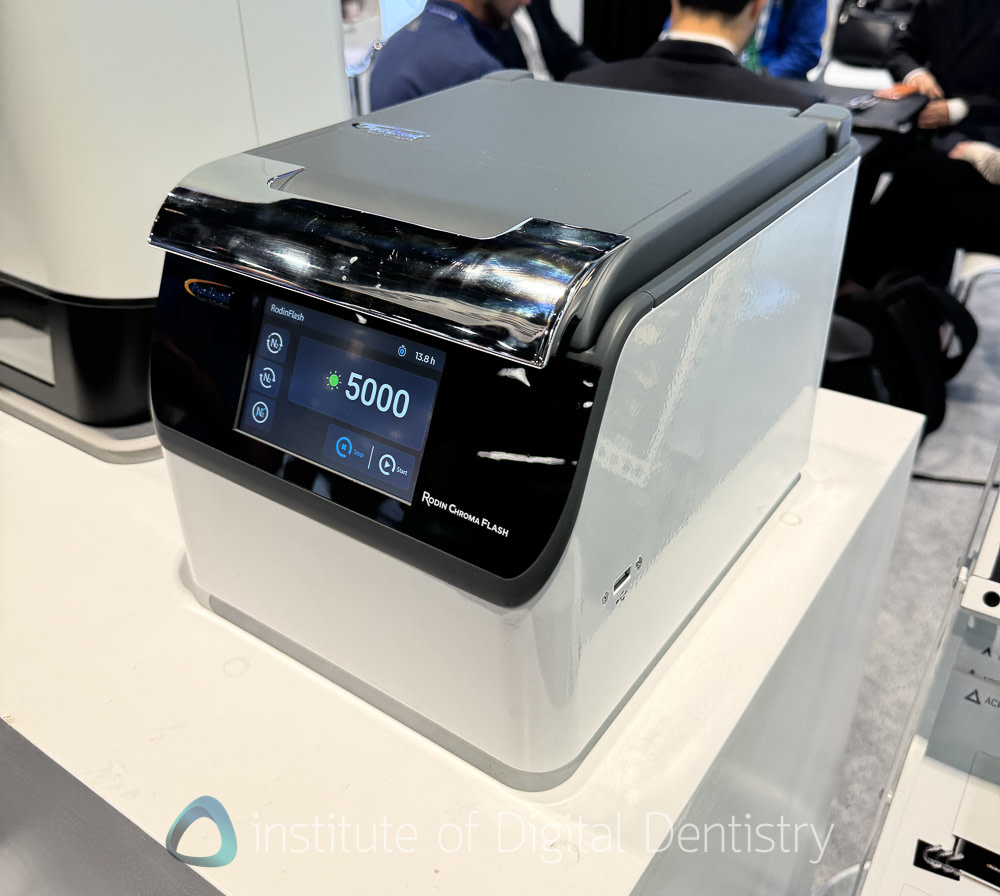
That means the curing box matters a lot more than most people realize.
The Chroma Flash takes a different approach to curing than the standard LED units most dentists are using. Instead of LEDs, it uses a broad-spectrum bulb system. The wavelength window of a typical LED setup sits in a narrow band, roughly 390 to 420 nanometers. The Chroma Flash operates over the wavelength range of 280 to 950 nanometers.
What that means in practice is more complete curing, better mechanical properties, and significantly improved shade accuracy. Ayush explained that a common complaint with LED units is that splints and denture materials come out yellow-tinted or translucent. The broad-spectrum approach solves for that.
If you've followed the dental 3D printing community at all, you'll have heard people rave about the Otoflash for years. The Otoflash came out in the 1990s and still gets talked about as the gold standard. The Chroma Flash is built on the same broad-spectrum technology class, with modern improvements.
Deliveries are expected in June. Retail pricing in the US is around $3,500.
On the topic of curing, we also discussed nitrogen curing, a subject that sparks a lot of debate online. Ayush's position is clear: with the right materials and the right curing unit, oxygen inhibition is not the problem it used to be. Pac-Dent consciously engineered their Rodin resins to work without nitrogen because they wanted a material that would function on any curing unit in any clinic. He estimates less than 1% of dentists are actually curing under nitrogen, which matches what I see, too.
A lot of the online discourse about nitrogen versus glycerin seems to matter more than it does in the real world.
CrownPod
The CrownPod is still a code name at this stage, but it's the most conceptually interesting thing they showed in Chicago.
The idea is another pod-style printer designed to simplify chairside workflows by removing the CAD step entirely for certain applications. The first module targets pediatric dentists specifically, which is quite a niche to launch a product into. Pediatric clinics carry a large inventory of stainless steel crown kits. Ayush mentioned that some practices go through $200,000 to $500,000 of crown inventory per year. Dentists lose cases because they don't have the right size available. With the CrownPod, a clinician measures the tooth with a manual gauge, selects a template from an AI-powered library, and prints a crown on demand.
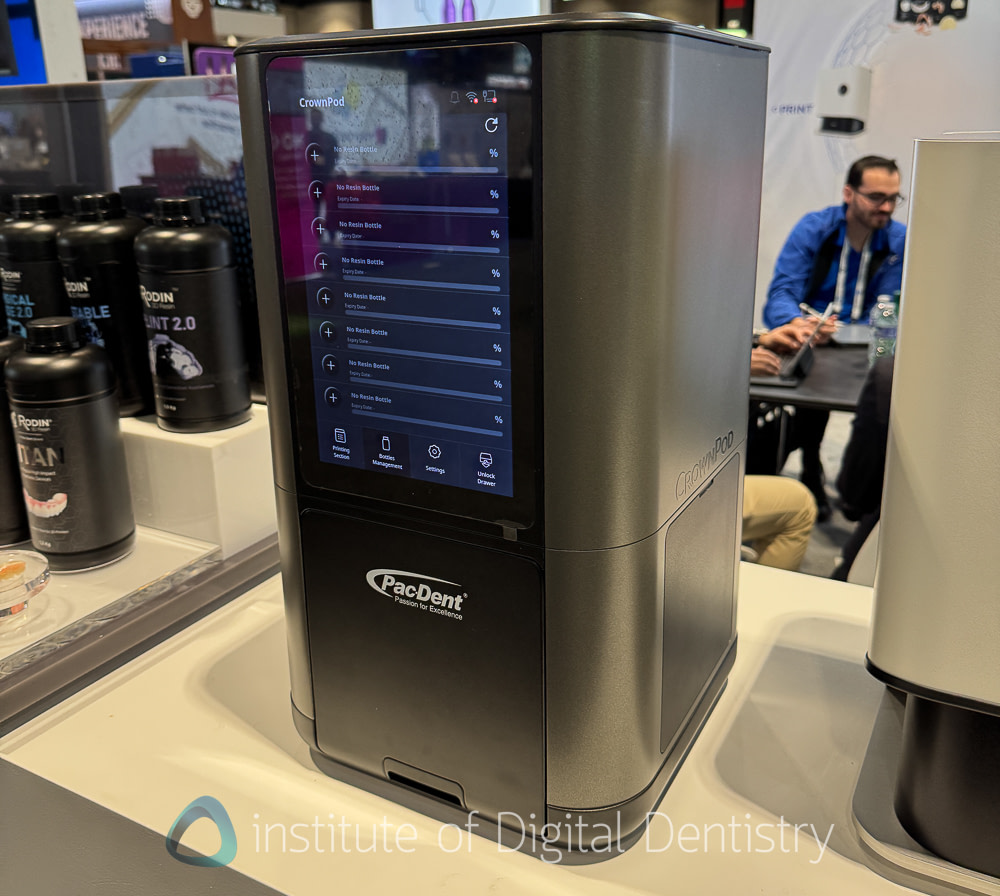
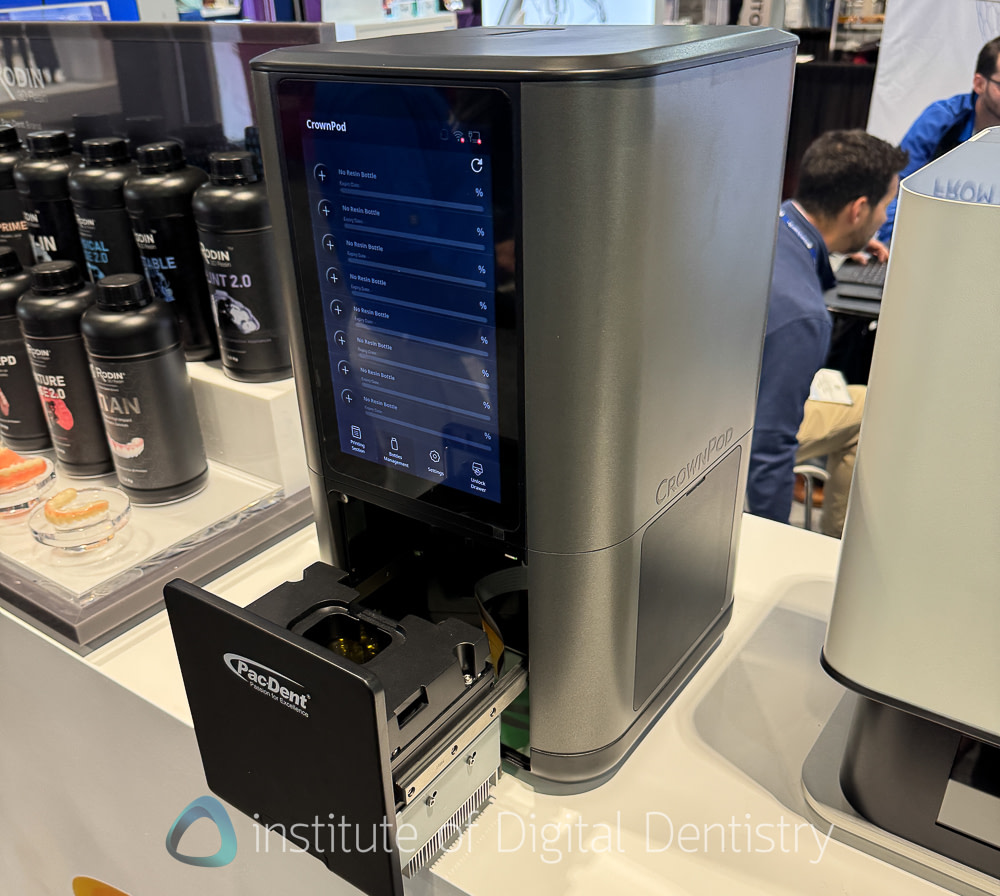
No scanner required. No CAD software required.
The unit has an eight-bottle resin system with a built-in mixer and heater inside each bottle to keep fillers from settling. Each build uses a fresh vat and build platform, which keeps failure rates low and results consistent.
Pediatric crowns are just the first application. Ayush mentioned a roadmap of more than 20 applications planned for the platform, including whitening trays, which is where the Pac-Dent materials portfolio starts to become very interesting. Crown and bridge, inlays, onlays, splints, and models are all on that roadmap.
Expected to begin shipping in Q3 this year.
Know what’s next in dentistry. Before everyone else.
The innovations, clinical insights, and digital trends that matter - curated by iDD and delivered straight to your inbox every week.
Where Pod Printing Is Headed
Pod printers are becoming more common. SprintRay, Planmeca, Asiga, and more of these systems are coming to market. The core value proposition is consistency and a lower failure rate, because the conditions are controlled and fresh consumables are used each time.
Ayush drew a useful comparison to the milling world, where single-use consumables are already standard and accepted. Clinicians pay a premium for predictable outcomes, and that logic applies equally here.
The tradeoff some people are pointing to is that pod printers for restorative and general-purpose open printers might end up sitting side by side in the same clinic. Ayush's view is that Pac-Dent's vertical integration of materials, hardware, analog products, and software under one roof gives them a different answer to that problem than companies that are just selling printers.
The Broader Picture
Here's how I'd summarise the state of the market.
There's an oversupply of printers right now, and a lot of them aren't sufficiently differentiated from each other. The companies that will win over the next few years are the ones solving real workflow problems, making CAD easier, making materials more reliable, and making the post-processing less fiddly.
AI is going to accelerate adoption, particularly on the software side. We're already seeing it in ortho planning tools and crown design. Ayush is right that the writing was on the wall when free software started lowering the barrier to entry. AI is the next version of that shift.
And the advice Ayush gave for anyone looking at their first printer is the same advice I'd give: talk to someone who's already done it. Not the sales rep. A colleague, a mentor, someone on the ground who has lived through the trial and error. The brand and the price point matter a lot less than getting the right fit for your practice and your goals.
If you want to go deeper on digital workflows and 3D printing, check out our courses at the Institute of Digital Dentistry.