
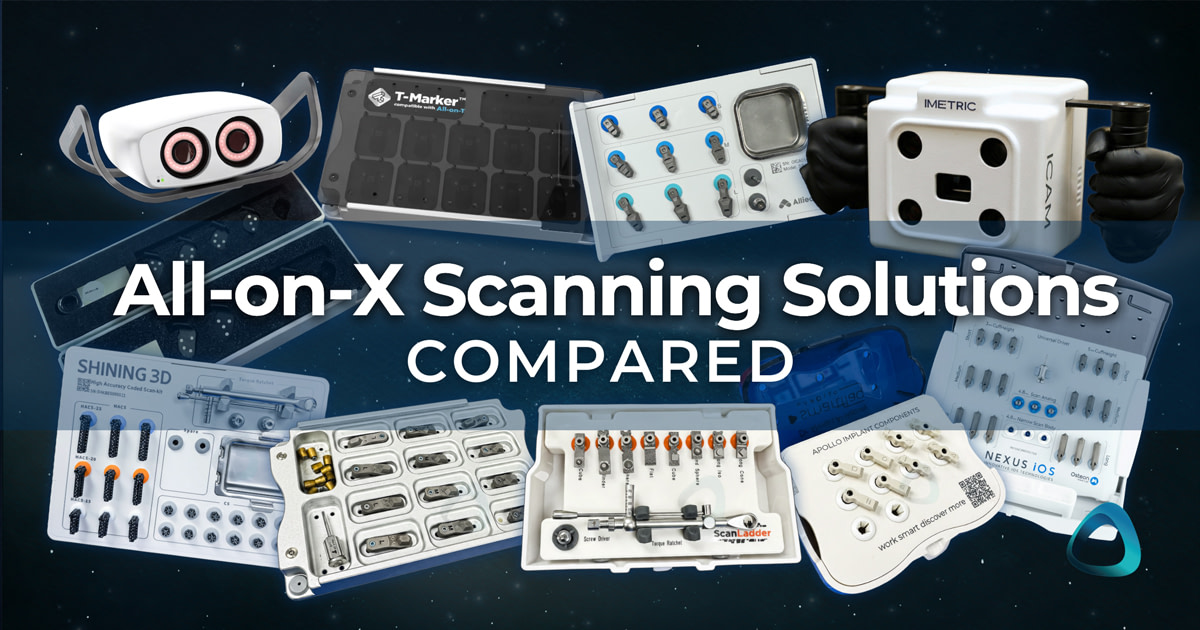

Full-arch dental implant scanning accuracy has arguably been the single most important unsolved problem in digital implant dentistry for some time. Whether you call it All-on-X, All-on-4, or full-arch implant scanning, the challenge is the same.
Over the past five years, the number of intraoral scanners, photogrammetry devices, and scanning systems that claim to solve it has exploded. At the Institute of Digital Dentistry, I have been fortunate (and, frankly, a little obsessive) to get my hands on every major All-on-X dental implant scanning system on the market and test it for you. I have used all the products covered in this article extensively at our clinic and through structured testing protocols using a contact measure machine (CMM) we use for our reviews.
What I can tell you upfront is this: there is no single "best" system. Frankly, they all seem to work. The right choice depends entirely on your case volume, your existing equipment, your budget, and how much you value verification certainty versus workflow simplicity.
This is not a sponsored article. My goal is to give you the same honest breakdown I do in my scanner reviews, backed by published data where available and clinical experience where it is not. I have used every single one of these systems. Here is my honest take.
Let's get into it.
At a Glance - All-on-X and All-on-4 Scanning Systems Compared (2026)
Before we go deep into each product, here is a quick comparison of every major system covered in this article. This should help you narrow down which ones are worth reading about in detail based on your workflow and budget.
System | Type | Works With | Price | Published Accuracy | Subscription |
ICam 4D (Imetric) | Extraoral photogrammetry | Any intraoral scanner (soft tissue) | ~$39,900 | 25 µm median | No |
PIC Dental | Extraoral photogrammetry | Any intraoral scanner (soft tissue) | Contact for pricing | 10–49 µm | No (app is $59/mo) |
Shining 3D Elite IPG | Intraoral photogrammetry | Elite scanner only | ~$20,000–$24,000 | 26 µm | No |
IO Connect (TruAbutment) | Horizontal scan body | Any intraoral scanner | ~$3,000 | 20–48 µm | No |
NEXUS Scan Gauges | Horizontal scan body | Validated intraoral scanners | ~$3,900 | Best in class (Lerner 2026) | No |
Apollo SmartFlag | Horizontal scan body | Any intraoral scanner | ~$2,500 | Limited published data | No |
Scan Ladder | Horizontal scan body | Any intraoral scanner | ~$1,093 | 11–13 µm (inventor study) | No |
Alliedstar DIRECT IP | Horizontal scan body | AlliedStar scanners only | ~$16,000 (with Sensa) | ~20 µm (iDD testing) | No |
T Marker (TruAbutment) | iPad photogrammetry | iPad (no intraoral scanner needed) | $3,000 + $99/mo | 30–40 µm (claimed) | Yes ($99/mo) |
iTero Lumina | Standard intraoral scan with large FOV | iTero Lumina scanner | ~$30,000 USD for the Lumina | ~30 µm | Scanner subscription optional |
Why Full-Arch All-on-X and All-on-4 Scanning Accuracy Matters
Intraoral scanners lose accuracy progressively across edentulous arches.
Each sequential image must be "stitched" to the last, and errors compound from one side of the mouth to the other. A 2021 systematic review of 30 studies found intraoral scanner trueness ranging up to 731.7 µm for full-arch spans, and 18 of those studies exceeded the commonly cited 100 µm acceptability threshold.
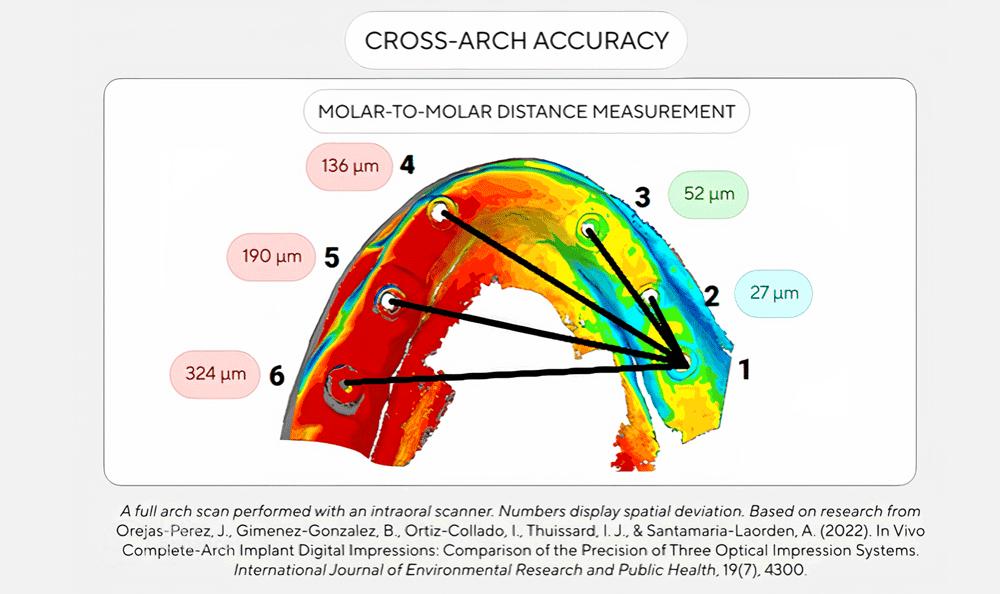
This matters because a misfit of just 40–50 microns across a full-arch All-on-4 or All-on-X prosthesis can trigger screw loosening, framework fracture, marginal bone loss, and ultimately implant failure. The clinical stakes are enormous: connection-related complications climb from 4.3% at five years to 26.4% at ten years in poorly fitting restorations.
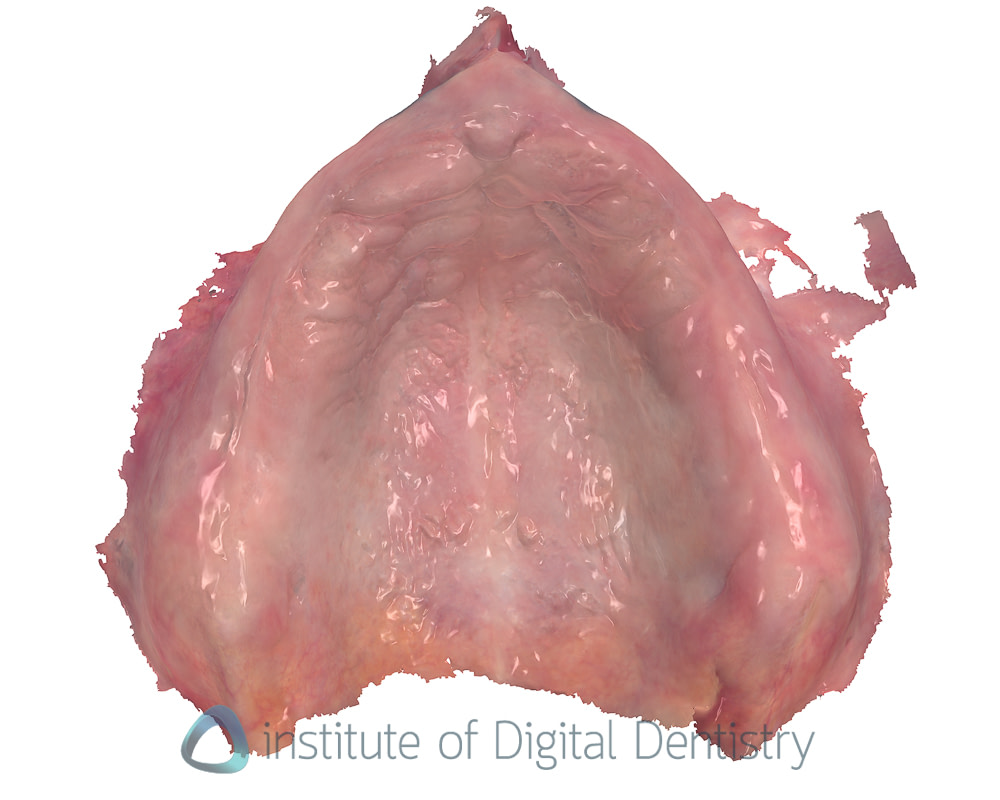
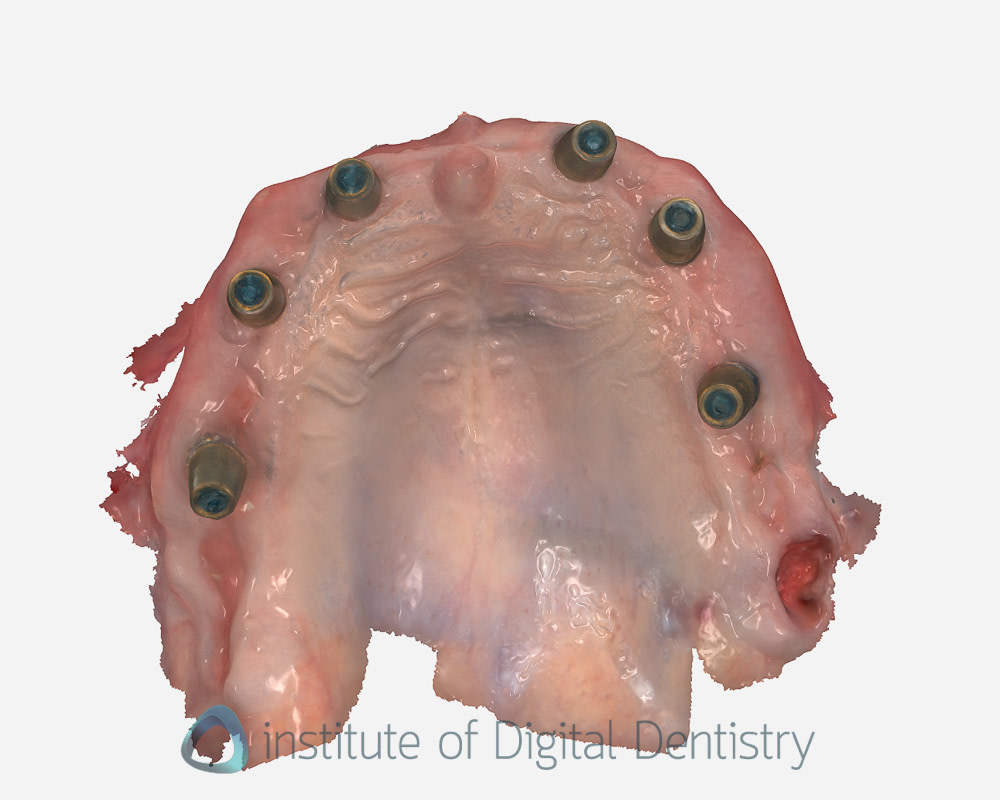
Edentulous ridges compound the problem: they lack teeth (obviously) and landmarks that intraoral scanner algorithms depend on for pattern recognition. Identical-looking cylindrical scan bodies separated by featureless mucosa make matters worse.
The clinically acceptable misfit threshold remains a subject of debate. Brånemark's original 1983 standard was 10 µm. More recent work suggests 50–100 µm for distance deviation and under 1° angular deviation are realistic targets for passive framework fit. A widely cited practical threshold is 150 µm, below which biological and technical complications are unlikely over time.
Four fundamentally different technological approaches now compete to solve the All-on-X dental implant scanning problem:
- Extraoral photogrammetry uses dedicated cameras to capture coded markers on scan bodies simultaneously, eliminating stitching errors entirely, but it requires a separate intraoral scanner for soft tissue.
- Intraoral photogrammetry (a 2024 innovation) embeds photogrammetric algorithms inside the intraoral scanner itself.
- Horizontal scan bodies and scan gauges redesign the scan body geometry to give intraoral scanners more landmarks and reduce stitching drift.
- iPad/iPhone-based scanning attempts to bring photogrammetry to consumer hardware, lowering the intimidation factor of the tech and cost.
Extraoral Photogrammetry Systems for All-on-X Dental Implant Scanning
Imetric ICam 4D
The ICam 4D, now in its fifth generation, is manufactured by Imetric 4D Imaging in Courgenay, Switzerland.
It uses four moving cameras plus a structured-light projector (the only system with this multi-camera architecture) to capture overlapping 2D images of proprietary titanium ICamBodies screwed onto multi-unit abutments.
The scan can take as little as 20 seconds in expert hands, but as long as five minutes if you're new. Software identifies pre-measured marker targets on each body and computes XYZ coordinates plus angulation for every implant.
ICamBodies are individually calibrated, radiopaque titanium components that can be verified with radiographs. They have specific kits for most MUA platforms from Nobel, Straumann, Zimmer Biomet, and others. The system exports to Exocad and 3Shape via IScan3D Dental software.
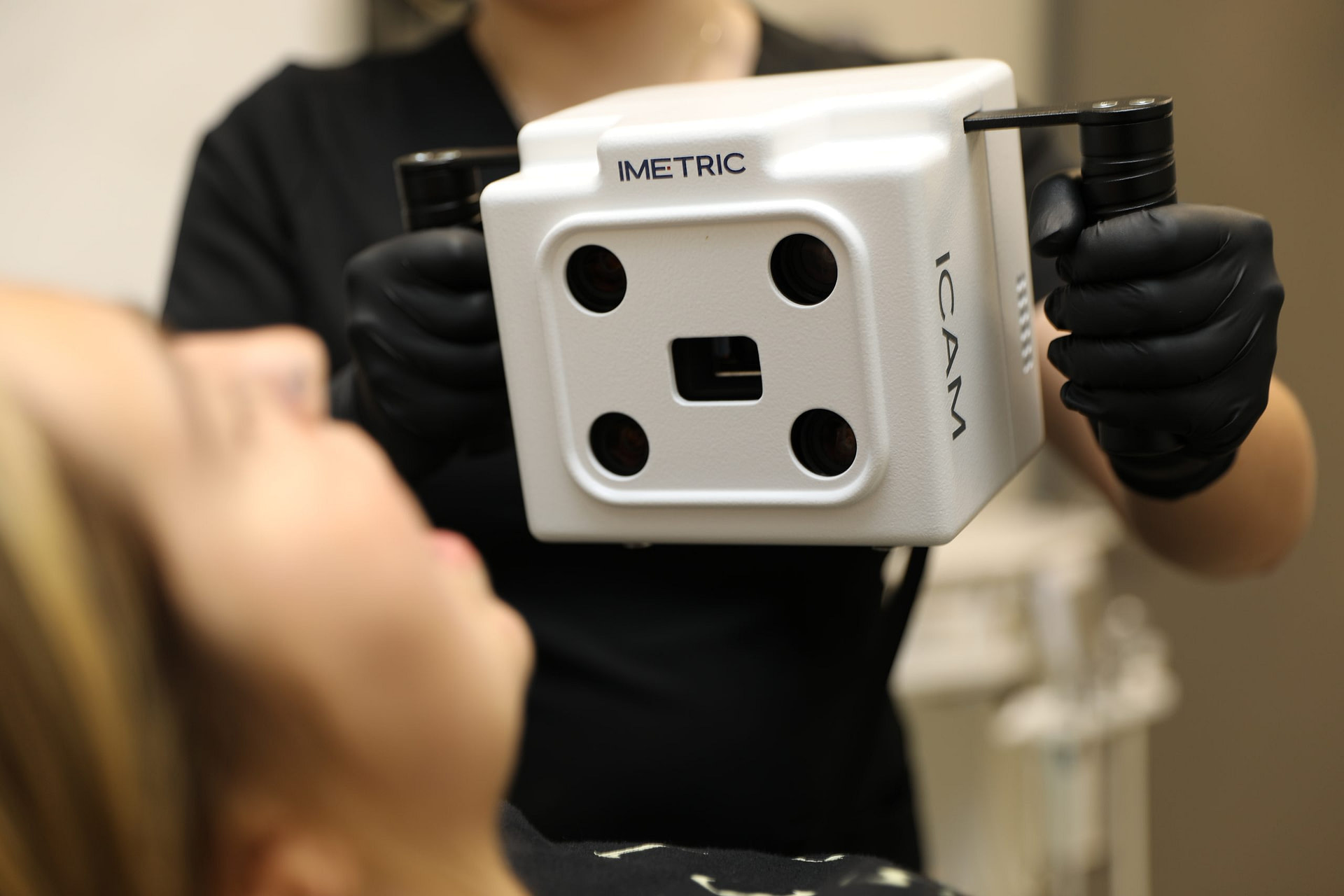
Pricing is around the $39,900 mark for the Gen 5 unit, including the photogrammetry device, a two-year warranty, training, and eight ICamBodies. Replacement ICamBody sets cost roughly $3,200.
Published accuracy data is strong. A 2025 in vitro study reported a median 3D trueness of 25.23 µm and an angular deviation of 0.12°, significantly outperforming intraoral scanners (78.58 µm). The Gómez-Polo 2023 systematic review reported a trueness of 24–77 µm and a precision of 2–20.3 µm, indicating some variability under challenging conditions.
The reality is this - photogrammetry works very well. It solved the issue of needing of a verification jig after full arch / All-on-X implant scanning.
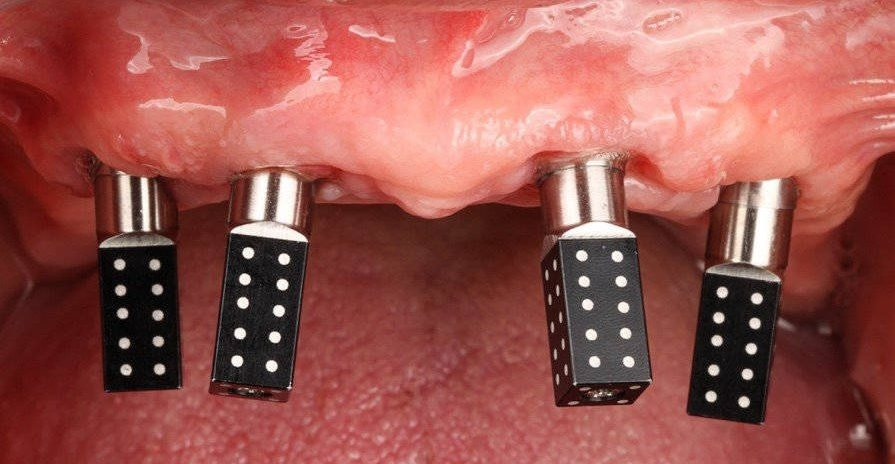
The critical thing to realise about photogrammetry is that it does not rely on your intraoral scan like using horizontal scan bodies do. The systems completely ignore the soft tissue, and the software is typically rigid. You either have the correct data, or you do not.
Unless you have put the markers on incorrectly, you can't really do it 'wrong'. I need to emphasize the consistency of the scans. If a total beginner takes an ICam scan correctly, the result will be the same quality as that of an experienced user. This is the key differentiator between photogrammetry devices and horizontal scan bodies, which depend on how well the user scans.
Want more of the latest in dentistry?
Join the RAPID community
and get insights straight to your inbox.
PIC Dental photogrammetry system
PIC Dental, headquartered in Madrid, is the pioneer of dental photogrammetry, having launched the world's first commercial system in 2010. Far ahead of its time.
With 49+ peer-reviewed publications and 1.4 million clinical cases across 50 countries, it has the deepest evidence base of any product in this comparison.
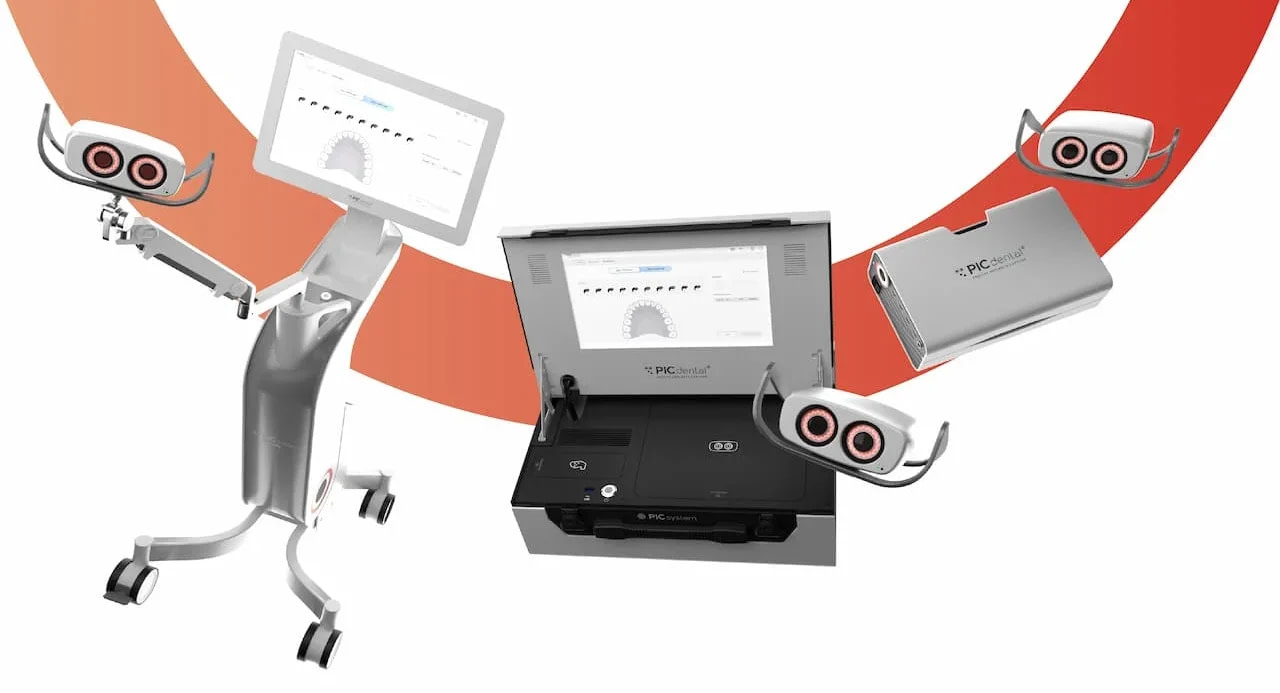
The system uses stereophotogrammetry (two stationary cameras with an infrared flash) to capture coded PIC transfers screwed onto implants. The manufacturer claims an accuracy of under 4 µm under controlled conditions. I personally think that is quite a claim.
The Gómez-Polo systematic review reported trueness of 10–49 µm and precision of 5–65 µm, with tighter precision ranges than those of the ICam 4D.
PIC now offers four distinct products:
- PIC system Gravity (high-volume surgical suites)
- PIC system (all-in-one with touchscreen)
- PIC system Station (wall-mountable, most portable)
- PIC app (launched in March 2025; uses iPhone 14 Pro or newer on a pay-per-use model). An in vitro study showed the PIC app achieves an accuracy of 30.92 µm, roughly 12.7 µm behind the dedicated system, a difference likely not clinically significant.
Interesting to see how the pioneer of photogrammetry has pivoted to a phone app. Sign of the times?
Once again, these systems work. No doubt. But the main drawbacks in my experience of traditional photogrammetry systems for All-on-X and All-on-4 cases are:
- High upfront cost, which makes no sense if you seldom restore these cases
- Bulky devices
- Software can look dated (looking at you, ICAM)
- Steeper learning curve than learning how to scan with horizontal scan body systems
- Inability to capture soft tissue (requiring a companion intraoral scanner)
- The need for pre-scan calibration with the calibration plate before every single case
There are now multiple other devices that have entered this space since these two products launched, including Micron Mapper, Tupel (OEM of the Blue Sky Bio device), and a number of Chinese photogrammetry products, too.
These traditional photogrammetry systems are effective, but you will have to pay a premium. We have an ICam 4D, and it served us well for many years in the clinic. But, in saying that, it has been totally replaced by horizontal-scan bodies in my clinic, I have to say.
Horizontal Scan Body Systems for Intraoral Scanners
Shining 3D Aoralscan Elite with IPG
The Aoralscan Elite, launched in late 2024, is the world's first intraoral scanner with built-in "photogrammetry" for All-on-X and All-on-4 cases, and it may be the most disruptive product in this comparison.
Although Shining 3D did not invent the concept of a horizontal scan body, they arguably created the best end-to-end solution for an intraoral scanner, from scanning to digital matching/alignment and digital transfer, all within one product. They were the first to do this.
The IPG system is supplied with an Aoralscan Elite scanner, priced at approximately $20,000 for the wired version ($23,999 for the wireless version), and it delivers a complete intraoral scanner plus photogrammetry in a single 124-gram handpiece with no subscription fees.
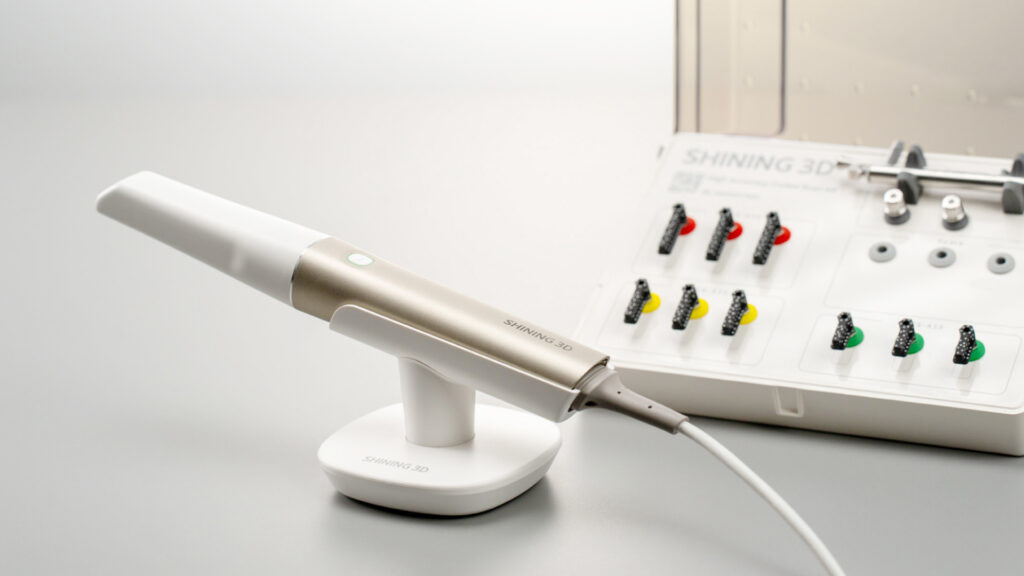
The IPG workflow uses High Accuracy Coded Scanbodies (HACS) with encoded dot patterns. The scanner reads these patterns using its standard structured-light camera and a photogrammetry algorithm to compute implant positions, then captures soft tissue with standard intraoral scanning. A three-step software process automatically merges everything.
It is not technically photogrammetry, which requires two cameras, but, frankly, it works. And it doesn't really matter what it is. Yes, it may be clever marketing to call it IPG, but at the end of the day, for a clinician doing All-on-4 or All-on-X cases, this opened up a brand-new and effective workflow.
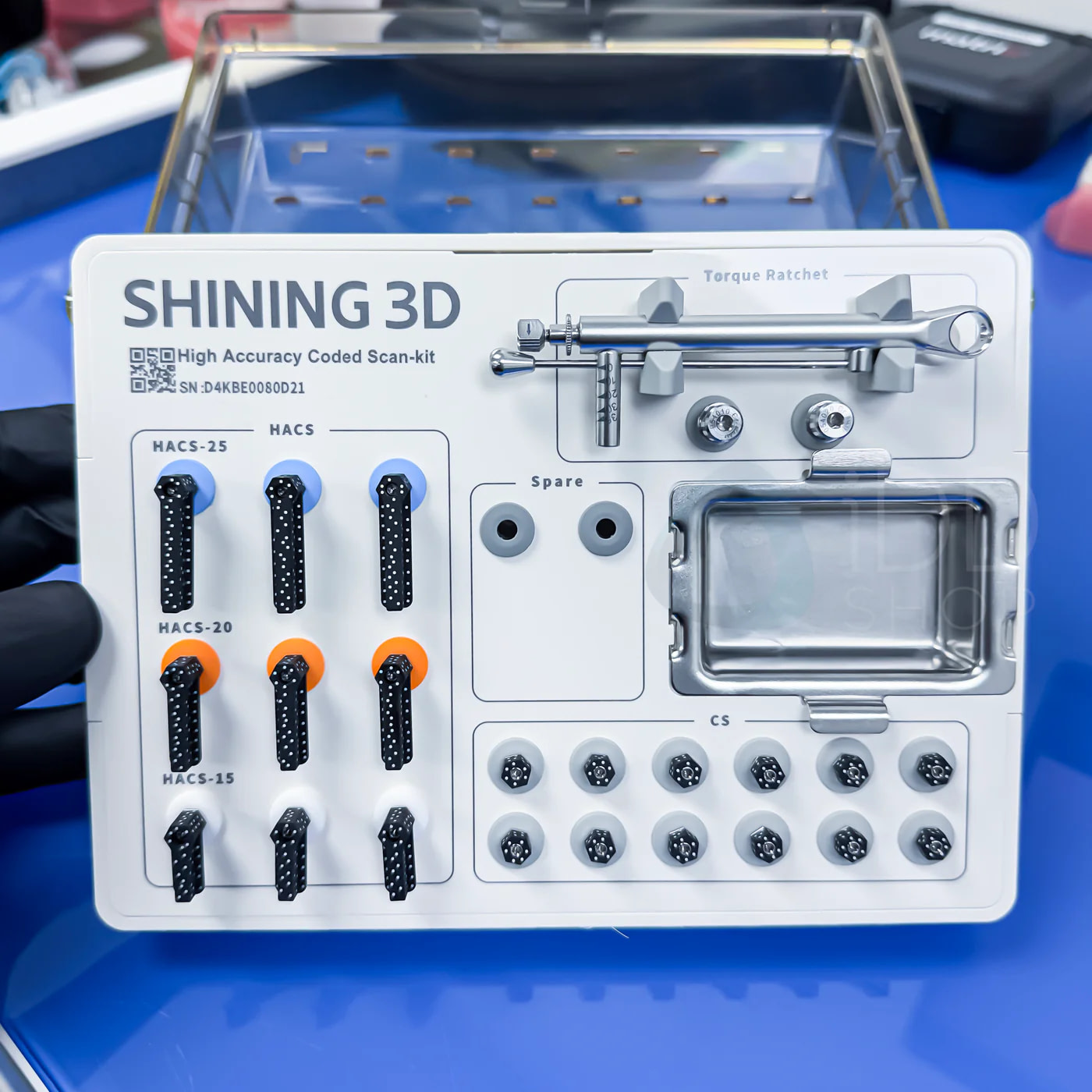
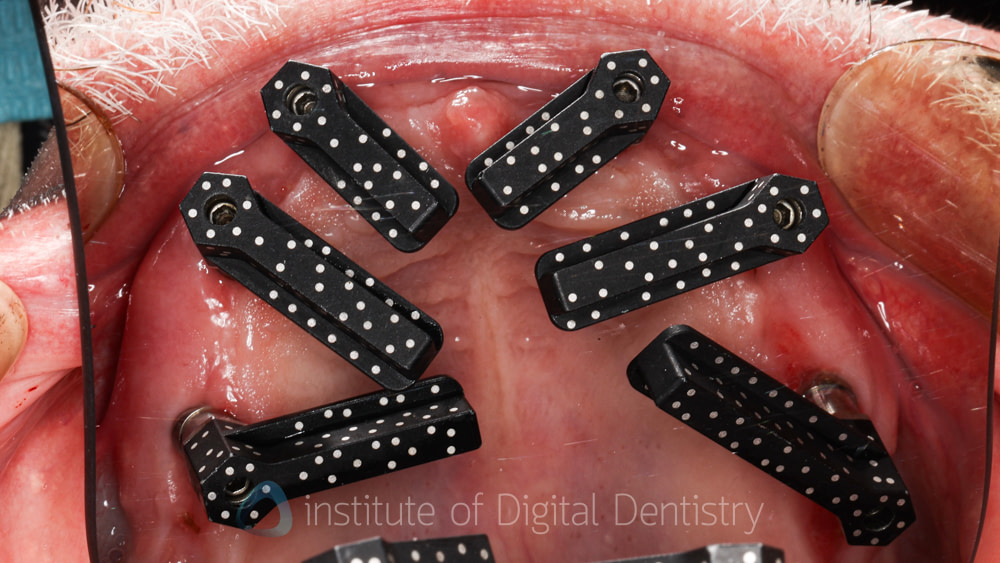
Early accuracy data is encouraging. Fu et al. (2025) reported an IPG trueness of 26.37 ± 1.02 µm RMS, comparable to the 31.72 µm reported by extraoral photogrammetry in the same study. Brakoč et al. (2025) found that IPG demonstrated the highest accuracy across all parameters compared with TRIOS 5, Medit i700, and Aoralscan 3. Disruptive.
The key advantages are obvious: one device, one workflow, one purchase price, no subscription. The company is also innovating at a rapid rate - adding cap scan bodies to make tissue alignment easier in immediate cases, improving the cassete (which looks premium), and recently releasing a new kit with screws for the horizontal scan body that can be changed so one kit can fit multiple different MUA types.
The limitations are equally important, and in my experience, these are:
- This kit can only be used with Shining 3D Elite scanners. You cannot use the IPG kit with any other intraoral scanner, so if you have a TRIOS or Medit, the cost is still quite high because you need to buy a new scanner to use it. If you are on the market for a new IOS, however, it's a big bonus.
- The entire workflow relies on user scanning. So if you scan incorrectly, it can throw the results. Unlike traditional photogrammetry, which is very 'black or white.'
- The dots on the scan bodies are used by the scanner to register them. If they are covered in blood after surgery or cleaned incorrectly, the scanner will not 'see' the body. It can be very slight as well, like a thin film on them. It can be frustrating during a scan, and there is definietly a learning curve with this entire system.
- If the scan bodies are cleaned incorrectly, the dots lose their shine, requiring replacement as the scanner cannot read them like a normal scan body, or like any other horizontal scan body system.
All this asie, the workflow is undoubtedly excellent, and once again Shining 3D were the first to create a true end-to-end software solution within an intraoral scanner app for full-arch dental implant scanning. It works, it gained huge respect by clinicians globally, and everyone seems to say it's the 'best' system. This release really rocked the industry at the time.
Want more of the latest in dentistry?
Join the RAPID community
and get insights straight to your inbox.
IO Connect by TruAbutment
TruAbutment's IO Connect is an open horizontal scan body system priced at $3,000 per kit. It works with any intraoral scanner for full arch implant scanning.
The system includes short-, medium-, and long-scan body heights, as well as HS Caps for soft-tissue reference. It comes in implant-system-specific kits covering Nobel, Straumann, Dentium, Osstem, MegaGen, Neodent, and others. I have to say the build quality and finish of these scan bodies and the casette is top notch.
The concept is simple: rather than scanning tall cylindrical bodies scattered across an edentulous arch, IO Connect's horizontal scan body arms converge toward the center of the mouth/palate, creating a concentrated "TruScan Zone" where the intraoral scanner captures all implant positions within its most accurate first field of view.
You don't have to scan the entire body of the scan, as with Elite IPG, but only the hexagonal shape at the end of each abutment, and then the tissue scan with the MUA caps. In the clinic, the workflow is somewhat simpler than that of the Elite.
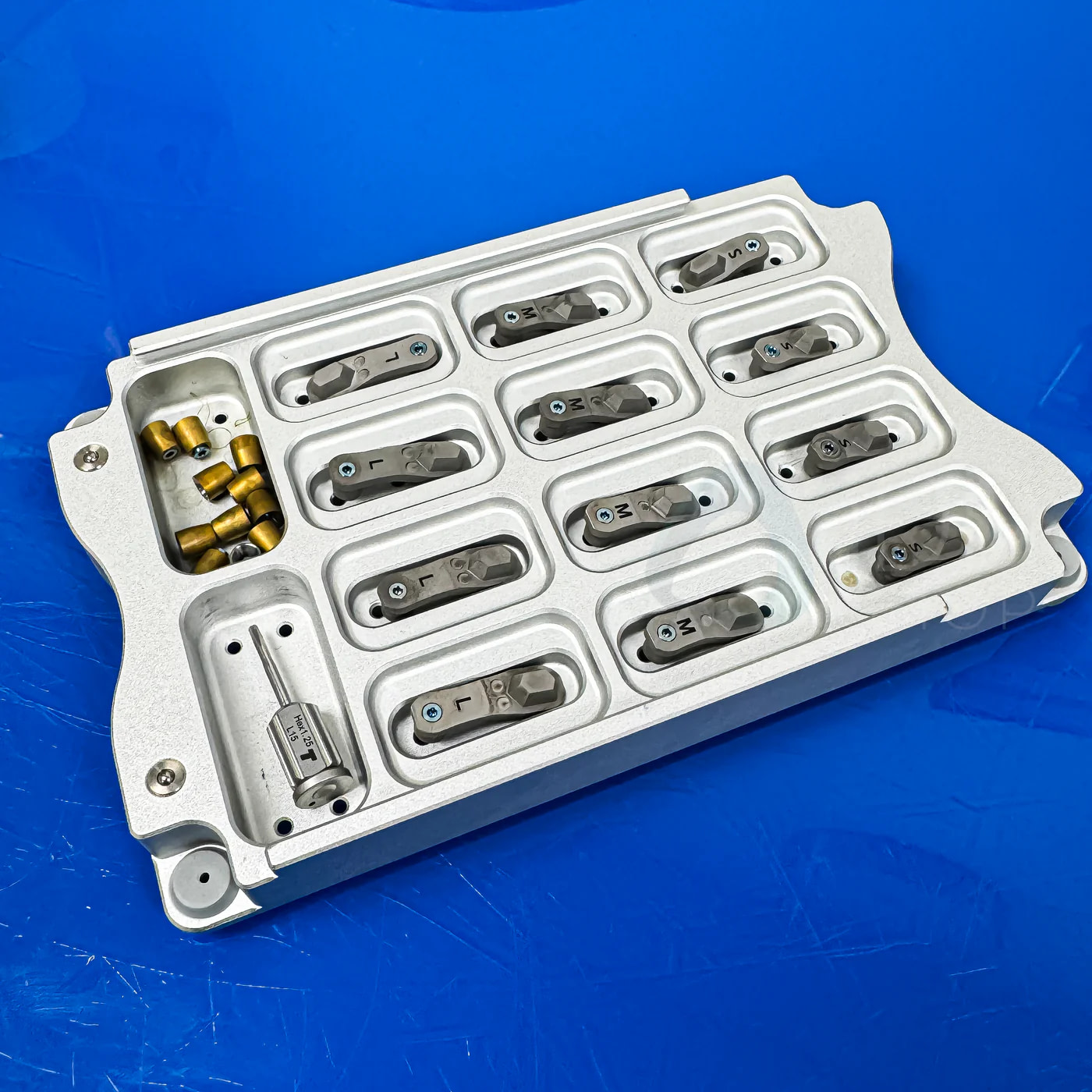
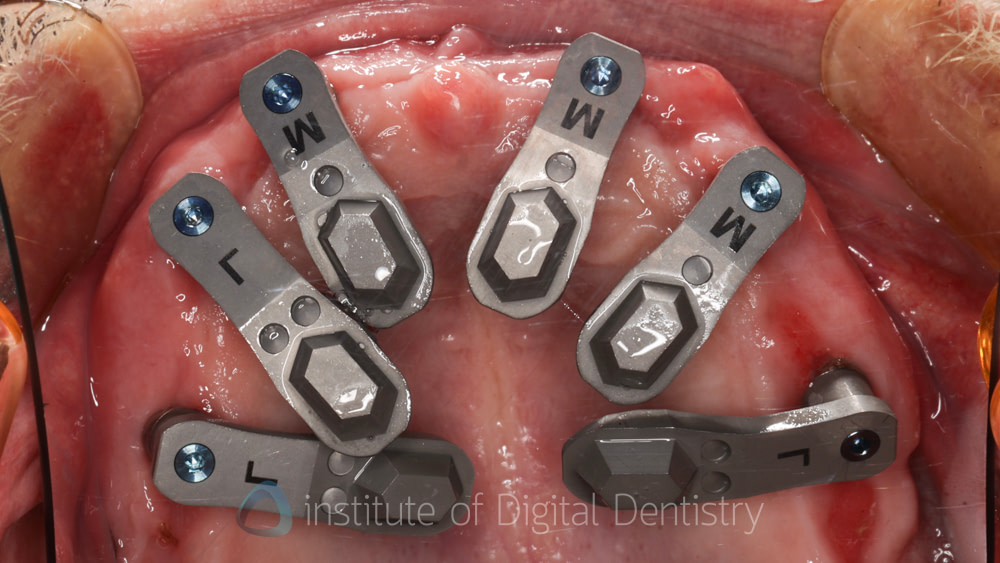
The free TruSuite software (including the ioConnect app) processes scans and exports STL files compatible with 3Shape and Exocad. This is nice because it's an open system that works with any scanner, but it's also a downside: it requires exporting the scan, importing it into the TruAbutment software, and performing the digital matching and transfer. More steps for you to do, or your lab will do this after you send it to them.
Multiple 2025 studies by Revilla-León validate the approach. IO Connect demonstrated significantly better angular trueness and precision than standard non-splinting scan bodies and achieved the best linear precision in a clinical comparison with Micron Mapper and Shining 3D Elite. Mean linear discrepancies fell within the clinically acceptable range of 20–48 µm. In my own testing and clinical cases, I can attest that this system works too. Passive fits.
Overall, another great system, quite frankly. Accessible to all intraoral scanners and very accessible compared to photogrammetry. TruAbutment make a lot of good software too.
The main limitations in my experience with this:
- The extra steps and software required for the digital matching of the scan bodies. This may be annoying for clinicians to do themselves, and I have a feeling many like to do the matching to ensure it is correct, which is part of the appeal of the Elite IPG. So there are a few extra steps when compared to that.
- It is one of the few systems that requires cap scan bodies to be placed on the MUA before the tissue scan. This may not sound like much but one of the most tiresome things about these all-on-x cases is screwing things on and off all the MUA's. And this is again an extra step, unlike the other systems which is just a horizontal scan body (and optional cap for tissue matching).
NEXUS IOS Scan Gauges
The NEXUS system, developed by Osteon Medical (now part of Keystone Dental Group, Melbourne, Australia), takes a fundamentally different approach from every other product here: every individual scan gauge is precision-measured to 1–2 microns at the factory and paired with a unique digital library generated specifically for that kit. This eliminates manufacturing tolerance as a variable, something no other system does, albeit maybe a little overengineered these days.
The titanium, radiopaque gauges are horizontal and flat, with seven scannable facets each. Available in two heights (3 mm, 5 mm) and three lengths, they're arranged to bridge gaps between implant sites, providing continuous reference surfaces for the intraoral scanner. This is another kit that feels high quality. It looks premium in terms of build quality and finish.

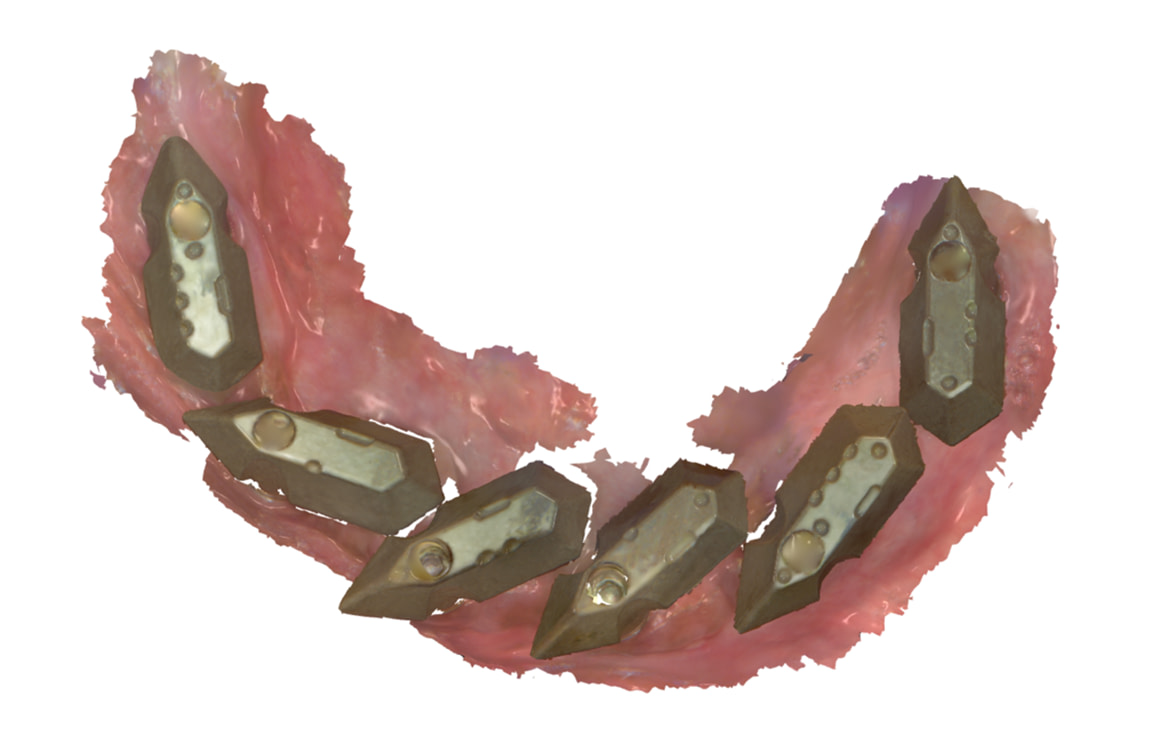
The scanning protocol is different here: a bidirectional approach (left-to-right in one scan window, then right-to-left in the other) is used, and the results are fed into the Nexus Analyzer (separate, downloaded software), an AI-powered chairside verification tool that compares the two scans and returns a clear success/failure verdict. This is essentially a built-in digital verification jig.
Kit pricing is approximately $3,900, which Osteon positions as "less than one-tenth the cost of any photogrammetry system." The system operates as a semi-closed ecosystem: cases are managed through the Nexus Portal, and prostheses are fabricated primarily by Osteon Medical or Nexus Connect Lab partners. Prosthetics come with a lifetime warranty on the titanium bar.
This company was one of the first to create horizontal scan bodies. But unfortunately, they locked it to their own lab, which proved to cripple the adoption of an incredibly innovative product. I think it could have totally taken the market by storm, like Shining 3D IPG, as it was released 2 years before the Elite. Being locked to their lab prevented many clinicians from using it, including myself at the time. There are whispers of the company opening the system up, but is it too little too late?
The evidence base is solid and growing. Lerner et al. (2026, Journal of Dentistry) found that NEXUS demonstrated the highest dimensional accuracy, superior trueness, and precision compared with four conventional scan body systems (DESS, Medentika, IPD, Elos). Klein et al. (2023) reported 100% clinical acceptability across 37 arches with Sheffield test-confirmed passive fit in all cases at one-year follow-up. The system has been included in a 2025 systematic review by the American Academy of Fixed Prosthodontics.
Another great system. Works well. Passive fits in my experience, and Osteon has completed thousands of cases.
The trade-offs in my experience:
- The closed ecosystem (limiting lab choice)
- Once again a seperate software is required for the analyzer, rather than being baked into the IOS software
- The stricter placement protocol and scanning technique (two scans required)
- The higher kit cost compared to other horizontal scan bodies
- The requirement that each intraoral scanner be validated by Osteon Medical - fair enough i guess
For clinicians who value verification certainty and are comfortable with the Nexus lab network, it offers arguably the most complete end-to-end workflow, including verification, of any open horizontal scan body system.
Apollo SmartFlag
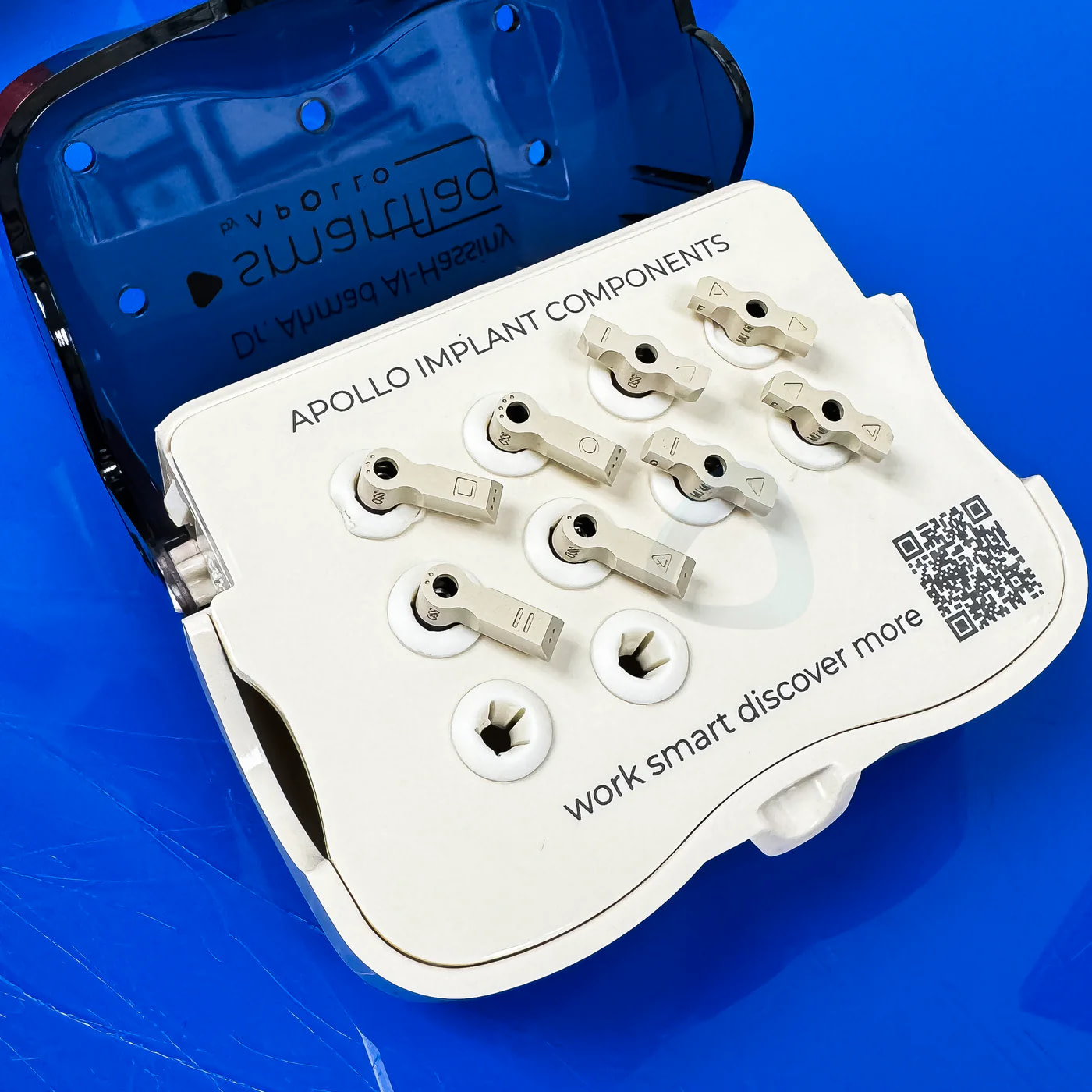
Apollo Implant Components, based in Pabianice, Poland, produces the SmartFlag, a PEEK and Grade 5 titanium hybrid horizontal scan body system that supports nearly 50 implant systems, one of the broadest compatibility ranges in the category.
Each 8-piece SmartFlag Kit includes four single-wing and four double-wing bodies with unique alpha markings. The PEEK scanning surface is anti-reflective, eliminating the light reflections that can confuse intraoral scanners on metallic surfaces. The titanium base ensures a good connection to the MUA. SmartFlags withstand up to 100 autoclave cycles. Each kit costs $2,500 USD. Making it one of the more affordable systems in the entire comparison.
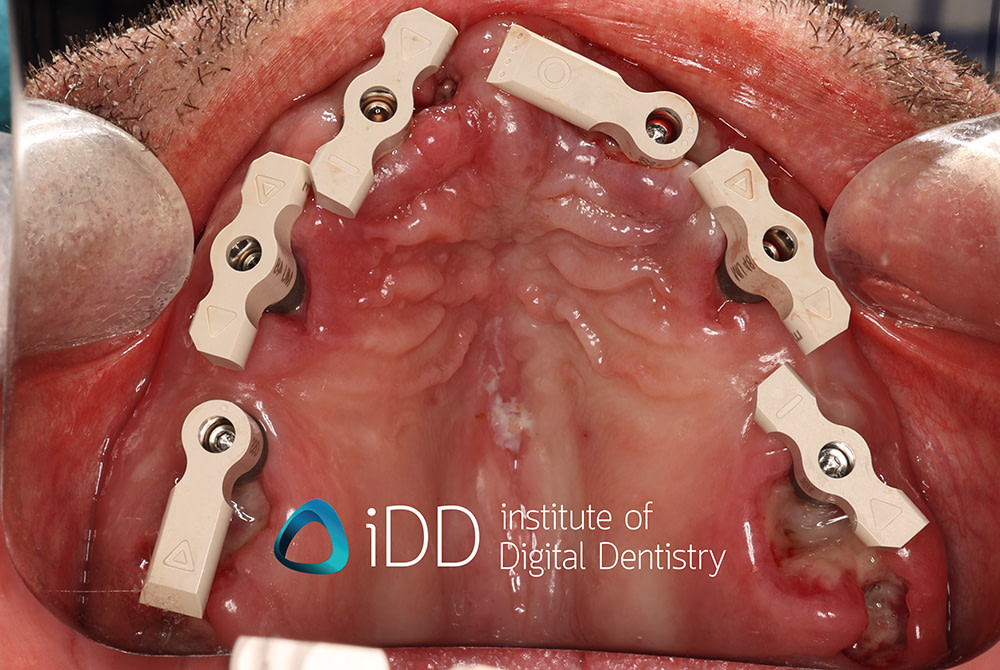
The scanning protocol requires some considerations: use the largest intraoral scanner tip you can, the bigger FOV the better. AI scan assist should be disabled in the scanner software; set the maximum scanning depth if possible; and ensure the SmartFlags don't contact each other - this is common in all systems.
The key difference here is that these are not converging horizontal scan bodies, unlike basically every other horizontal scan body product on the market. Rather, these are just placed around the arch. I have heard mixed things about this; some people love them, while others think they don't work because they don't converge.
In our clinic, we have done over 15 All-on-X cases with this kit. And well, I have had one misfit, but I cannot tell if it was my scanning or not. I think systems like these require much more care with scan strategy because they do not converge, so if you are sloppy, you will introduce inaccuracies.
In saying that, the other cases fit perfectly, and it is much easier in my experience to scan these than other systems purely because it's just a normal scan strategy, like you are scanning an arch. They are also a lot easier to place, more like normal scan bodies than horizontal scan bodies, which can be fiddly.
The only other gripe I have with this system is the screws for the scan bodies to the MUA falling out kind of easily if the scan body is held upsidedown. Most systems its a tighter fit to the screw, or they are non-removable, which is just one less thing to worry about when you are positioning them in the back of the mouth.
Overall, Apollo has grown on me over time. So another system that seems to work, but I believe is much more dependent on how well you scan than others.
Scan Ladder
Invented by Prof. Adam Nulty and manufactured by Full Arch Technologies Limited in Norwich, UK, the Scan Ladder uses patented Random Surface Technology. Each titanium scan body in a kit has a completely unique, irregular topographical surface. This gives the intraoral scanner abundant, distinct landmarks, preventing scan drift and the "slippage" that occurs when identical-looking scan bodies confuse stitching algorithms.
Despite the unique external geometry, all bodies share a patented Common Matching Cylinder, meaning only one CAD library file is needed.
Two variants exist: the Indirect Scan Ladder (clips onto existing scan bodies, which we won't discuss here, and I personally don't use) and the newer Titanium Direct Scan Ladder (connects directly to MUAs, starting at around $1,050 for a 6-body kit).
This makes it the most affordable horizontal scan body system on the market, a significant advantage for this system quite frankly, and it makes it an attractive entry point for those who may want to try these systems or those in price-sensitive markets.
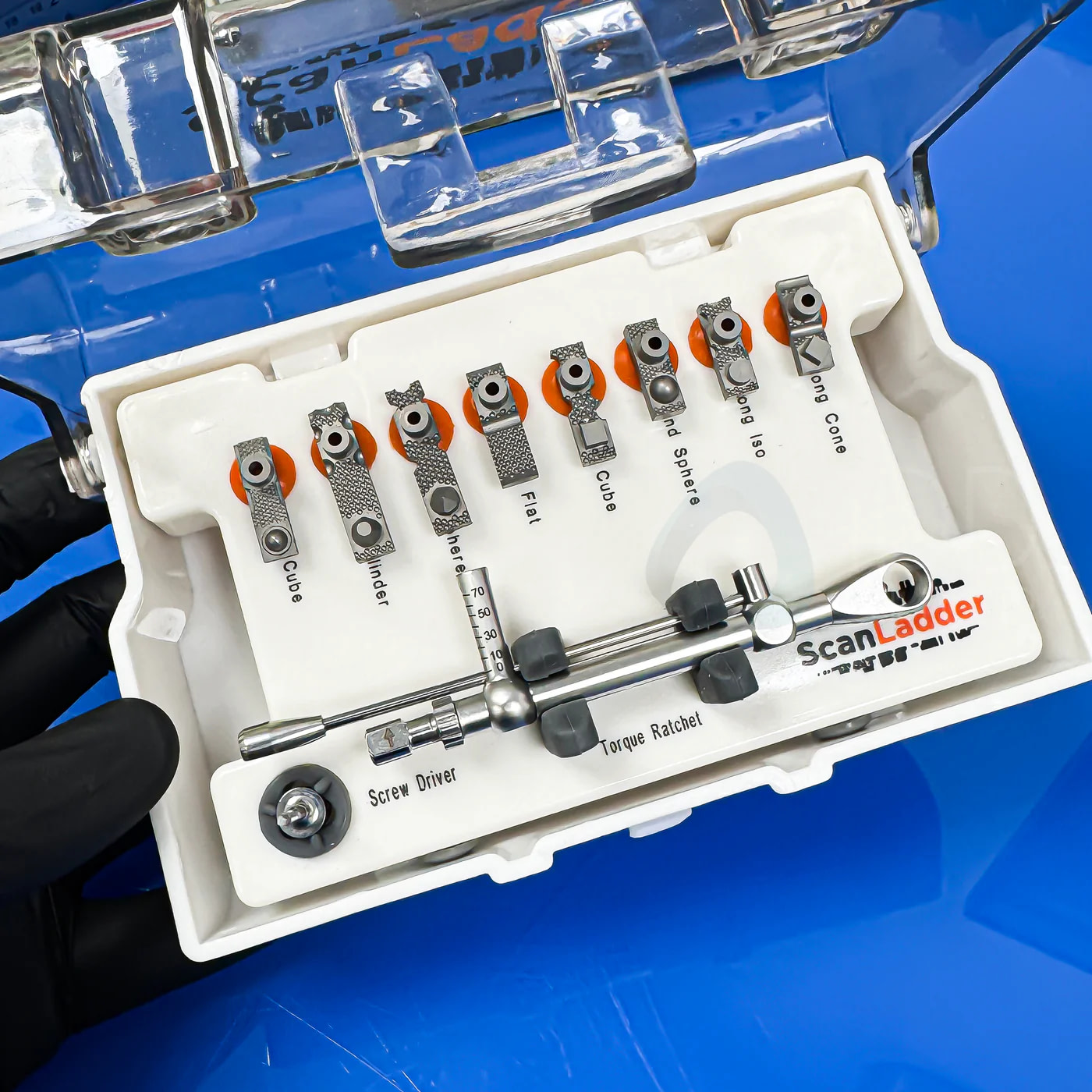
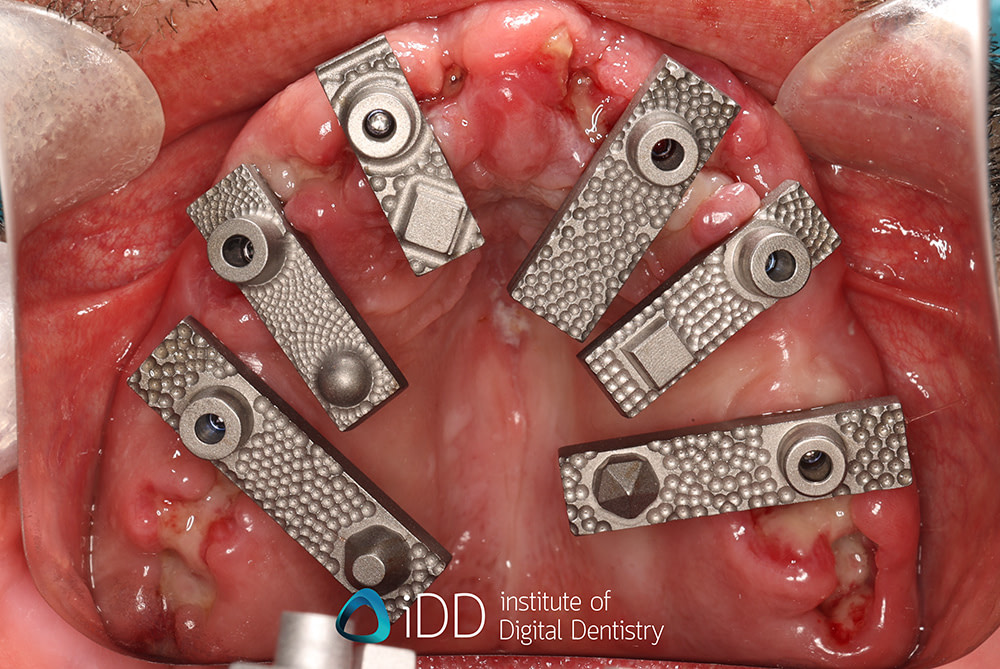
Prof Nulty's own 2024 in vivo pilot study (10 patients, Primescan and Medit i900) found a mean RMS trueness of 11–13 µm with Scan Ladder and no statistically significant differences compared with intraoral photogrammetry (Shining 3D Elite). Not sure how the conflict of interest was managed there, but it's published. A subsequent review article confirmed these values. However, the primary study's author is the inventor, the sample size was relatively small, and independent replication is needed, I feel, which I am working on.
The system is fully open, which is one of its major strengths: it works with any intraoral scanner, any CAD software, and any lab. It supports a wide range of implant systems, covering an estimated 90–95% of MUA systems. All the digital files, scan bodies, etc., are all easily accessible online.
This is another system I have used frequently in the clinic. I know personally of ten other doctors who use it, and all are happy with the results. It works. It is the most affordable system, and it's super open. A lot to like here.
A few pointers about it to note:
- Unlike Nexus, there is no built-in chairside verification software; accuracy depends entirely on the scanning technique and the intraoral scanner hardware.
- Unlike Shining 3D and TruAbutment, verification does not occur in software you, as a clinician, will likely have; rather, it is done in the lab using exocad (or other lab software). The same applies to the digital transfer. So you are handing the lab the responsibility to do it right.
- It is the most affordable system, but it also looks it, including the cassette and scan bodies. This system definitely looks much more economical than the other options, and I guess that's because it is.
Alliedstar DIRECT IP
One of the newest kits on the block from a major intraoral scanner manufacturer, Alliedstar.
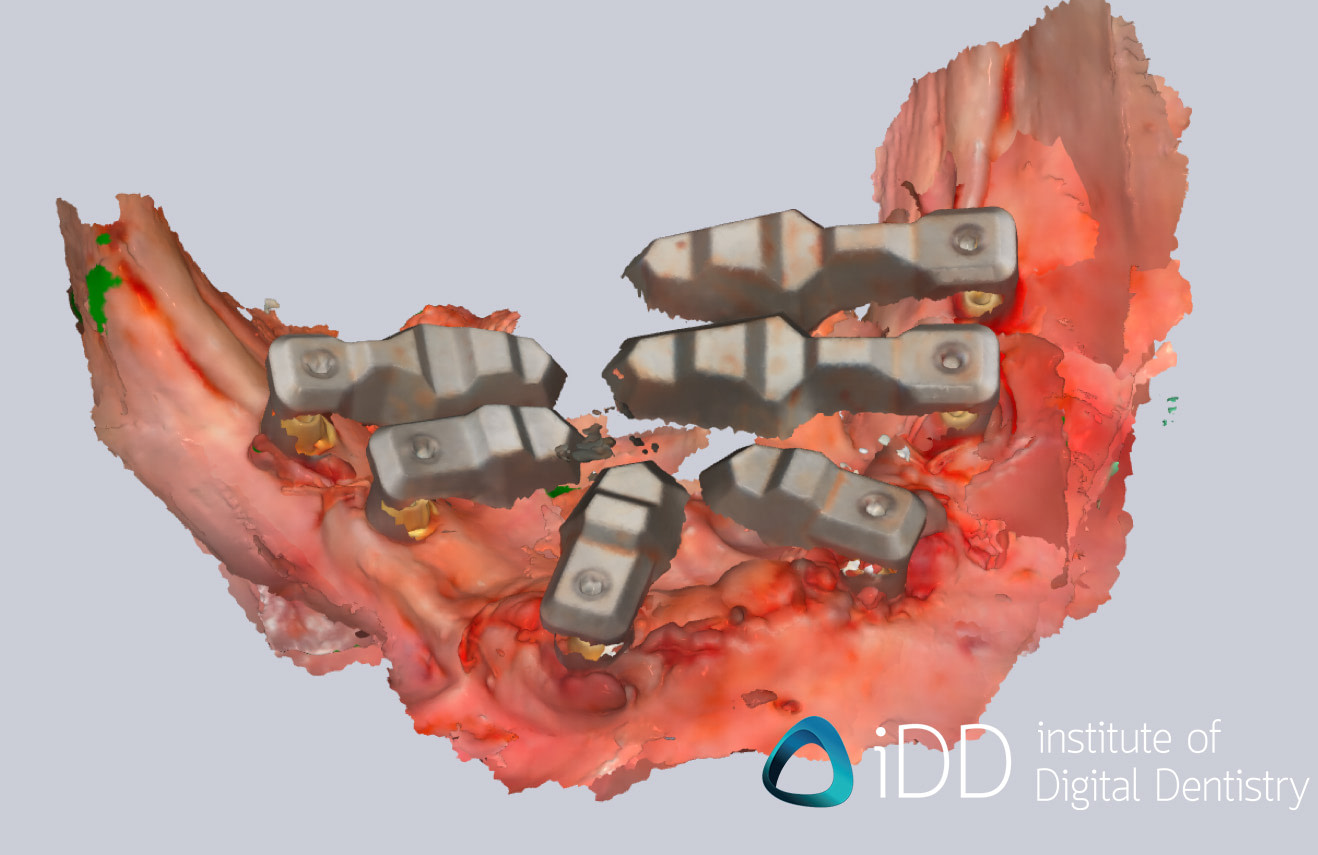
To me, this was made to compete directly with Shining 3D Elite - Alliedstar has developed its own horizontal scanning body system called DIRECT IP. It comes with a (familiar-looking by now) horizontal-scan body kit and is used in a similar way to other converging systems.
DIRECT IP works with all their scanners, including AS 200E, AS 260, and Sensa.
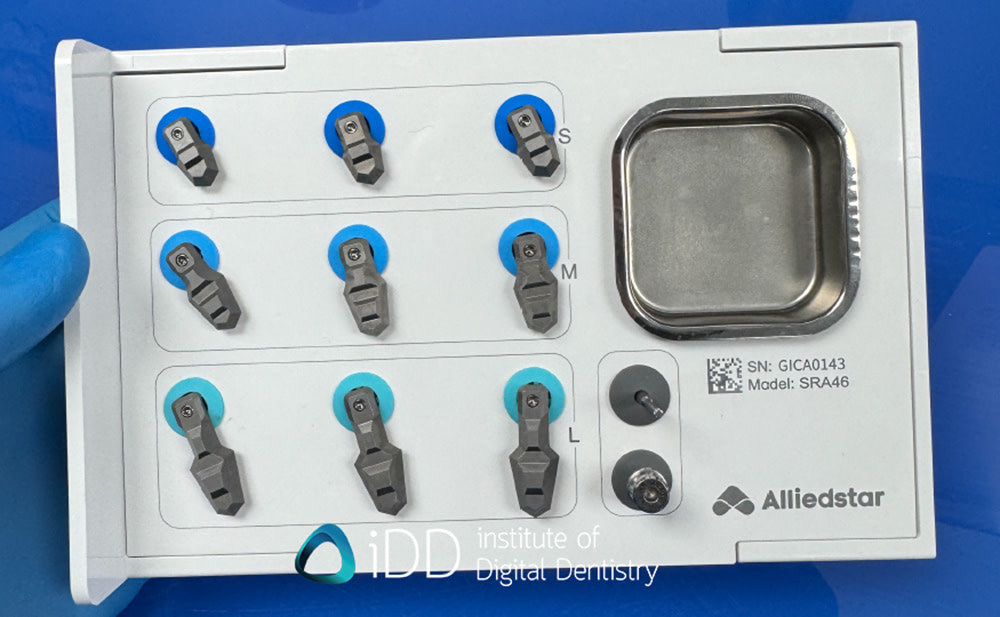
There is a distinction from TruAbutment, IO Connect, and the Nexus kits: this kit is only usable with Alliedstar intraoral scanners. Locked into their own ecosystem like Shining 3D's IPG.
But just like Shining 3D, they have built an entire software workflow around this, including body scan matching and digital transfer, all within the intraoral scanner software. It also includes a verification step that confirms whether the scan body is properly aligned in real time as you scan.
In my experience, this system works very well. I have achieved discrepancies of only 20 microns compared to a master model measured with a contact measure machine.
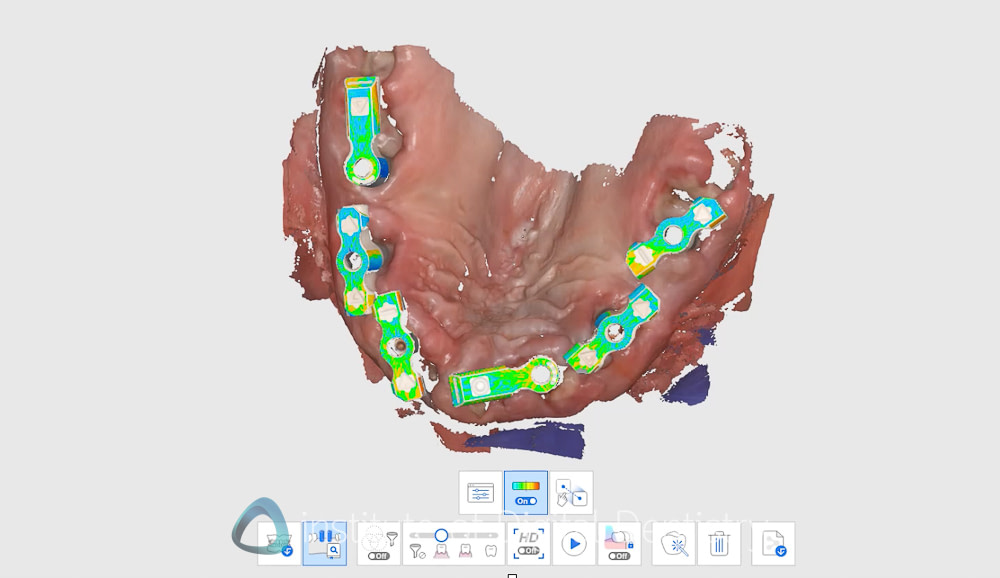
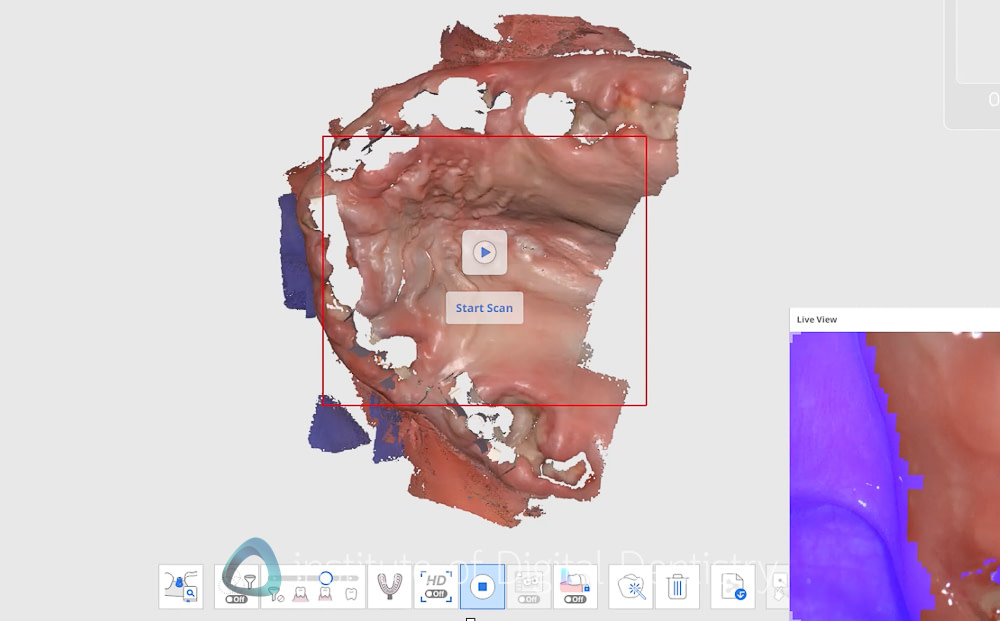
The software workflow is also well done - slightly different workflow compared to IPG. You scan the horizontal scan bodies first, and then the tissue scan after the software digitally removes the horizontal scan body but keeps all the other data. Much like Medit Smart-X.
Once again, the main 'downside' here is that it's only for AlliedStar. So it exists to ensure their intraoral scanners remain competitive, and it is quite fascinating to see how the company moved fast into this space. So it may be worth considering if you are in the market for a new intraoral scanner, as in total with a Sensa it will cost around $16,000 USD.
Want more of the latest in dentistry?
Join the RAPID community
and get insights straight to your inbox.
MEDIT Smart-X
I have to mention Medit Smart-X, as although the company does not make a horizontal scan body kit, they were one of the fastest in the entire industry to respond to the Shining 3D Elite IPG.
Essentially, Medit Smart-X is a software workflow within the Medit scanner software that supports a range of horizontal scan bodies, such as Apollo and Scan Lader, as discussed above. So, although Medit doesn't make the scan body hardware, they developed the software to keep their scanners competitive.
The Medit Smart-X workflow is designed to help walk you through the steps of all-on-x scanning with horizontal scan bodies. Notably, the software itself does the digital alignment and digital transfer. Which is a big benefit. I compare it to 3Shape's TruAbument IO Connect integration, which does not do that within the software (you still need to use TruAbutment's software for that step).
The workflow itself is like Alliedstar Direct IP, and it differs from the Elite IPG. You scan the horizontal scan bodies first, then the tissue scan after the software digitally removes just the scan bodies, leaving you with holes to fill in. It's very efficient and minimises rescanning of areas you've already captured.
Although Medit Smart-X is not comparable to the hardware on this list, I had to mention it. For those with Medit scanners who may feel left out, just know there is a workflow for you.
iPad-Based Photogrammetry for All-on-X
T Marker by TruAbutment
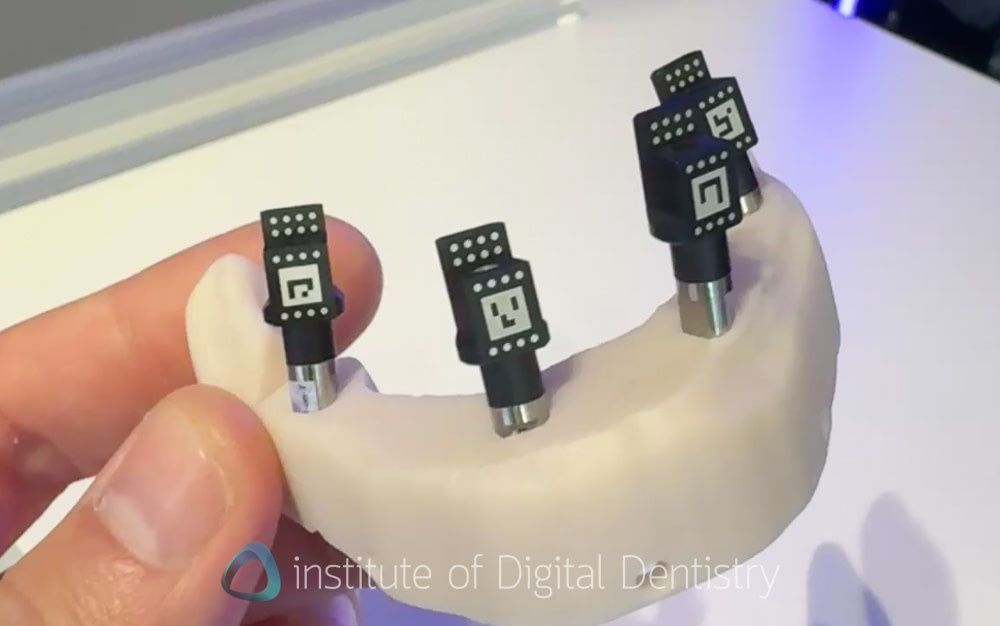
TruAbutment's T Marker represents the most ambitious play in this market: iPad-based photogrammetry for All-on-4 and All-on-X cases at $3,000 plus a $99/month subscription.
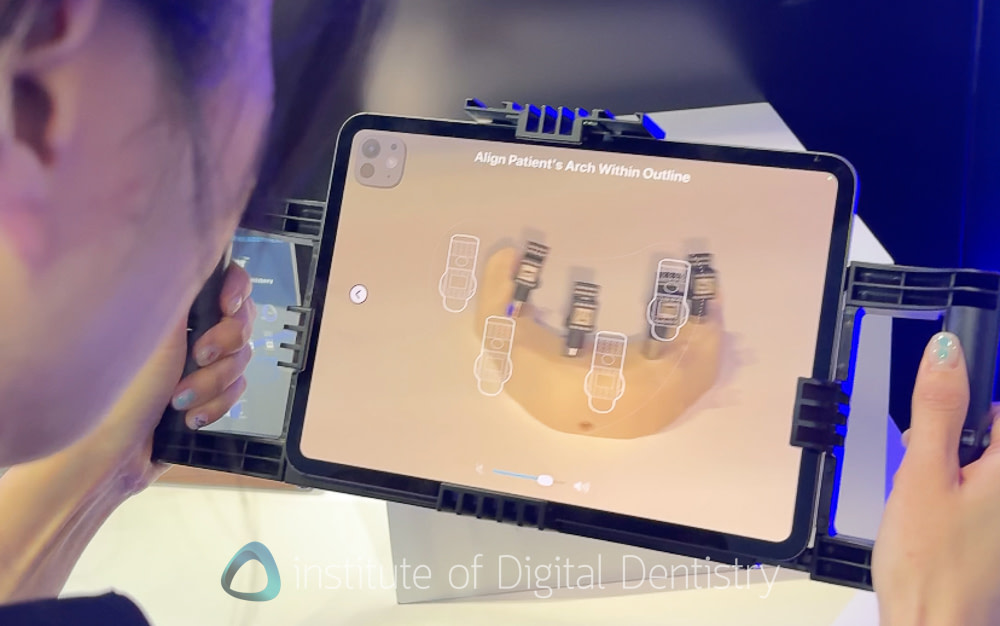
The kit includes titanium scan bodies that resemble traditional photogrammetry setups. These screw onto MUAs, and an iPad's camera is used with a TruAbutment application that captures photogrammetric data, which the software processes into implant coordinates. An iPhone version is also in development.
I have tested the application, and it works nicely. It's fast to capture the position of the implants, but it has a slight learning curve due to the position of iPad camera in the corner which is counterintuitive at first because you naturally point the ipad directly in the middle of the subject.
TruAbutment's Jay Kim has stated accuracy targets of 30–40 microns, which would be excellent if achieved. No peer-reviewed studies exist; it was just launched. If you are curious to learn more, I did a podcast with him discussing this product; click here to listen to that episode.
If T Marker delivers on its promise, it could democratize full-arch digital workflows for practices doing All-on-X without intraoral scanners. But until independent validation arrives, clinicians may question the accuracy. It is worth noting that even PIC Dental, the creators of the first photogrammetry device, also pivoted to an iPhone application. Is this where the industry is headed?
The main benefits I see of this system are:
- Much more affordable than traditional photogrammetry
- Everything is done on an iPad. The company is also developing T-Snap, an iPad app that takes an intraoral scan of the ridge, potentially allowing everything to be done without an intraoral scanner.
- May appeal more to clinicians who do not trust horizontal scan bodies and want a 'photogrammetry' like device for their All-on-4 cases
The considerations here are:
- Lack of scientific literature currently
- The $99/month subscription adds $1,188 in annual costs, which can erode the cost advantage over time.
- Using an iPad in surgery may not be what clinicians are comfortable doing
Otherwise, I think it is one of the most interesting releases of 2026. I covered all the new releases here. If you read that blog, you will also know that horizontal scan bodies are one of the biggest trends in digital dentistry now.
At AEEDC 2026, I saw six new horizontal-scan body kits from multiple Chinese manufacturers that also make intraoral scanners.
Can Intraoral Scanners Alone Now Handle All-on-X?
There is one more angle worth discussing before drawing conclusions.
What if you don’t use photogrammetry? What if you don’t use horizontal scan bodies? What if an intraoral scanner itself can be good enough?
This question resurfaced in 2024 with the release of the iTero Lumina. Align claimed that their scanner is accurate for full arch implant restorations in some of their marketing materials. I have to say, they have not made a huge effort to announce this widely and make everyone aware of it.
The idea is simple - a significantly larger scanner field of view and improved stitching algorithms. The Lumina has the largest FOV of any intraoral scanner currently on the market. A larger FOV means fewer images are required to span a full arch. Fewer images mean fewer stitching events. And fewer stitching events mean less cumulative error. That logic makes sense.
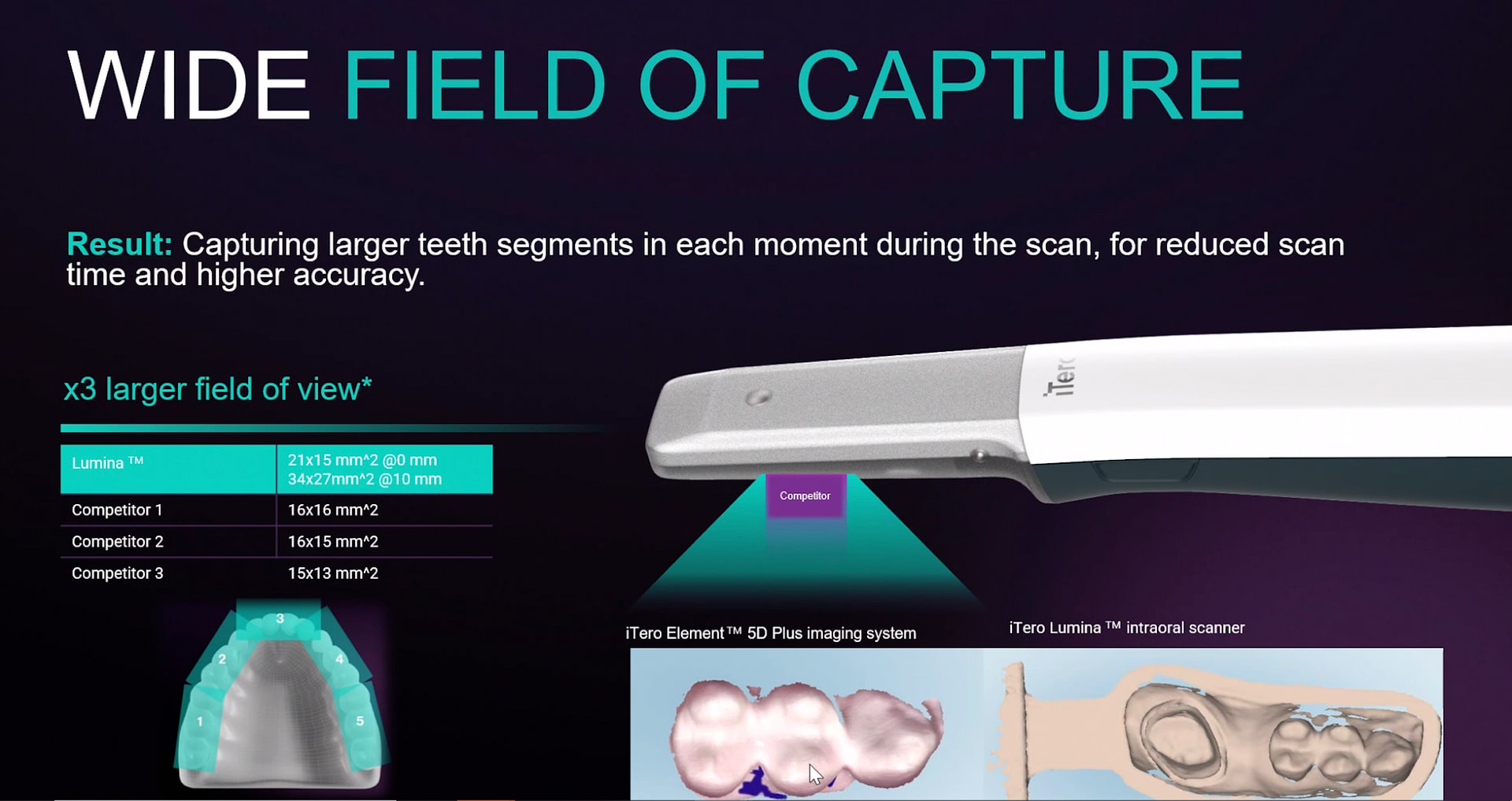
In my own testing, I was surprised by how well Lumina performed without horizontal scan bodies or photogrammetry. Just standard scan bodies. No scan gauges. No coded markers. No converging arms. Published data also suggest that the Lumina can achieve clinically acceptable trueness even across edentulous spans. There is always a drawback, of course, and the larger FOV means a larger scanner head width in this case, but I won't get into the details - you can read my full review of the Lumina here.
The key difference here is this - these systems are still fundamentally stitching-based. Relying on a good scan strategy.
So is this the future? Possibly.
If intraoral scanners continue to increase their FOV while improving real-time alignment intelligence, the need for additional hardware may decrease over time. We may look back at horizontal-scan bodies the way we look at verification jigs - as an important transitional phase in the evolution of accuracy.
But as of 2026, while scanners like iTero Lumina are clearly pushing the boundaries of what is possible with software and optics alone, many clinicians are still hesitant about such claims. That said, it is no longer unreasonable to ask the question. And that alone tells you how much the industry has moved.
What About Lab Scanners for All-on-X?
A common question I get, and one worth addressing directly, is about lab vs chairside scanning for full-arch implant cases.
When clinicians search for the best scanners for All-on-X, they sometimes mean the entire workflow, from chairside capture to the lab scanner that digitizes the model or verification jig. So let me clarify where the real accuracy bottleneck sits.
Lab scanners (like the 3Shape E4, Medit T-series, or Shining 3D DS-EX Pro) can scan physical models and verification jigs with extremely high accuracy. That part of the workflow is essentially a solved problem. The lab scanner is not the weak link.
The real challenge, and the reason this entire article exists, is the chairside capture step. Accurately recording the three-dimensional position of multiple implants across an edentulous arch, in the mouth, with saliva, blood, and limited access, is where errors are introduced. That is the bottleneck.
This is why every product in this comparison focuses on improving the chairside capture, whether through extraoral photogrammetry, intraoral scanner-based photogrammetry, horizontal scan bodies, or iPad-based solutions. Once you have accurate implant position data from the chair, the lab side is straightforward.
Some systems, like NEXUS, route cases through specific partner labs, making the lab scanner entirely transparent to the clinician. Others, like IO Connect and Scan Ladder, are fully open and let you send your scans to any lab with any lab scanner. Either way, the lab scanning step is not where you need to worry.
The focus for improving accuracy in All-on-4 and All-on-X should be on getting the chairside scan right. That is what this comparison is all about.
Which All-on-X Scanning System Should You Choose in 2026?
The full-arch implant scanning landscape has changed dramatically.
What was once a binary choice between verification jigs and high-cost extraoral photogrammetry has become a crowded, fast-moving ecosystem of solutions ranging from just over $1,000 to well beyond $45,000. And importantly, the accuracy gap that once separated these categories is shrinking quickly.
Most modern systems, whether photogrammetry-based, intraoral scanner-driven, or horizontal-scan body-assisted, now publish trueness values in the 10–50 µm range, well within clinically acceptable limits for passive full-arch fit.
The biggest shift in 2026 is that intraoral scanner-based workflows are no longer "second best." Calibrated scan gauges, converging horizontal scan bodies, and emerging intraoral photogrammetry systems are now achieving results that, in early clinical studies, are statistically comparable to dedicated extraoral photogrammetry, often at a fraction of the cost and complexity.
Several products feel like genuine inflection points. Shining 3D's Elite IPG has shown what's possible when scanning and implant position capture are combined into a single, seamless device. NEXUS offers perhaps the most rigorous verification-driven workflow without requiring separate photogrammetry hardware. And PIC's pivot into smartphone-based photogrammetry signals where the industry may be headed next: accuracy becoming increasingly accessible.
That said, extraoral photogrammetry systems like PIC and ICam remain, for many clinicians, the "gold standard" when maximum certainty is non-negotiable, particularly in highly complex cases such as zygomatic or pterygoid restorations, where verification margins matter most. I am personally not sure if that is just dogma. In the same way people say gold restorations are the best ever, which I think in some ways yes, but in others no.
But the underlying principle remains unchanged: no technology eliminates the need for clinical validation. Even the strongest meta-analyses continue to recommend a rigid provisional try-in, because biology, prosthetic tolerance, and execution still matter as much as raw scan data.
Ultimately, the best All-on-X or All-on-4 scanning system is not the one with the lowest published micron value; it's the one that fits your workflow, your volume, your lab relationship, and your willingness to verify consistently.
For most clinicians entering the full-arch digital space today, starting with an intraoral scanner-compatible horizontal solution is often the most practical first step. From there, the decision to move into dedicated photogrammetry becomes less about 'gold standards' and more about whether it truly adds value for the complexity of cases you treat.
If you have any questions, please leave them below.
Thanks for reading.
Great review! Congratulations on the work done in this area. It makes our choices much easier and keeps us updated. Best regards!
My pleasure. I appreciate the kind words.
Great article. All nicely explained. Thank you
Appreciate the kind words. My pleasure, happy to help!
Any experience with Straumanns “Exact”
I am not a big fan of any ‘clip on scan bodies’. Even though it has been verified by Straumann, and they gurantee the lab work if you use their labs. I personally think that it was just a transitional solution and horizontal scan bodies are better.
Hi, please help and advise.
In our clinic, we have a 3Shape TRIOS intraoral scanner.
We are unsure about the next step.
Should we purchase the Shining 3D Aoralscan Elite with IPG or a Scan Ladder horizontal scan body kit?
Which of the two performs better in conditions immediately after implant placement for immediate loading (in situations with significant blood and saliva)?
Thank you in advance.
Best regards.
Both work quite frankly. IPG (ELite) has the advantage of being all in one software workflow, but it is tied with your Elite.
Scan ladder can be used with any scanner, it is cheaper, but also a little more budget feeling.
That really is the decision making process as I find both systems work nicely.
Very well-written article! Thank you. I tend to have a hard time scanning my TruAbutments with my 3Shape trios 5 and iTero element 2 (the A.I is constantly cleaning it up). Any advice to help get more consistent? I also just ordered a lumina so I wonder if you think that will help.
Thank you! The only way to scan them properly is to turn off the AI. Scanners dont like ‘islands’ of scan data that are not connected together like the IO connect markers so that is why they are removed. With iTero you can disable AI by click (with your finger if touch screen) and holding on the scan screen and you will see an option to disable it. With TRIOS same, you can disable the AI or you can use their new workflow they made for all-on-X which does the same automatically. Hope that helps 🙂
Loved the article – what about the micron mapper – is this considered true photogrammetry or is it stereogrammetry and how do you find it compares to other extraoral and intraoral photogrammetry systems?
Micron mapper is very popular as well. Haven’t personally used it myself, but i own an imetric ICAM and did a lot of data capture for a paper im publishing on this topic. Basically, with good scanning intraoral photogrammetry is close to extraoral. Hence why I do not use my icam much anymore 🙂
I think itero Lumina works great in my practice, but i am still curious if i use horizantal scan bodies or t-marker, does it make a significant difference. What do you think?
This has been something I was surprised with too based on our data. It seems like Lumina gets away with just normal scan bodies with good scan strategy due to the large FOV.
In saying that, it would not hurt to use a horizontal scan body, it just may not be absolutely necessary like other IOS.
Greetings from Spain. That’s a great article. I wanted to ask you: I’m currently trialling DOF’s new Freedom Air, which includes extraoral photogrammetry as well as being a scanner suitable for all types of treatment. What do you think of it, given that you haven’t mentioned it? Thanks in advance.
Hi! Thanks for reaching out and greetings to Spain 🙂
Yes, I’ve had a look at the Freedom Air. It’s definitely a cool concept with the separate inbuilt camera and lens for photogrammetry. That said, I’m still not entirely convinced what the true USP is anymore, especially now that horizontal scan bodies are so widespread and have simplified full-arch workflows quite a bit. I actually shared some initial thoughts here if you’re interested: https://instituteofdigitaldentistry.com/dof/hands-on-with-the-dof-freedom-air-photogrammetry-ios/
Curious to hear your experience with it during the trial—how are you finding it so far?