

If you have followed digital dentistry for any length of time, you will know that exocad sits at the center of a huge number of lab and chairside workflows worldwide. The software is ubiquitous in the lab world, and what they announce at their flagship annual event, Insights, each year tends to make its way into daily practice fairly quickly.
The fifth edition of Insights ran on April 30 and May 1 in Palma de Mallorca, Spain, under the theme "Calling All Heroes." Around 850 people attended. A few things stood out, and a couple of them point to real shifts in how labs and clinicians will work over the next few years.
Some of it is here now. Some is clearly still maturing. Let's go over it all.
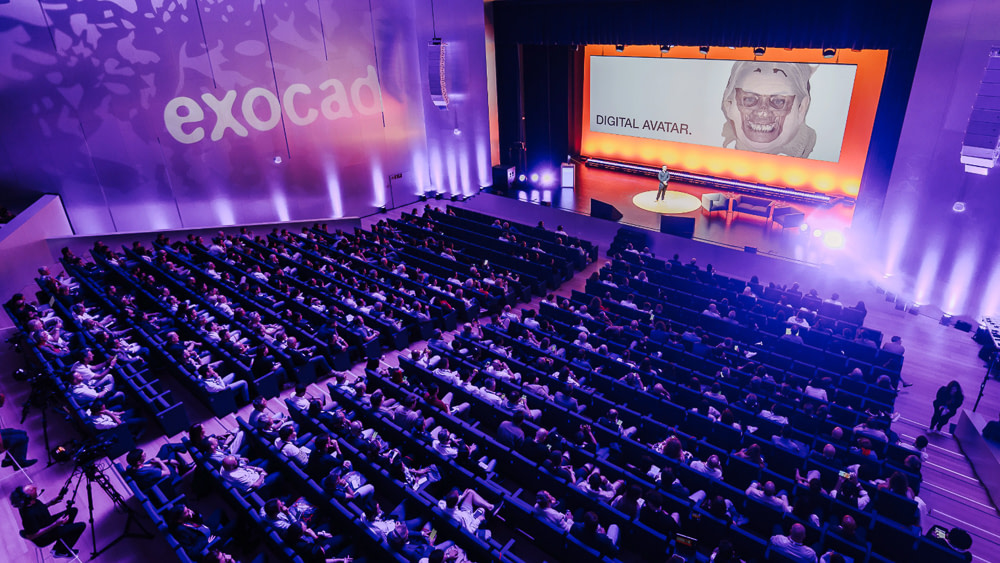
The Event Itself – Bigger Than the Products
Before getting into the technical announcements, it is worth acknowledging what Insights has become as an event.
The program spanned 60 breakout sessions, a full innovation expo with over 50 partner companies, keynotes from the exocad leadership team, and contributions from speakers including Dr. Christian Coachman, Dr. Alexis Ioannidis from the University of Zurich, Caroline Kirkpatrick from Scotland, and Dr. Zhiqiang Luo from the University of Michigan. That is a serious lineup across lab, clinical, and education perspectives.
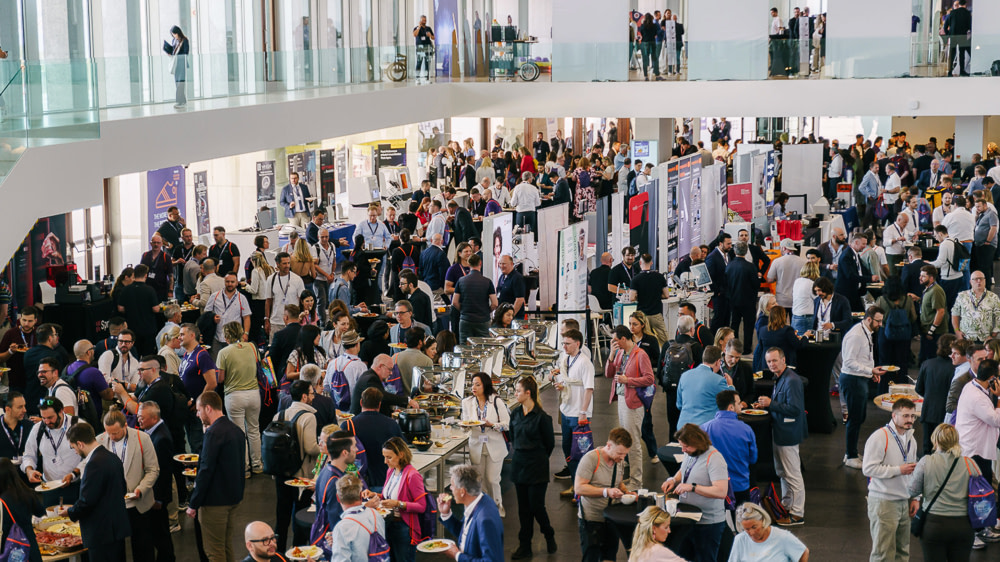
The CEO, Tillmann Steinbrecher, and senior product marketing manager, Nilou Sotouhi, presented a "What's New, What's Next" session. When a company of this scale gives you a roadmap update in person, it tells you something about how seriously they take their relationship with the community.
exocad has not historically been a loud, marketing-heavy company. They build, they ship, and they let the software speak. Insights is the one place where they open up the roadmap, and this year, they had a lot to say.
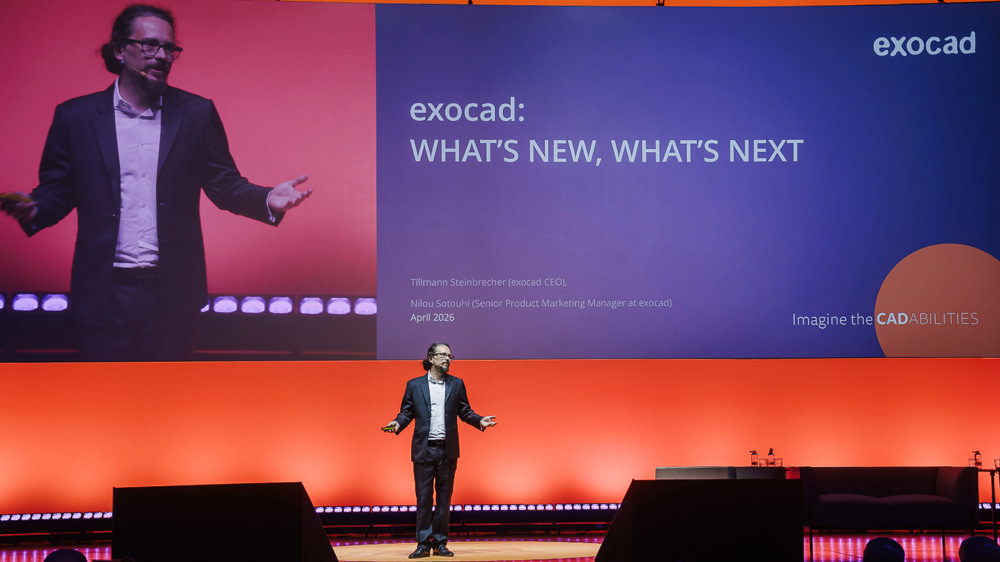
Additionally, for the first time, exocad introduced a spotlight country concept, with China taking center stage in 2026. Given how dominant Chinese manufacturers have become in scanners and printers, and how active the Chinese exocad user community has become, that is a sharp and well-timed move, in my opinion. Fascinating.
AI Crown Updates and the Request From Database Workflow
The headline item for most labs will be the AI Crown updates, specifically the Request from Database workflow.
Here is the core idea. exocad's AI Crown feature draws on a large database of real-world cases to generate crown proposals, and it does so in the cloud rather than tying up your local machine. In the demo shown at Insights, multiple cases were submitted for AI design at the same time, calculated in the cloud, and reviewed rapidly back in DentalDB or opened and finalized in DentalCAD with no extra waiting.
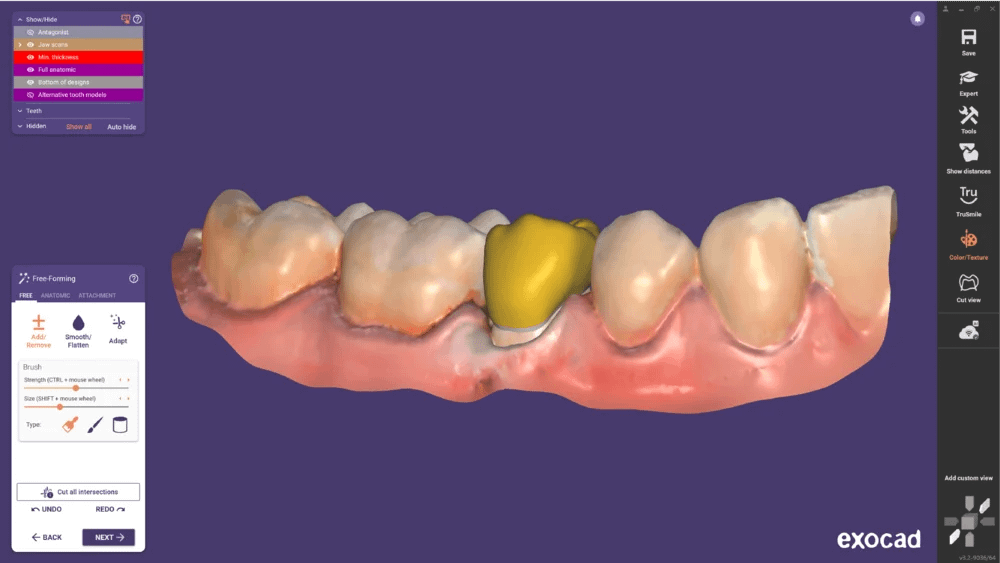
The practical benefit is the part I find most interesting. You can batch cases and send them overnight or during a break, and the proposals will be ready when you come back. When you open the case, the design is already there. You adjust in seconds rather than designing from scratch for minutes.
A few specific improvements are worth noting:
- AI crowns now account for occlusion, which will obviously help when the opposing relationship is favorable.
- This extends to implant cases as well, not just standard crowns.
- For multiple adjacent crowns, the design now follows the curve of Spee, meaning the AI is not simply mimicking single-tooth anatomy but respecting occlusal geometry across the arch.
Here is the thing about all of this. Speed is often mentioned when AI design comes up, but it is honestly the secondary benefit. The real story is consistency. A busy lab with five technicians has five different quality floors. AI crown design at this level starts to raise the lowest floor. You get more predictable starting points, fewer cases where the technician is having a bad day, and it shows in the proposal. That is a meaningful quality control story, even if it is not as exciting to talk about as raw throughput.
The usual caveat applies. AI proposals are a starting point, not a finished restoration. Exocad was upfront about this at the event, which leads into how the founders framed AI overall.
Looking to buy exocad software?
Buy it through iDD Shop
Where exocad Stands on AI + Why I Respect the Messaging
One thing I genuinely appreciated coming out of Insights was that the messaging around AI was grounded rather than breathless.
Paraphrasing the tone from the leadership sessions: We all use AI now, and it all depends on how you use it. What they have seen is that it increases the correctness of work. You get better at your job by using it, but you still do your job. Your job might change a little, but overall it will be good. And it needs to be managed well. Some CEOs see AI as a replacement for everything. The exocad position is: they believe in human brains. You still need to know what you are doing if you are the one in charge.
That matches what I see clinically. AI is most useful as a tool that raises your floor and frees up time. Not something that takes the operator out of the loop. The technician and the clinician still own the outcome. Exocad seems to understand this, which is more than I can say for some of the more hyped-up positioning we see from other players in the space.
exocad Hub and DentalCAD in the Cloud
This one has the biggest long-term implications.
exocad showed DentalCAD running in the cloud via what they call the exocad Hub. The workflow demonstrated went something like this. A technician designs a case and shares it directly with the dentist from within the Hub. The dentist receives a link, opens the doctor-facing version of the Hub, sees image previews, updates the case status, and messages back and forth with the lab in real time.
The part that stood out is what happens next. The dentist can launch the full exocad software on demand, running in the cloud and displayed in the browser. Not a simplified web viewer with a handful of tools. The full software. Parametric adjustment, freeform toolset, Smile Creator, and direct communication with the lab, all running on remote computing power rather than the local device.
The benefits are clear. Design and review from anywhere, on modest hardware. Real-time collaboration between the lab and the clinician inside the same case. Reduced dependence on a powerful local workstation, since the heavy computing happens remotely.
One detail worth highlighting - it runs in any modern browser, including on a Mac. A decent proportion of the dental clinician population lives on Mac hardware and has historically been either locked out of dental CAD entirely or forced into clunky workarounds. If cloud DentalCAD performs as shown, that barrier disappears.
Now, a fair word of caution. Cloud CAD lives or dies on real-world performance. Responsiveness, connection reliability in a busy clinic, and behavior under genuine workload are things you can only judge once they are in daily production. The demo looked fast, including on a tablet.
I will say this, though. I have been using the iTero Design Suite, which is essentially exocad running in the cloud for iTero users, and it works well. After they got that right, it felt like a matter of time before they launched the broader cloud DentalCAD. That moment has now arrived. The groundwork was already laid. This is the extension of a pattern, not a pivot. And that gives me more confidence than if this were a completely untested direction.
The deeper implication here is for the lab-clinic communication model overall. Right now, the workflow between labs and clinicians involves a lot of exported files, emails, and phone calls. A shared cloud environment where both parties work on the same case in real time is a fundamentally different model. It shortens the feedback loop, reduces rework, and speeds up sign-off. Labs that adopt this early will have a communication advantage over those who do not.
Don't have time to read this now?
View as a flipbook online or download a copy to read it later.
exocad ART – Advanced Restorative Treatment
The next highlight is exocad ART, which stands for Advanced Restorative Treatment.
exocad ART brings tooth alignment and restorative treatment into a single planning workflow inside the exocad environment. In practical terms, that means comprehensive ortho-restorative case planning without jumping between separate tools for the alignment and restorative sides.
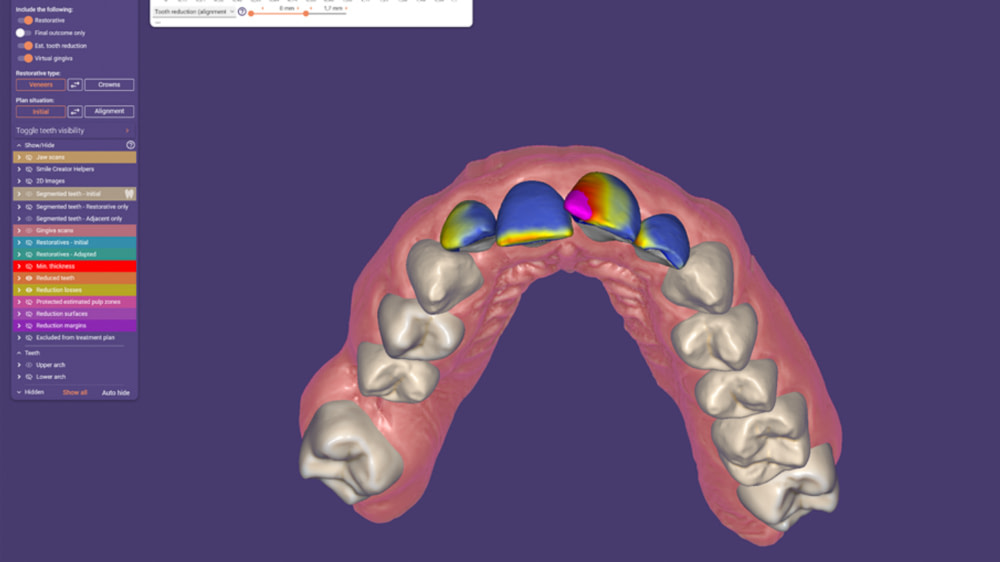
This is an interesting direction, and I think the context of Align Technology ownership is relevant here. Align acquired exocad in 2020 for approximately USD 420 million. They own Invisalign. They own iTero. And now they are pushing exocad toward ortho-restorative integration. Are we seeing the first tangible signs of the Align ecosystem coming together in a real clinical workflow? I think so.
The line between orthodontic and restorative planning is blurring in complex aesthetic and full-mouth cases. Anyone doing full-arch work, combined clear aligner and restorative cases, or minimally invasive aesthetics with alignment component knows that planning across two separate software environments creates friction, inconsistency, and extra steps. Having alignment and restorative design under one roof is a legitimate clinical problem worth solving.
Whether ART delivers on this in practice depends on how tightly the two halves actually integrate, and on whether the alignment-planning side has the depth that dedicated ortho-planning tools offer. That is the question I will be watching as more users get their hands on it.
The New Monthly Subscription – Lower Barrier, Better Access
The last major announcement is commercial, and may matter the most to those priced out of exocad for the longest time.
exocad has launched a monthly subscription option sitting within their wider Flex licensing model. This is a meaningful shift for a company whose upfront perpetual license has historically been a real barrier for smaller labs, newer practices, and anyone not ready to commit at the entry level.
Here is how the full pricing structure now looks (all figures in USD):
Perpetual license (paid upfront, includes one-year upgrade contract)
Tier | Price per license | Upgrade contract per year |
|---|---|---|
Core | $5,950 | $930 |
Advanced Lab Bundle | $6,790 | $1,160 |
Implant Lab Bundle | $8,780 | $1,630 |
Ultimate Lab Bundle | $13,290 | $2,640 |
Flex yearly subscription
Tier | Initial yearly fee (year 1) | Yearly fee (from year 2) |
|---|---|---|
Core | $3,530 | $1,160 |
Advanced Lab Bundle | $3,940 | $1,650 |
Implant Lab Bundle | $4,630 | $2,440 |
Ultimate Lab Bundle | $6,820 | $3,750 |
Flex monthly subscription (the new subscription)
Tier | Initial monthly fee | Ongoing monthly fee |
|---|---|---|
Core | $378 | $132 |
Advanced Lab Bundle | $428 | $163 |
Implant Lab Bundle | $502 | $214 |
Ultimate Lab Bundle | $643 | $322 |
On the new Core subscription, you are looking at $378 to start and $132 a month ongoing, rather than $5,950 down. For a lab just getting started, or a clinician exploring in-office design for the first time, that changes the conversation entirely.
If you add it up... if you design consistently and plan to stay on exocad for years, the yearly or perpetual route still comes out ahead. The yearly Core plan settles at $1,160 per year from year two onward. The perpetual is a one-time cost plus an optional upgrade contract. Monthly makes more sense for variable case volume, short-term exploration, or situations where cash flow matters more than long-term cost optimization.
What This All Means
Stepping back, the through-line across every announcement at Insights 2026 is unmistakable.
exocad is consolidating the digital dentistry workflow into a single connected environment. Cloud DentalCAD, batched AI crown design, ortho-restorative planning, real-time lab-clinic collaboration, and a subscription entry point are not independent features. They are pieces of the same architecture.
Think about what the intended end state looks like. A clinician scans a patient. That scan feeds directly into cloud DentalCAD. The lab receives it instantly, designs the case with AI assistance already incorporated, shares the preview with the clinician through the Hub, the clinician opens it in their browser on any device and approves or adjusts in real time, and the case goes to production. Ortho-restorative planning sits alongside that workflow for complex cases.
That is not the world of three years ago, where exocad was excellent CAD software that required a powerful Windows workstation, a well-trained technician, and a file transfer workflow to get cases back to the clinician. The ambition is clearly broader than that now.
Mark my words: the labs that move early on cloud DentalCAD and the exocad Hub will have a structural communication and efficiency advantage over those who wait. Not because the technology is perfect yet, but because the feedback loop between lab and clinic shortens dramatically when both are working inside the same case in real time.
Here is what I think is often underappreciated about exocad's position. They are not just a software company trying to add features. They are, increasingly, the platform layer sitting beneath everything else in the digital lab workflow. Open architecture means they connect to nearly every scanner, every printer, and every mill in common use. Adding AI and cloud on top of that open foundation is more powerful than a closed ecosystem doing the same thing, because it works regardless of which hardware you already have.
The Align Technology ownership is worth watching closely in this context. Align owns Invisalign, iTero, and exocad. ART brings alignment into the restorative design environment. The iTero Design Suite already runs exocad in the cloud for iTero users. These are not coincidences. There is a long-term play here to connect scanner to aligner to restoration inside a single ecosystem. Most of the dental industry is not yet paying enough attention to how far that integration could go.
The pace is notable. Several of these things would have been on a wish list a few years ago. They are not on a wish list anymore.
A sensible level of caution still applies. Cloud DentalCAD needs to prove itself in real clinical volume. ART needs to show how deep the ortho-restorative integration actually goes. AI crown proposals are starting points, not finished restorations. These are all fair caveats. But the direction is clear, the infrastructure is being built, and exocad is not moving slowly.
I will be watching closely as these features reach daily production use, and I would genuinely love to hear from any of you who get hands on the cloud DentalCAD or ART early. If you are already using any of these features in your lab or practice, drop a comment below or get in touch. Real-world experience from the community is always more useful than demo conditions.
If you have any questions, please leave them below. Thanks for reading.
Looking to buy exocad software?
Buy it through iDD Shop