
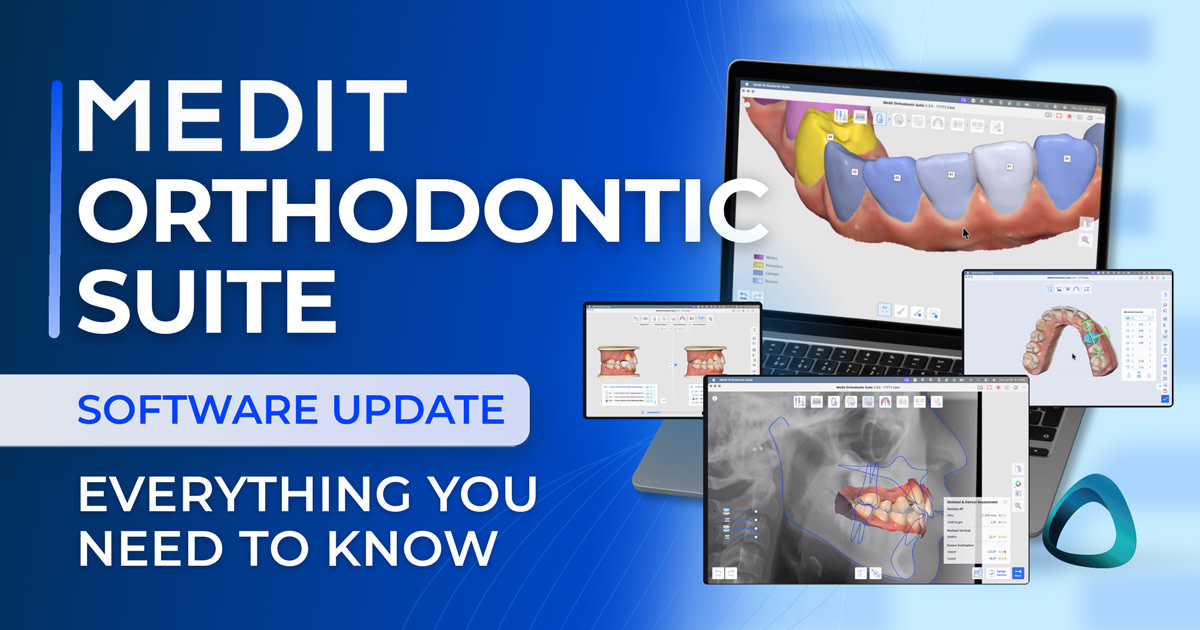

Medit has started previewing Medit Orthodontic Suite (MOS) 2.3, the first major update to its ortho software since it relaunched the platform alongside Medit Aligners in 2025. I have been testing it for some time, and this post is a first look at the new features because, frankly, this is quickly becoming the most comprehensive ortho software built into a scanner - we are not just talking about ortho simulations.
For those unfamiliar with it, MOS is Medit's dedicated orthodontic planning software, built into the Medit Link ecosystem. Originally launched as Progressive Orthodontics, the platform has evolved well beyond a simple smile simulation tool into a comprehensive orthodontic workflow for diagnosis, treatment planning, aligner design, and case management. Using an intraoral scan, with optional cephalometric radiographs, MOS can generate realistic treatment simulations, perform AI-driven cephalometric analysis, visualize multiple treatment scenarios, design aligner cases, and export files for either in-house production or direct ordering through Medit Aligners. In short, Medit's goal is to let clinicians manage the entire orthodontic workflow, from scan to treatment, in a single software platform.
A quick note on independence. This is not a sponsored post. This is simply a cool update that I believe everyone in digital should be aware of. In true iDD fashion, this is totally objective so you can decide whether it is worth your attention. Let's get into it.
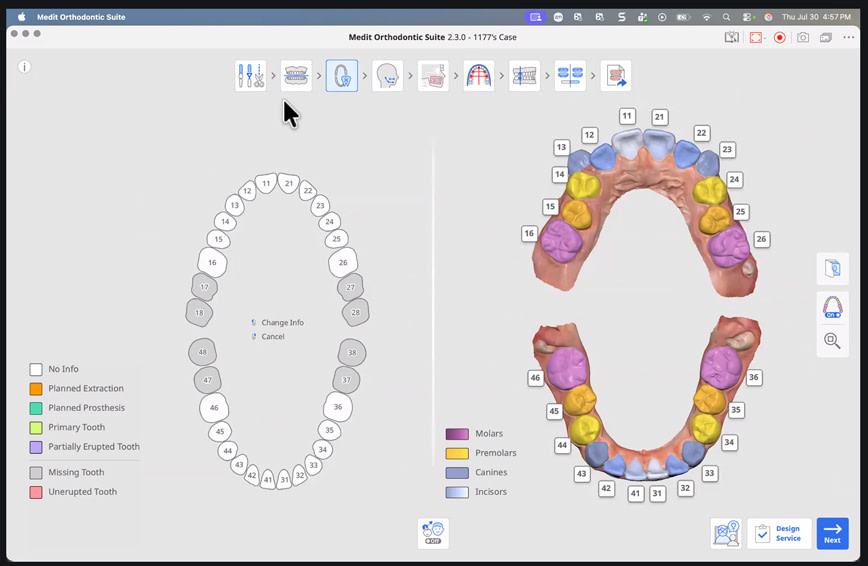
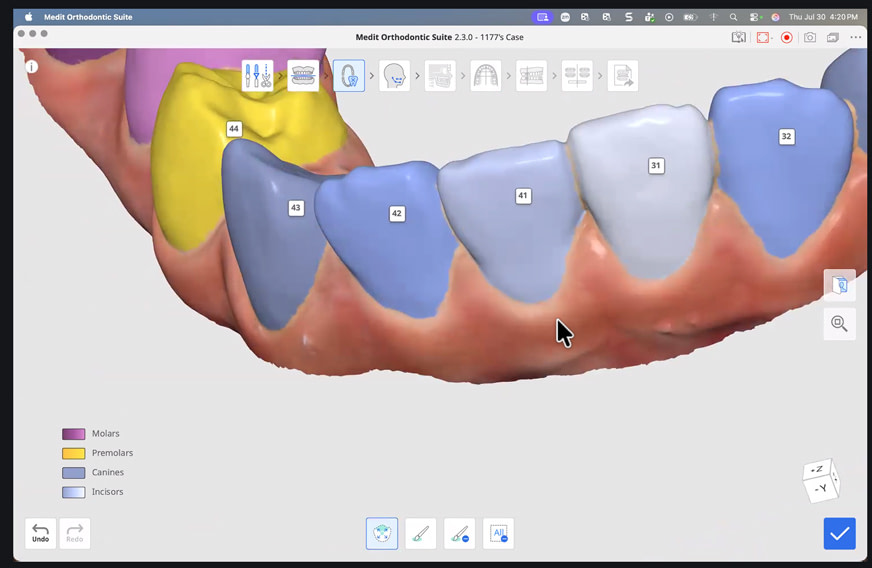
Here is the to-the-point summary - three features drive the new software update: an in-app Design Service, Custom Staging, and the ability to easily remove brackets/aligner attachments from scans. Around them sit roughly a dozen smaller refinements aimed at tooth-level control and cleaner exports. Most of the work targets general practitioners taking on more aligner cases, which is consistent with where Medit has been pushing this product.
The Headline Additions
Design Service. You can now submit a case for ortho planning + staging, review the returned plan, and approve it, all inside the app. Previously, keeping the design in-house meant doing the staging yourself, and outsourcing meant leaving the platform. This adds a middle path where Medit's team builds the entire ortho plan, and you sign off without a third-party detour. For a GP who wants aligner cases but does not want to stage every one personally, that is a meaningful option to have. Basically, you can get Medit designers to do the entire tx plan for you and then choose either to use the Medit Aligner service for production of the aligners or make them in-house.
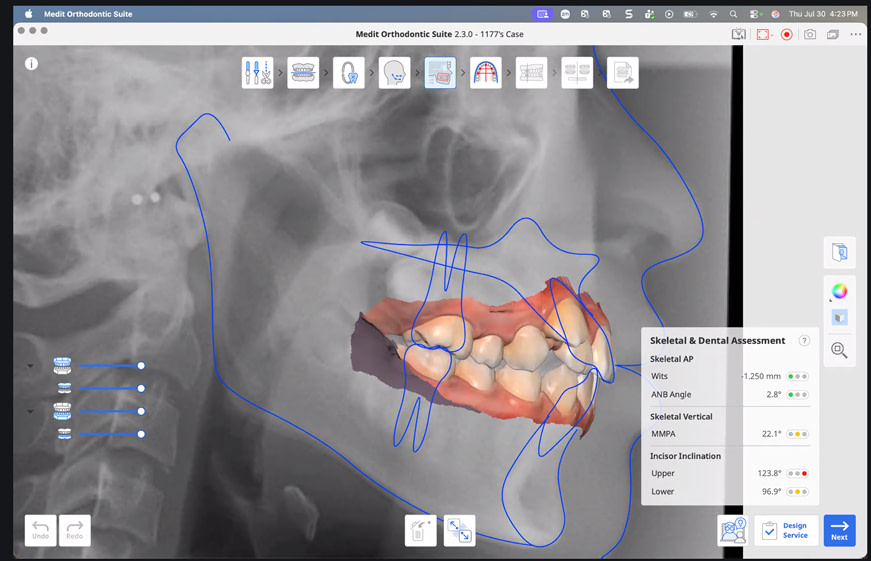
The software already does cool stuff like AI lat ceph tracing, visualizing treamtent options on the intraoral scans etc.
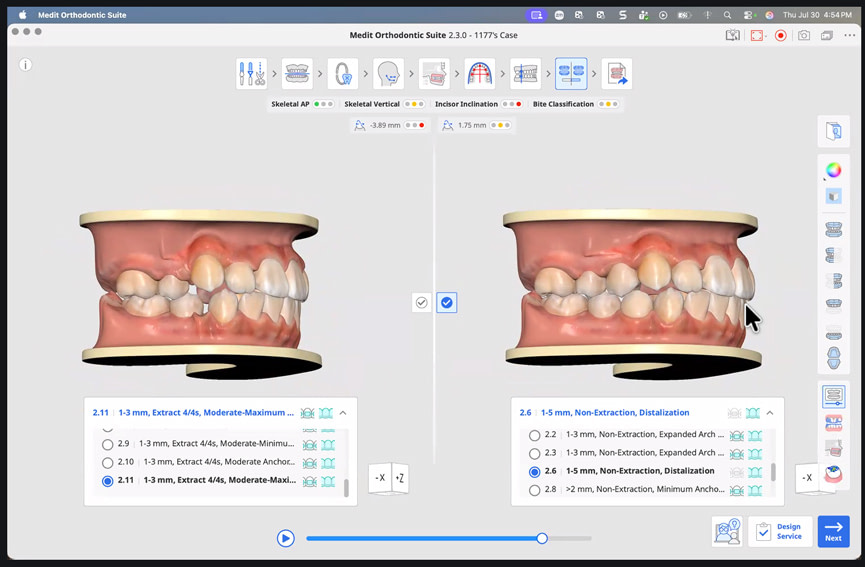
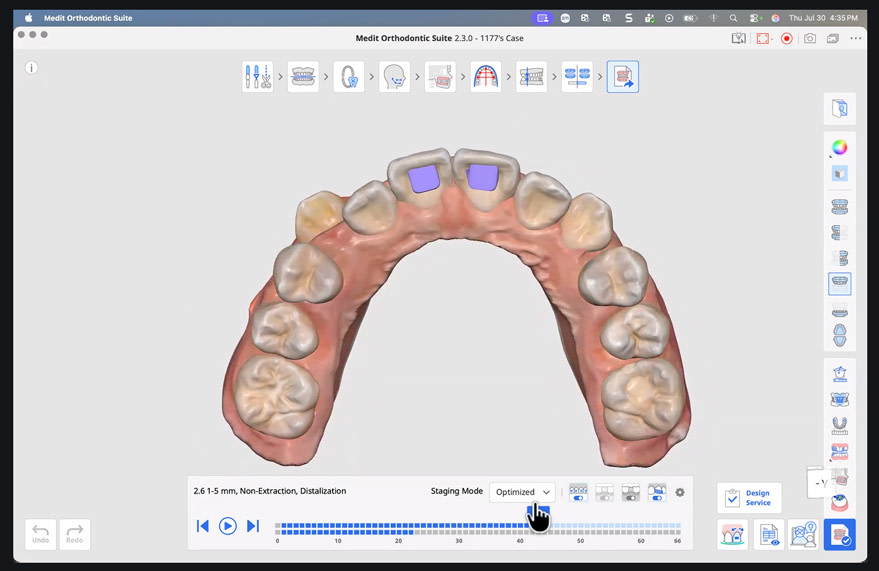
Custom Staging. This gives per-tooth control over the treatment timeline, with a drag-to-edit interface for adjusting when each movement happens. Staging control is where a lot of aligner software either frustrates you or earns its keep. By carefully adjusting tooth movements during a specific part of treatment, you can get crafty with treatment timelines and staging.
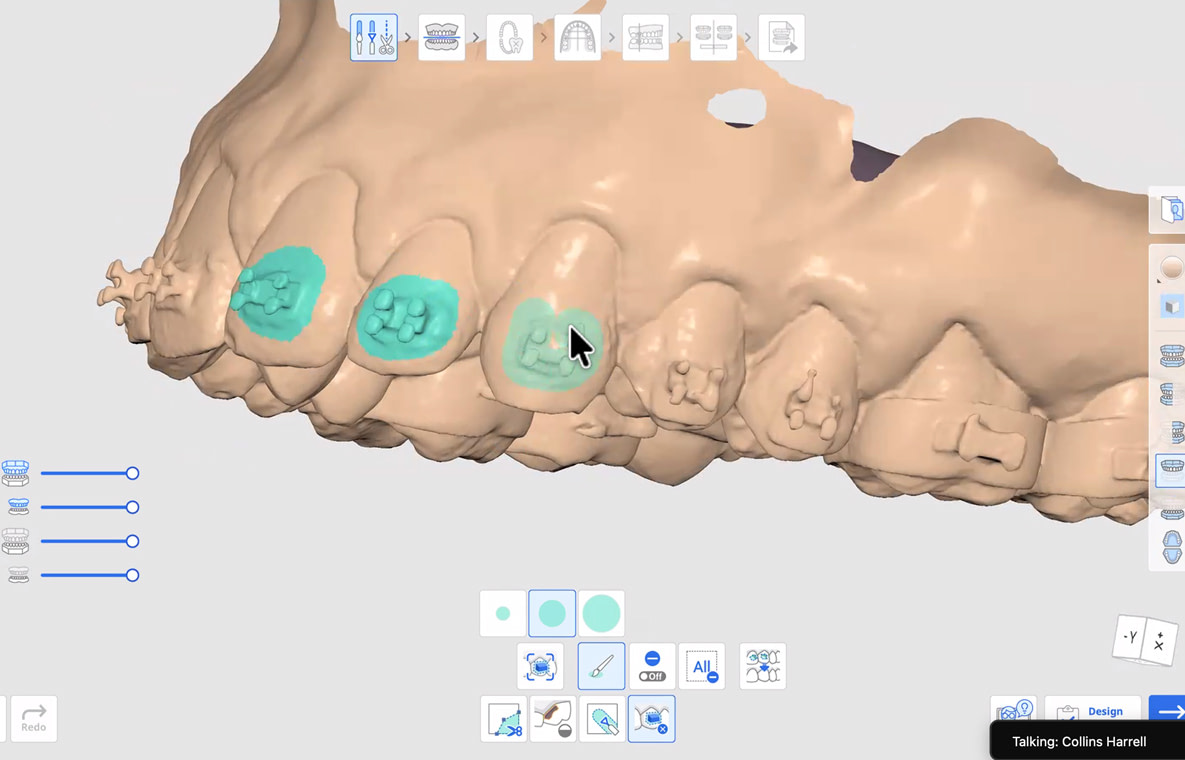
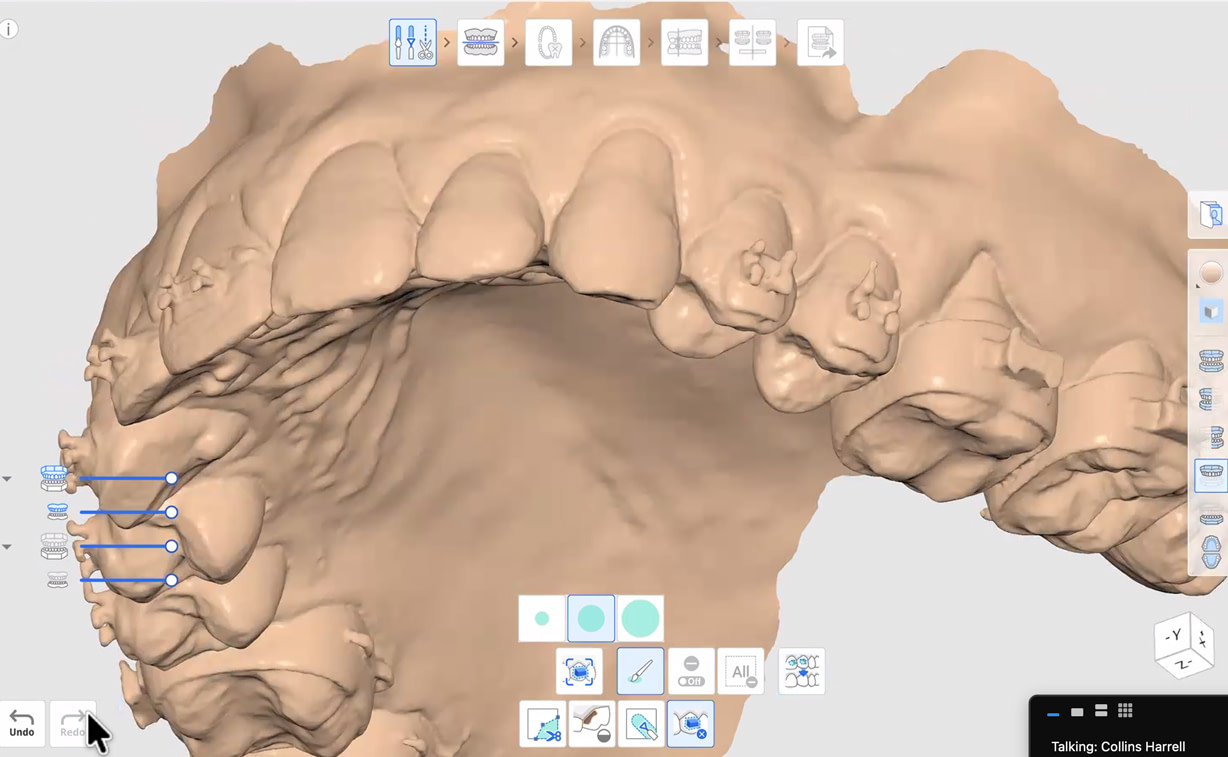
Remove Attachments / Brackets. Medit software has always been good at turning the traditionally complex into simple. E.g model builder, etc. Well, now within their software you can easily remove attachments and brackets. The company says for fixed ortho, it's ideal to remove the wire before scanning. You may be asking why you do this? Well, one use is to be able to scan a patient in their last review before finishing ortho, use this software to remove attachments/brackets, and then have their retainer ready on the day of deband.
The Refinements
The remaining changes are smaller, but several address friction points in ortho planning.
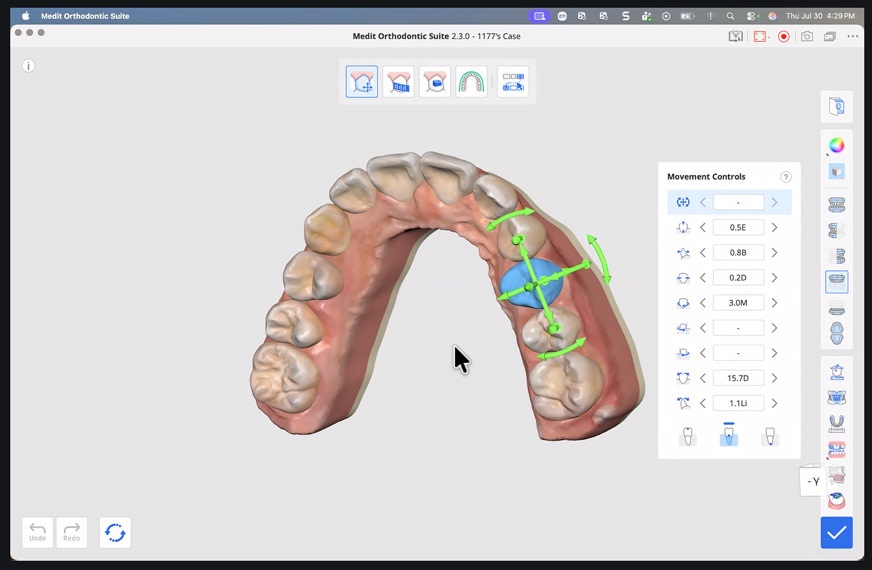
Tooth-level editing. A new tooth edit manipulator for rotate and translate control, improved tooth axis identification, and hinge-axis rotation for mesial and distal movement.
Arch and IPR control. Arch modification with control points (symmetric or opposing), a reduced minimum IPR step down to 0.1 mm, more reliable interdental blocking for STL export, and the option to hide the IPR display.
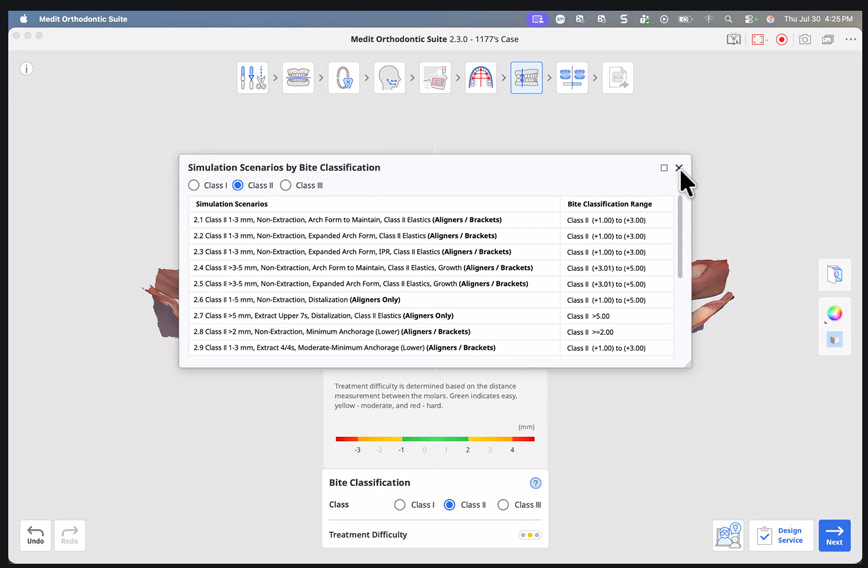
Workflow and library. Ortho photo import for coaching requests, an expanded attachment library with button cutout sizing and new shapes, automatic eruption bubbles and pontics, and updates to bite classification.
None of these are dramatic on their own. Taken together, they suggest Medit is filling in the editing gaps that separate a demo-friendly tool from one you can actually work with day to day.
Pricing of Medit Orthodontic Suite
Pricing has not changed with 2.3, and Medit publishes it openly, which I appreciate. The software itself is completely free to use, whether you own a Medit scanner or not. Instead, Medit primarily uses a pay-to-export model.
If you are exporting files for in-house production (such as 3D printed models for suck down aligners or direct print aligners), pricing is charged per aligner stage (i.e. each individual aligner in the treatment sequence) per arch. Medit scanner owners pay $1.50 USD per aligner stage per arch, while non-Medit scanner owners pay $5.00 USD per aligner stage per arch.
Alternatively, if you produce a high volume of cases, you can opt for an unlimited subscription. This costs $199.99 USD per month for Medit scanner owners and $499.99 USD per month for non-owners. This allows you to export as many cases as you want within that month.
European pricing follows the same structure (€1.50 per stage, €190/month, etc.). Importantly, treatment planning and simulations remain free - you only pay when you export files for manufacturing.
If you choose to have Medit manufacture the aligners for you, the published pricing is $18 USD per aligner stage, or $20 USD per aligner stage if you also use Medit's Design Service. Total treatment costs are capped at $1,290 USD per case, before packaging, taxes, and shipping.
A Shift in Strategy
Looking beyond the feature list, I think MOS 2.3 says something much bigger about where Medit is heading.
Traditionally, intraoral scanner manufacturers sold hardware. The scanner was the product, and everything that happened afterward was left to third-party software and laboratories. Medit is taking a very different approach. Over the past few years, it has steadily built an orthodontic ecosystem that keeps clinicians inside the Medit environment from the initial scan through treatment planning, aligner production, and case delivery.
The acquisition of Progressive Orthodontics was the first clear sign of this strategy. Rather than building orthodontic software entirely from scratch, Medit acquired an established planning platform, integrated it into Medit Link as MOS, and has continued investing heavily in its development. The launch of Medit Aligners completed another piece of the puzzle, giving clinicians the choice of manufacturing aligners themselves or outsourcing production directly through Medit.
What's interesting is that very few scanner companies have committed this heavily to a clinical specialty. Medit appears to have chosen orthodontics as one of its primary points of differentiation. That's an interesting strategy in the scanner market, where hardware specifications have become increasingly similar and meaningful differentiation is becoming harder to achieve.
Whether this ultimately succeeds remains to be seen, but I think it reflects a broader shift happening across digital dentistry. Increasingly, value isn't coming from the scanner itself, it's coming from the software, the workflow, and the services that sit behind it. The scanner is becoming the entry point into a much larger digital ecosystem.
If Medit continues investing at its current pace, it could end up being remembered not simply as an intraoral scanner manufacturer, but as one of the companies that fundamentally changed how digital orthodontics is delivered to general practitioners. That is a fascinating direction to watch.