
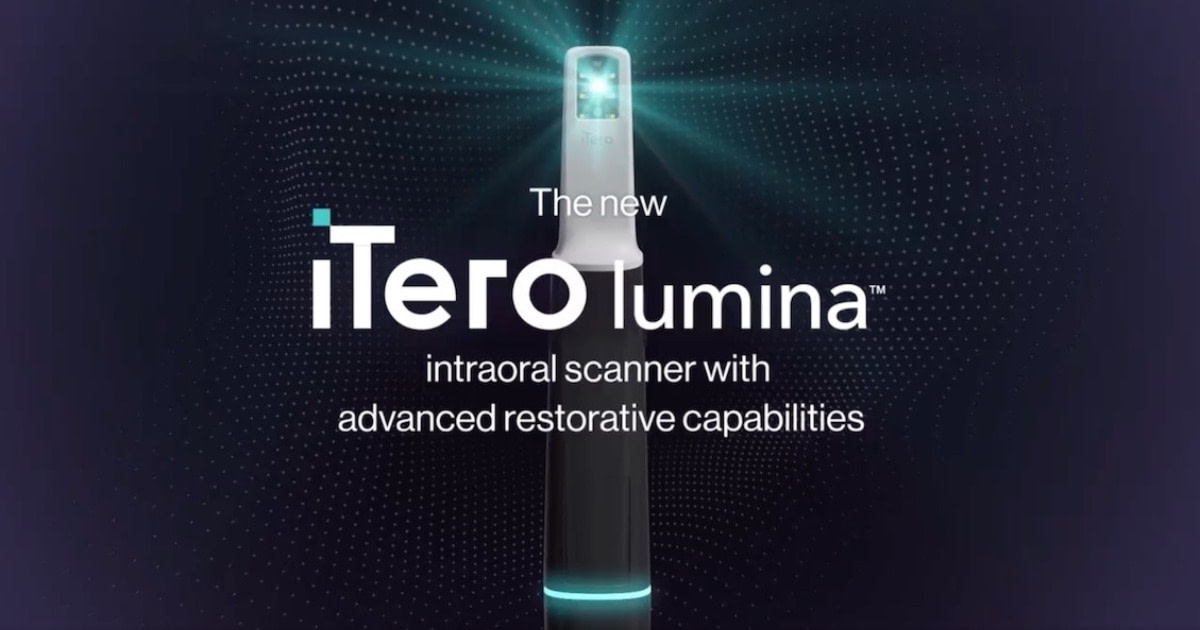

When the iTero Lumina was first released in early 2024 at the Chicago Midwinter show, one of the most notable omissions was the lack of restorative capabilities. I and many users were waiting for this functionality, which kept getting pushed back. Now, a full year later, these features are finally rolling out.
After much anticipation, Align Technology has announced the availability of restorative capabilities on their flagship scanner. This long-awaited update adds restorative workflows to both the standard iTero Lumina intraoral scanner and introduces the new iTero Lumina "Pro" which has Near Infra-Red Imaging (NIRI) technology.
Just to be clear, the hardware is all exactly the same, this restorative update is purely software and workflow improvements, and the only difference between the Pro and Non-Pro Lumina is NIRI.
Align Technology has been doing some very exciting things as of late, including the iTero Design Suite which essentially makes a basic version of exocad available for all iTero users and is totally cloud-based.
So what's New in the Restorative Update?
The iTero Lumina and new Lumina "Pro" claim to deliver comprehensive capabilities for general practitioners, enabling:
- Diagnostic, restorative, and multidisciplinary ortho-restorative workflows
- Scanning of all case types from single crowns to full arch with multiple preparations in a 'single pass'
- The company claims superior full-jaw clinical accuracy compared to tested competitors
- Up to 5 capabilities in one device: photorealistic 3D models, HD intraoral camera, interproximal caries detection (with NIRI on the Pro model), photorealistic scans that eliminate the need for intraoral photos for Invisalign cases, and accuracy comparable to photogrammetry - this last comment is a huge claim and one I am eager to test. If iTero pulled it off, this will be huge.
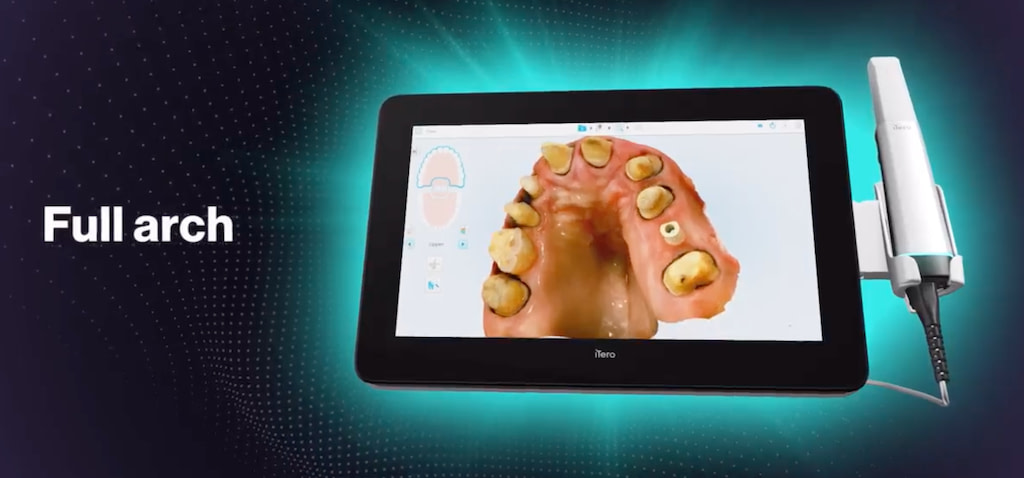
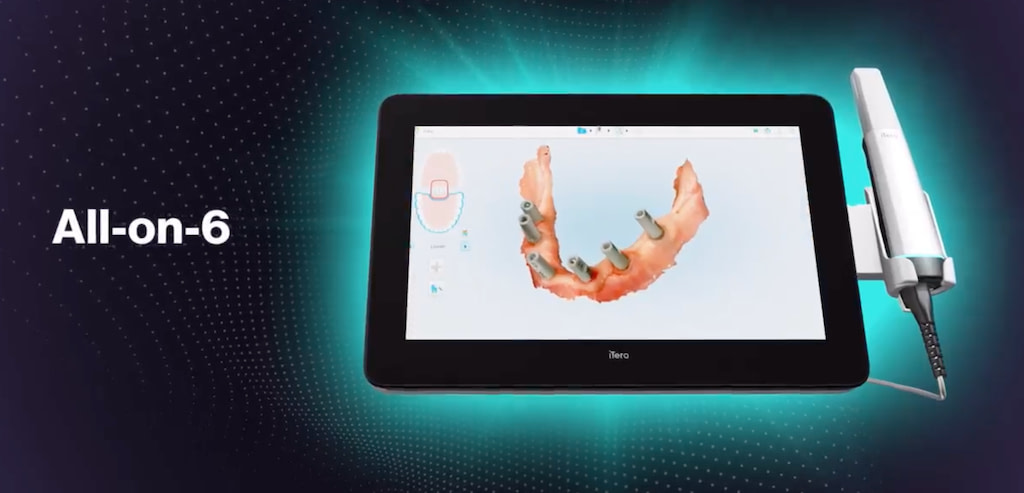
In their press release, Align made some significant claims about the iTero Lumina's restorative capabilities, including:
- Scans are "within accuracy threshold of photogrammetry for full-arch implant restorations"
- "Achieve predictable and repeatable first-time restoration fit from single unit crowns to removable prosthetics"
- "Ability to capture challenging areas for dentures, palates, edentulous spaces, and other complex cases"
The company says they conducted specific benchmarking tests comparing the iTero Lumina against competitors including Trios 5, CS3800, Medit i700, and Alliedstar. They claim the Lumina showed "significantly higher" accuracy with reduction of total error ranging from 0.11% to 0.46%. For the photogrammetry accuracy claims, Align defined thresholds as: Horizontal error <50µm, Vertical error <30µm, and Angular deviation < 0.4°.
If these claims hold true, this will position the iTero Lumina as one of the top contenders for restorative workflows in the market. It's refreshing to see Align Technology finally placing a serious focus on restorative capabilities, an area they've arguably neglected for years while competitors like Medit and 3Shape TRIOS have continuously dominated the restorative digital workflow space.
For the longest time, iTero scanners were primarily viewed as "Invisalign scanners" with restorative functionality feeling like an afterthought. While companies like Medit built comprehensive software ecosystems with robust apps specifically designed for restorative dentistry, and 3Shape refined their prosthetic workflows, iTero seemed to maintain their orthodontic stronghold without seriously challenging the restorative market.
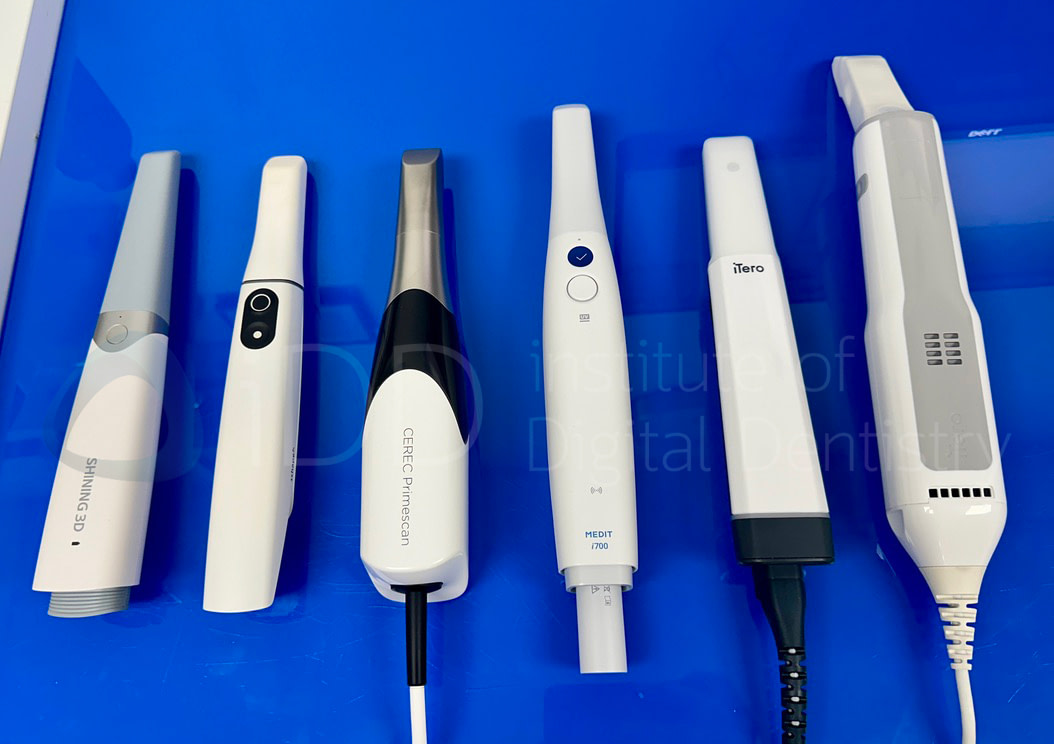
What's particularly bold is Align's approach to implant scanning accuracy. While other manufacturers like Shining 3D with their Elite scanner are developing specialized scan bodies to achieve high implant accuracy, Align claims their scanner can achieve comparable results without additional accessories. Can they really deliver on this?
The integration of the iTero Design Suite, essentially offering a cloud-based version of exocad to all users, further demonstrates Align's renewed commitment to comprehensive digital dentistry beyond just clear aligners.
The original iTero Lumina was a significant improvement over previous iTero models in terms of speed and ergonomics, bringing the platform up to par with current market leaders. Now we'll need to see if the restorative workflows deliver on their promises.

I'm looking forward to testing these claims in a clinical setting to see if the Lumina Pro can truly bridge the gap and deliver the kind of restorative performance that practitioners have been seeking from iTero for years.
Availability and Rollout
Current iTero Lumina scanner owners will receive the new software with restorative capabilities (minus NIRI technology) starting in April via direct software update following regulatory clearance in their countries.
The iTero Lumina Pro dental imaging system is commercially available in select markets including the United States, Canada, Australia, New Zealand, Japan, Hong Kong, Singapore, and Vietnam. Meanwhile, the standard iTero Lumina scanner is available in more regions including European Union countries, UK, Northern Ireland, South Africa, Kenya, Ghana, and several Asian markets, with more locations expected throughout 2025.
What are your thoughts? Will iTero make a comeback?
Stay tuned for our hands-on review once we've had a chance to thoroughly test these new capabilities in practice.
When I originally purchased the Lumina, I was told the NIRI would be available for it, but we just had to wait for the updates. Now that I’m learning the Lumina Pro is for the NIRI function, I feel like I’ve been duped.
I can understand why you’re feeling frustrated. If you were initially told that NIRI would be available on the Lumina with future updates, it’s completely fair to feel misled now that it’s being tied to a separate model.
I would reach out to your iTero rep for sure. Perhaps an upgrade is possible?
HI Craig. Customers who purchased Lumina in 2024 can upgrade their SW to the new NIRI version (available with the release of Lumina PRO). The SW was simply not available at time of the first Lumina release. Please reach out to your local iTero rep and they will help you with the upgrade.
Thanks for clarifying that Karim
Wow! Full arch implant scanning comparable to Shining 3D Elite!?? This would be MASSIVE. I am excitedly skeptical, haha.
Please give your opinion on this capability once the update is released. I have really enjoyed your articles and videos. They have been incredibly helpful. What a time to be a dentist!
Cheers and have a great week!
Thanks so much for the kind words! Really glad you’ve found the articles and videos helpful. Yes, if the full arch implant scanning proves to be comparable to the Shining 3D Elite, it would be a huge step forward.
Like you, I’m cautiously optimistic. I’ll definitely share my thoughts once I’ve tested it. Exciting times indeed, dentistry is moving so quickly right now!
Wishing you a great week as well!