
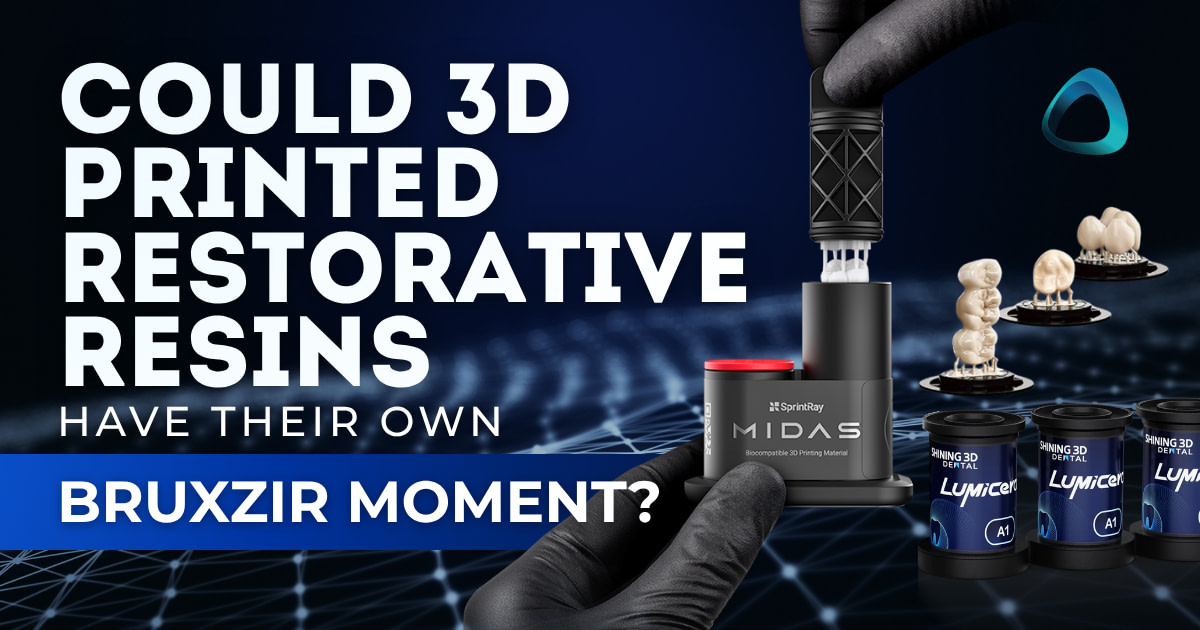

Every material that now sits comfortably in your operatory was once something the profession didn't trust.
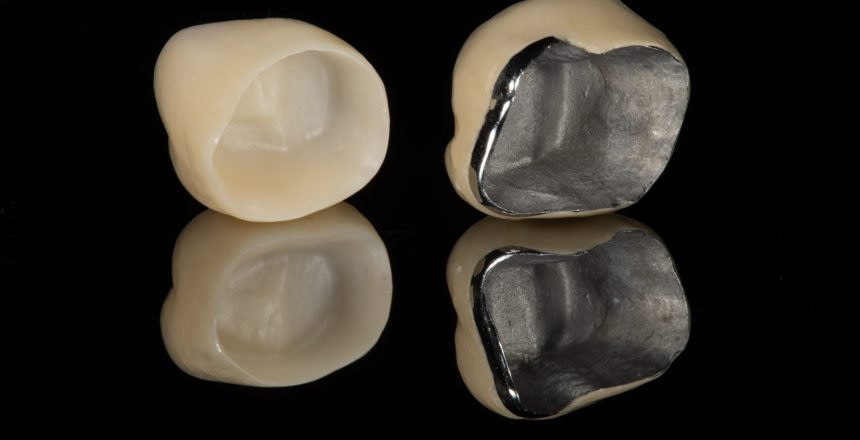
Zirconia is a great example. In the mid-2000s, the standard indirect restoration was still a PFM (porcelain-fused-to-metal) crown. Dentists tolerated it because there wasn't a real alternative, not because anyone loved seeing gray metal color peek through a chipped porcelain margin or at the gumline. Industrial zirconia existed, but it looked like a bathroom tile. Opaque, chalky, and about as close to a natural tooth as a golf ball.
Other ceramics were available, feldspathic porcelain and leucite-reinforced glass ceramics like IPS Empress, and e.max entered the market in 2005. But these materials were still viewed primarily as esthetic solutions. When it came to a posterior crown expected to withstand years of heavy function, few, if any, dentists were ready to trust an all-ceramic restoration. Metal was still the benchmark for strength, and ceramics had yet to earn the profession’s confidence.
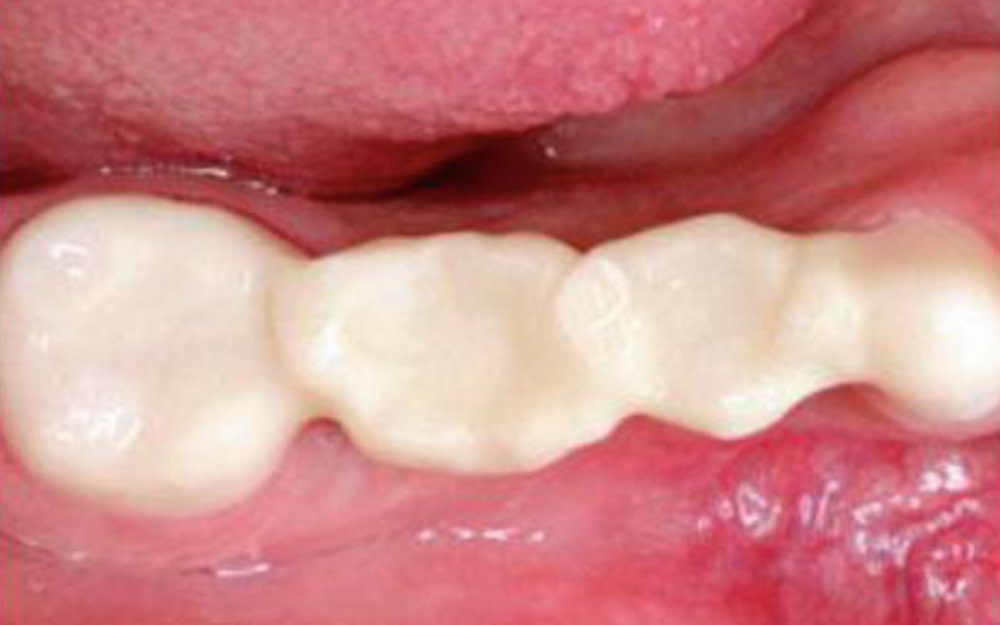
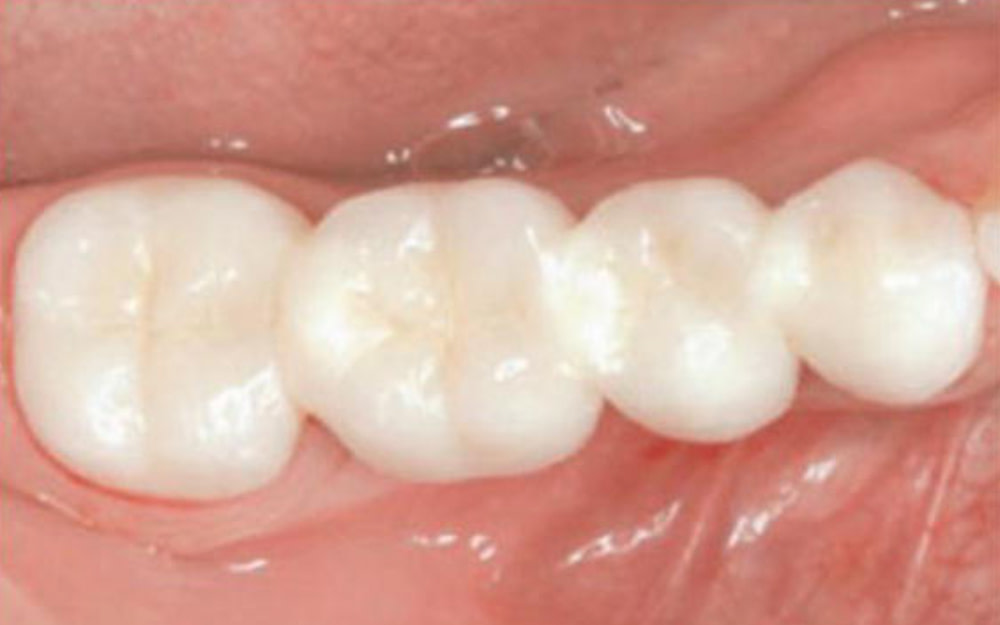
Picture from https://www.intechopen.com/chapters/85719
Jim Glidewell changed that. Rather than sourcing generic zirconia blocks, he built an entire research and manufacturing operation in Southern California (Prismatik Dentalcraft) to re-engineer the material from raw powder up. His team reformulated the yttria ratios that stabilize the crystal structure, developed a colloidal processing method to eliminate the microscopic voids that made zirconia opaque, and bought the industrial presses and kilns to produce their own milling blanks rather than buying them in. BruxZir launched in 2009, and it took years of skepticism before it became the default many labs now reach for without a second thought.
I bring this up because I've been in a lot of conversations lately, some in clinical groups full of people who print, mill, and press daily, where the exact same skepticism is aimed at 3D-printed restorative resins. It sounds like a similar story I just described above, doesn't it?
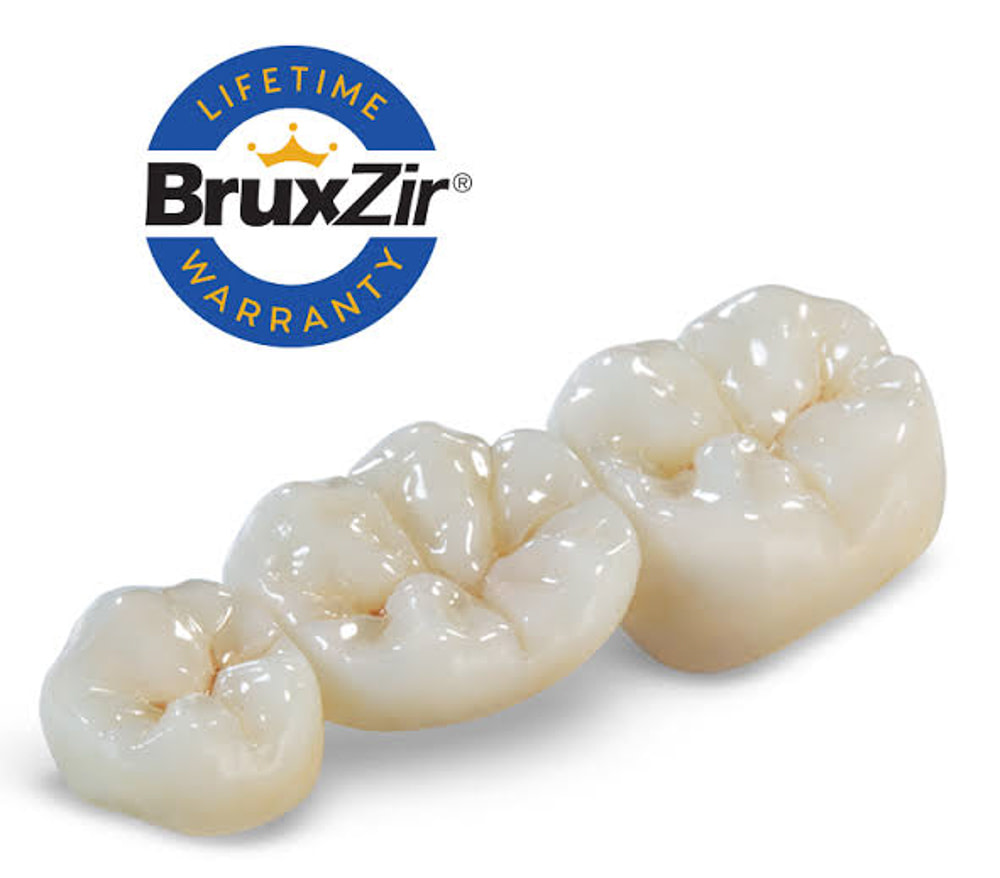
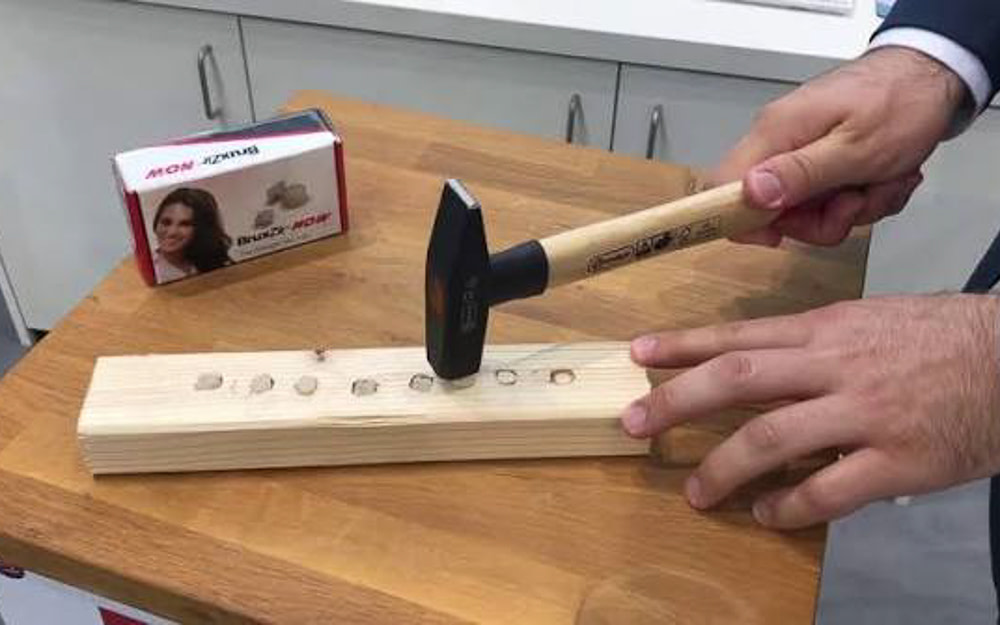
The famous BruxZir advertisement is one of the best marketing campaigns in dental history.
Watch me do the same with 3D printed crowns and emax here.
The Current Skepticism Is Similar
Here's the thing. If you swap "zirconia" for "3D printable ceramic filled resin" in a conversation from 2007, you'd likely see many parallels.
The concerns I keep hearing feel similar. Will it actually last? Will it bond reliably, or will we see a wave of debonds? Is the marketing getting ahead of the clinical evidence? Is this actually a new material category, or just a rebrand of something we've already seen underperform?
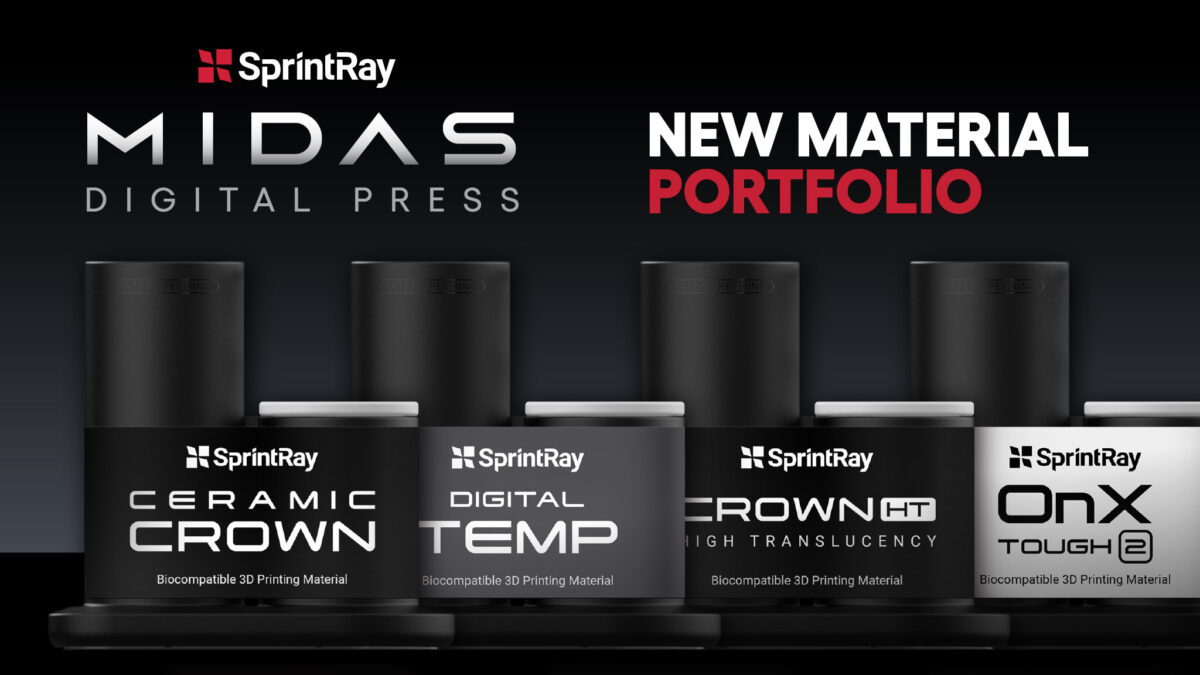
That last point matters. Resin filled with ceramic particles for permanent restorations isn't exactly new. What's changed is the filler percentage, the resin chemistry, and frankly, the wear resistance some of the newer generations are reportedly showing. Materials like SprintRay's Restore sit in this category, and it's the one I keep hearing described as the actual step change rather than another incremental release.
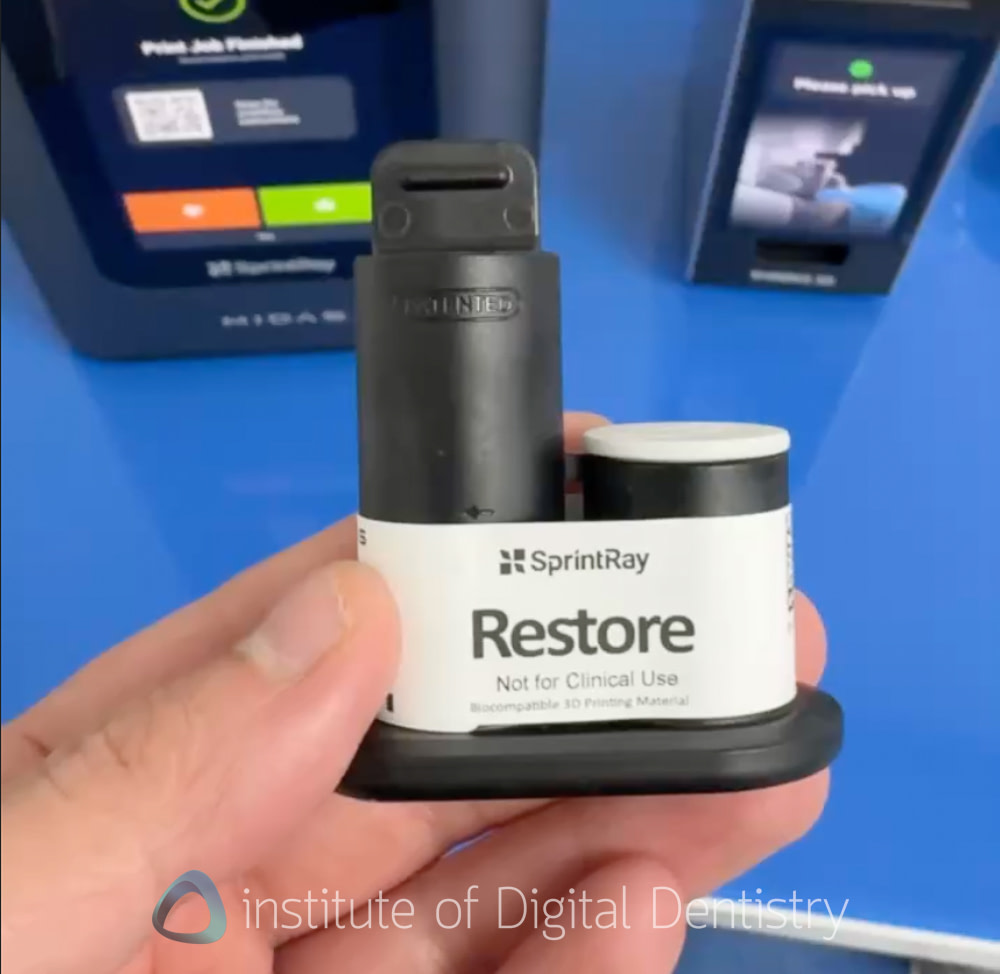
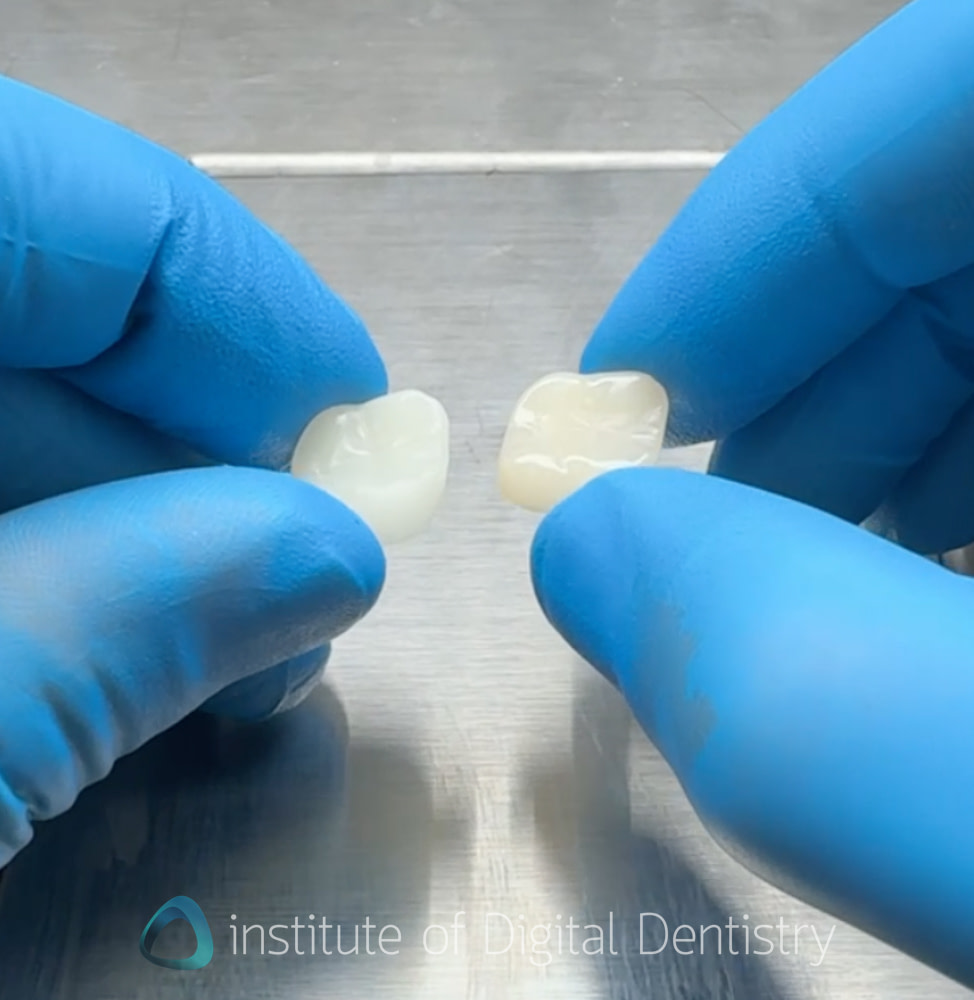
What the company is reporting is a filler component of around 75%, translucency and luminescence that rivals ceramics, and a polish that comes up smooth and shiny with nothing more than 2-step hand polishing, no glaze required. That last point matters more than it sounds. Glaze layers on resins wear off, every one of them, and a material that looks its best hand polished rather than glazed is a material that keeps its color and texture longer over time, not just on delivery day.
There's also a gap in that story worth talking about. Nobody seems to be talking about characterization, the staining and shading work that gives a restoration its individual character rather than a flat, uniform shade. Right now, there's no stain or glaze system for these materials that lasts more than maybe four months. So the base shade and polish might last, but any custom characterization you add on top of it won't. For a single posterior crown, that may be a minor issue, but for an anterior case or a veneer where characterization could be critical, that's a limitation, and an important one to realize.
I'll be genuinely curious to see how long it takes other resin systems, whether from other printer manufacturers or software-driven CAD ecosystems, to catch up on that specific combination of polishability and aesthetics. A high filler load that still prints cleanly and polishes well is not a trivial formulation problem, and right now it looks like one company has a real head start. What will other companies like Shining 3D, Asiga, Formlabs, etc do next?
The average dentist doesn't have a background in polymer chemistry, filler morphology, degree of conversion, or fracture mechanics. So when two printers both advertise materials for "permanent crowns," it's easy to assume they're offering essentially the same thing. They're not—any more than an early industrial zirconia block was equivalent to BruxZir, or to the highly translucent, high-performance zirconias we use today. And that's the danger of what's happening in our industry right now. The category is advancing quickly, but the marketing is moving even faster. The same words: "permanent," "definitive," "crown" are being used to describe materials with very different chemistries, properties, evidence, and clinical track records.
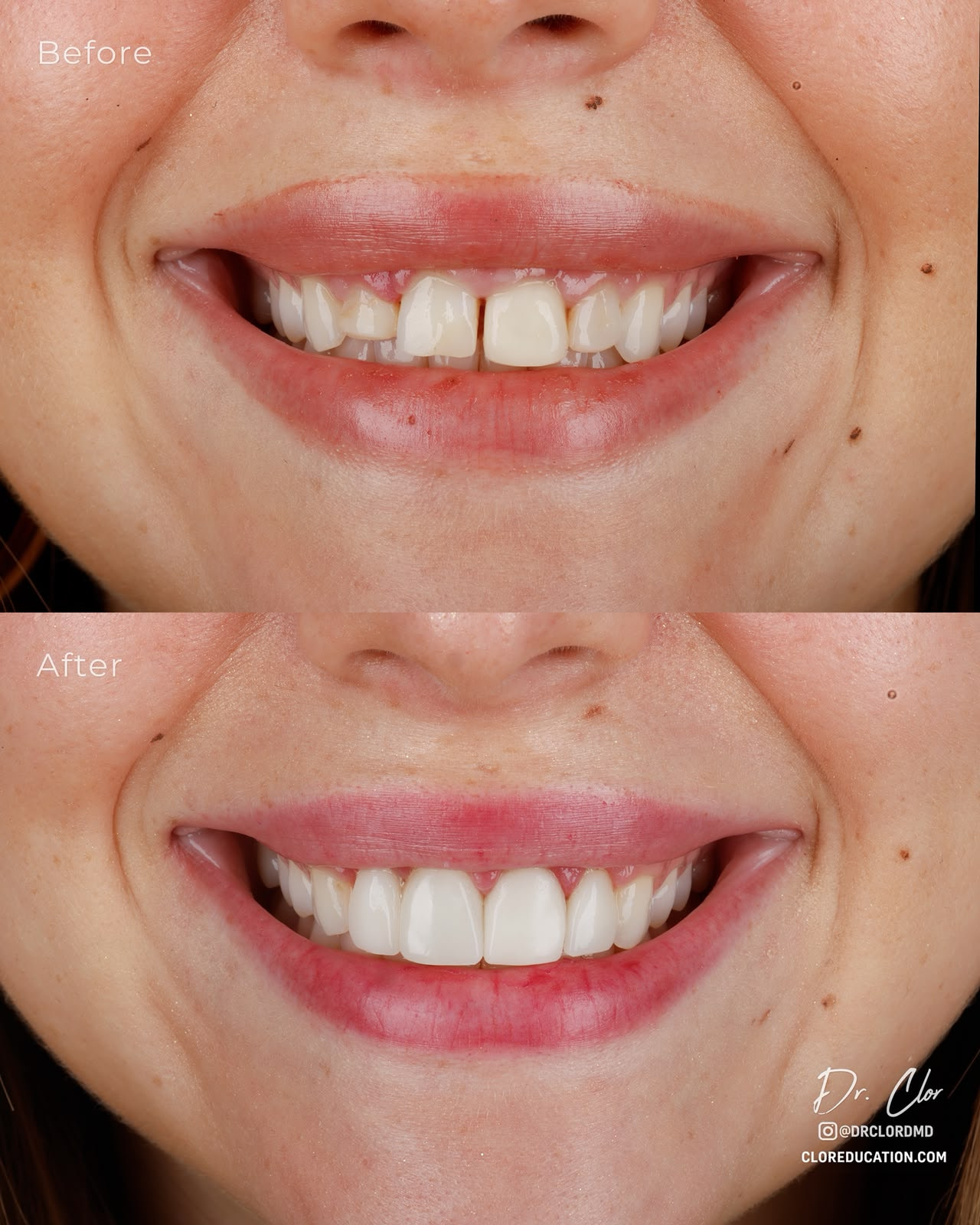
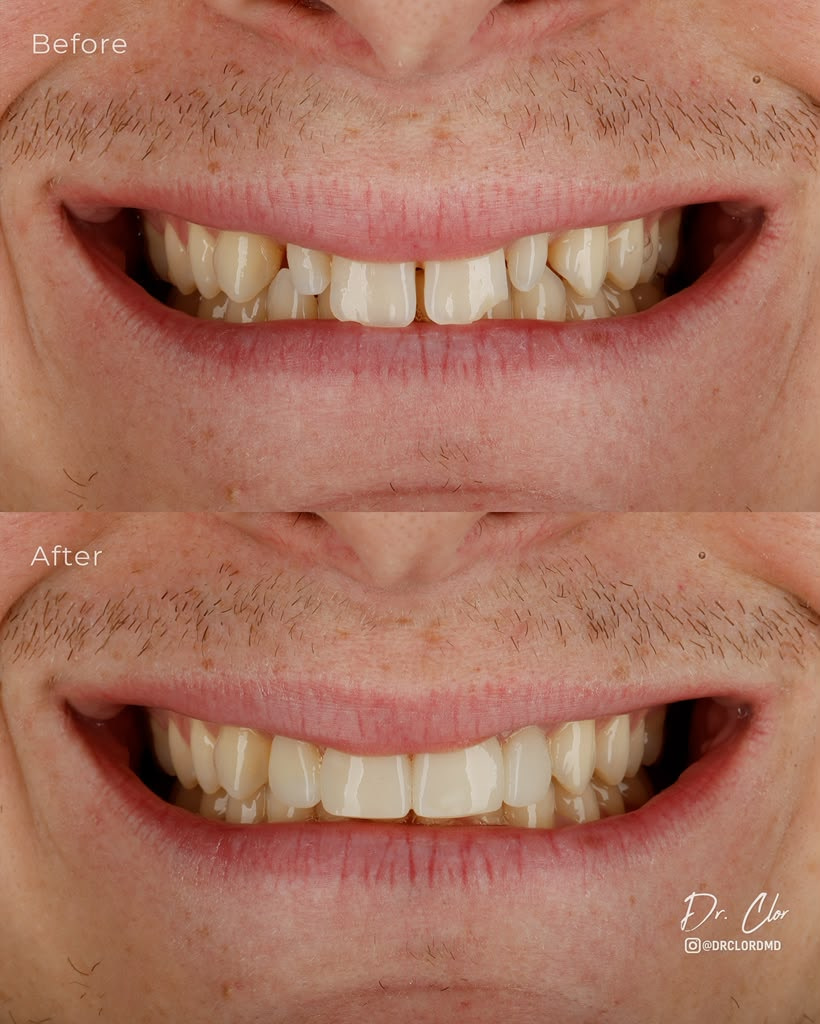
What is clear is that 3D-printed restorations do have their place in modern dentistry. And when done well, they can look very good; check out these MIDAS Restore printed veneer cases by Dr Omar Clor for many examples of that.
We Already Ran This Experiment, With CrownTec
Here's where I'll push back on my own analogy a little.
This isn't the first time a 3D printable resin has been positioned as a serious ceramic alternative. Saremco's CROWNTEC has been around since 2020, went through TÜV SÜD conformity assessment as a Class IIa medical device, and had research out of the University of Zurich comparing its fracture load favorably against traditional particle-filled composite ceramics. Since then, it has appeared in multiple published studies as one of the stronger performers among printed permanent resins in terms of flexural strength and research backing. On paper, this is exactly the kind of evidence base people are asking new resins to produce.
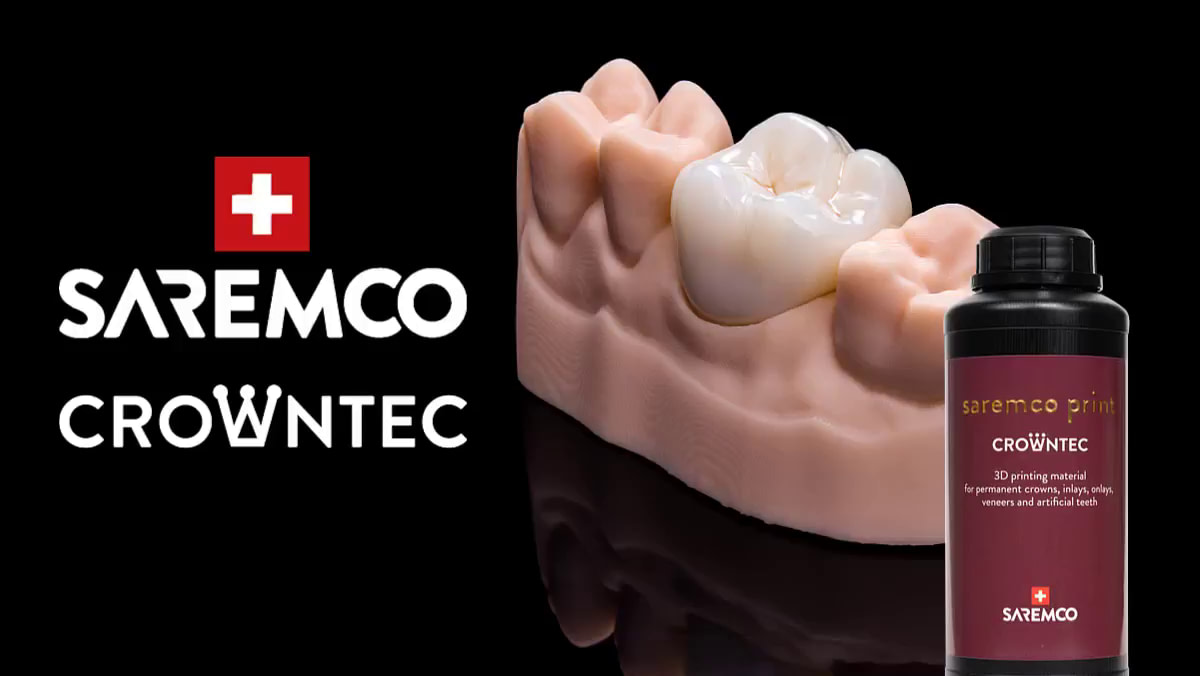
And yet CrownTec never became a household name the way BruxZir did. Most general dentists I talk to haven't heard of it, and it never crossed over from the open platform printing crowd into mainstream adoption.
I think that's the real lesson here, and it's a more useful one than "wait for the data." Glidewell didn't just publish research on BruxZir, he built the manufacturing pipeline, the pricing, and the distribution to put it in front of every lab in the USA. CrownTec had the research and the certification, but it lived in a bottle that only worked with specific open-platform printers like the Asiga MAX, sold to a niche of dentists and labs who were already comfortable designing their own resin workflows. Good materials science without an accessible workflow around it doesn't automatically become the new standard. It just becomes a really well-documented niche product.
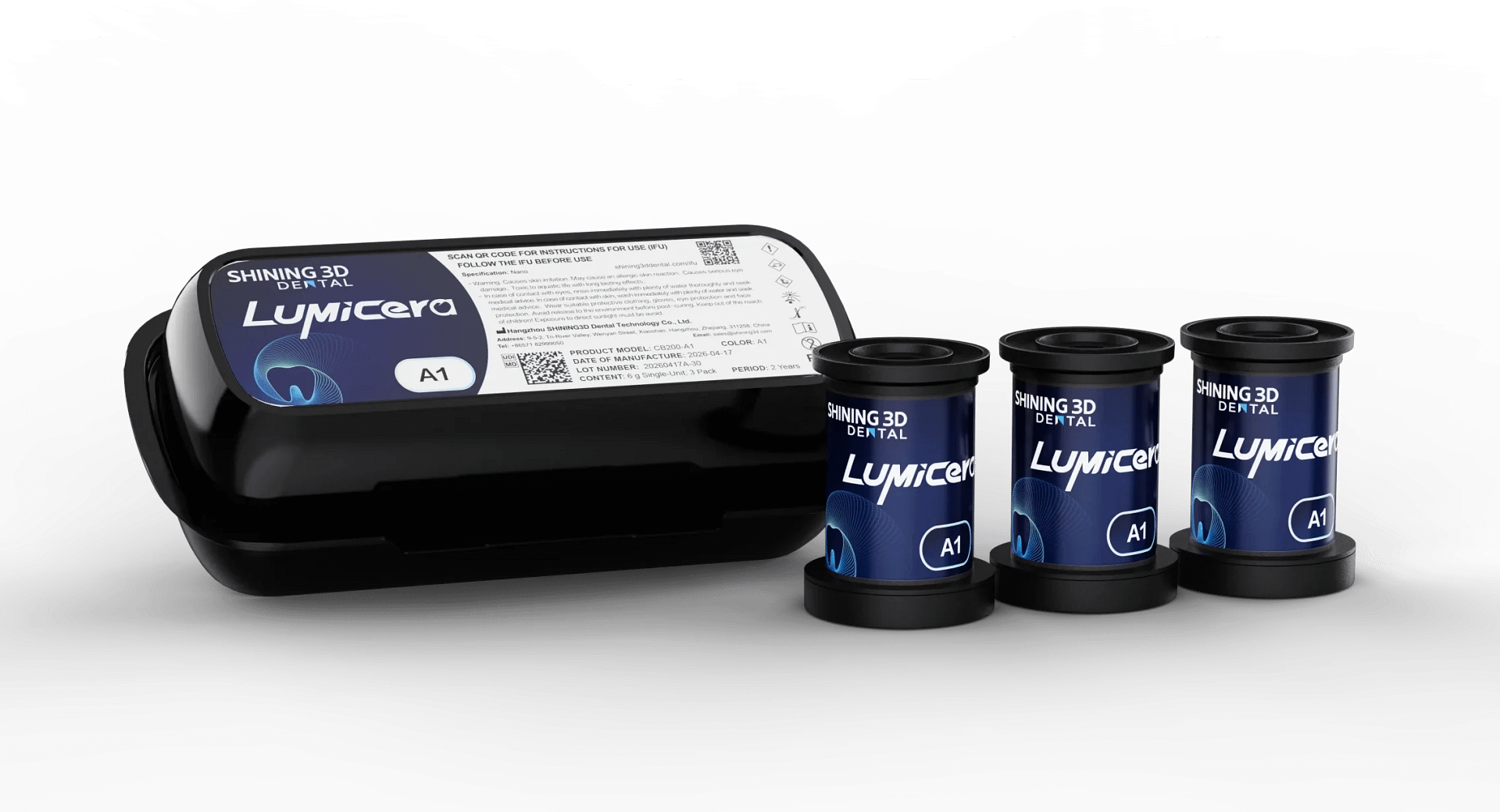
That's worth sitting with if you're trying to predict whether SprintRay Restore, Shining 3D Lumicera or anything like it actually breaks through. The chemistry proving itself in a lab is necessary, but on its own it clearly hasn't been sufficient before.

Know what’s next in dentistry. Before everyone else.
The innovations, clinical insights, and digital trends that matter - curated by iDD and delivered straight to your inbox every week.
Why Printing May Win on Price Alone, Even Before the Wear Data Is In
Separate from the aesthetics and the long-term data question, there's a much simpler argument for why printing keeps gaining ground in dental clinics, and it has nothing to do with whether resin ever fully matches ceramic. It's the economics.
A box of e.max or GC Initial LiSi is somewhere around $200 to $240 USD for five blocks in markets like the US, working out to roughly $35 to $40 USD per single unit. Cheaper again in emerging markets such as Brazil, much of Asia, and MENA.
A single-use printing capsule, depending on the material and market, has been landing in a similar range, sometimes a little higher, and noticeably lower per unit once you account for how many restorations fit on one capsule. Remember that most printing capsules for restoratives are single-use, including SprintRay MIDAS and the new Shining 3D Ceramix-Nano. The only exception to this is Asiga Print-Pods, which can be used many times. So, in general, you are better off fitting in as many restorations as possible on a single capsule. It is also much faster to print multiple restorations than to mill them.
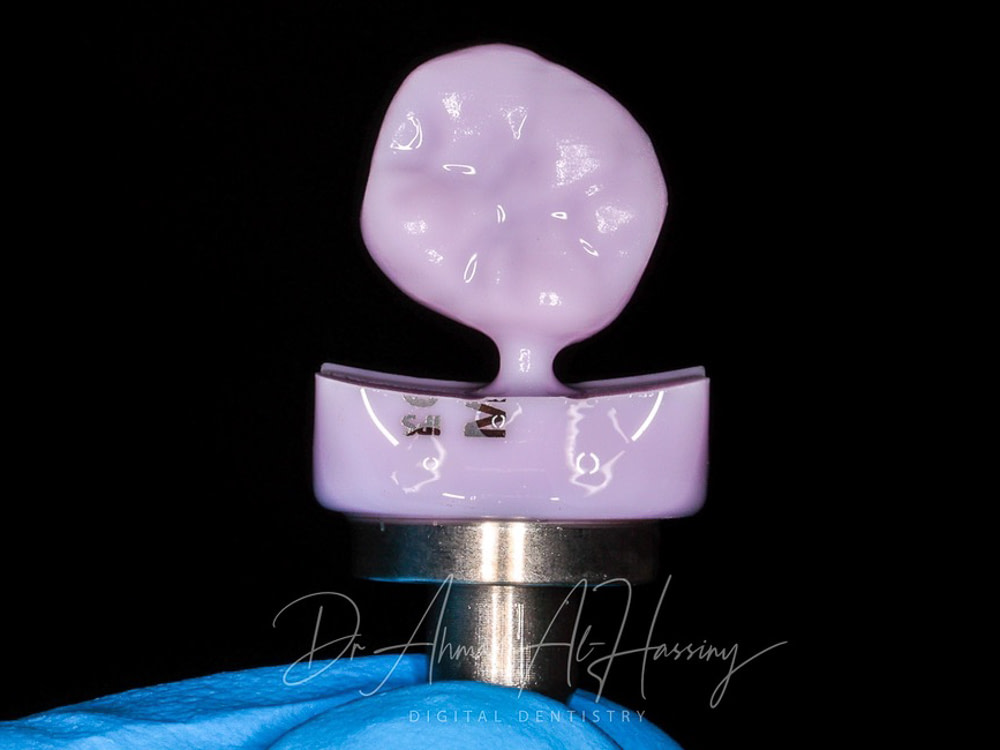
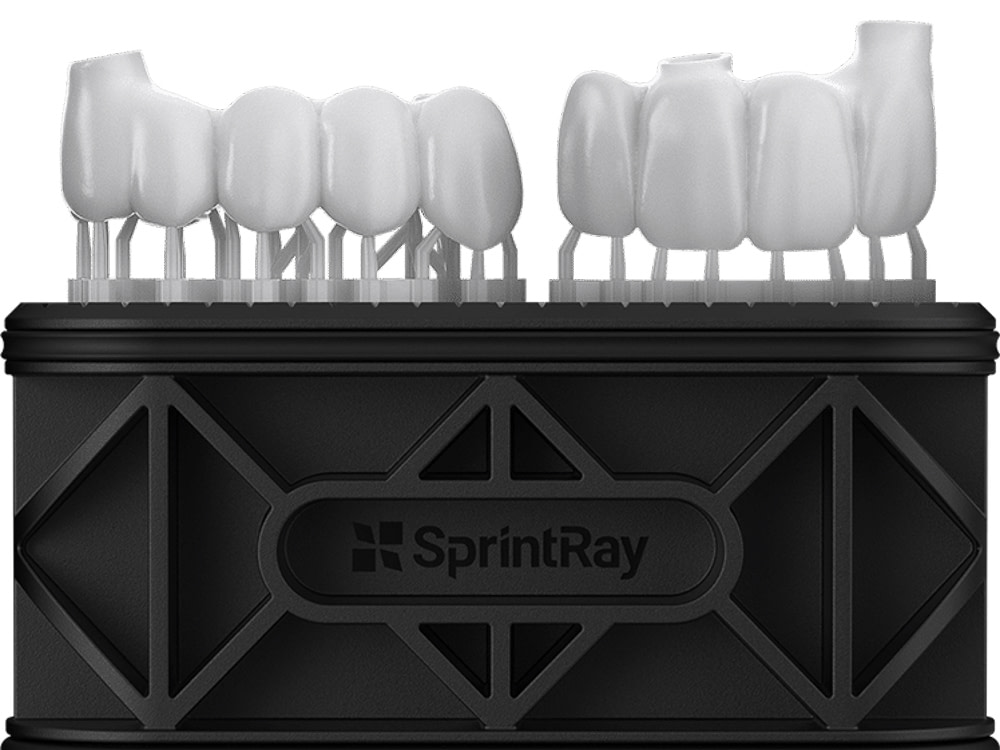
Even for single-use capsules, the per-unit comparison is where printing starts to pull ahead, because 3D-printing isn't really a single-unit game. Multi-unit cases, full-arch temporaries, smile designs, and same-day quadrant dentistry are exactly where that math works hardest in favor of a printer, even before you touch the question of whether the material will last.
Single units tell a different story, and it's worth being honest about that too. For a single posterior crown, several clinicians I've seen discussing this still reach for the mill, since the per-unit cost of a milled block is often similar to a single printing capsule once you're only getting one restoration out of it, and a milled restoration doesn't come with the wash, cure, and hand finishing steps a printed restoration still needs.
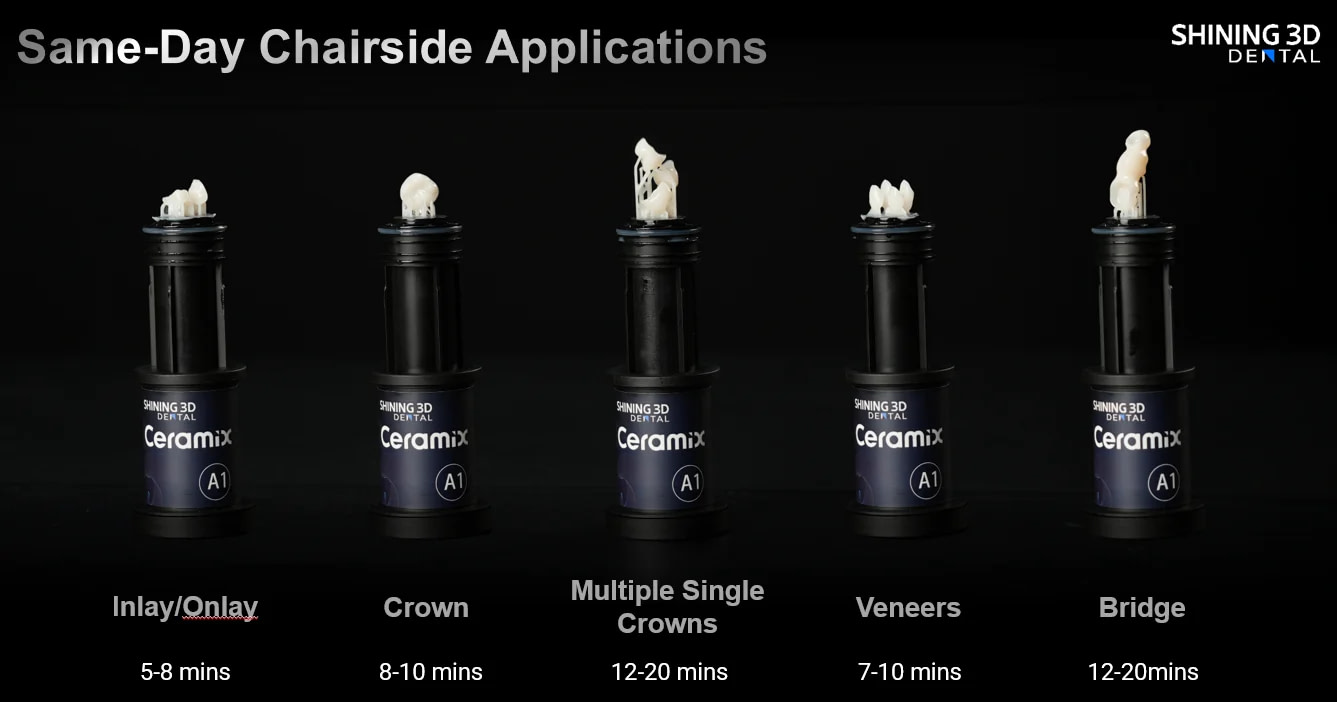
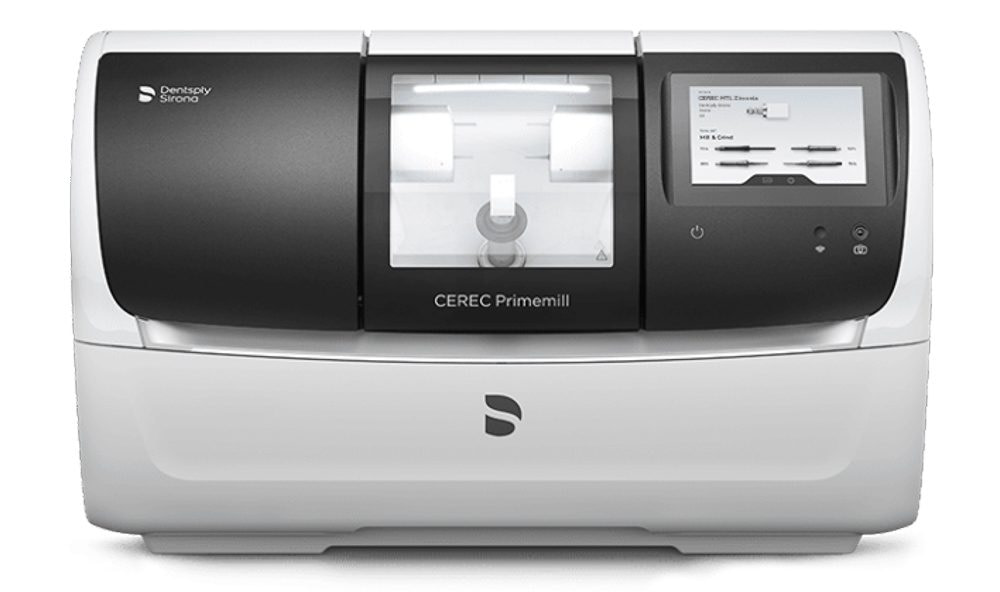
There's a bigger accessibility argument sitting underneath all of this, though. A chairside mill is a five-figure capital investment before you've cut a single block. A printer capable of the same same-day workflow is a fraction of that entry cost. Although do not forget you do need a curing unit. Regardless, for a practice that could never justify a milling unit, whether that's a newer dentist building a practice from scratch or a clinic in a market where that kind of capital outlay simply isn't realistic, a printer is genuinely the more accessible way into same-day chairside dentistry and CADCAM in-house. It lets a practice leapfrog straight into digital same-day workflows without a mill ever being a prerequisite.
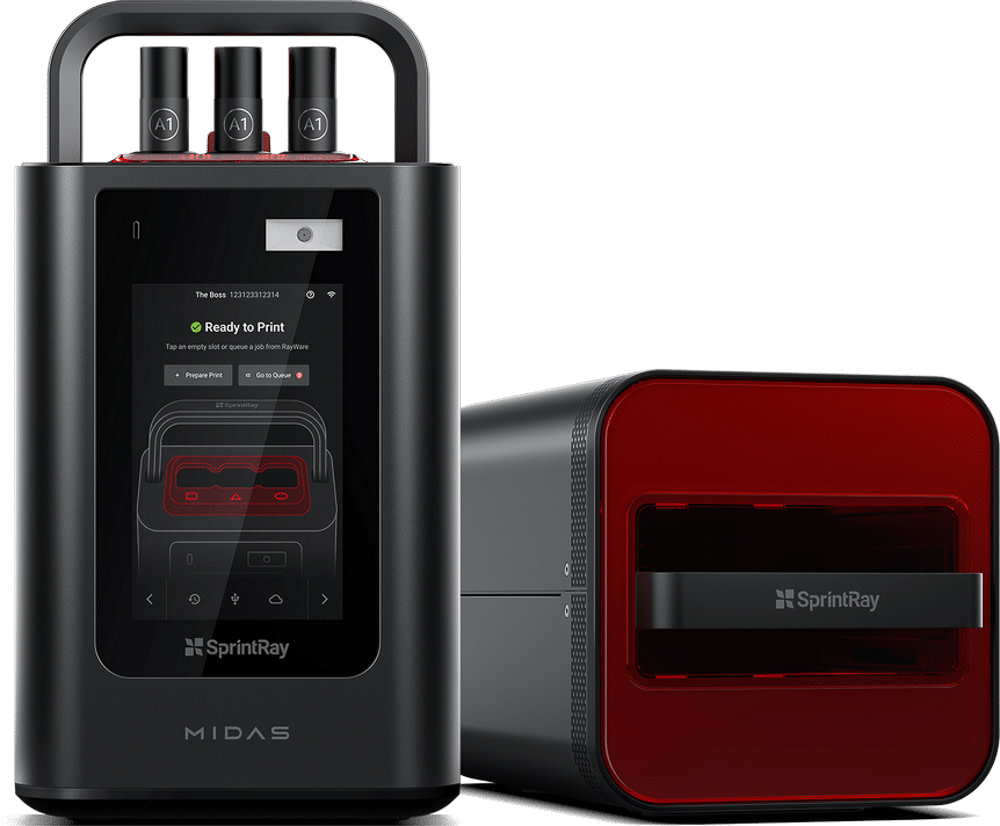
That promise runs into a wall in exactly the markets that need it most, and this is worth discussing too. I've personally heard from clinicians and colleagues in the MENA region and LATAM that the ongoing capsule cost is what's pricing them out, even where the printer itself was the accessible part. A lower hardware entry cost doesn't amount to much if the recurring per-unit cost still exceeds what a local lab charges for a single zirconia crown. In more developed markets like the US or Australia, the resistance looks different again. The hardware cost isn't the same barrier there. It's a straight per-unit cost comparison against e.max or zirconia that are already relatively cheap, familiar, and backed by a decade of track record, so the printing capsule has to earn its place rather than just being novel.
Where the Comparison Breaks Down
That said, I don't think the BruxZir parallel is a clean one-to-one with 3D-printed restorations.
Glidewell's BruxZir story worked because there was a company willing to invest millions into fundamental materials science, not just faster hardware or better software. Glidewell built kilns. He hired ceramicists. He controlled the chemistry from powder to finished block. There's also a bigger structural difference in how each material actually spread, and I think this matters more than the chemistry.
Zirconia's adoption wasn't really a one-to-one swap made by individual dentists weighing up a new material. Labs pushed it and pushed it hard. A lot of labs offered dentists a free zirconia crown for every PFM they sent in, specifically to get clinicians off metal and onto zirconia, because the lab's margins and workflow were better off once everyone was milling zirconia instead of layering porcelain over metal by hand. Similar to labs giving dentists scanners to get them off physical impressions... see the parallels? That kind of top-down, subsidized conversion campaign is a huge part of why zirconia went from niche to default so quickly.
Nothing like that is happening with resin, and I don't think it ever will, for a simple reason. A lab has no incentive to subsidize you into a workflow that removes the lab from the equation. Zirconia still needed to be designed and milled by someone, so it was in the lab's interest to get every dentist on board. Same-day printed resin often cuts the lab out of the case altogether. There's no version of that economics where a lab hands out free printed crowns to get you off e.max, because doing so would be subsidizing its own replacement. Don't get me wrong, labs still use printed resins for restoratives, but it is rarely, if ever, for single-unit restorations. Rather, they use them more commonly for all-on-x restorations/temps, trial smiles, DSD wax-ups, etc.
If this push happens at all, it's going to come from clinicians themselves, chairside, one printer purchase at a time. That's arguably a more difficult kind of adoption, since nobody's economics depend on you switching. It's also a slower and less coordinated one than a nationwide lab incentive program. It's part of why I'd expect resin's growth curve to look more gradual and grassroots than zirconia's did, even if the 3D printed materials themselves turn out to be "good enough".
There's also a data problem that zirconia never really had to deal with in the same way. 3D printing materials evolve so quickly that by the time a five-year clinical study is published, the material under study is often already two or three generations behind what's on the market. CrownTec is a good example of exactly this. Zirconia and e.max had the luxury of one formulation staying relatively stable while the evidence caught up. Resin doesn't have that luxury yet, and I'm not sure the format ever will.
That's a genuine problem when you consider who this material actually needs to convince. Dentists are a tough crowd and for good reason. We want to see a track record, and most of us doubt anything new until it's had years to prove itself in other people's mouths, not just in a manufacturer's lab. A material category that keeps reinventing itself every year or two makes that harder, not easier, because the goalposts for "proven" never stay still long enough for the skepticism to fade.
Zirconia also shouldn't be treated as the flawless benchmark that this comparison sometimes makes it out to be. Full-contour zirconia, particularly when adjusted and inadequately repolished, has a well-documented potential to cause wear of opposing enamel and restorations. The issue is multifactorial, with surface roughness and finishing playing a major role, but clinically, it exists.
That matters when we evaluate printed resins. If a printed crown material ultimately proves to be kinder to the opposing dentition than zirconia while still providing adequate strength and longevity, that isn't simply a consolation prize for failing to match ceramic mechanically. It's a genuine clinical advantage.
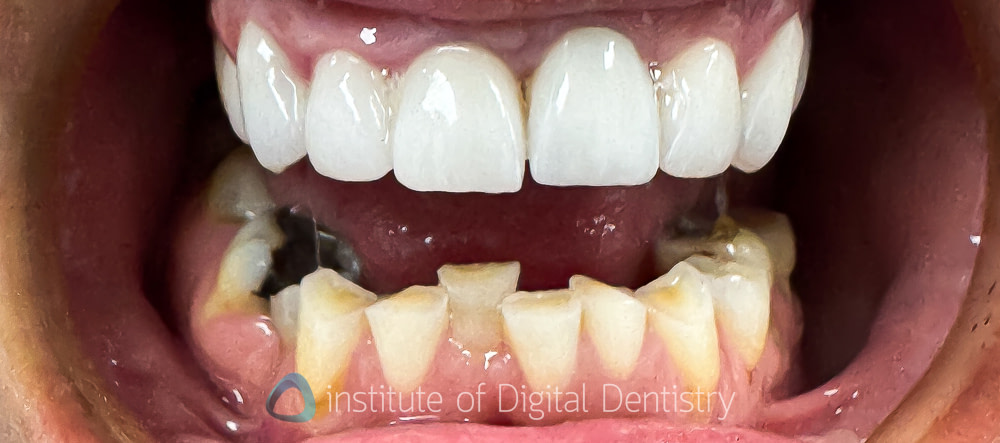
It's worth remembering that the material we're comparing resin against comes with its own compromises and clinical considerations. I've seen the consequences firsthand in my clinic, particularly in patients presenting with extensive restorative work completed in dental-tourism destinations.
What Would Actually Prove It
So the question becomes: what would it take for a resin to earn the same trust that zirconia or e.max eventually did?
Wear is probably the biggest question, because it is also one of the easiest things to hide behind a beautiful delivery day photo on social media. A crown can look exceptional when it leaves the operatory. What matters is what that surface looks like after one, three, or five years of function. Color stability matters too, particularly with repeated exposure to coffee, tea, red wine, and other staining foods and drinks.
Fracture and debonding rates, meanwhile, already look reasonably encouraging in my own testing and in reports from clinicians using the latest generation of materials. Some are showing cases that still look excellent at 12 months. That is promising. But by ceramic standards, 12 months is still short term, and much of what we are seeing remains anecdotal.
What we really need is longitudinal data with maybe serial digital scans and superimposition, allowing us to quantify volumetric wear and surface changes over time, rather than simply eyeballing a restoration at recall or judging durability by the cases people choose to share on social media.


Images courtesy of Dr Steven Shao, showing 17 months of clinical wear on a 3D-printed crown fabricated with a previous-generation material with notably lower filler particle percentage. Filler % matters.
If I boil the whole debate down to one question, it's this. Does a printed crown wear at roughly the same rate as the tooth structure around it, faster than it, or slower than it? That single relationship, printed resin against natural enamel and dentine, tells you more about long-term clinical success than almost anything else in this conversation.
From there, it becomes a timeframe question. Is the wear we're seeing at one or two years still acceptable at five? Is it still acceptable at ten? And practically, would you be comfortable telling a patient that this restoration might need replacing at the five-year mark, as you might with a large direct composite, or does calling something a permanent restoration mean it should last closer to what we expect from a milled ceramic crown? I don't think the profession has agreed on an answer to that yet, and I suspect the answer might differ depending on whether we're talking about a single posterior crown or a full-arch case, and how you are positioning it to the patient.
One thing is clear: we have moved well beyond the days of ugly 3D-printed restorations. With the latest generation of materials (I am looking at you SprintRay MIDAS Restore), these restorations are starting to look genuinely impressive. We also know that, with modern bonding protocols, debonding is becoming much less of a concern. Aesthetics and translucency have improved significantly. So, what remains to be proven? Wear resistance and long-term color stability.
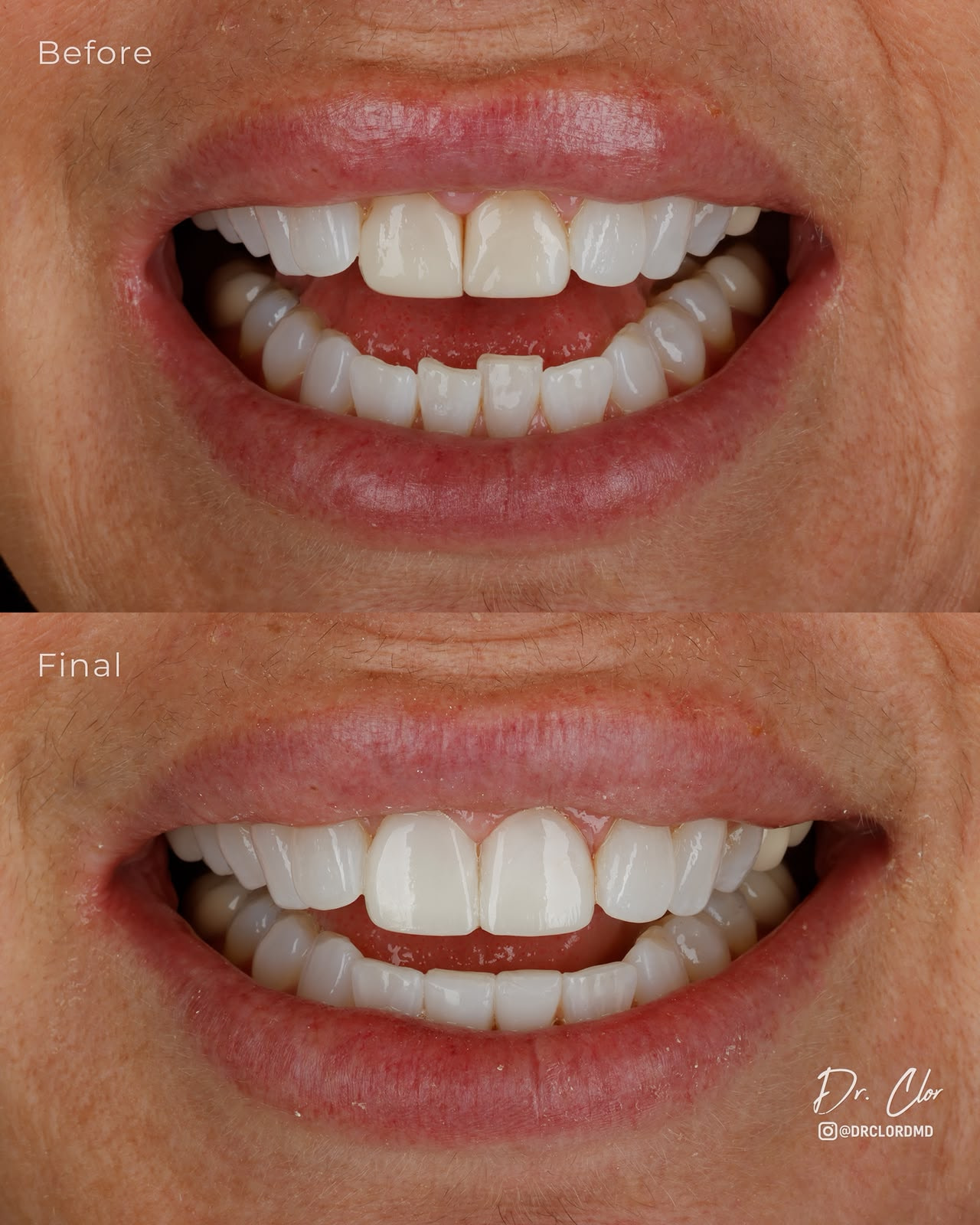
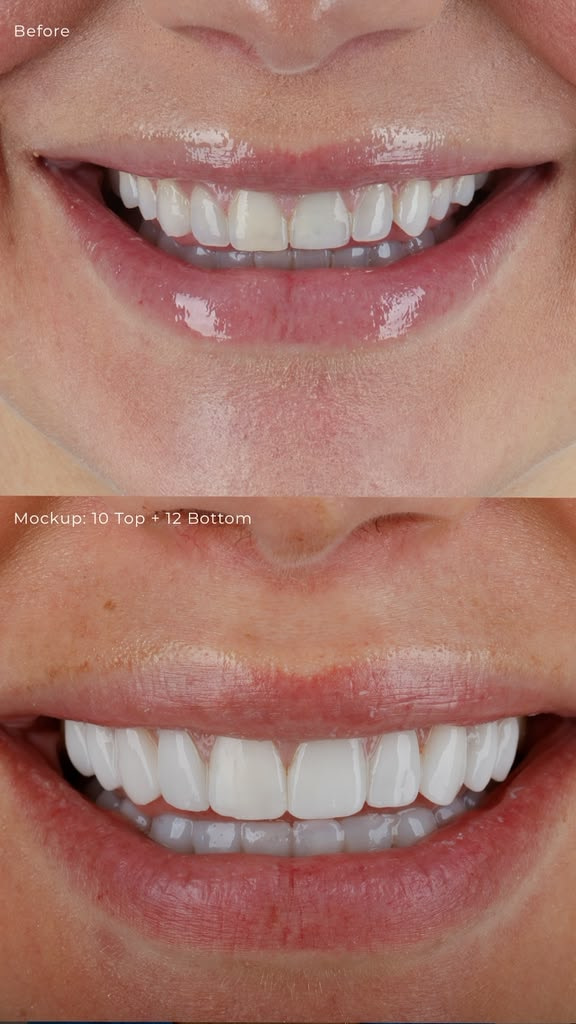
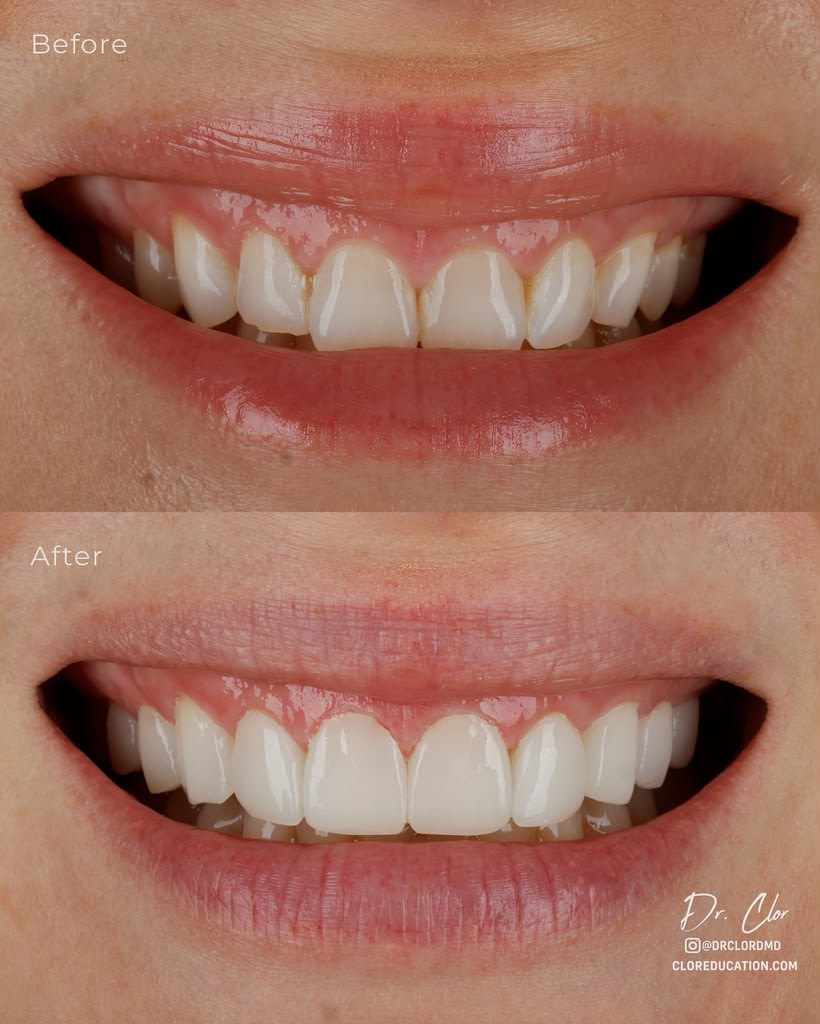
3D-printed veneers using MIDAS Restore. Images courtesy of Dr Omar Clor
My Take
I don't think 3D-printed resins are guaranteed a BruxZir moment in our industry. But I also don't think the profession should assume printed resins can't have one just because a research-proven material didn't break through last time, or because the last few generations of printed restoratives underperformed on wear and aesthetics.
The honest answer is that we're probably a couple of years away from knowing. If the wear data holds up as early clinical reports suggest it might, and if whoever is leading on polish and aesthetics right now can translate that into an accessible workflow, as Glidewell did, this could genuinely shift how a lot of same-day and multi-unit cases are planned and executed.
The other consideration is how we price these restorations for our patients. I've heard a lot about clinicians positioning them as a "middle-ground" option, somewhere between direct composite and a ceramic crown, and charging around 50% of their ceramic crown fee accordingly. This could open up treatment to an otherwise underserved group of patients, people who cannot afford ceramic veneers but would happily consider printed veneers at a fraction of the cost, provided realistic expectations are communicated about how long they're likely to last and the possibility of future repair or replacement.
That raises another question though. Is that 50% figure actually about the material being "lesser," or is it about chair time? A prepless printed veneer case, for instance, skips the prep and temporary appointments entirely and goes straight to delivery, which is genuinely less chair time than a conventional ceramic veneer case. That's a very different justification for a lower fee than "it's printed, so it should cost less." Bread-and-butter single crown dentistry is a separate question again. If designing and printing a single unit takes as long as, or arguably longer than, milling a composite/hybrid once you factor in wash, cure, and hand finishing, there's no chair-time case for a discount, and you're left charging less for a comparable or larger time investment.
So do you price these by chair time, by material cost, or by something else entirely? I don't think the profession has settled on an answer. Either way, don't underestimate the time and effort it takes to design and produce these restorations in-house, especially at scale for a six- or eight-unit veneer case. Are you comfortable charging less for your time when the treatment still demands considerable skill and effort to get right?
Weighing up the equipment cost against material strength, polishability, and where the aesthetics land, SprintRay's Restore is a genuine step forward for resin, and quite possibly the strongest material on the market right now (even compared to milled ceramics) for two specific applications: prepless veneers, and chairside multi-unit inlays and onlays, where printing three to six units in around ten minutes is a workflow advantage nothing milled can match.
Full coverage single restorations are a different story. If you can afford a CEREC, I don't see it competing with that because the printing workflow is still more involved than milling, and the per-unit cost doesn't clearly win once you account for that. However, if you don't want to spend six figures on a CEREC milling system, 3D printing may still make sense for you.
Right now, 3D printed restorations feel built for the early adopter, the fully digital, plugged-in dentist who already lives in this workflow. SprintRay's ambition is to get this into the hands of the everyday dentist, and there are still some real hurdles between here and there. But they're the ones pushing the industry forward, and that counts for something. As we have seen, more players will enter this space, and one thing is for sure: 3D-printed restorations are not going away anytime soon.
Either way, I'll be tracking it the way I track most new materials, with interest and a healthy amount of "let's see the data." Only time will tell, but we'll keep you up to date on iDD. If you have any questions or thoughts, please leave them below.
Thanks for reading.