


Having spent the past year attending major dental exhibitions across four continents, I was genuinely curious about IDEM 2026 in Singapore. This is Asia Pacific's premier dental event, a biennial show held at Marina Bay Sands and organized by Koelnmesse, the same organization behind IDS in Cologne. That's a pedigree worth paying attention to.
IDEM is said to draw around 10,000 dental professionals from over 70 countries, with 400+ exhibiting companies this year from 34 nations. On paper, it's a significant event. In reality? It was a fascinating and at times surprising experience that told me a great deal about where digital dentistry actually stands in the Asia-Pacific region.
Let me break it down.


Singapore as a Host City - A Tale of Two Markets
Let's address something that shaped everything I observed at IDEM 2026: the inherent contrast in holding the "premier Asia Pacific" dental event in Singapore specifically.
Singapore is a very wealthy, highly developed city-state. GDP per capita puts it among the top countries in the world. Infrastructure is world-class. The dental profession is well-regulated and, in many respects, comparable to those of Australia, the UK, or North America.
But Singapore represents a very small market. The number of registered dentists in Singapore is similar to that in my country, New Zealand (around 2500). And, critically, despite the wealth of the host city, digital dentistry adoption in Singapore itself is not particularly advanced. The country hasn't gone digital at the pace you might expect given its economic profile.
Meanwhile, the broader Southeast Asian market that IDEM is supposed to represent, covering Indonesia, the Philippines, Vietnam, Thailand, Malaysia, and more, is relatively price-sensitive. These are markets where many dentists earn a fraction of what their counterparts in the West do, and where the business case for a $20,000 scanner requires a completely different calculation.
What you end up with at IDEM is a show that sits between these two realities. It's not the full luxury showcase of IDS or even AEEDC. But it's also not completely price-driven, with some premium and expensive products on display. It's a mix of both worlds, and the event seems to be trying to navigate that.
Don't have time to read this now?
View as a flipbook online or download a copy to read it later.
The Exhibition Floor - Digital Ramping Up
Walking through the exhibition halls, the most immediate observation was that this felt different from Chicago Midwinter, AEEDC, or IDS. Not as many robots. No AI-related booths stretching down an entire corridor, as in Chicago. Yet I have to say, digital dentistry is still significant even here. A significant portion of the exhibition space was dedicated to intraoral scanners, 3D printers, resins, and related products.
A candid observation on attendance is that the first and last days of the show were relatively quiet. The middle day was the busiest by a large margin, but also not exactly crazy busy. I've noticed this pattern emerging at several conferences now, and I think it's worth noting.
There seems to be a broader challenge facing dental trade shows globally around attendance numbers. Whether that's post-pandemic behavior changes, cost-of-living pressures that make travel harder to justify, the current geopolitical climate, too many conferences competing for the same audience, or some combination of all of the above, I'm not entirely sure. But IDEM 2026 was not the packed house that I expected going in. The industry should be paying attention to this trend.

The Notable Absences
This is where things got interesting. Several major brands that dominate the digital dentistry conversation simply were not here in any meaningful way.
SprintRay, which you'll find at essentially every major digital show globally, was absent. Exocad, arguably the world's most widely used dental CAD software, had no booth. 3Shape, a staple at every major show, wasn't here either. The premium Korean IOS manufacturers were also largely absent.
In their place, filling much of the digital dentistry floor space, were (again) the Chinese manufacturers. Aidite, Shining 3D, Alliedstar, Runyes, HeyGears, and Fussen all had a strong presence. This mirrors what I saw at MIDEC in Kuala Lumpur last year, where the same dynamic played out. When Western leaders step back, Chinese manufacturers step forward, increasingly doing so with genuine confidence rather than simply offering budget alternatives.
The distributor model was also very evident. Some of the major brands were present through their regional distribution partners rather than at their own dedicated manufacturer booths. This is consistent with what we saw in Brazil at CIOSP and reflects the practical reality of serving diverse Southeast Asian markets, where local partnerships, regulatory knowledge, and after-sales support are absolutely essential for success.


Digital Dentistry at IDEM - Where Things Stand
Digital dentistry adoption across Southeast Asia is still in its early stages. Many practitioners in this region are still operating in conventional workflows. That's not a criticism; it's a market reality, and it makes the region one of the most genuinely fascinating to watch over the next five years.
Here's why. Southeast Asia has a massive dentist population spread across some of the world's most populous countries. Patient volumes in many of these markets are extraordinary. And increasingly, the dentists I spoke with at IDEM are not unaware of digital dentistry. They're following it. They're curious. They're asking the right questions. What they often lack is not motivation but access, whether that means affordable hardware, quality training, or a clinical community that has already made the journey and can show them the way.
Mark my words, this region will digitize. The question is simply when, and who will be there to capture it when it does. The energy at IDEM, even in a show that was quieter than I expected in terms of attendance, told me that the appetite is building. The next five years in Southeast Asian digital dentistry will be very interesting indeed.
Anyway, at the show itself, the digital highlights I'd flag are:
Alliedstar - DirectIP and Full-Arch Scanning
Alliedstar had a big presence at IDEM, showcasing the Sensa and AS260, and I had the opportunity to deliver a lecture on the DirectIP full-arch implant-scanning workflow and full-arch solutions in general during the show. The audience's interest was genuinely strong.
That's worth unpacking a little. Full-arch implant work is often thought of as a premium, high-complexity workflow associated with markets such as North America and Europe, where All-on-X cases command fees that justify the investment in dedicated scanning solutions. But the interest I saw from Southeast Asian clinicians around DirectIP suggests that's a simplistic assumption. There are many practitioners across this region performing full-arch cases, and they're actively seeking better digital solutions to support their work.

For those unfamiliar, DirectIP is Alliedstar's end-to-end horizontal scan body system, developed in partnership with Straumann. It includes proprietary scan bodies, a complete software workflow for digital alignment and transfer, and removes the need for third-party solutions at any step of the full-arch capture process. I've tested it in my own clinic, and the workflow is genuinely well thought out. You can read my full breakdown of every full-arch scanning solution on the market here for context on where DirectIP sits in the broader landscape.
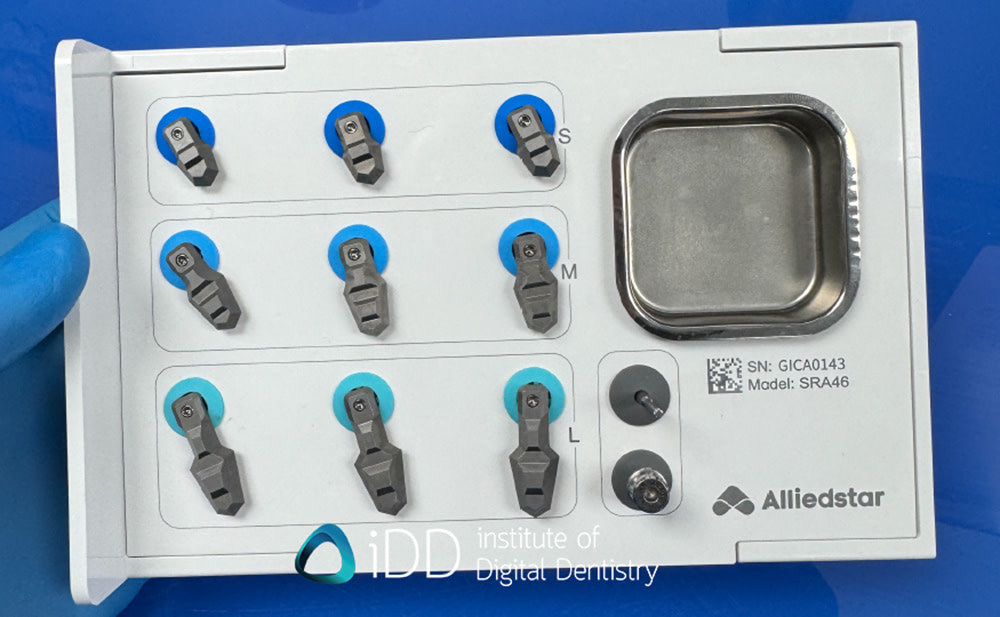
The Sensa and AS260 themselves are solid scanners at accessible price points for this region. The combination of accessible hardware and a clinically serious full-arch workflow is a compelling package for a market that is clearly more ready for this conversation than many people assume.
Align Technology - Lumina PC Configuration
One of the more notable releases from the show came from Align's booth. This was their showcase of the iTero Lumina in its PC configuration, the third deployment option for the Lumina platform alongside the existing cart and tablet versions. I've already covered this in detail on the iDD blog, so if you want the full breakdown, read that article here.
The short version: same wand, same scanning performance, better price. You can run it on a validated laptop, such as the Dell Precision 3591, or on your own compliant machine if it meets the published specs.
I tested it at the booth, and it runs well, as expected from a scanner in 2026. No lag on the laptop, and it scans fast. This will be Align's entry-level offering for the Lumina, and I am very curious to see how it is received, not just in this region but globally.
Align has confirmed rollout across Singapore, Vietnam, Thailand, Taiwan, Hong Kong, Australia, and New Zealand, among others, as of early 2026. For practices in this region that don't have dedicated workstation setups or that operate across multiple clinic sites and want to avoid buying multiple full cart/tablet systems, the PC configuration is a practical option.
Whether it moves the needle commercially is another question. Dentsply Sirona tried a similar approach with the Primescan Connect a few years ago. Align's stronger ecosystem pull through Invisalign may tell a different story, but we'll see.
Either way, it’s great to see it being showcased for one of the first times globally.


Don't have time to read this now?
View as a flipbook online or download a copy to read it later.
BSM (Besmile) – More and More New Printers.
Besmile, a Chengdu-based manufacturer, was showcasing its LP2000 LCD printer at IDEM. Another show, another Chinese printer brand I hadn't encountered before. This is becoming a consistent theme across every emerging market show I attend, and IDEM was no different.
The LP2000's specs on paper: 192 x 120 x 110 mm build volume, 3840 x 2400 XY resolution at 38-micron accuracy, 2-micron Z-axis positioning, and print speeds up to 55mm per hour. The machine uses CHITUBOX Pro for slicing, weighs 26 kg, and comes bundled with a post-curing unit. They've also included a mini printing kit for temporary crowns as a chairside module, a nice addition. Their throughput claims are 40 temporary crowns and 10 surgical guides in 20 minutes each.
All the usual nice features are here - temperature-controlled printing chamber, the dust-proof optical system, and the quick-release resin vat with 30-second film swaps are all features that address real pain points in daily printing workflows rather than just looking good on a spec sheet.
To be honest, I've lost count of how many Chinese LCD and DLP printer brands I've come across. The market is genuinely crowded, and the specs between many of these machines are converging rapidly.
What will separate the ones that build lasting businesses from the ones that disappear in the coming years isn't the hardware; it's materials, materials, materials. This is the key to 3D printing and why SprintRay does so well. Also, after-sales support and clinical credibility. Besmile has a US office, suggesting some ambition beyond the Asian market. A curious one to watch.

Dentsply Sirona – Primescan Connect + Quieter Cloud Story
Dentsply Sirona had its usual presence at IDEM, showcasing the Primescan in its Connect configuration as its entry-level offering for this region. I like the Primescan and have used it for many years in my CEREC workflow. Notably, the Primescan 2 was not on display, which is consistent with what I've observed at other emerging market shows this year.
What was more interesting than what was shown was what wasn't being talked about. DS Core, which has been a central pillar of Dentsply Sirona's messaging at their own events and at Western shows, was almost absent from the conversation here. That's not entirely surprising when you think about it. DS Core's value proposition is built around cloud connectivity, cross-platform integration, and AI-powered workflows, and it requires reliable internet infrastructure, regulatory clearance in each market, and a practice-level comfort with cloud-based systems that simply isn't universal across Southeast Asia yet.
It's the same challenge I flagged after DS World Dubai earlier this year. A bold cloud-first strategy is one thing in North America or Western Europe. Executing it across dozens of markets with varying infrastructure, data sovereignty laws, and levels of digital maturity is a very different problem. IDEM was a quiet reminder of that gap.


Fussen Technology – Scanner and AI-Powered CBCT
Fussen had a booth at IDEM showcasing two things: their intraoral scanner and their latest CBCT unit, the DentalX 2.0, which was prominently displayed alongside AI diagnostic features under the DentalX AI branding. I have written a comprehensive overview of the new AI features here.
I've covered Fussen before at AEEDC 2026, where they showed the Rubik X1 CBCT with an impressive-sounding feature list that included panoramic, cephalometric, face-scanning, and AI-driven diagnostics, all in one unit.
Fussen's strategy in Southeast Asia mirrors what I observed at AEEDC: offering a comprehensive digital imaging ecosystem at accessible price points that meaningfully compete with Western competitors such as DEXIS. For a region where CBCT adoption is still growing, and practices are making their first major digital imaging investments, that combination of a scanner and AI-enabled CBCT in a single package from a single vendor may be a genuinely attractive proposition.
Whether the clinical validation behind the AI features matches the marketing claims is always the question worth asking, and one I'll continue to investigate.


PioNext Mini – Tiny Chairside Printer With Built-In Curing
Another interesting release at the show was by PIOCREAT, showcasing their PioNext Mini, a compact all-in-one LCD printer with integrated curing built directly into the unit. The whole package weighs just 4.86 kg. Tiny.
The specs are reasonable for the size: 9K resolution at 18-micron pixel size, an 80 x 70 x 80 mm build volume, print speeds up to 60mm per hour, and compatibility with Piocreat BOX and CHITUBOX Dental slicing software. The integrated curing chamber sits alongside the printer in a single combined footprint, and the company claims a complete ceramic crown chairside workflow in 35 minutes, covering slicing, printing, wiping, curing, staining, and final glaze.
The concept is interesting. The chairside 3D printing space has been trending toward simplification for some time, with pod-based systems like SprintRay MIDAS and Asiga's PrintPods aiming to reduce workflow complexity. The PioNext Mini takes a different approach: make the machine itself so small and self-contained that the physical footprint of chairside printing essentially disappears.
Some questions around build quality and cure strength exist, but overall, it is cool to see how companies are innovating in this space.


RayShape – Edge Mini Continues to Build Momentum
RayShape was at IDEM showcasing the Edge Mini, their compact LCD chairside printer, which I've now seen at multiple shows across different markets this year, and each time the reception seems strong.
The specs are: dual-platform versatility with a small build plate of 74 x 64 x 100 mm for crowns and bridges, and a larger 130 x 80 x 100 mm platform for models, guides, and dentures. It weighs 13.4 kg, runs on an open material system, and complete packages start at around $3,000 USD.
What's interesting about RayShape is the trajectory. This is a company I first took serious note of at AEEDC, and I've now watched the Edge Mini appear at IDS, AEEDC, GNYDM, Chicago Lab Day, and now IDEM. They are building a global distribution network at pace, and the reception in emerging markets has been consistently positive.
In Southeast Asia specifically, the combination of compact footprint, open resin system with validated materials from established names like VITA, BEGO, and Dreve, and accessible pricing makes this seem like attractive entry point for practices dipping their toes into chairside printing for the first time.


Don't have time to read this now?
View as a flipbook online or download a copy to read it later.
Riton – Another Chinese Printer Brand
One company I hadn't encountered before was Riton, a Chinese manufacturer exhibiting their RXDent-D130 DLP resin printer alongside what appeared to be a metal SLA-style unit called the MLAB.
The D130 is a DLP printer with a dual-tray system, offering a large vat at 130 x 70 x 120 mm and a smaller 60 x 60 x 120 mm option, with 30-micron XY resolution at 1920 x 1080, a 385nm light source, and print speeds of 1-6 seconds per layer. The machine weighs 20 kg and connects via wireless or USB.
A few features in their brochure caught my attention beyond the standard spec sheet. The automatic resin refilling with real-time level monitoring is something only otherwise seen in Formlabs Dental; the dual heaters that bring the print environment to 45°C in five minutes, and the force monitoring system that tracks peeling force in real time and alerts you before film damage occurs, are genuinely thoughtful engineering if it works as described.
There are a lot of Chinese printer brands competing for attention right now, and Riton will need to demonstrate consistent output quality and reliable after-sales support to stand out. Worth keeping an eye on. They did have a nice booth.

Shining 3D - Four Scanners and a Printer Teaser
Shining 3D Dental had a strong presence and made an interesting strategic choice - they showed four scanners simultaneously. The Aoralscan Elite, the Aoralscan ELF, the Aoralscan 3, and the Aoralscan Lync were all on display at once, representing essentially the full breadth of what Shining 3D offers across the globe.
If you've followed my coverage this year, you'll know these span a remarkably wide range. The Elite sits at the premium end with its intraoral photogrammetry capability. The ELF is the sub-$12,000 lightweight option that has been making waves since its launch, especially in leading markets. The Aoralscan 3 remains an OK mid-range workhorse. And the Lync, which I first encountered at MIDEC Malaysia last year, is an emerging-market-specific scanner priced at around $3,500, with deliberately stripped-back software to maintain pricing discipline elsewhere. I've written a detailed comparison of the entire Shining 3D scanner lineup here if you want to understand how these four sit relative to each other.
This four-tier approach makes a lot of sense for a region as economically diverse as Southeast Asia. A specialist practice in Singapore can likely justify the Elite. A practice getting started in Indonesia or Vietnam can enter the digital world with the Lync at a price point that simply doesn't exist from most Western competitors. Few companies can credibly span that entire range, and Shining 3D is executing on it effectively right now.
The other notable moment from their booth was a very early showcase of an upcoming 3D printer. I can't share details yet, and I'll be upfront about that. What I can say is that pricing will be very competitive. Watch this space. This company isn't stopping.


SimEx Plus – AR Clinical Training and Surgical Navigation
One of the interesting things I came across at IDEM is SimEx Plus by EPED Inc., a Taiwanese company that has been developing augmented-reality dental training systems for 15 years. Now, this is not an entirely new release, and I have seen this type of tech at other shows and even in some dental schools before, but it is a timely reminder of how much our industry is changing.
The concept is straightforward. Instead of practicing on phantom heads or real patients, dental students and clinicians use an AR-based simulation system that provides real-time feedback on preparation angle, depth, and flatness as they drill. The system records the entire training process in real time, making assessment more objective and removing the subjectivity that has long been a limitation of traditional clinical evaluation.
The more advanced modules connect to intraoral scanner STL files to simulate implant surgery, plan implant positions against CBCT data, and provide real-time navigation feedback during the procedure. So the same system used to train a dental student can, in theory, support a clinician during live navigated surgery.
One critique is, of course, the lack of the same tactile feel that working on a sim head gives, but I don't doubt this will be adopted by dental schools in the future.
TruAbutment – Full Ecosystem on Display
TruAbutment had a strong presence at IDEM, showcasing their entire lineup.
The T-Marker was front and center, which makes sense given that it's been one of the standout launches of 2026. If you've missed my coverage from AEEDC and Chicago, the T-Marker uses an iPad or iPhone to capture full-arch implant positions, eliminating the need for dedicated, expensive photogrammetry hardware.
The interest from Southeast Asian clinicians at the booth was genuine, and I think the price accessibility of an iPad-based solution resonates particularly well in this region compared to traditional photogrammetry devices that cost many thousands of dollars.
Alongside T-Marker, they were also demonstrating T-Snap, their iPad-based intraoral scanning app for capturing full-arch provisional scans, and the IO Connect horizontal scan body system for conventional full-arch implant scanning.
Seeing the complete TruAbutment ecosystem laid out together tells a clear story about where this company has arrived. They've gone from a component manufacturer to a genuinely comprehensive full-arch solutions provider in a remarkably short time.

The Broader Show - Other Notable Presences
Beyond the companies covered above, the full-arch implant workflow theme that has dominated every major show in 2026 was also present at IDEM, though in a more modest way. BLZ Dental was here with their scanner and horizontal scan body system. Scan Ladder / allonx.ai had a presence, and PIC Dental had its photogrammetry systems on display as well.


Given that high-value full-arch cases represent some of the biggest opportunities for practices looking to grow revenue in this region, it makes sense that companies pushing these solutions are trying to establish themselves here early. The question is whether the infrastructure, training, and clinical confidence exist at scale to convert that interest into adoption.
Also, of course, were the resin companies. Many, many resin companies exhibited. Some are well known, like Pac-Dent, and others are not so well known. But there seems to be an endless supply of resins from companies around the world, especially in China.
The Bigger Picture - What IDEM 2026 Actually Tells Us
Southeast Asia represents one of the most significant opportunities in global digital dentistry. The dentist population is large, patient volumes are high in many markets, and the awareness of digital workflows is growing fast. The question of when, not if, this region digitizes is settled. What's still being worked out is the pathway: which companies get there first, at what price points, and through which distribution and education models.
What IDEM 2026 confirmed is that Chinese manufacturers seem to be the best positioned to capture this market in the near term. Their price points, willingness to develop region-specific products, and increasingly capable hardware and software place them ahead of Western competitors that haven't adequately adapted their offerings to Southeast Asian economic realities.
The notable absences of some of the industry's biggest names says something, too. Either these companies don't yet see enough ROI in attending IDEM, or they're relying on distributors to carry the load in this region. Neither is necessarily wrong as a strategy, but it does leave a gap that others are actively filling.
There's also a broader question worth asking: Is IDEM fulfilling its potential as Asia Pacific's leading dental event? The attendance numbers this year suggest there is work to do. The show has real assets. The Marina Bay Sands venue is genuinely world-class, and Singapore is an excellent hub for regional travel. But it really felt like a Southeast Asian event rather than one across all of APAC, notably Australia and NZ. The numbers on the floor also didn't match the ambition of the event's positioning, in my opinion. Whether that's a temporary blip or a challenge is something to watch at the next edition in 2028.
What I will say is that IDEM remains a genuinely useful lens on where digital dentistry is heading in one of the world's most demographically important dental markets. I'm glad I came, and I'll be back.
If you were at IDEM 2026 or have thoughts on the Southeast Asian market, I'd love to hear from you in the comments.
Thanks for reading.