
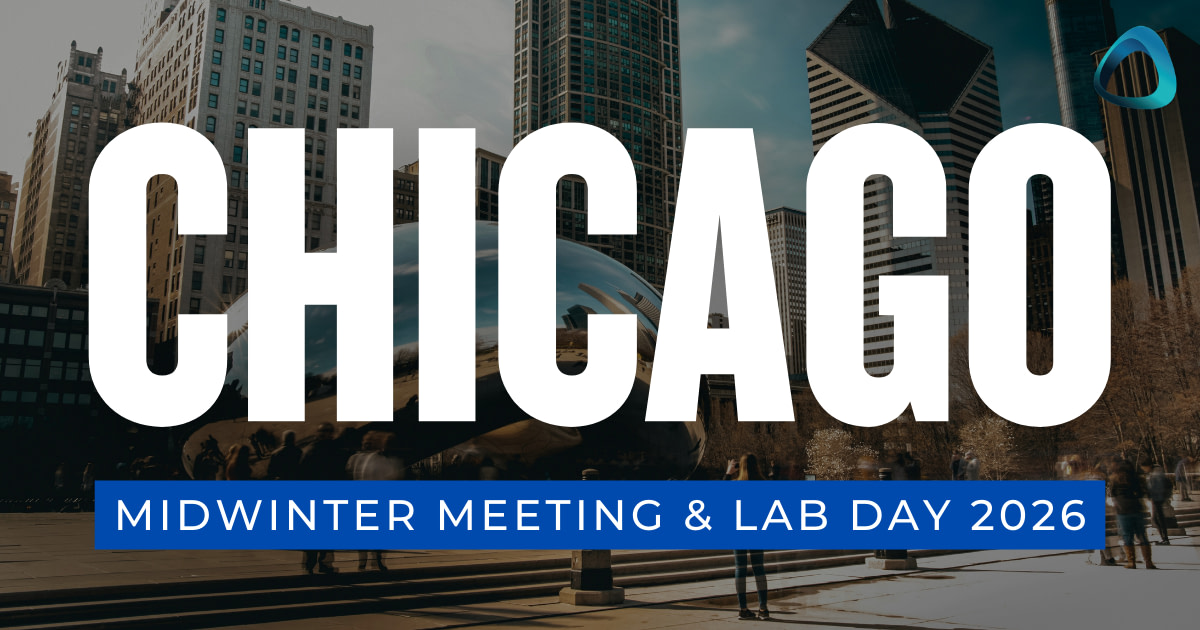

Fresh off the back of AEEDC Dubai and CIOSP in São Paulo, I arrived in Chicago for the annual dual expo - the 161st Chicago Dental Society Midwinter Meeting and the concurrent LMT Lab Day - one of the most famous events on the international dental calendar.
This year, I'm combining both shows into a single recap, and there's a good reason for that.
The theme across both? Consolidation.
Much like what we saw at AEEDC and CIOSP earlier this year, the Chicago shows reflected an industry that is refining, not reinventing. No major sweeping product launches. No huge paradigm shifts. Instead, steady progress, incremental improvements, and a maturing digital dentistry landscape.
But here's what made this trip particularly interesting - the contrast between the two expos was more dramatic than ever. The dental side (Midwinter Meeting) felt quieter than the lab side (LMT Lab Day), which was absolutely buzzing with digital energy. If you want to see the true state of digital dentistry innovation, the laboratory show continues to be where you need to be.
Let me break down the highlights I saw across both shows.
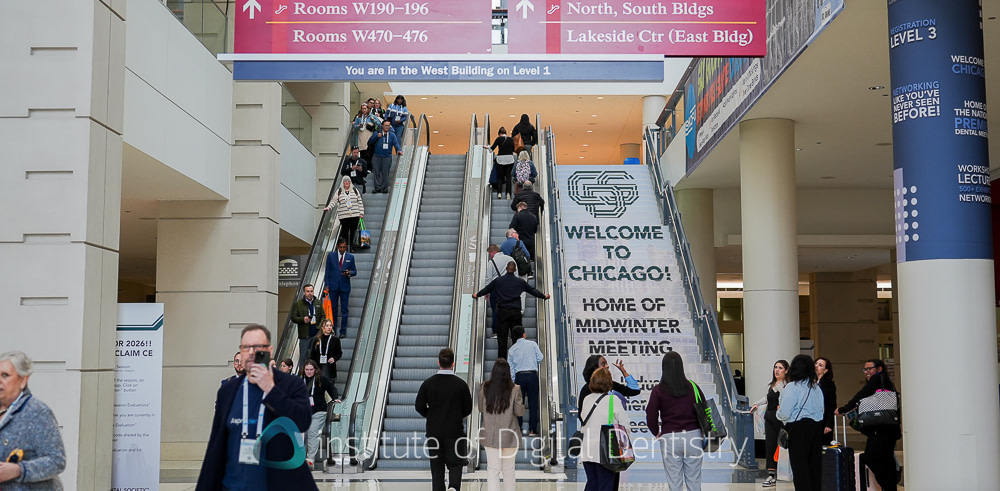
American Events Yet Globally Significant
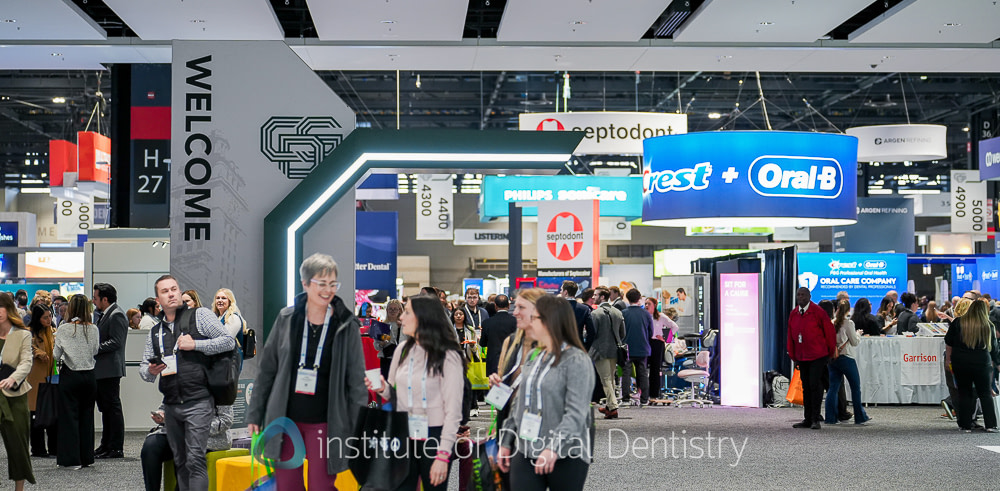
Let's set expectations. Both expos are relatively small compared to international exhibitions like AEEDC (70,000+ attendees) or IDS (over 130,000). This is a primarily American show, and the audience reflects that. That said, Chicago Midwinter + Lab Day remains the premier dental event in the United States, and for many companies, it's the show where they launch products for the North American market. It carries weight that punches above its size.
The USA is one of the largest dental markets in the world, and in terms of digital dentistry, definitely one of the most important. So we often see new things being released here in Chicago rather than in Dubai or other regions.
That said, this year was interesting, as there were few new releases and even fewer Chinese players here than at AEEDC, where they came out in full force with horizontal-scan body systems, budget scanners, and ecosystems. The North American market continues to operate differently, with mid-range and premium solutions commanding most of the attention.
Lab Day Was the Highlight
Going from the Midwinter Meeting halls over to Lab Day felt like stepping into a different show entirely. Lab Day was packed. The energy, the crowds, the density of digital solutions on display, it was all significantly higher than the clinical show.
This continues a trend I've observed for several years now. Dental laboratories are further along the digital adoption curve than most clinical practices (by a large margin). While clinics still debate ROI on scanners and printers, labs have moved well past that conversation. Their focus now is on optimization, automation, scaling, and, in some cases, AI integration. That maturity showed clearly at Lab Day 2026.
The show layout remains the same as in previous years: dedicated showrooms for the larger companies (Henry Schein, Ivoclar, Argen, etc.), and a bustling, flea-market-style exhibition space in the "basement" of the Hyatt, where nearly 300 companies compete for attention. It works.
Midwinter Meeting Overview
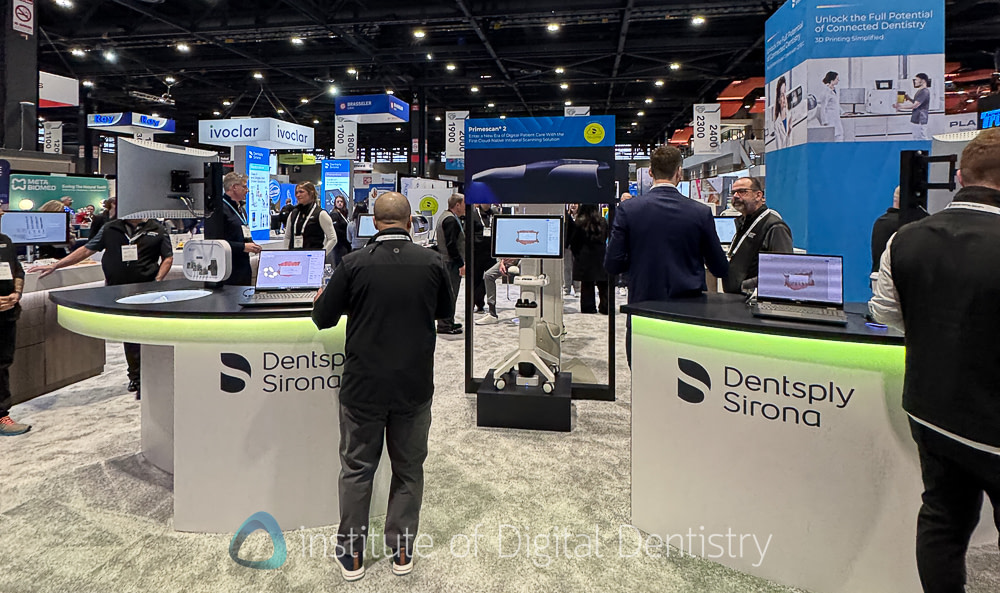
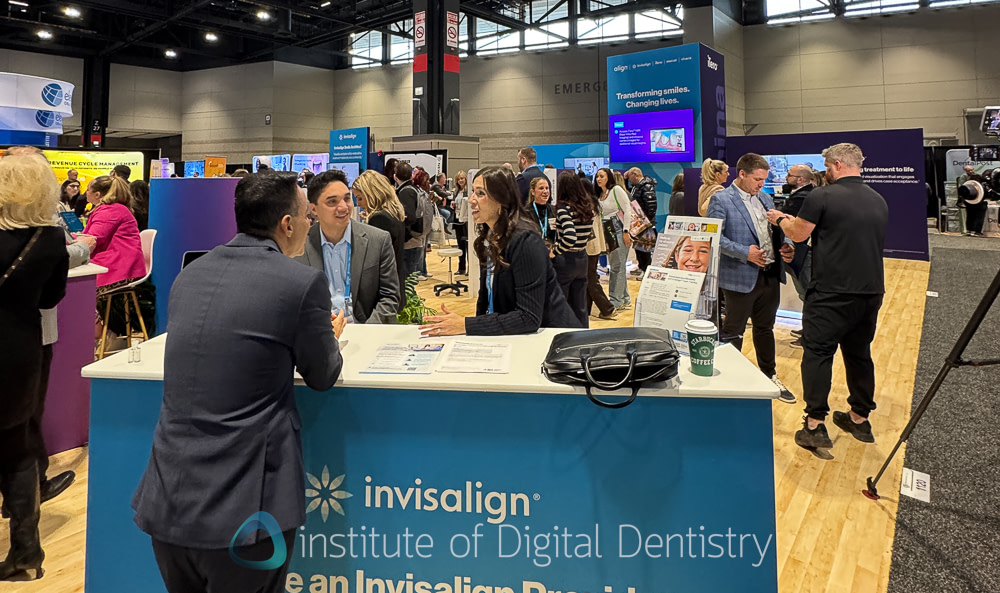
This year, the volume of "new releases" has noticeably reduced. That said, the booth quality has stepped up significantly. Several exhibitors invested in larger, more extravagant booth designs, bringing things more in line with what we see at AEEDC Dubai or IDS, though not quite at that level yet. The production value is improving.
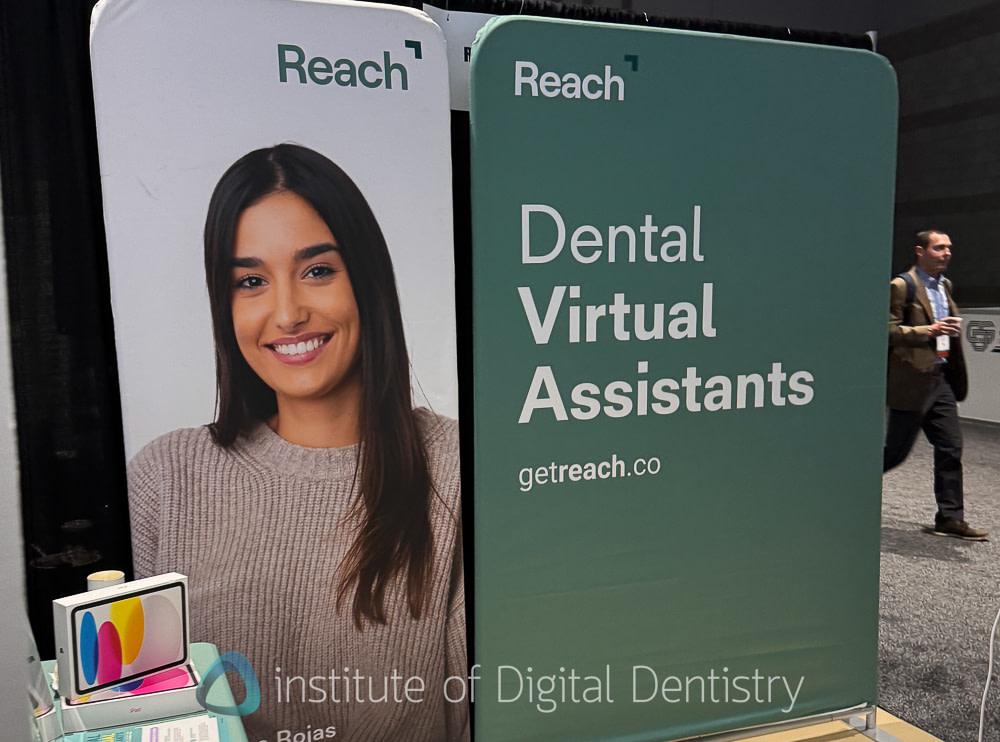
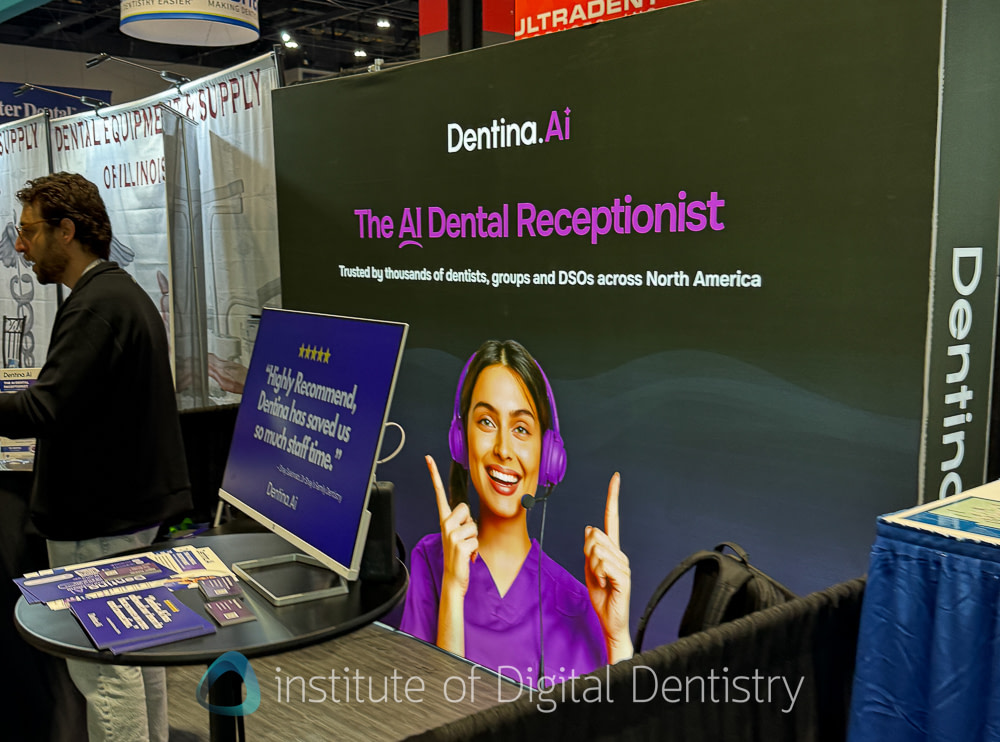
One thing that really stood out at the Midwinter Meeting, and is unique to this USA show, is the sheer volume of AI agent companies. I'm not talking about AI in scanners or CAD software. I'm talking about AI receptionists, AI practice management systems, AI invoicing, AI patient communication, AI diagnostic services, and AI marketing solutions. Booth after booth after booth. At least 15 or so.
This is clearly a North American phenomenon, and it reflects both the sophistication and the business pressures of the American dental market. Also, the higher buying power of Americans. You don't see this at AEEDC or CIOSP to anywhere near this degree.
Download the iDD Highlights PDF
A summarized version of this blog.
View as a flipbook online or download a copy to read it later.
Chicago Midwinter Meeting 2026 Highlights
Here's what caught my attention on the clinical side, in alphabetical order.
3Shape – TRIOS 6 at Midwinter
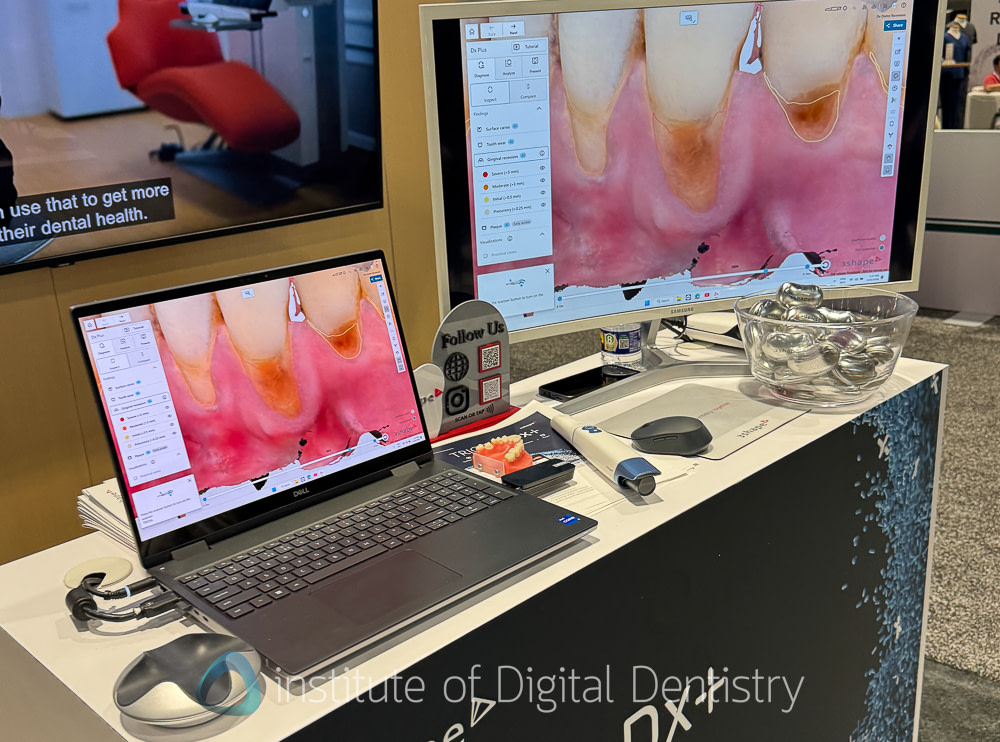
3Shape was present on both the clinical and lab shows this year, showcasing the TRIOS 6 and its AI diagnostic capabilities. No major new releases here beyond what we've seen at other shows this year, but their presence at Midwinter reaffirms their commitment to the North American market.
The conversation around TRIOS 6 continues to center on whether its premium pricing and subscription-based AI features resonate with practices that prioritize scanning fundamentals over advanced diagnostics. I think they should drop the subscription for AI diagnostics. It is a great scanner regardless, as was the TRIOS 5.
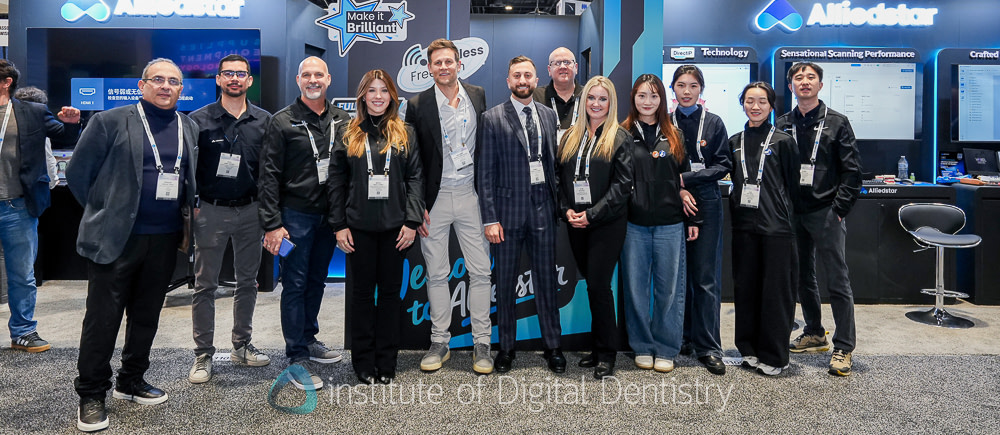
Alliedstar – DirectIP Teaser
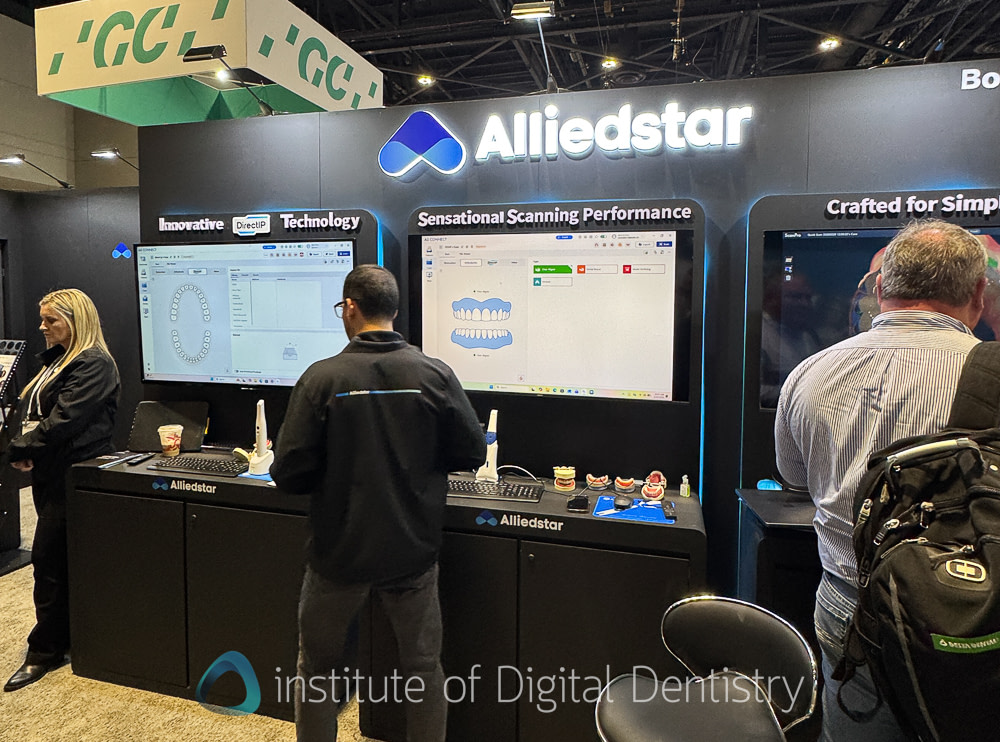
Alliedstar showcased its DirectIP horizontal scan body system to the North American market alongside its SENSA scanner.
DirectIP, which we first saw at AEEDC 2026, is their full-arch implant workflow backed by the Straumann partnership, and continues to be developed. Essentially, the company has developed its own horizontal scan body kit and sells it separately from the scanner for around $2000-$3000 USD per kit. They have also developed a complete software workflow to carry out the entire scanning, digital alignment, and digital transfer processes, which are critical for all-on-x / all-on-4 scanning.
This is significant, as it means Alliedstar is the second scanner company, behind Shining 3D Aoralscan Elite, to offer a complete end-to-end solution that does not require third-party scan bodies. I have tested it in the clinic, and it works well.
In fact, I have written an extremely detailed review on every all-on-x scanning solution available, which you can read here.
DirectIP will officially launch in Q4.
Arcreal – Official Scanner Launch
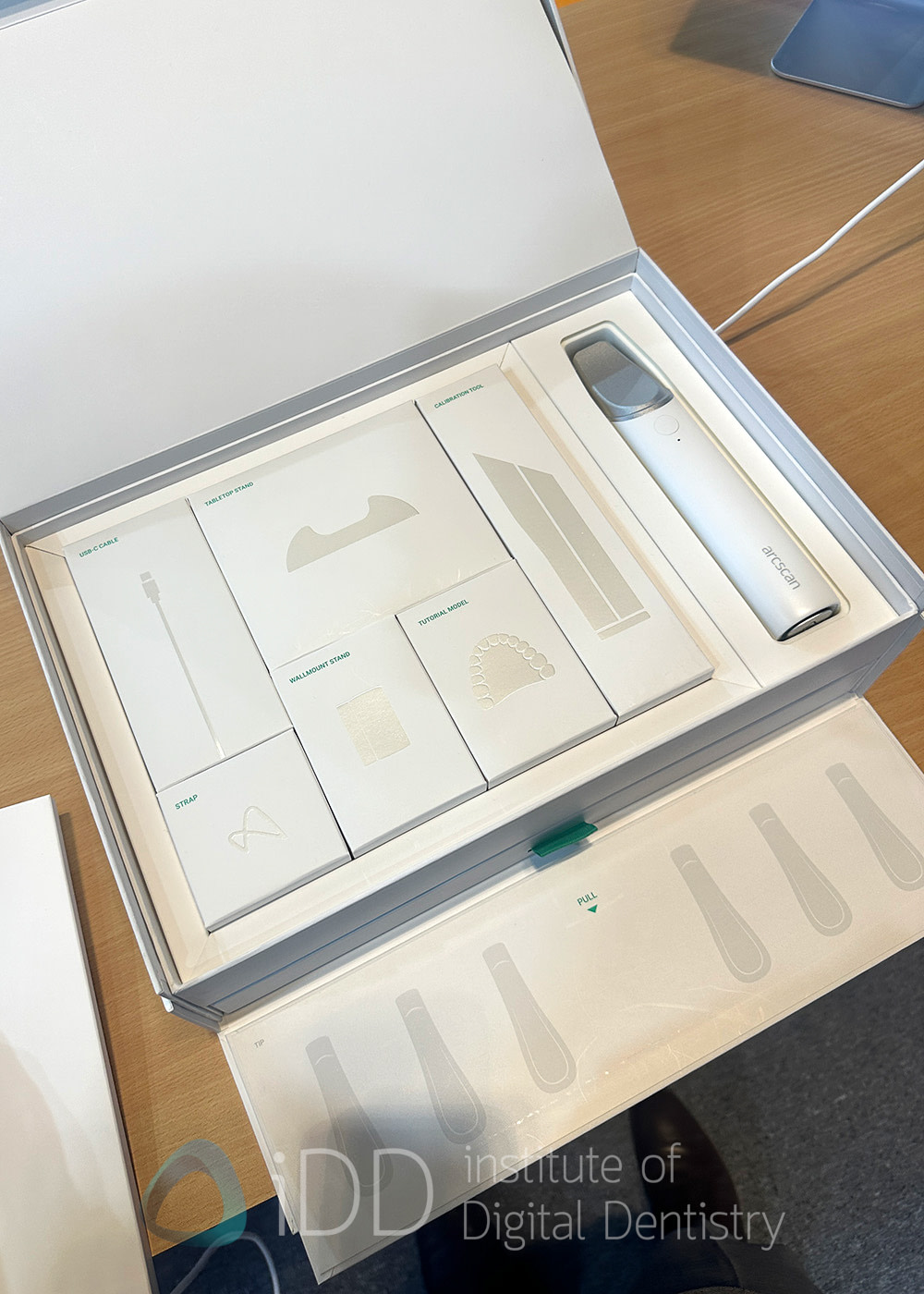
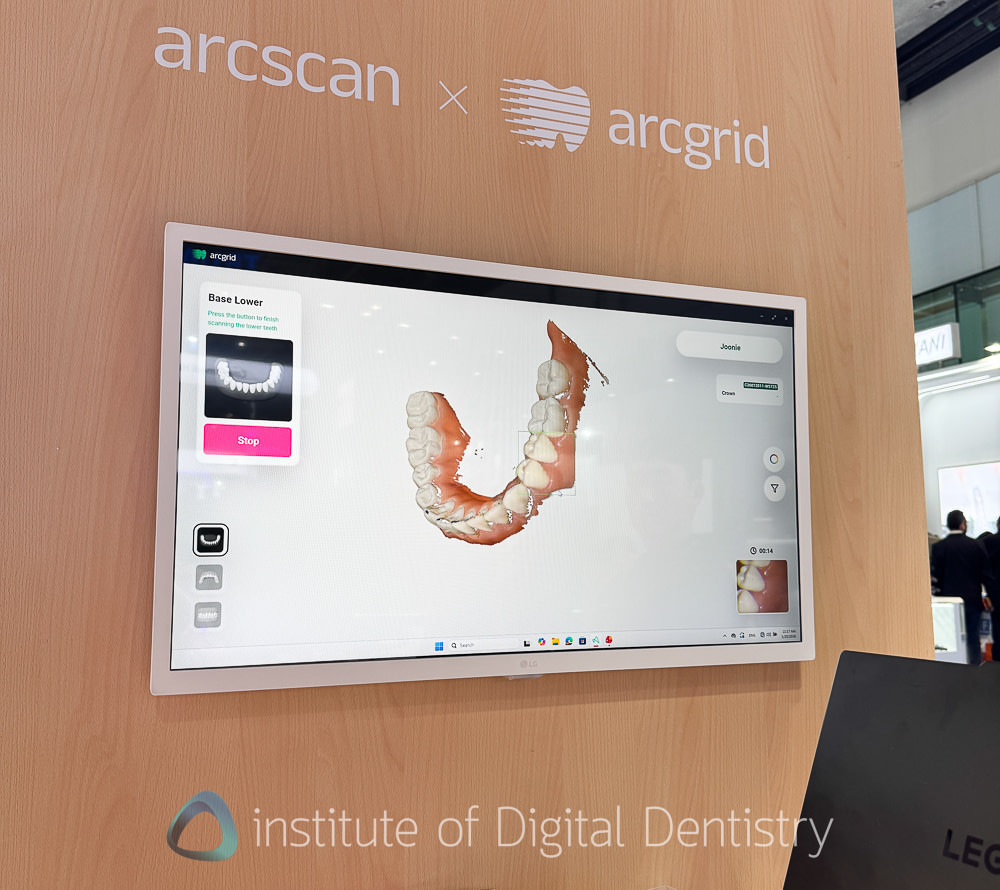
Arcreal officially launched their Arcscan intraoral scanner at Chicago Mid Winter, moving beyond the teases and prototypes we saw at AEEDC and previous shows. Notably, the UI/UX of this iOS is among the most polished I've seen in any scanner on the market, and it frankly looks really good. All the standard features we expect in 2026, like fast scanning, nice textures, etc.
Some cool features are being developed, too, like a streamlined AI-generated smile design app and an AI crown design tool. The question remains: can they break through in what is now an incredibly saturated scanner market?
The user experience is genuinely good, but converting booth interest into real market share against entrenched competitors is the real challenge. Worth watching.
Dandy – Aggressive Market Strategy
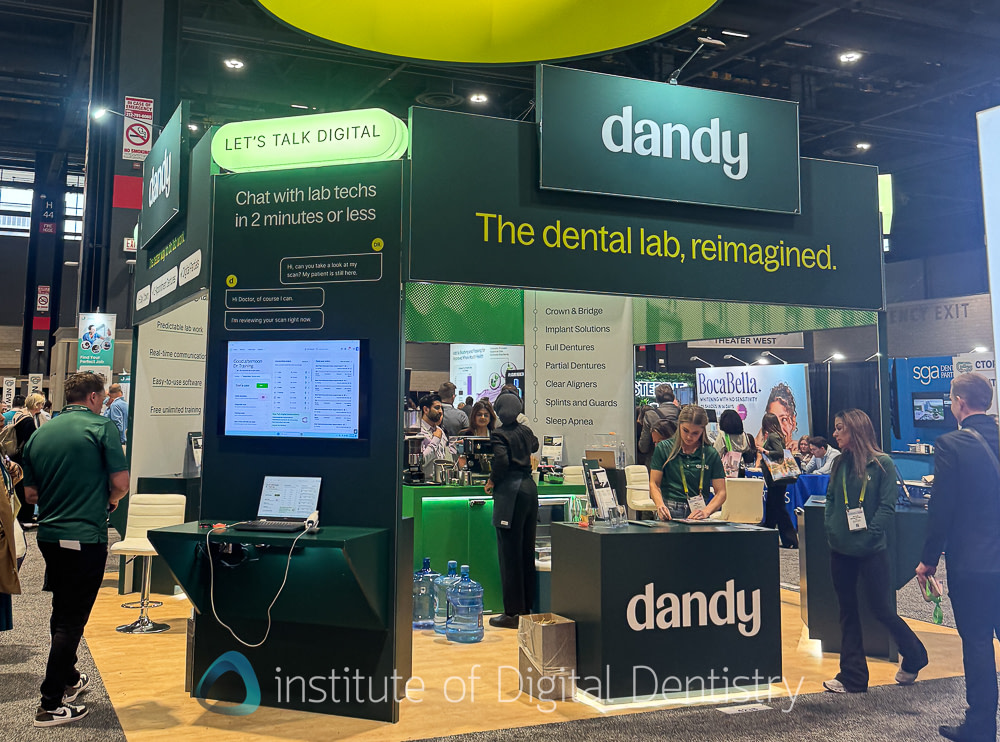
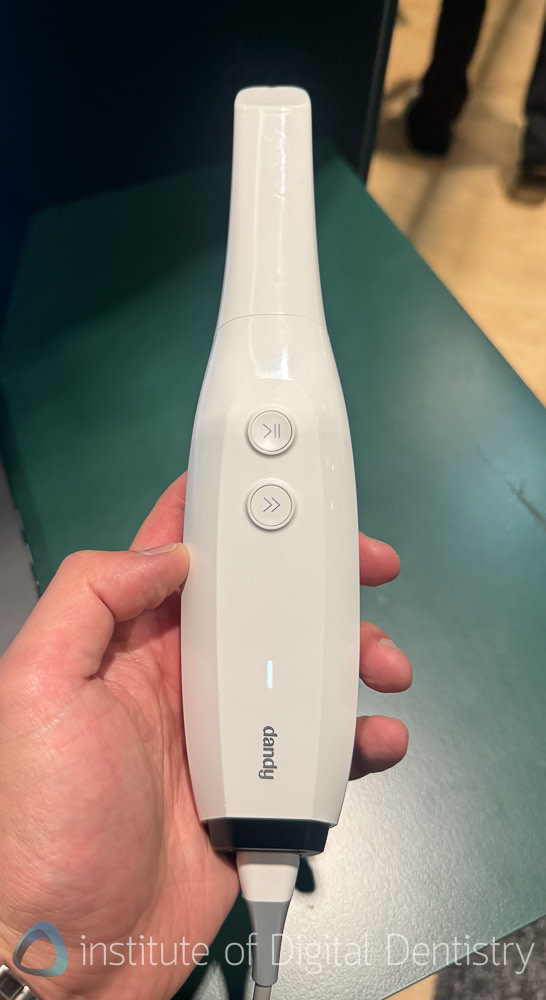
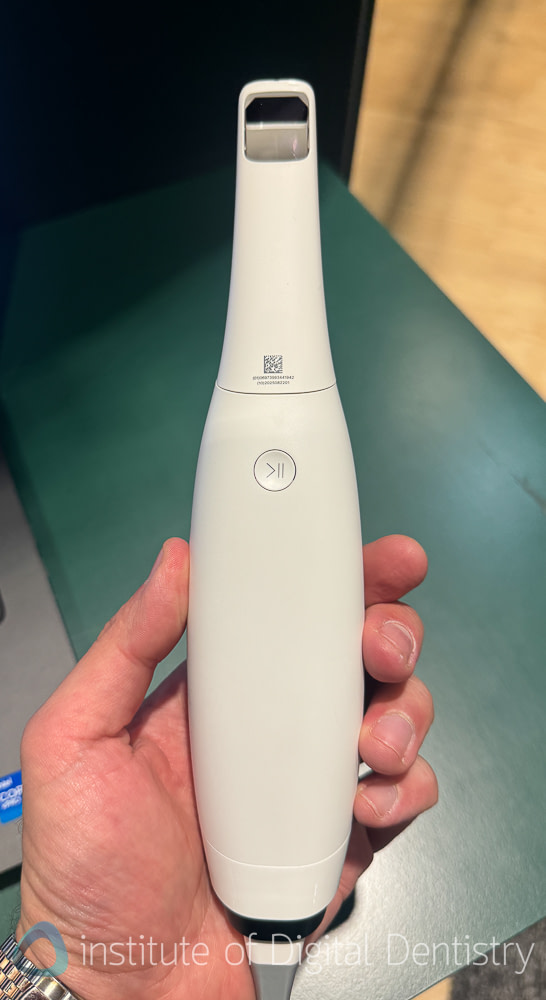
Dandy had a very bold presence at Midwinter with an aggressive marketing push. They were showcasing their branded intraoral scanner alongside an aggressive strategy to onboard as many practices onto their laboratory system, offering the scanner for free as an incentive.
It's a bold move, and whether it translates into long-term loyalty or simply short-term acquisition remains to be seen. But the booth traffic was strong, and they're clearly investing heavily in growth. One of the most disruptive forces in the lab space right now, and a company that is also worth watching.
Medit – i900 Mobility Showcased
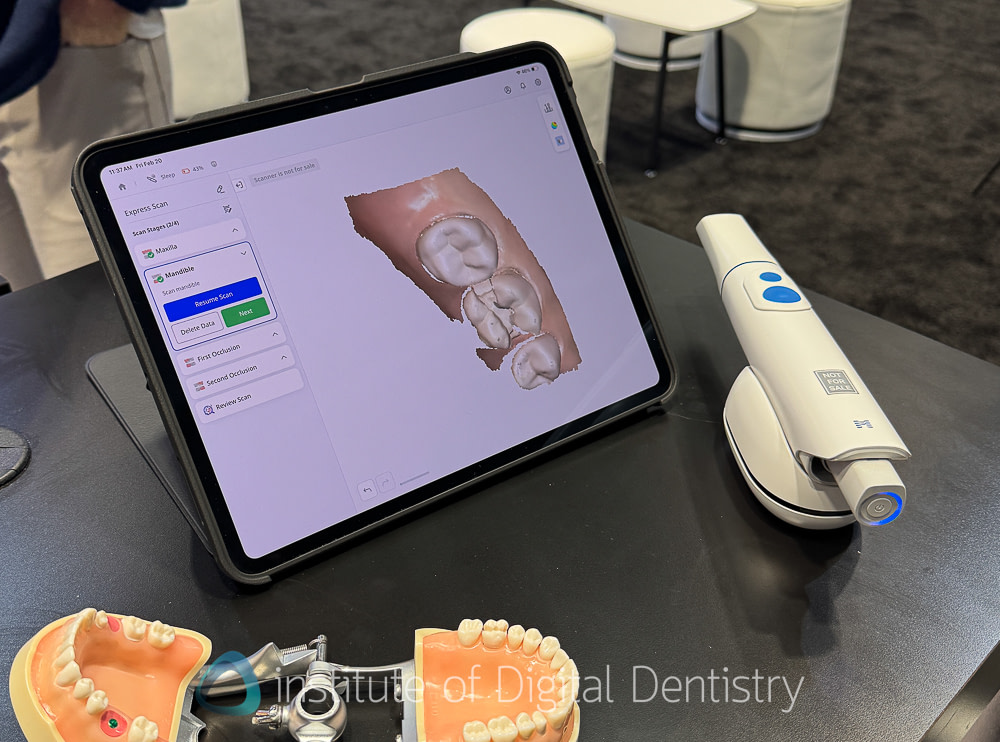
Medit was present, showcasing the i900 Mobility, their iPad-native scanning solution that I recently reviewed in detail. No new releases at the show otherwise.
For those unfamiliar, the i900 Mobility isn't just a wireless i900. It can run on a completely new iPad-native app called Medit Link Express, purpose-built for mobile workflows rather than simply adapting their desktop software. When I tested it in the clinic, I was genuinely surprised by how well the iPad scanning experience works. It felt more fluid and responsive than scanning on my Windows laptop, and the simplified interface strips away the complexity that Medit Link has accumulated over the years. Scans sync automatically to the full Medit Link desktop software when you need the advanced features.
Whether iPad-native scanning becomes the next major market trend remains to be seen, but Medit appears to be ahead of the curve here. TruAbutment's T-Marker is also iPad-based, Medit has a native iPad app, and more clinical tools are moving to tablets. This could be a bigger shift than people realize.
Neer – No-Prep Veneer Service Enters the Scene
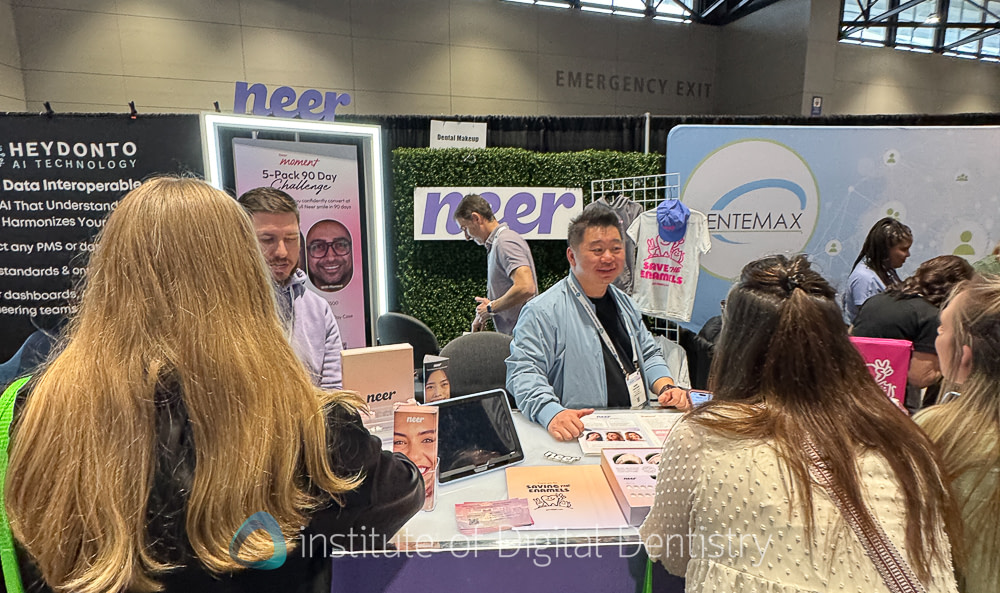
An interesting newcomer at the Midwinter Meeting: Neer, a no-prep veneer design and manufacturing service.
The concept is straightforward. Dentists scan the patient, order a custom Neer Smile Kit, and receive ultra-thin, no-prep printed veneers. Two visits: scan and try-on, then placement. No drilling, no anesthesia, no enamel removal. The company claims their veneers are up to three times thinner than conventional options, and the pricing comes in at 50-70% less than traditional veneers, which makes them accessible to a much broader patient base.
For dentists, the model is pay-as-you-go: no upfront inventory, no complex workflows. They also offer marketing support and patient acquisition through their platform, including an online Smile Simulator that lets patients preview results before committing.
It's an interesting play that sits at the intersection of digital workflows, consumer marketing, and minimally invasive cosmetic dentistry. Whether the long-term durability and aesthetics hold up against traditional porcelain veneers remains to be seen, but the value proposition for both patients and practices is clear. As 3D printing materials for permanent restorations continue to improve, services like Neer could gain real traction in the cosmetic space.
Pac-Dent – CrownPod Printer Teaser
One of the more interesting launches at the clinical show came from an unexpected direction. Pac-Dent unveiled its new CrownPod printer, a pod-based printer that caught my attention for a specific reason: the resin changer. The printer features a built-in mechanism for switching between different resin pods, almost like a disc changer in a milling machine. This means you can queue different materials without manual intervention. Pretty cool.
Also, the pod printing phenomenon - I believe this will also be a market trend in chairside printing. We saw MIDAS do it first, then Asiga with their pods, and now Pac-Dent. Who is next?
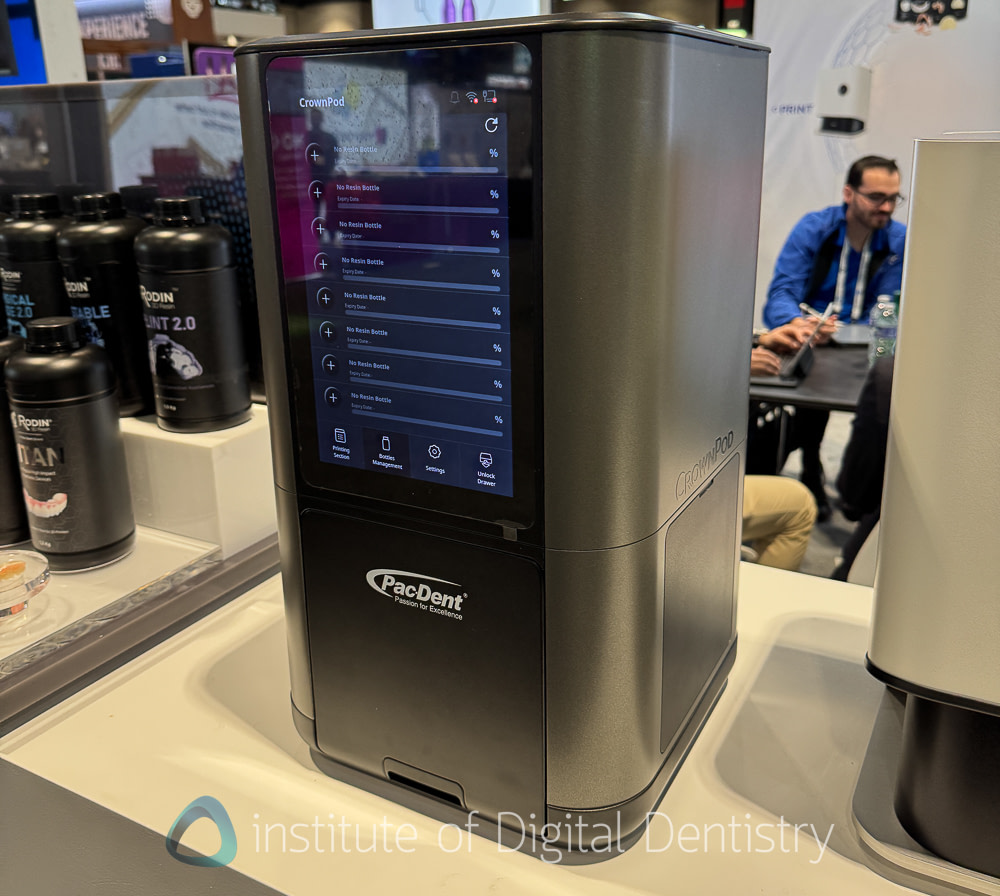
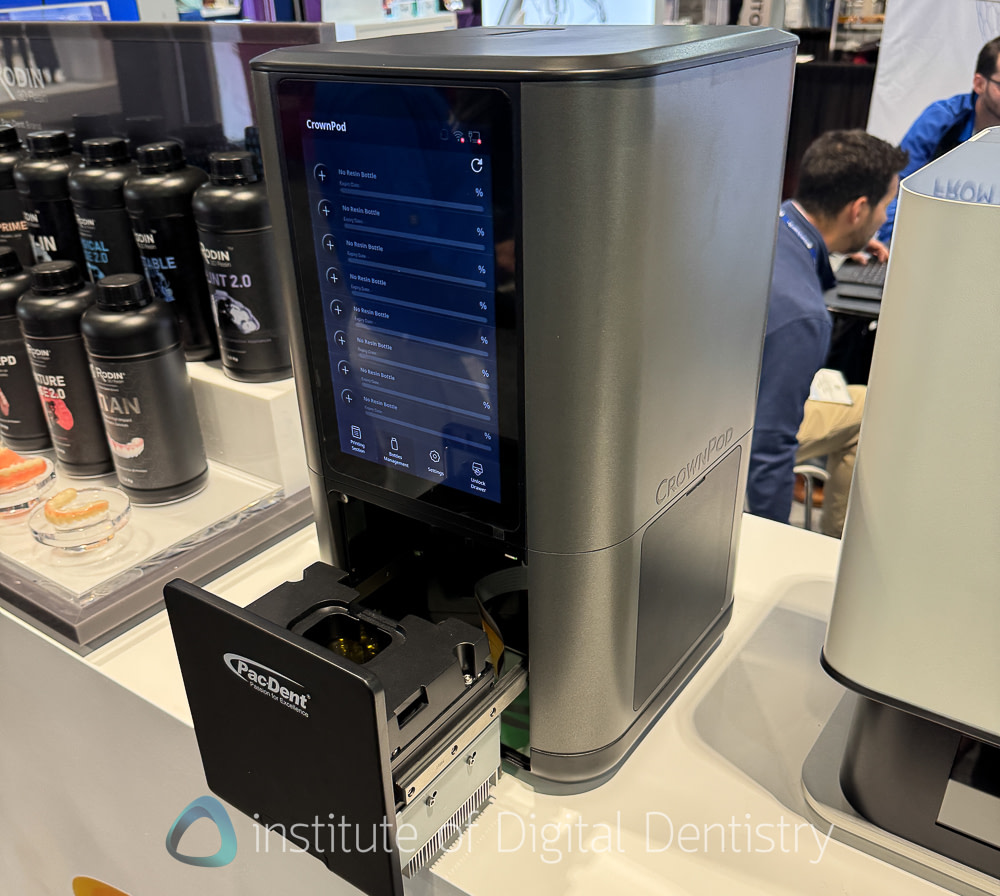
The company also showcased prefabricated pediatric crown printing using this machine, which is a niche application I'm personally less focused on, but the resin-changing mechanism itself is a genuinely clever piece of engineering that could have broader implications for chairside workflows. Nice to see the company launch some hardware, and I am curious to see how this one is received once it launches.
Pac-Dent also showcased the Chroma Flash, essentially a modern, arguably better version of the Oto Flash, the popular third-party curing box. Another interesting addition to their growing hardware portfolio. And of course, the Ackuretta printers were on show (Ackuretta was acquired by Pac-Dent), along with all the popular Rodin resins.

Planmeca – Onyx Scanner and "New" Printer
Planmeca showed the Onyx scanner at their booth. Again. Still no confirmed release date.
At this point, it has been well over a year since we first saw the Onyx at IDS 2025, and the scanner still hasn't reached the market. The competitive landscape has shifted considerably during this delay. Multiple new scanners have launched, software ecosystems have evolved, and market expectations have moved on. The longer this takes, the harder it becomes to make an impact on release. Planmeca remains a respected name, especially with CBCTs and Dental Chairs, but this extended timeline is becoming concerning.
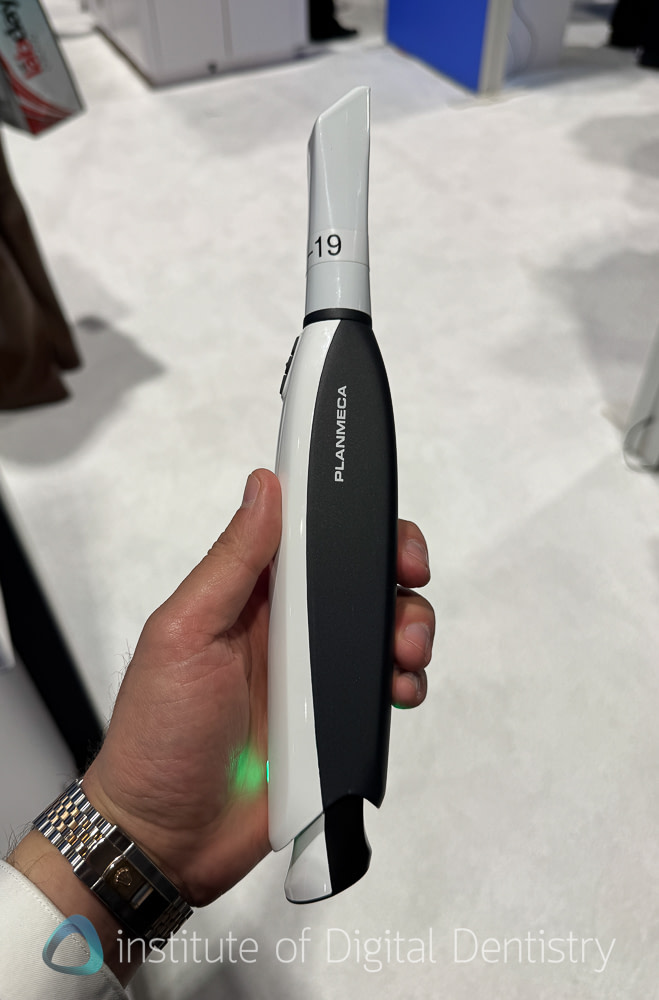
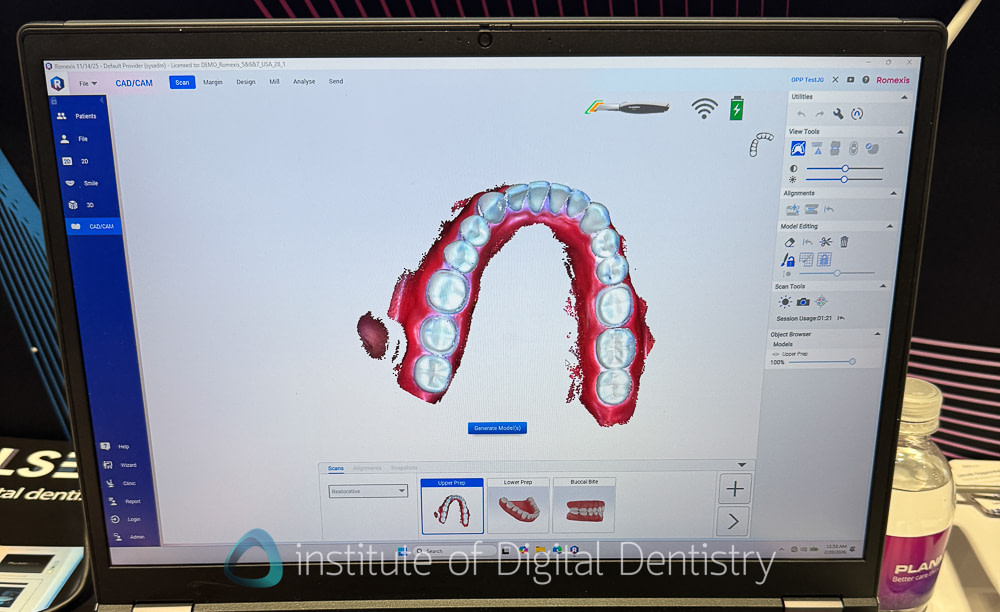
I tried the scanner at the booth. Frankly, it is fast, like other modern scanners, but my feeling is the UI needs a modern overhaul.
I'm not trying to be a hater because I like the company (E4D and Planmeca were my first-ever scanners a decade ago), but the delayed launch of this scanner may be difficult to pull off - especially with how the market is now. I don't see this scanner doing all-on-x/all-on-4 workflows with proprietary horizontal scan bodies, for example.
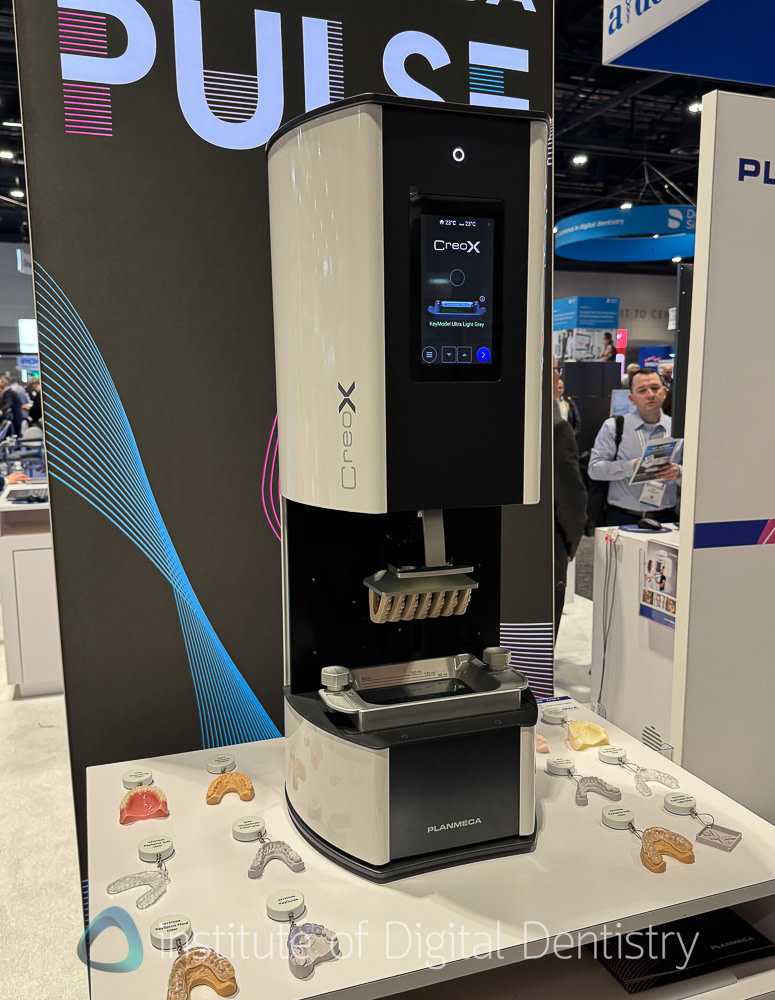
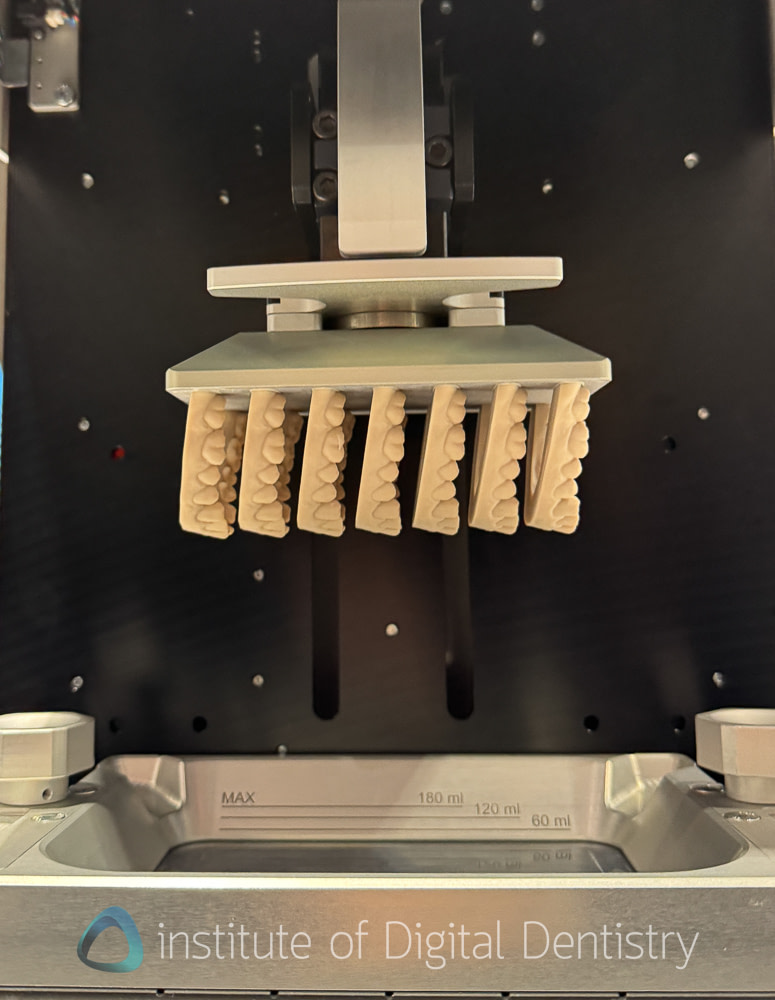
Planmeca also showed the new CreoX printer, an evolution of their previous Creo 3D Printer. The notable change? No more print cartridges. The system now uses a standard build platform and plate approach like most other printers.
It's interesting because it suggests the cartridge/pod system that Planmeca had tried didn't gain the traction they had hoped for, especially when you compare the market reception to SprintRay's MIDAS capsule system, which has been very successful. Perhaps because proprietary print materials are a huge driver of printer adoption?
Download the iDD Highlights PDF
A summarized version of this blog.
View as a flipbook online or download a copy to read it later.
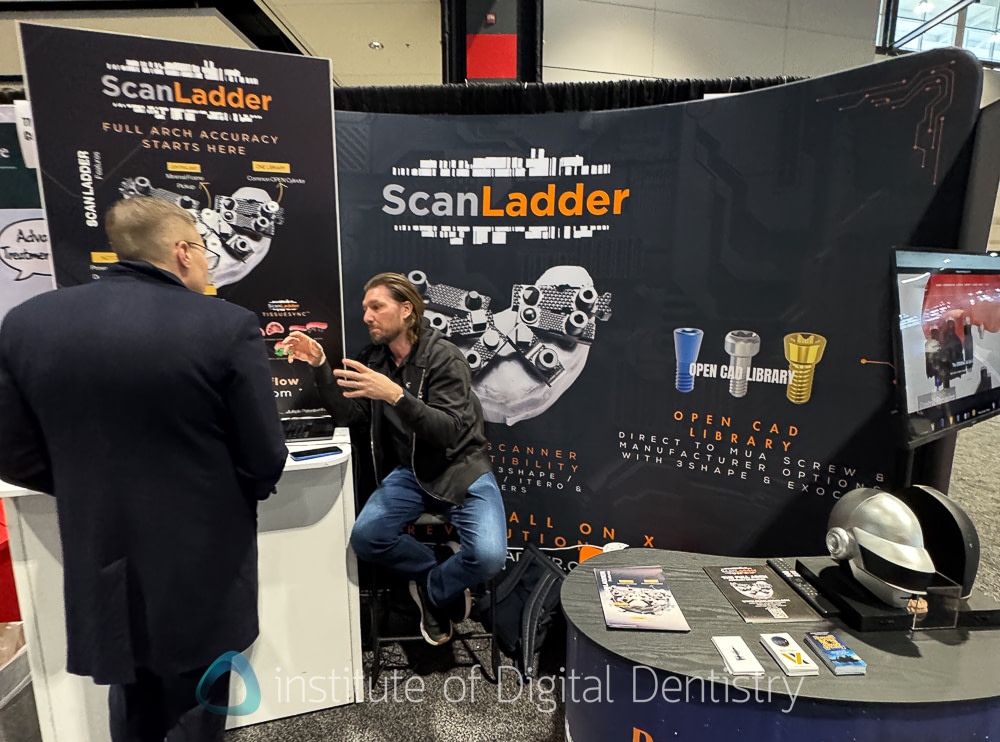
Scan Ladder - allonx.ai Launches
An interesting announcement that caught my attention: Adam Nulty, the creator of Scan Ladder, has been appointed Clinical Director of Voyager AI, and with it comes the launch of allonx.ai, a cloud-based AI tool that generates full-arch CAD designs from your scan within minutes.
The workflow sounds straightforward: place implants, scan, upload to allonx.ai, and within minutes, you receive a full AI-designed CAD STL ready to print, plus a complete exocad project file if you want to refine or collaborate with your lab. The promise of same-day full-arch bridge design without overnight CAD dependency is compelling.
Beta testing is currently open and free at allonx.ai, with the full cloud-based launch planned for March 2026. It's early days, but this is exactly the kind of AI application that could genuinely change clinical workflows rather than just automate existing ones. One to watch. Can they pull it off?
Shining 3D – Aoralscan ELF Proudly on Display
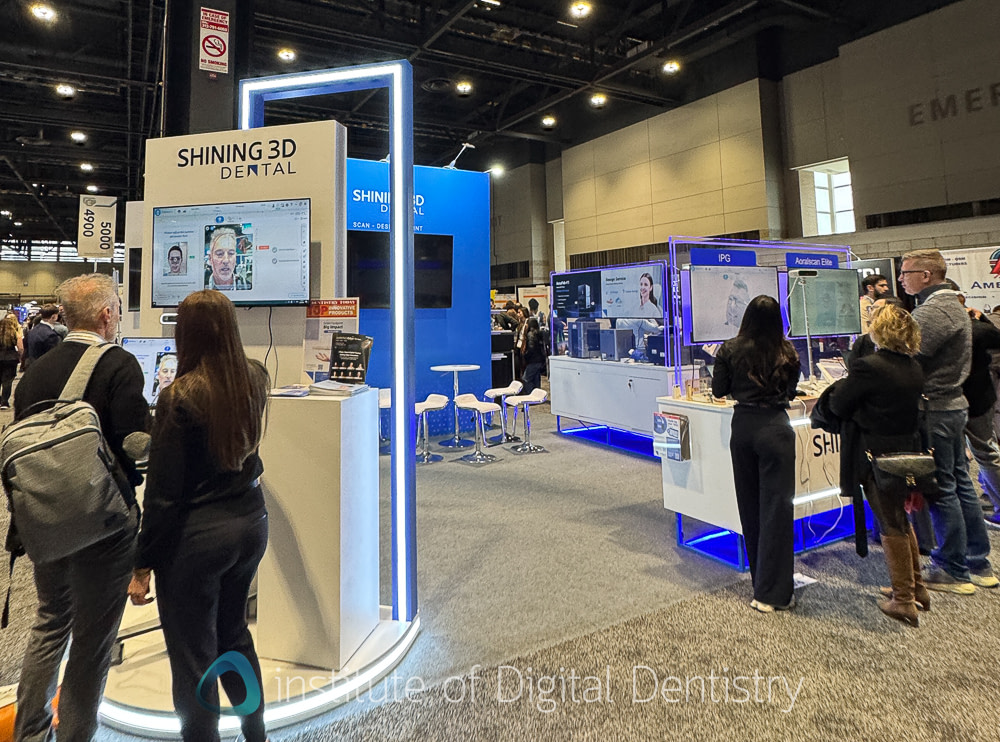
The Aoralscan ELF, which I also reviewed recently, was prominently showcased at the Midwinter Meeting. For those who missed the review, the ELF is essentially the Aoralscan Elite without the IPG photogrammetry system, built with plastic construction instead of metal, and priced at $11,999 USD. That's $8,000 less than the wired Elite and $12,000 less than the Elite Wireless, while delivering the same excellent scanning performance and comprehensive software suite. At 106 grams, it's also the lightest modern intraoral scanner on the market.
This company continues to make waves, and it was great to see it front and center in North America. Shining 3D is building serious momentum in this region, and the ELF's value proposition is genuinely hard to ignore. Every scanner in the sub-$15,000 segment is now being compared against it, and how the industry responds to that pressure will be one of the more interesting storylines of 2026.
Nothing else new to report. I warned you, this year there were hardly any new releases... except the next company below.
SprintRay – A Few Notable Releases
SprintRay continues to dominate the chairside printing space, and they had some interesting releases at this show:
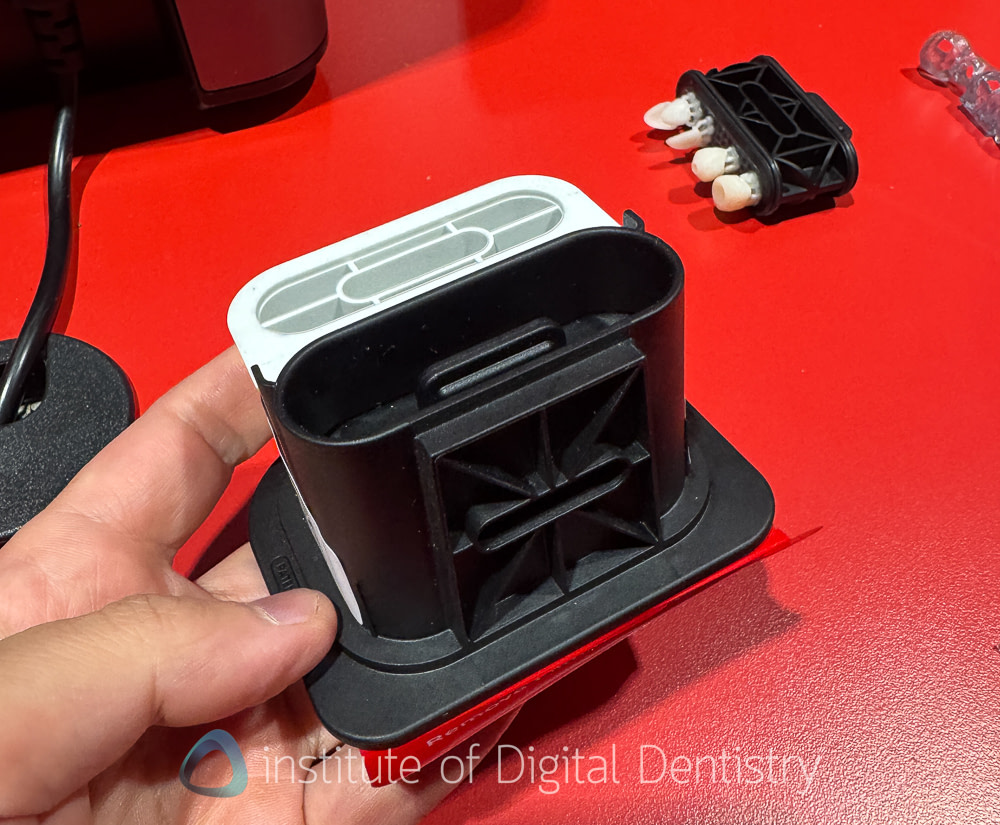
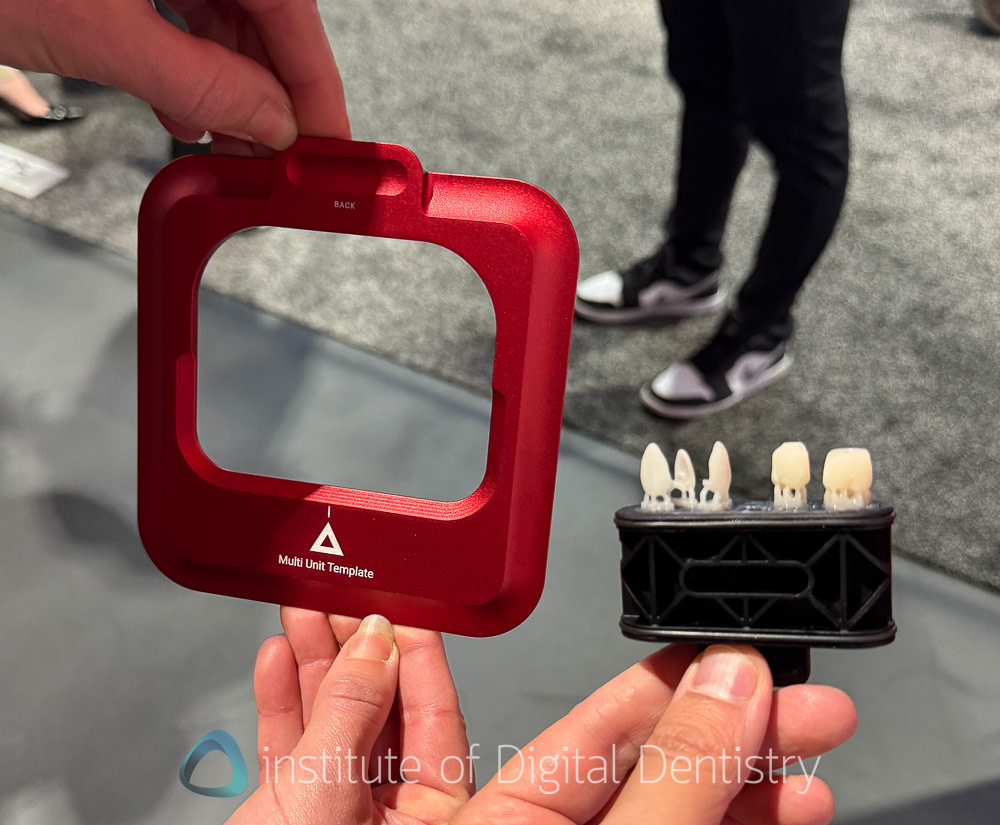
Multi-Unit Capsule for MIDAS: This was the headline release. SprintRay now offers a larger capsule specifically made for multi-unit restorations, trial smiles, or printing multiple single units, etc. This expands what clinicians can do with the MIDAS system beyond just single units or fitting 2-3 in a cartridge.
You can now print bridges, multiple single-unit restorations, and smile designs, all in one cartridge. The cartridges are still single-use and will be around $75 USD each, so you'll only want to use this when printing multiple things at a time.
How does it work? You simply change the plastic 'template' used to fit the single-unit capsules (see images below). A welcome addition to the development of the MIDAS ecosystem.
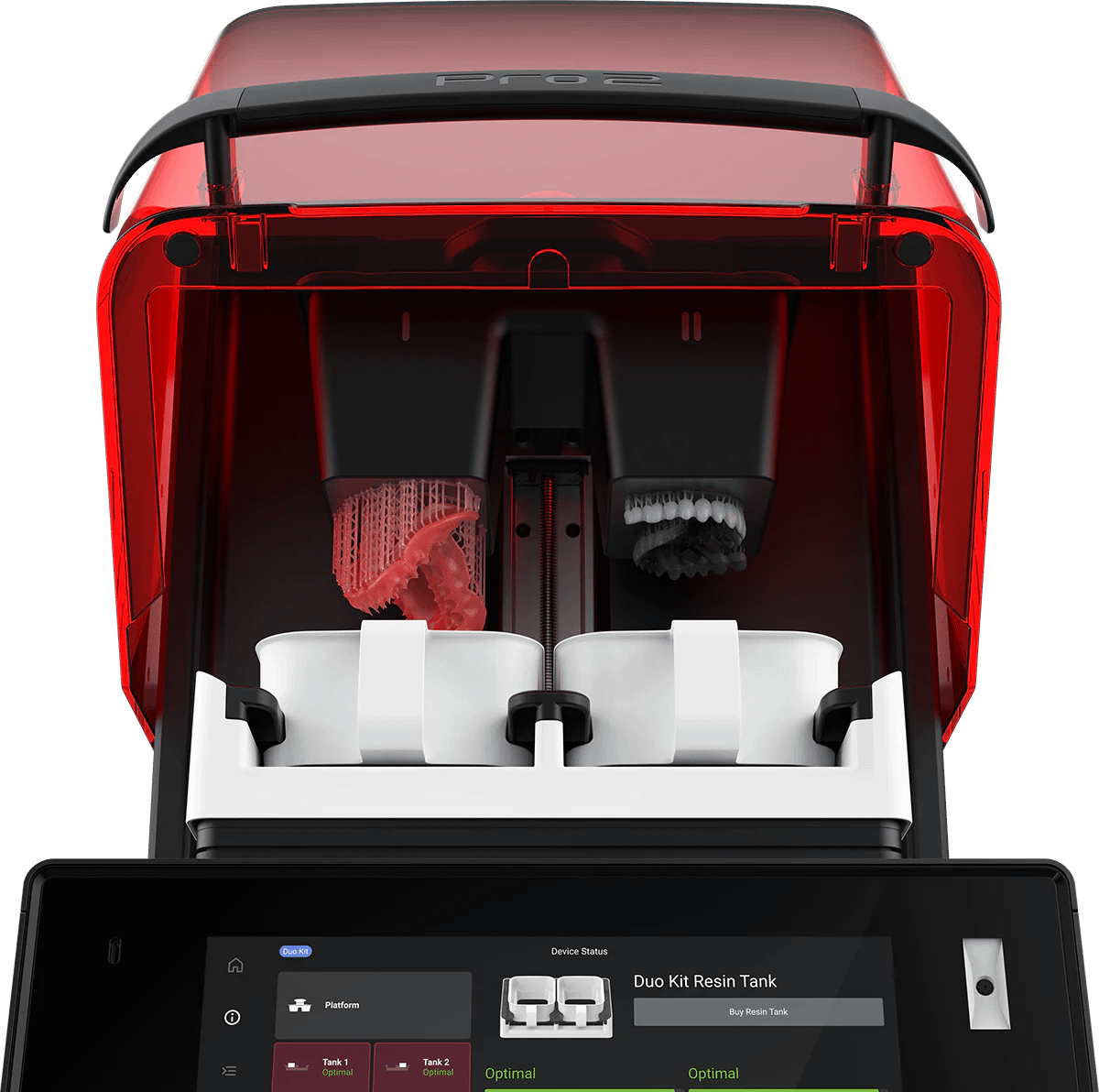
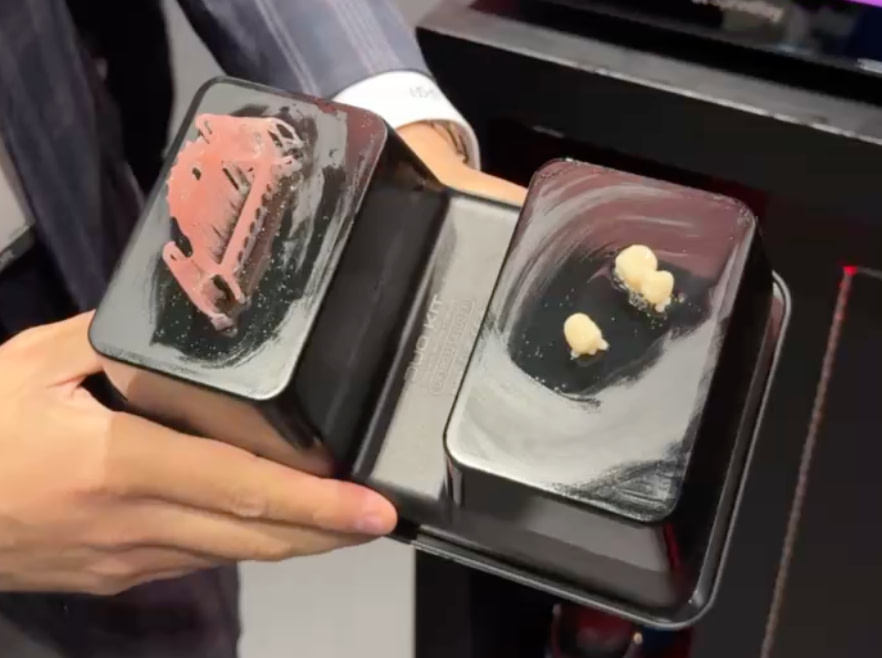
Duo Kit: Not new (we saw this last year), but it was prominently showcased and remains an ingenious solution for the Pro2, enabling you to print two different materials simultaneously. Basically doubling efficiency. Think denture base and teeth, model and guide, etc.
New Resin Formulations: An improved formulation of a previous sports guard resin that now comes in a clear option (alongside blue and red), a new IBT (indirect bonding tray) formulation, and a precision guide resin for stackable and complex surgical guides. Solid incremental resin additions.
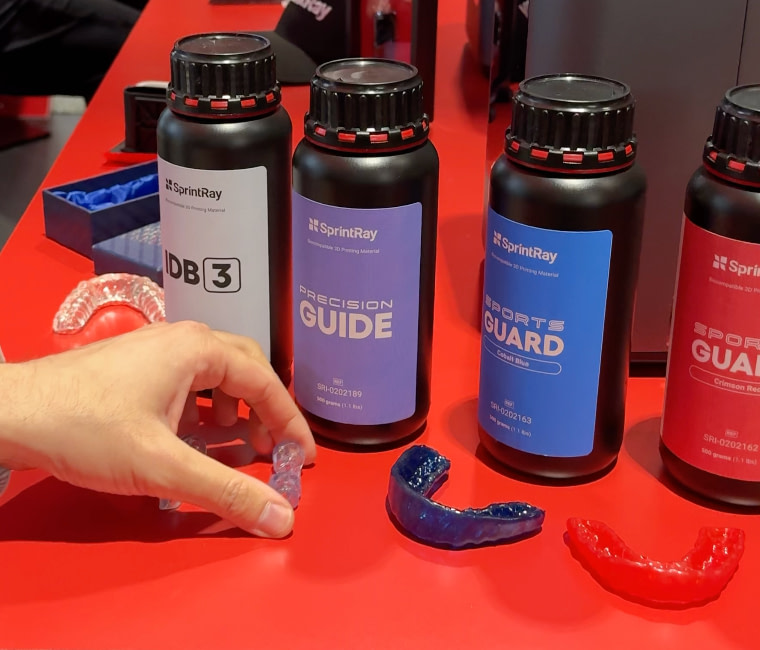
No new restorative resin yet. This is the one many are waiting for. The current crown and bridge materials have gained traction, but the market is watching closely for the "next generation" of permanent restorative resins from SprintRay that we have been promised will come with the MIDAS. We are still waiting. It is coming soon, I am told - waiting on regulatory approvals.
The Broader Clinical Show
Beyond individual companies and some interesting releases, the clinical show reflected the same themes we're seeing globally: maturation, consolidation, and a shift from hardware-driven innovation to software and service differentiation. Once again, lots of AI agents in the Chicago Mid Winter show, more than I have seen anywhere else.
Many companies were here - Dentsply Sirona, DEXIS, Align, Glidewell, etc. It's just that there was a lack of anything really new. 2026 seems to be a year that we will not see many releases, which may be a good thing, and actually makes my life a bit easier, haha.
Many digital dentistry companies you might expect to find at the clinical show were actually exhibiting on the lab side instead, which tells you something about where the real digital conversations are happening.
LMT Lab Day 2026: Laboratory Side Highlights
Now for the part of the trip that genuinely excited me. LMT Lab Day wasn't defined by sweeping new releases this year either - it was defined by atmosphere. The halls were packed, the conversations were great, and if you want to understand where digital dentistry is actually heading, this is the show you need to attend.
In alphabetical order, here are some new things that are coming:
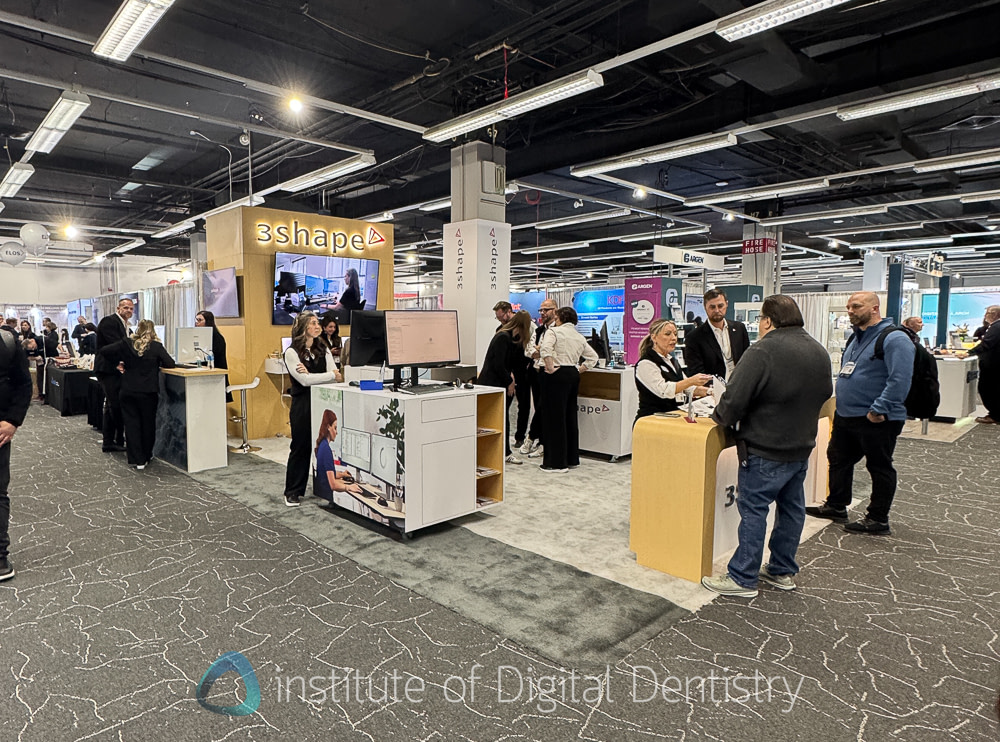
3Shape – New AI Lab Workflows
3Shape was also present on the lab side, showcasing new AI-driven workflows built specifically for their laboratory software system. This continues the "AI-first" approach they introduced with 3Shape Automate, where cases enter the lab software and generate complete designs without human initialization. The concept of "inspect and correct" rather than "design from scratch" is gaining momentum, and the lab audience was clearly receptive.
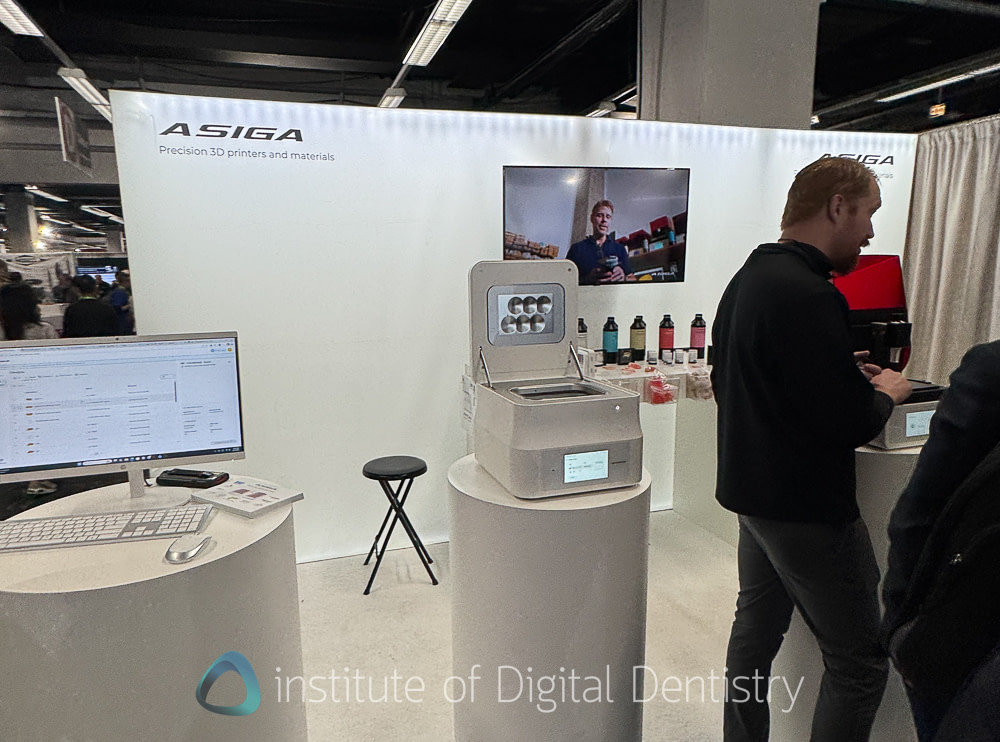
Asiga – Cure Box, PrintPods, and Still the Lab Standard
Nothing new at this show, but Asiga's presence at Lab Day reinforced what the industry already knows: these are still some of the best dental 3D printers available. The Max UV 2 and Ultra remain workhorses in production labs worldwide, and their reputation for reliability and material flexibility is well earned.
The Asiga Cure box and PrintPod system, both introduced over the past year, were on display. The Cure box continues to impress with its dual chamber size options, quiet vacuum pump for oxygen-free curing, optional nitrogen connectivity, and intelligent part detection that adjusts curing parameters automatically.
The PrintPods, which turn existing Max printers into chairside-capable machines using small disposable cartridges at around $25 USD each (reusable up to five times), represent Asiga's push into the chairside space without abandoning their lab DNA.
No splashy announcements, but Asiga doesn't really need them. They just keep making printers that labs trust and building out a post-processing ecosystem to match. Solid as always.
Amann Girrbach – Ceramill Motion Air
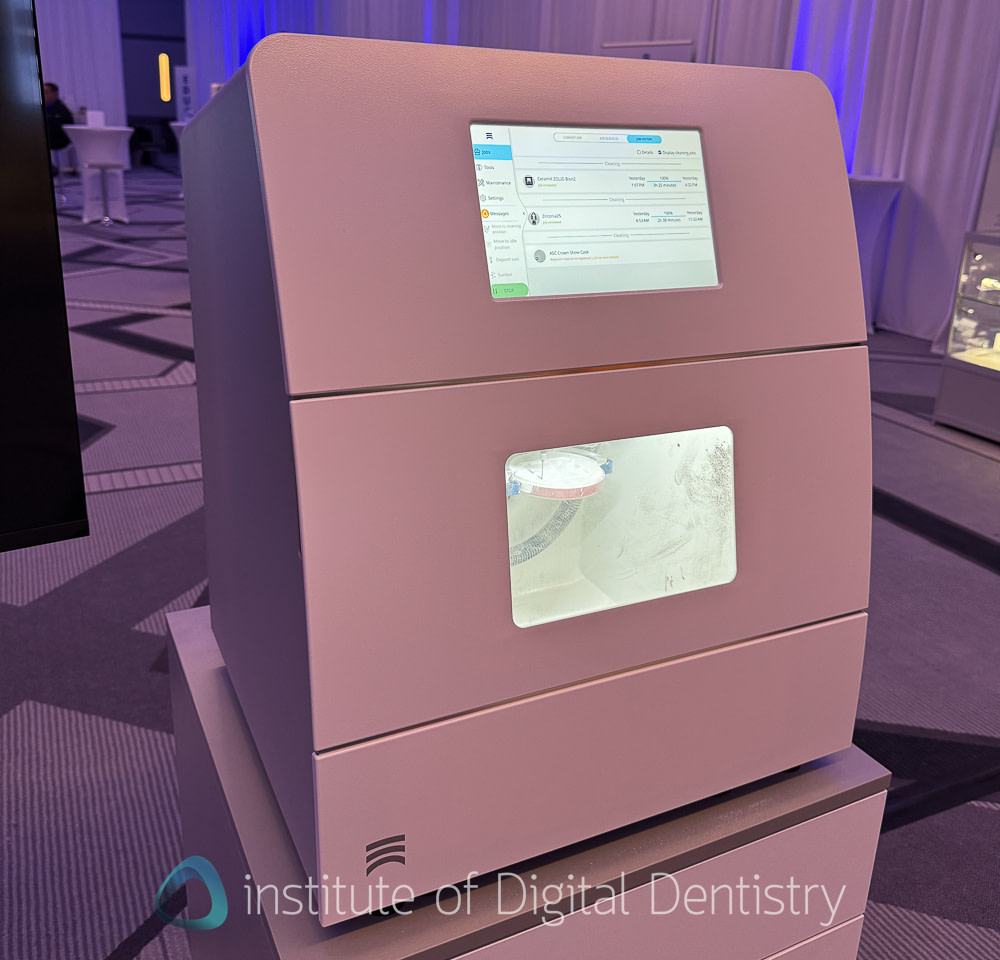
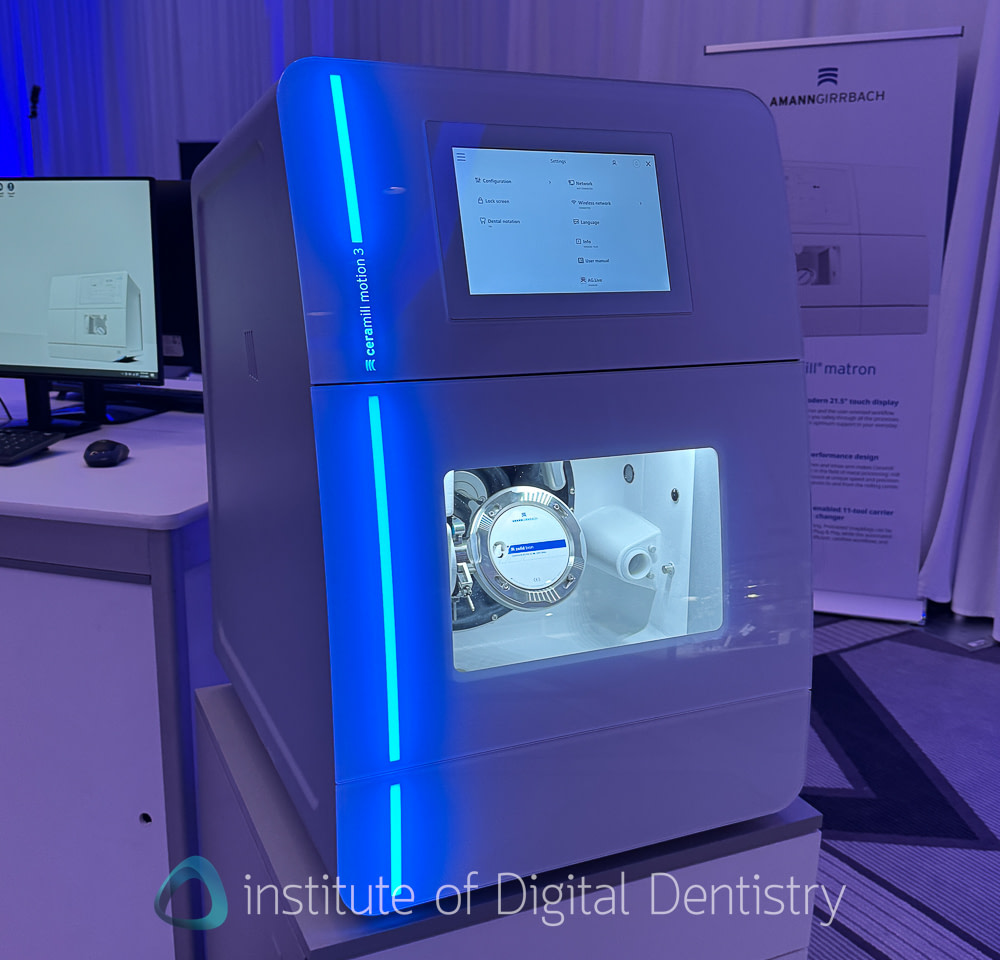
Amann Girrbach had a genuine new release at Lab Day this year - the Ceramill Motion Air, positioned as their most compact and accessible milling machine to date.
This is a 5-axis dry milling machine packed into what the company calls its most compact design ever. Despite its smaller footprint, it features an integrated compressor for independent, high-quality compressed air, an integrated 10-inch touch display, a webcam for remote service and maintenance, and an open tool magazine that holds up to 12 milling tools. The AeroClean spindle promises a dust-free work area, and the C-Clamp holder accommodates standard 98 mm blanks and blocks, ensuring material flexibility.
What's interesting here is the positioning. This isn't aimed at the big production labs already running Matrons and Motion 3s. The Motion Air is clearly targeting smaller labs, practice labs, and maybe even clinics looking to bring milling in-house without the price tag or footprint of Amann Girrbach's larger machines. The "Plug & Mill" simplicity, with plug-and-play setup requiring no external air supply, low power consumption, and an integrated compressor, makes it genuinely accessible for environments where a full-sized mill isn't practical.
The exterior looks a lot simpler than some of the more expensive Amann Girrbach units, but it is nice to see something 'new' at the lab show by a big manufacturer.
Axtra 3D – A Novel DLP + SLA Hybrid Printer
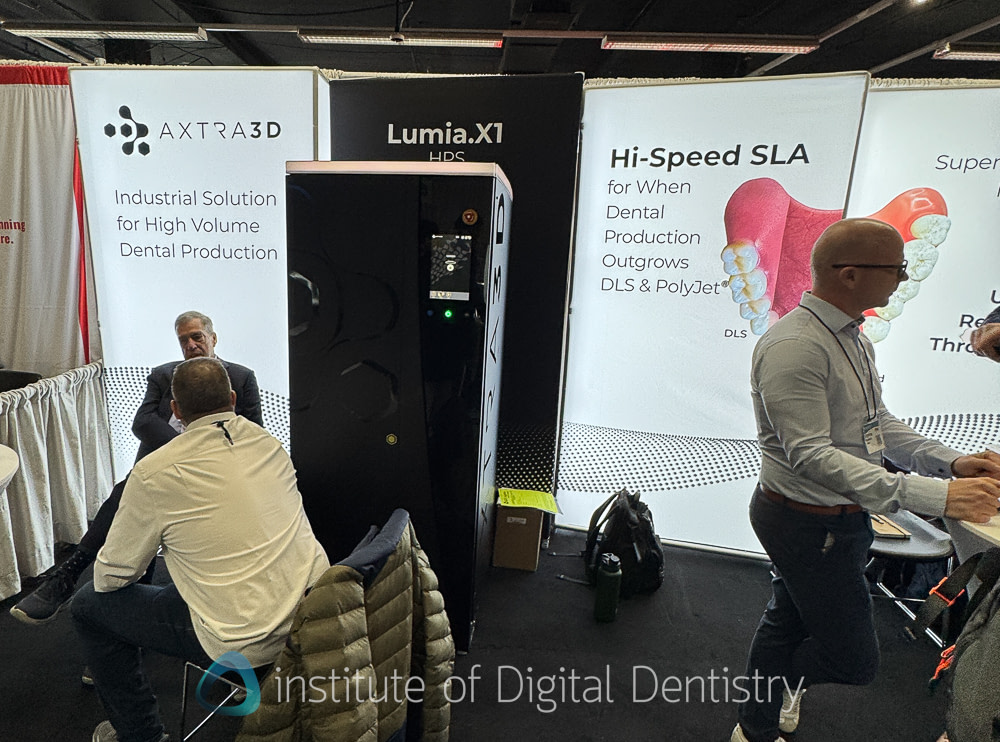
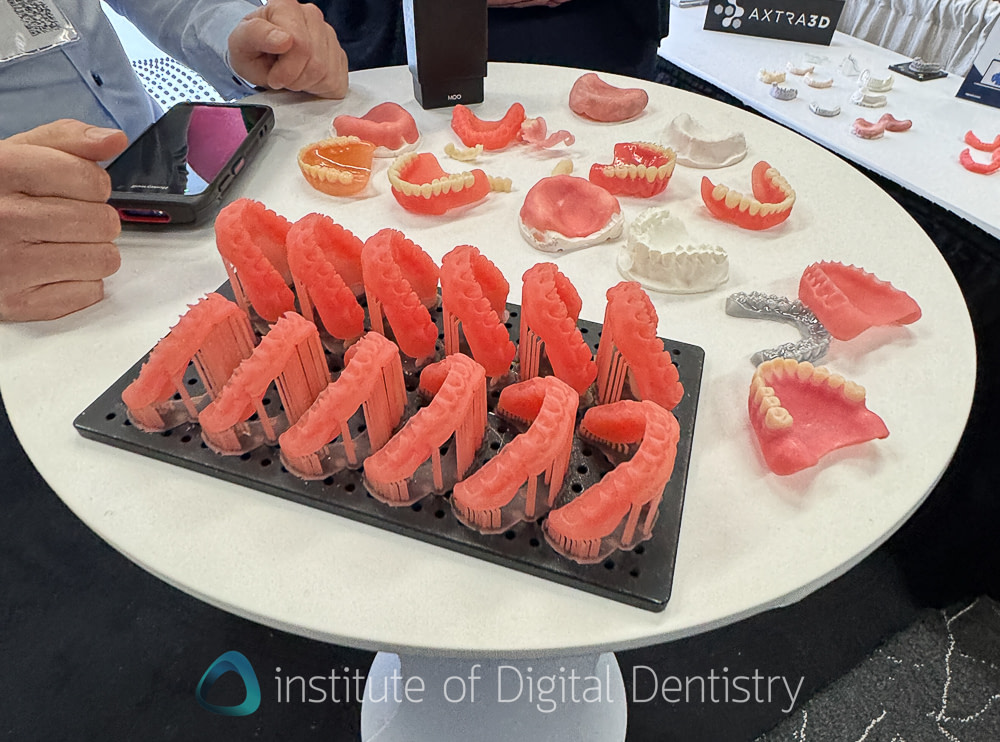
One of the more technically interesting things I spotted on the lab show floor was a printer called the Lumia X1 by Axtra 3D that combines both DLP and SLA technology in a single device. The concept of using the strengths of both approaches, DLP for speed and SLA for surface finish and precision, in one machine is intriguing. Whether it delivers practical advantages over dedicated systems remains to be seen, but it reflects the kind of creative engineering that makes Lab Day worth attending. They also had some nice denture resins on show.
CUBIT360 – Interesting Extraoral Scanner Concept
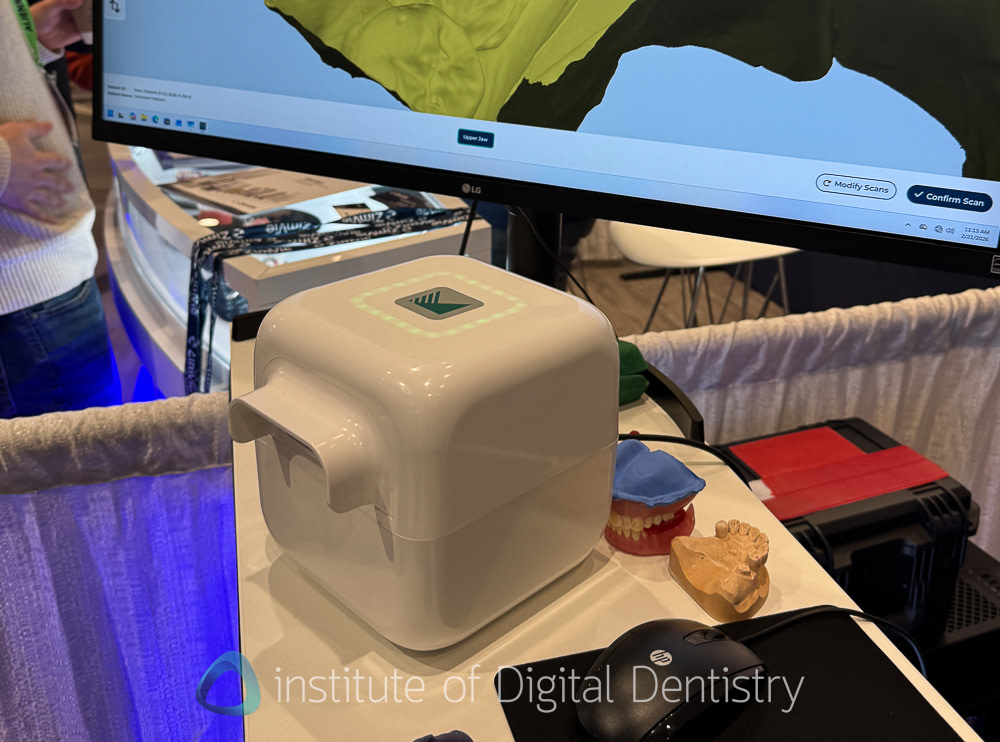
An interesting new product, the CUBIT360, looks like a cube and is essentially an extraoral scanner. A lab scanner, but instead of putting the object into a platform that moves or where the light source rotates, the entire scanner is stationary, and you move the product manually to capture a scan. The UI looks a little rudimentary, but it's an interesting concept, and the scans were fast.
Dentbird – Automated Model Generation
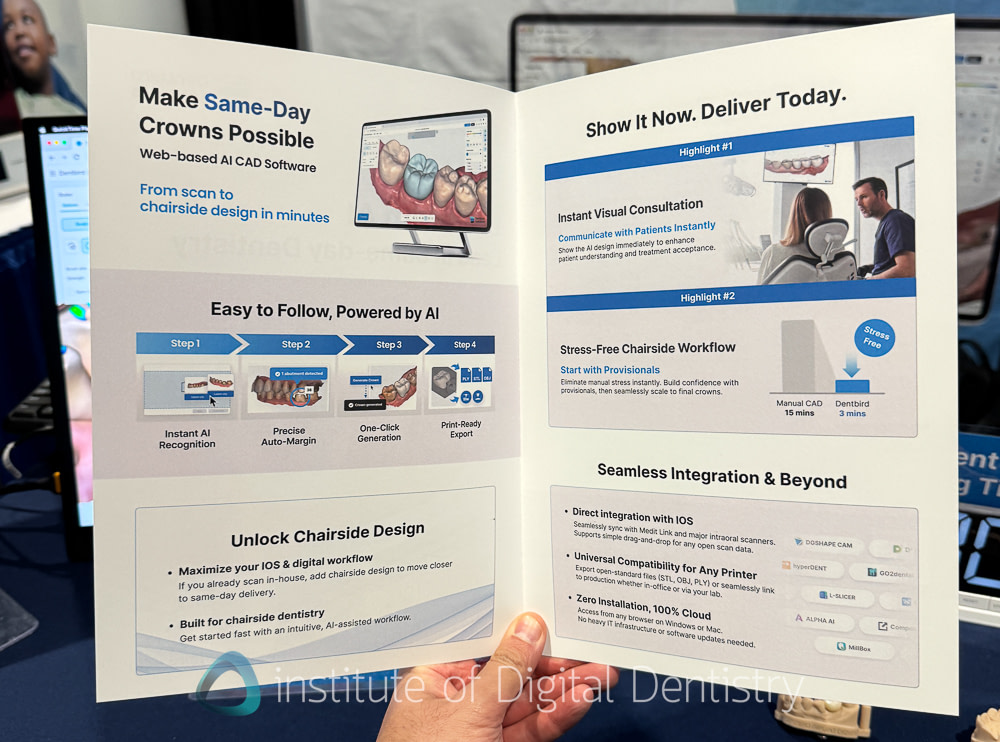
Dentbird (part of the Imagoworks ecosystem) had a strong presence at both Midwinter and Lab Day. Their update for this event was modest but beneficial - when designing a crown, a model can now be automatically generated directly from the scan, with or without a die, fully automated, no manual steps required. It's a clean addition that further reduces the number of clicks between scan and finished design.
No sweeping changes, but that's almost the point with CAD AI. They keep getting incrementally better, and the cumulative effect of those updates is a CAD workflow that is noticeably faster and more hands-off than it was even a couple of years ago. Their tagline at the show, "Ahead from the First Click", and the claim of reducing design time by up to 66% without losing precision, reflect the confidence of a platform that has earned its place in the conversation.
What's also worth noting is that Dentbird doesn't operate in isolation. Imagoworks presented it as part of a broader connected ecosystem at Chicago, Dentbird Solutions for digital workflow and AI design, AOX for complex All-on-X case specialization, and Monster Milling for precision manufacturing. The market conversation at the show has shifted from "should we adopt digital tools?" to "how do we connect and optimize everything we already have?" Dentbird is clearly positioning itself as the software core of that integrated answer.
I have written an entire overview of all the different cloud CAD platforms here if you're curious about how Dentbird compares to the competition.
Dreve – Printers, Resins, and Post-Processing
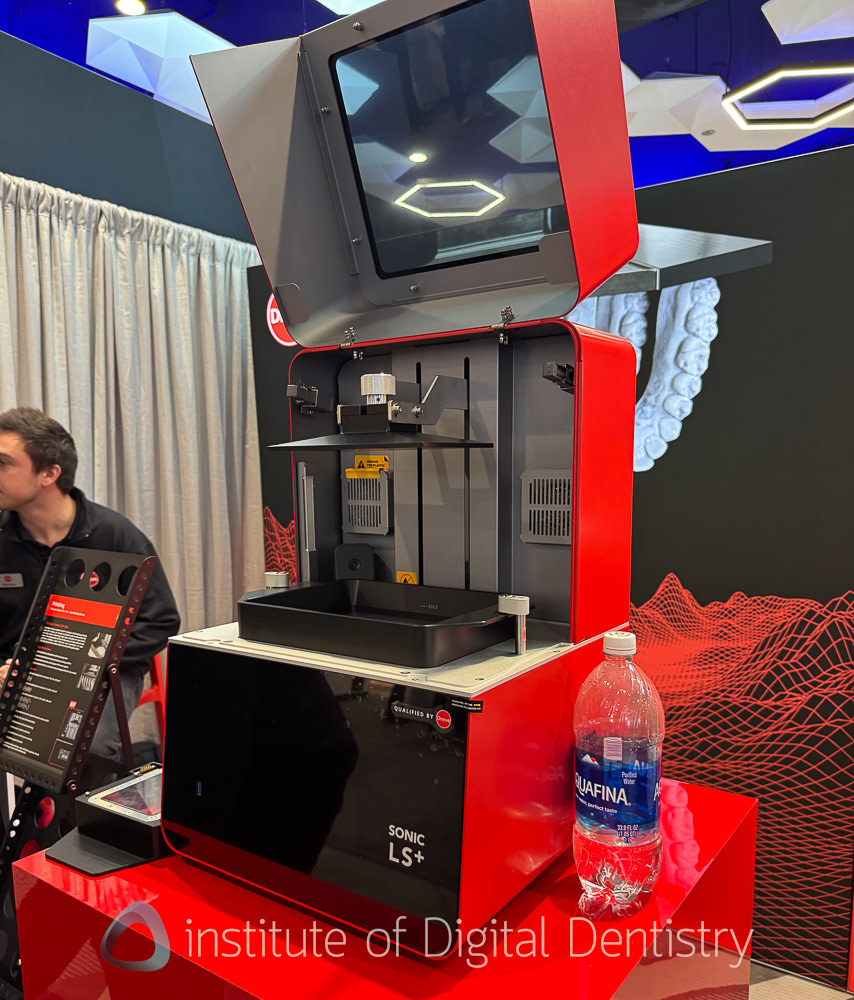
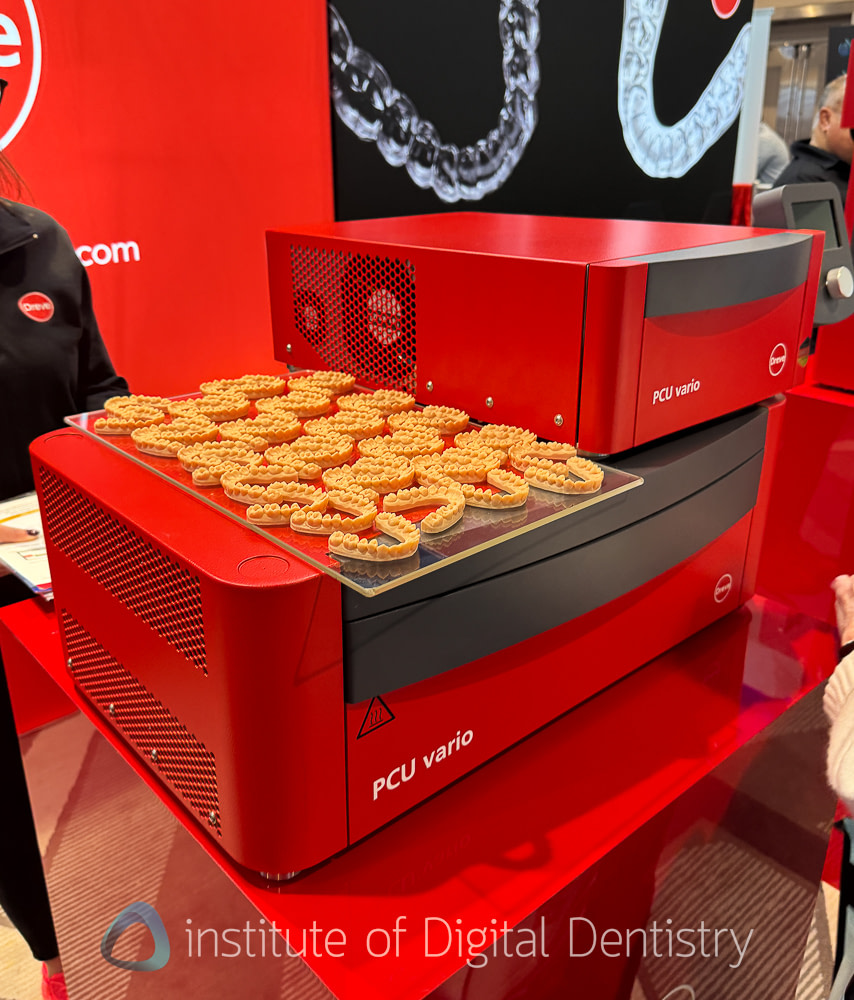
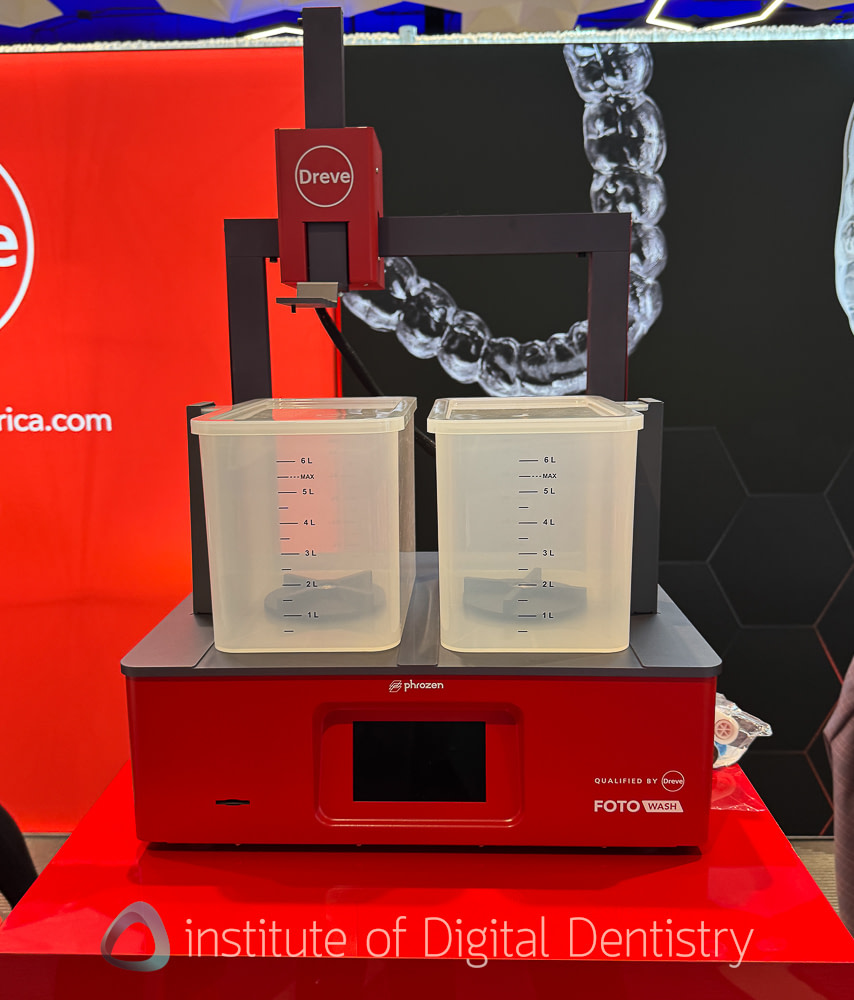
Dreve showcased a comprehensive ecosystem at Lab Day. Their printers are the Phrozen Sonic CS+ and LS+, which are qualified and supported by Dreve, with customized printing profiles available through their ElementS slicer software. The new Sonic CS+ was highlighted for its 22-micron resolution in a compact full-metal housing.
On the materials side, their FotoDent resin lineup covers virtually every dental application: denture bases, surgical guides, gingiva masks, IBT trays, impression trays, and models, including a new FotoDent model3 resin optimized for faster printing and a TryIn resin for denture base try-ins now available in the USA and Canada.
Post-processing got interesting additions too. The PCU vario 40 is a new high-end curing unit featuring three wavelengths (365/385/405 nm) with nitrogen atmosphere curing, and you can stack up to three chambers on a single control unit. They also showed the FotoWash cleaning unit with magnetic stirrer technology and automatic transfer between pre and post-cleaning basins, designed to accept Phrozen build platforms directly.
Dreve has always been strong on materials, and they're building out a full workflow package, from printing through washing and curing, that delivers a tidy, turnkey solution. Particularly appealing for labs that want Dreve's proven resins paired with accessible Phrozen hardware and dedicated bulk post-processing.
exocad – AI Features Expanding
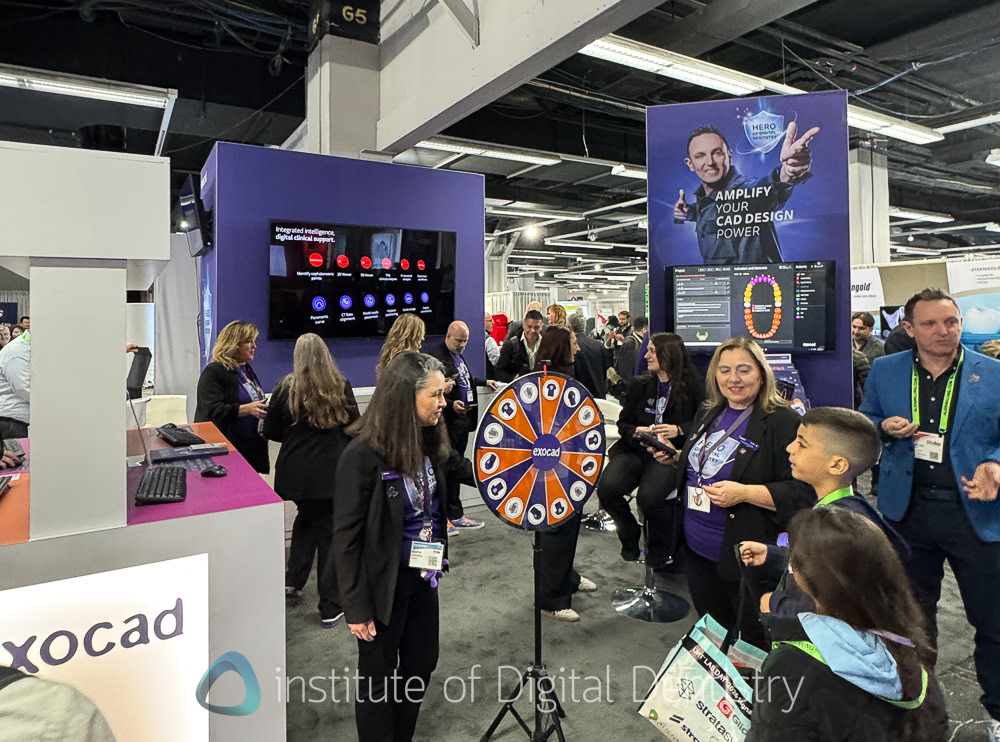
exocad continued to deepen its AI integration, showing new automated features for its laboratory CAD software. This follows the trajectory we saw last year, in which AI design suggestions, automated margin repair, and auto-articulation began to gain traction. The direction is clear: AI is becoming a practical tool in laboratory workflows, not just a marketing talking point. exocad's steady development in this area keeps them firmly at the forefront of lab CAD innovation. No major releaseas anounced.
Download the iDD Highlights PDF
A summarized version of this blog.
View as a flipbook online or download a copy to read it later.
Formlabs Dental – Open Resin Mode is Now Standard
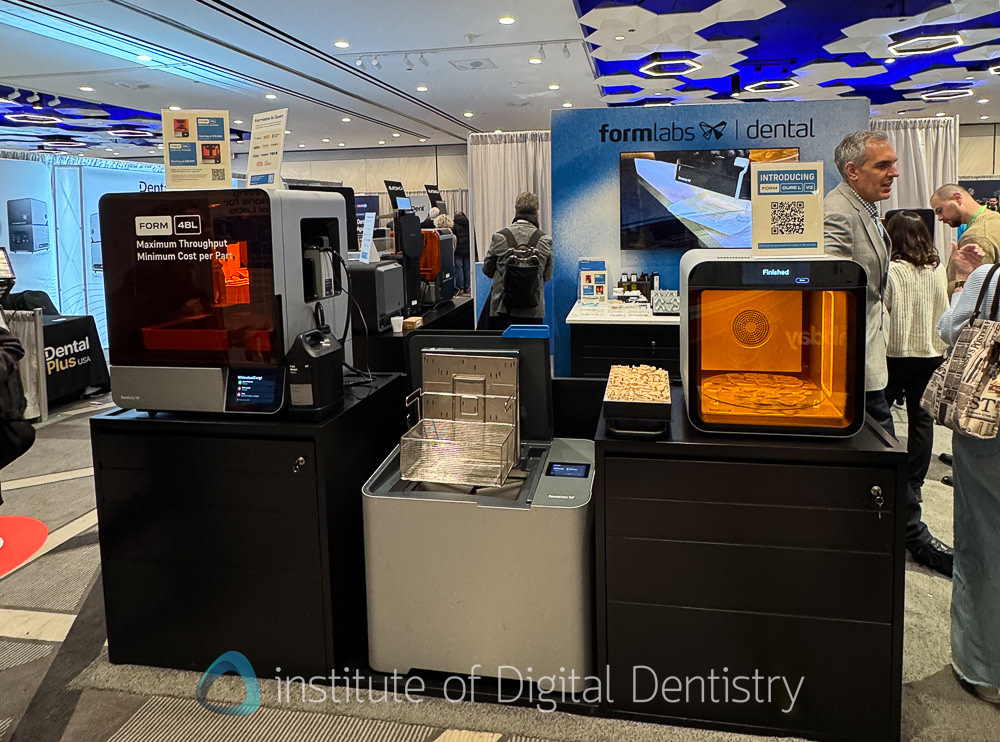
This is a significant development, and interestingly, Formlabs Dental only had one booth on the lab side, even though this announcement affects everyone, including clinics and dentists.
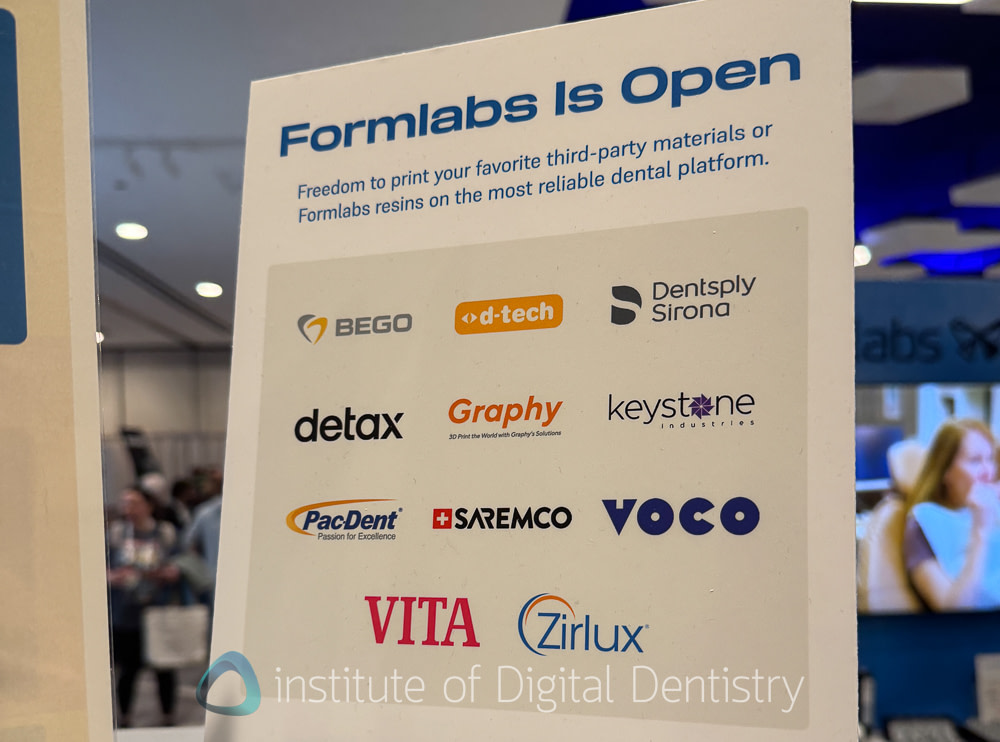
All Form 4B and Form 4BL printers now ship with open resin mode enabled straight out of the box. This means Formlabs has officially and fully opened its platform to third-party resins, including materials from BEGO, Dentsply Sirona, Detax, Graphy, Keystone, Pac-Dent, VOCO, VITA, and Saremco.
For a company that built its reputation on a tightly controlled, closed ecosystem, this is a major shift. They are also actively working with multiple partners to validate third-party resins on their printers. No new hardware, but this policy change alone is a big deal for labs and clinics that want material flexibility without sacrificing the reliability of Formlabs' printing platform.
FUGO 3D – Centrifugal Printing
This was one of the most genuinely interesting things I came across on the lab side, and it deserves more than a passing mention. FUGO 3D isn't pitching an upgrade to existing 3D printing technology. They're claiming an entirely new category.
The concept is built around centrifugal force. Instead of the traditional layer-by-layer approach used in DLP, LCD, or SLA printing, FUGO's system forms parts as concentric structures using centrifugal force during the build cycle. The result, according to the company, is the elimination of traditional layer lines, improved material distribution, and better surface quality - without post-processing as a separate step. Because here's the part that really caught my attention: washing and curing happen inside the same machine, automatically. You nest your parts in F3D Studio, hit go, and production-ready parts come out the other end. No separate wash unit, no cure box, no manual handling.
They're targeting production labs rather than chairside or small single-unit applications, and the fleet management software (F3D Homebase) suggests they're thinking about multi-machine lab environments from the start.
The obvious question remains: how does the output quality compare with established DLP workhorses like Asiga in real dental applications? What materials are validated? What does the machine actually cost? None of those answers were clear at the show.
But the underlying engineering concept is genuinely novel, and in a printer market that has become increasingly commoditized, novel is rare. One to watch.
Graphy – Still Beating the Drum
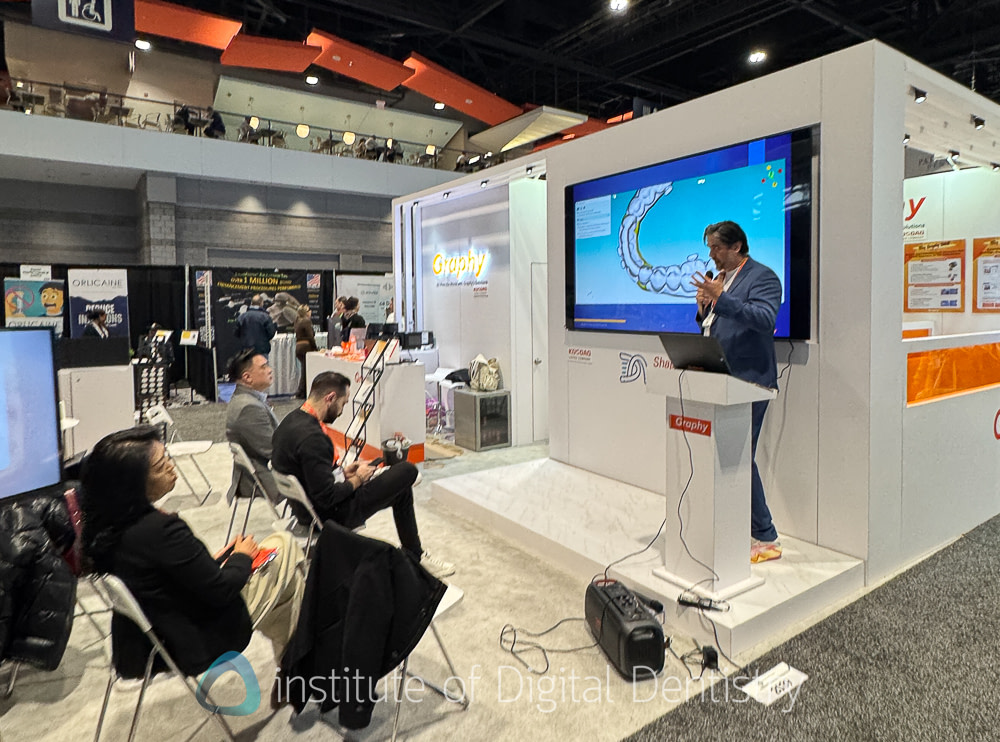
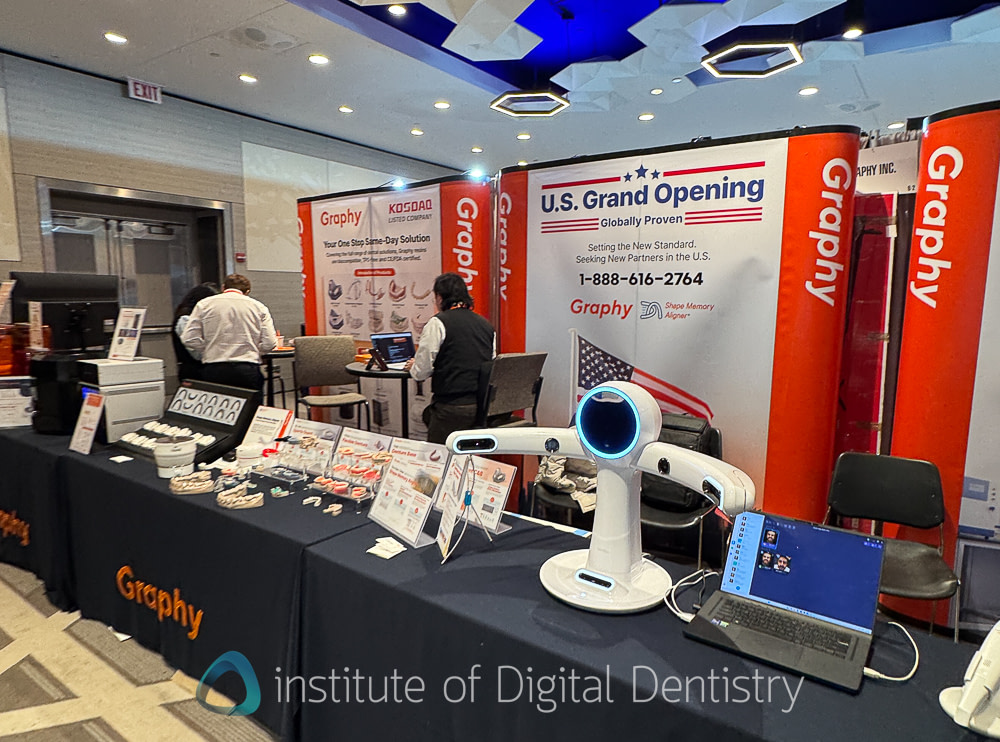
Graphy continued to champion their direct-print aligner workflow at Lab Day. And still, I hear two camps: those who say it's not there yet, and those who say it works great. The "not there yet" camp remains larger from what I can tell, and frankly, I have not had a lot of success with direct-print aligners myself. In our aligner laboratory in New Zealand, we still thermoform, and there are good reasons for that. The fit, retention, and long-term material performance of thermoformed aligners remain the proven standard.
I genuinely want to be proven wrong on this. The workflow simplification would be fantastic, and the elimination of thermoforming would save significant time and labor. But the clinical reality hasn't consistently matched the marketing promises yet, for many clinicians I speak to. Watch this space. It will get there eventually, and when it does, it will be a big deal.
HeyGears – One-Piece Denture Solution Teased
HeyGears' big talking point at Lab Day was the UltraCraft MMF (Multi-Material Fusion), their one-piece denture printing solution branded under "OnePiece." The machine appears to be two DLP print engines side by side in a single unit, using dual resin trays to print denture bases and teeth simultaneously as a monolithic unit. No bonding, no assembly, no risk of detachment. The company claims that the seamless fusion between the dual materials creates uniform transmission of occlusal stress and improves hygiene by eliminating joints where bacteria can accumulate.
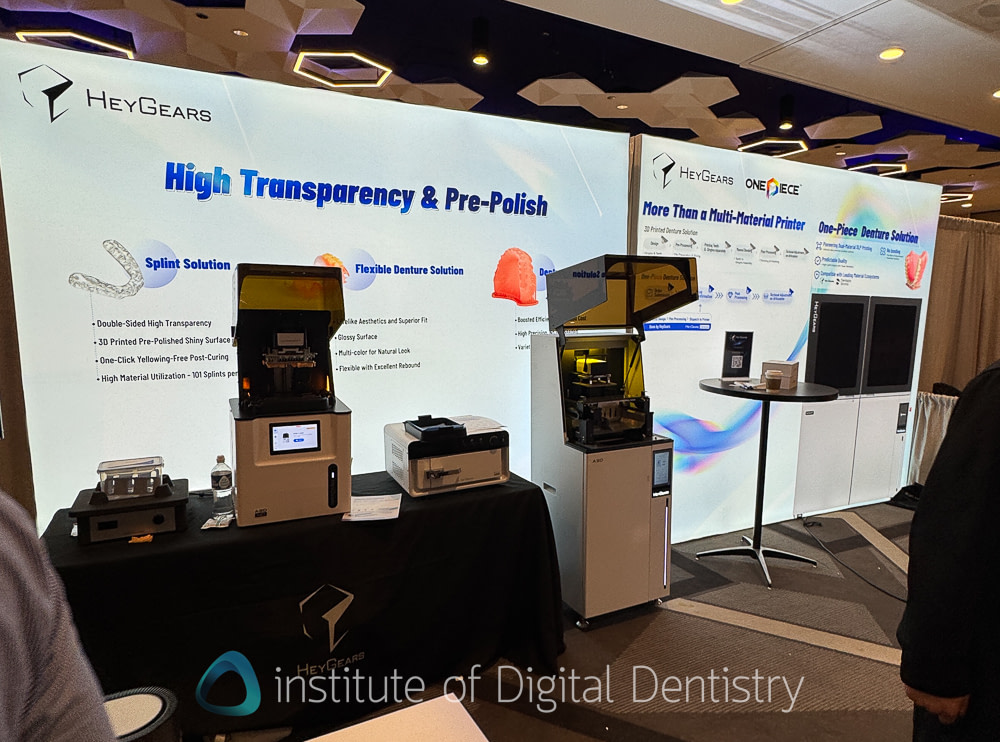
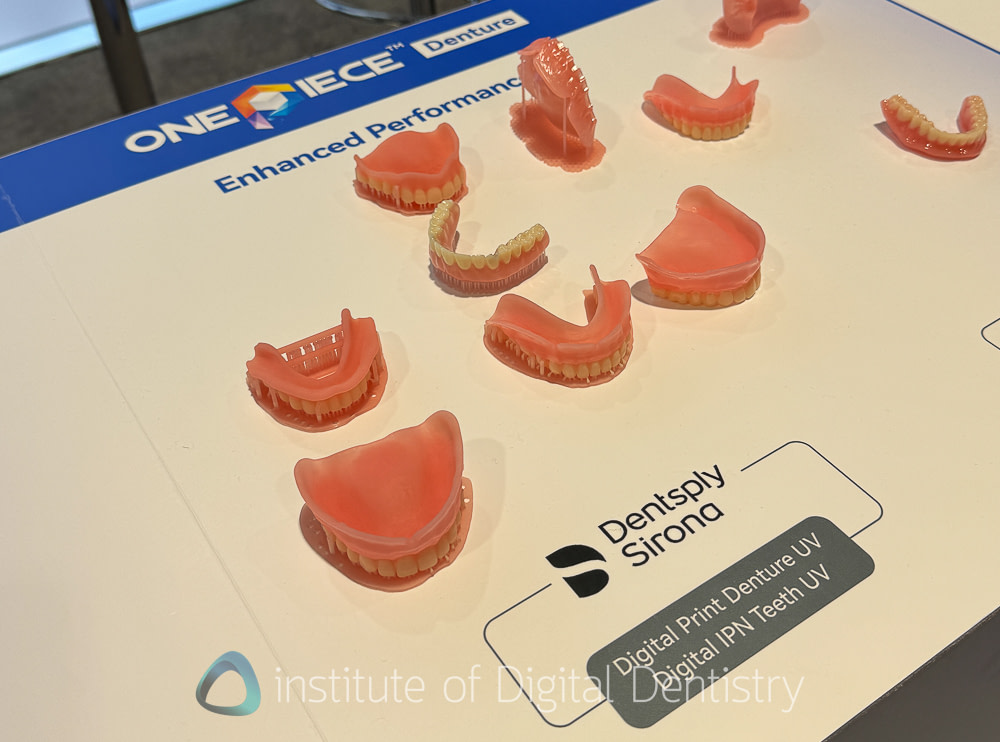
It's a big machine: 480 kg, 4K resolution at 42.5-micron pixel size, with ±21.3-micron accuracy. The workflow is simplified compared to traditional assembled dentures: upload a case, design, print, and finish, versus the multi-step process of separate base printing, teeth printing, manual bonding, and occlusal adjustment.
The materials are compatible with Lucitone Digital Print and 3D Premium Tooth Resin, which is smart positioning given Lucitone's established reputation in the digital denture space.
The machine was not physically at the show, but the brochures and sample dentures were on display. The samples looked OK. This is a different approach from the deposition-based multi-material printing they previewed at Lab Day last year, and it's interesting to see HeyGears pivot toward this dual-engine DLP concept instead. The challenges manufacturers face, including the dilemma between generating hype and actually delivering commercially viable products, are fascinating.
IOSCANS – One Portal for All Your Scans
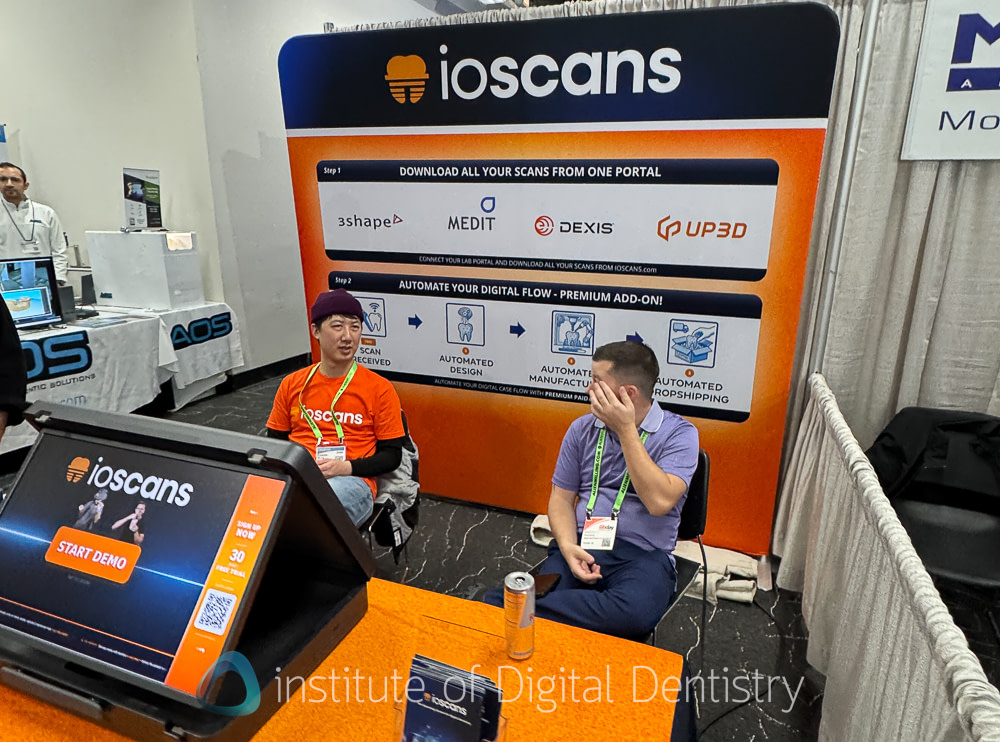
IOSCANS, officially launched at Lab Day 2026, had their very first live debut. The concept is straightforward but useful: a single cloud-based dashboard where labs can receive and manage cases from every major intraoral scanner portal, Medit, 3Shape, DEXIS, UP3D, and more, without jumping between platforms or losing track of orders.
In practice, that means a lab signs up, connects their existing scanner portals in minutes, and from that point forward, every incoming case lands in one place. Cases come with 3D scan viewing, real-time activity tracking, and instant messaging between the practice and the lab. The service costs $39.99/month, and there's a 30-day free trial to get started.
What makes it more than just a file aggregator is the AI design integration. As cases arrive, they can flow directly into automated crown design workflows, no clicks, no manual uploads. Similar to what 3Shape does with its lab software, but open to other scanners. They also offer manufacturing and dropshipping. Interesting.
This, alongside Dandy's aggressive scanner-and-lab bundling strategy at the Midwinter Meeting, points to a broader shift in the potential restructuring of the lab-practice relationship. The traditional model, a dentist partnering with a local lab, managing timelines and chasing remakes, is potentially being disrupted by centralized, tech-driven platforms that promise speed and simplicity.
Whether these services can match the quality and customization of an experienced human lab team remains the real question. But the direction of travel is clear. It raises the question Lab Day always prompts: what does the dental lab look like in five years?
Ivoclar – Programill 7 and 7 Pure
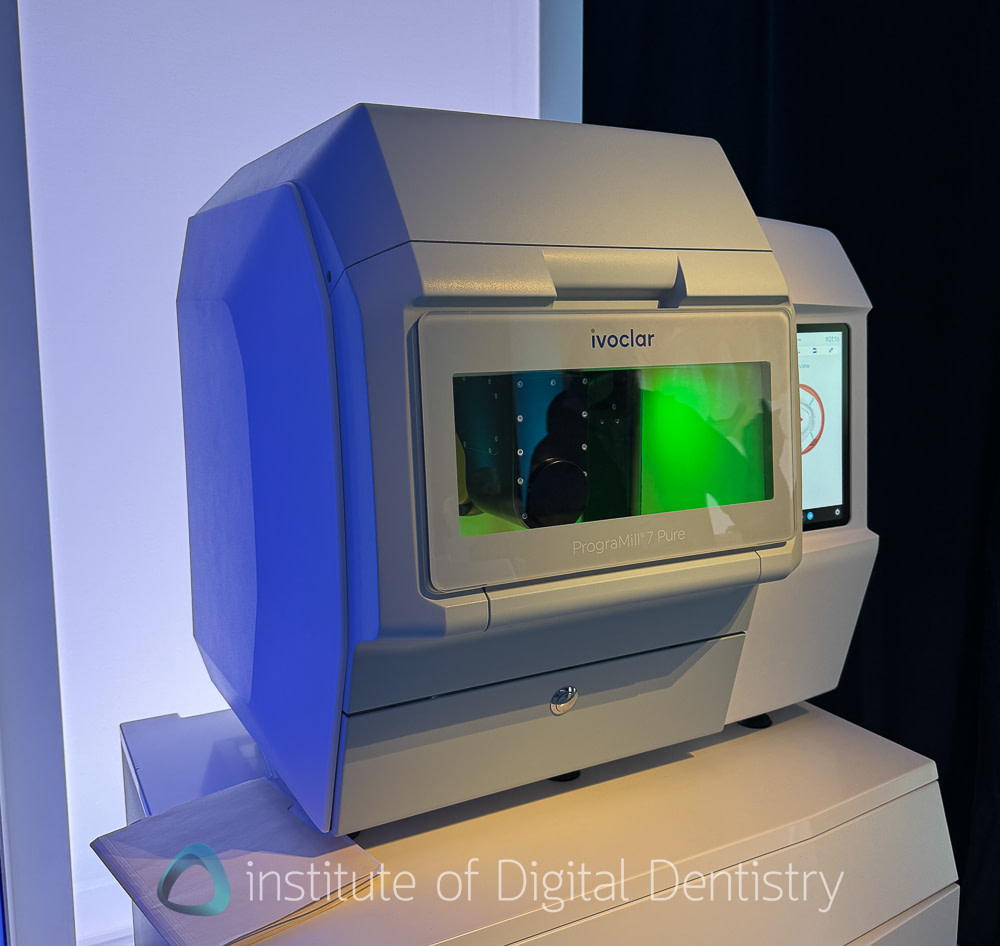
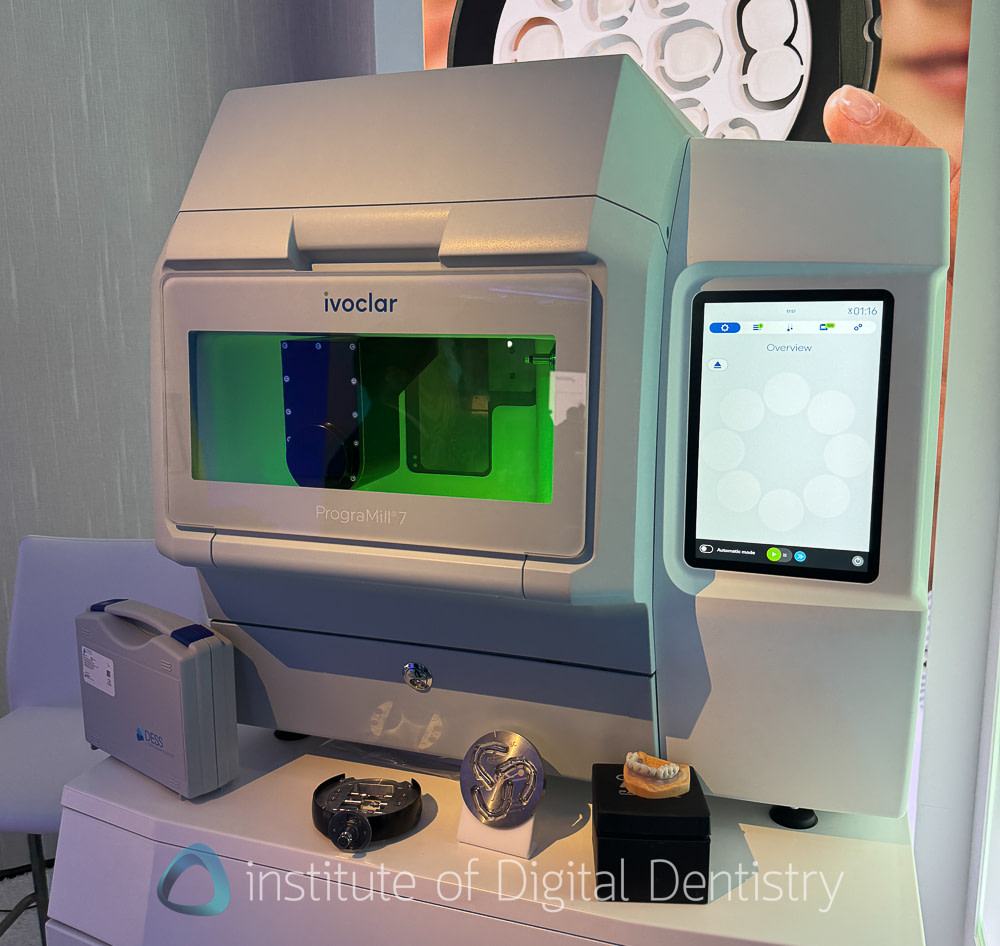
Ivoclar had a solid lab-side presence in their plenary room, showcasing upgrades to their Programill 7 mill and the new Programill 7 Pure milling machine. These aren't brand new machines but are refinements to an already popular system.
For the PM7 the spindle has been upgraded to 1.5 kilowatts, there's a larger display, the milling chamber has been redesigned to reduce debris accumulation, and Ivoclar says air consumption has been reduced. Incremental improvements. The PM7 Pure is a more affordable version of the PM7, without the extensive disc changer.
A new Ceram Art stain-and-glaze kit was also on display, adding to their already comprehensive materials ecosystem.
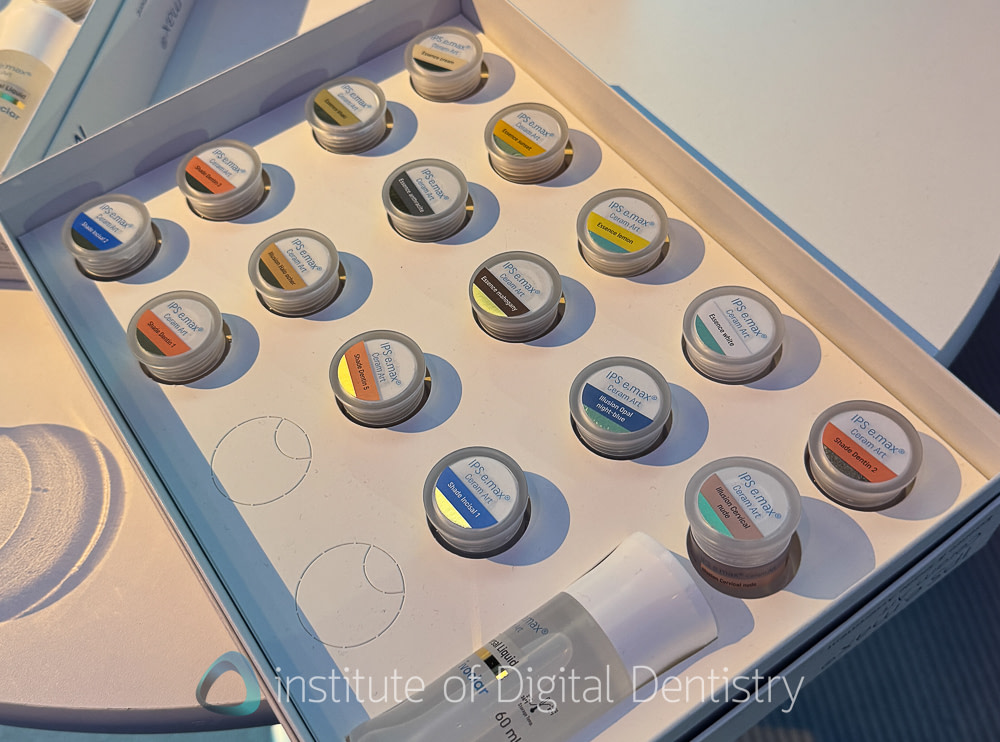
Interestingly, there didn't appear to be a focus on the PrograPrint printers this year, and of course, the Vivascan has been discontinued.
NextDent – Arc-Motion Aligner Printer Prototype
NextDent didn't have new printers to announce, but they had something more interesting: a prototype aligner printer with a fundamentally different approach to build platform movement. Instead of the traditional linear up-and-down motion, the build platform moves in an arc during printing.
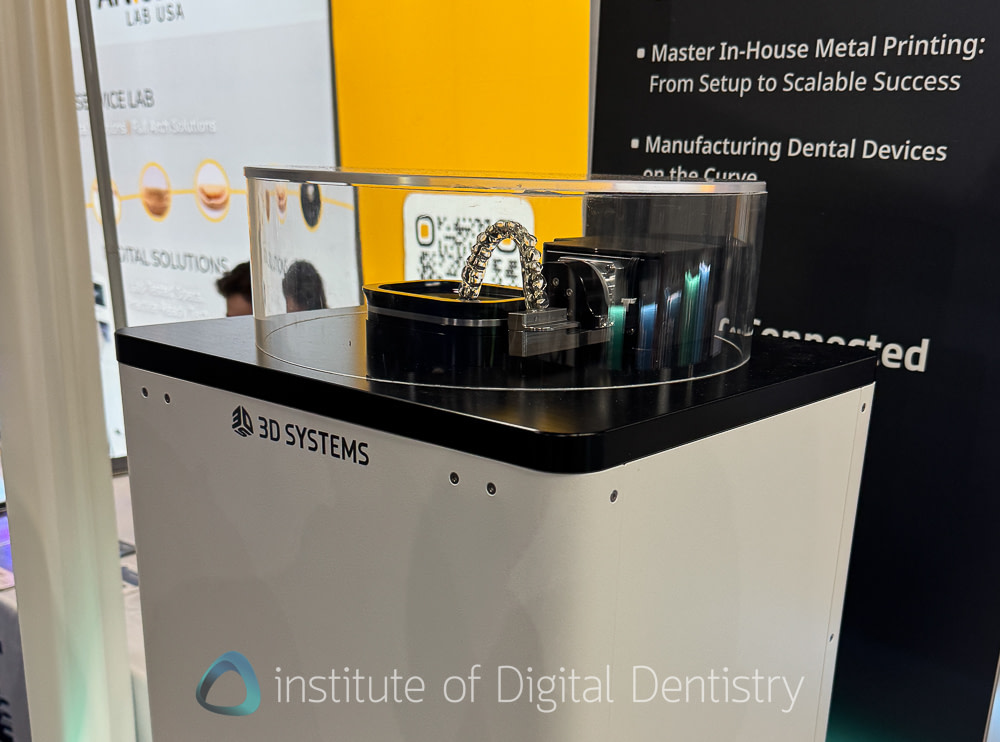
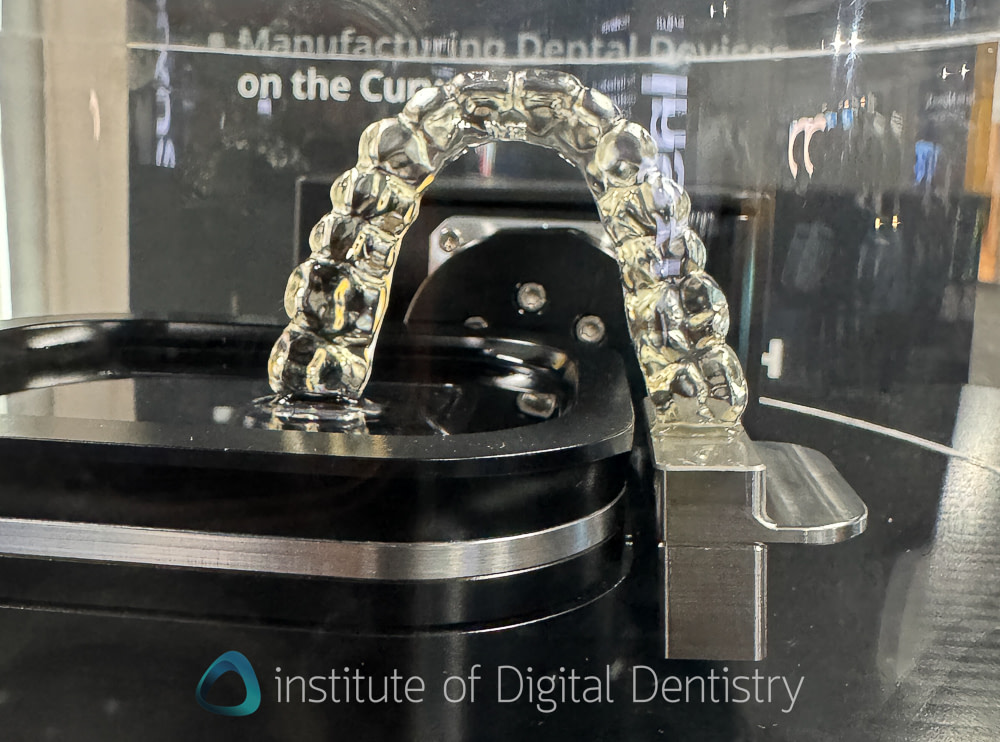
The purpose behind this design is clever. By changing the angle of separation between the print and the resin tray, supports can be significantly reduced or eliminated entirely. That's a nice efficiency gain. Less support removal means less manual finishing and faster throughput.
It's still very much a prototype, and there's no commercialization timeline that I'm aware of. But it's the kind of fundamental rethinking of how 3D printers work that catches my eye at these shows. Most printer innovation focuses on resolution, speed, or materials. Rethinking the actual mechanics of how the build platform interacts with the resin is a different approach entirely, and one that could have applications well beyond just aligners if it works as intended.
Novenda Technologies – Multi-Material Jetting Gets Serious About Dental
Another one of the more technically interesting things I came across on the lab side, and a company I hadn't encountered before. Novenda Technologies, a Dutch startup that raised $6.1M in Series A funding last year, showed up at Lab Day with a material jetting printer built specifically for dental production. Competing in a space that only includes Stratasys and NextDent.
The LD100, their current machine, can simultaneously jet up to four materials, combining hard and soft in a single print run, with no manual assembly, no bonding, and no gluing. The supports are water-soluble and rinse away with tap water. For nightguards alone, this is compelling: the machine can produce a dual-laminate guard with a hard outer shell and soft inner layer in one step, which traditionally requires bonding two separately printed components. Their throughput claims are serious too, up to 15 nightguards or 8 dentures per hour.
A more advanced model, the LD105, is in development, with up to eight material channels and sixteen print heads, targeting complex full-colour dental work such as high-end dentures. The LD105 reportedly targets 32 dentures in 5 hours.
The trade-off, as with other inkjet systems, is that it is a closed material ecosystem. The machine is yours to own, but you're buying exclusively from Novenda. What makes Novenda interesting in the broader context of Lab Day 2026 is that they represent a class of technology, material jetting, that has long promised to transform dental manufacturing but hasn't quite broken through commercially. Whether they can execute on the production reliability front will be the real test.
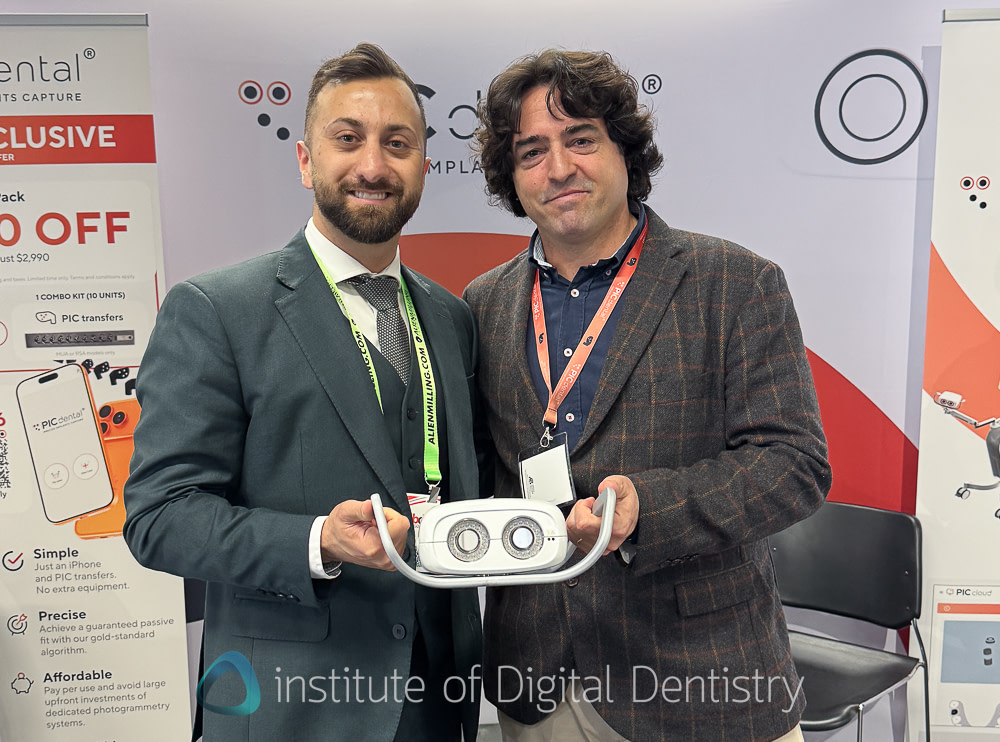
PIC Dental – Pocket Photogrammetry
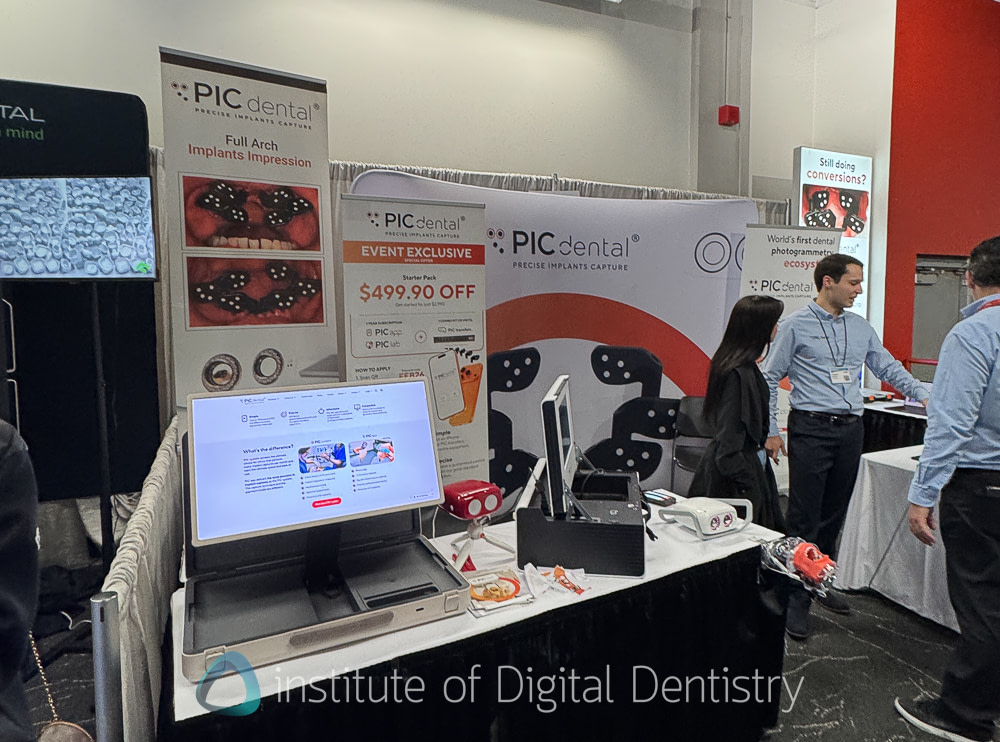
PIC Dental has been pioneering dental photogrammetry since 2010, long before it became a buzzword and before anyone else, and their presence at Lab Day this year was a sign of the times. Labs are increasingly the ones driving the full-arch digital conversation with their client full-arch dentists, and photogrammetry sits right at the center of that.
Their ecosystem spans three hardware form factors (desktop, arm-mounted, and ultra-portable), all sharing the same camera, transfers, and software with up to 4-micron accuracy. But the most interesting development is the PIC app, smartphone-based photogrammetry using an iPhone or iPad, pay-per-case, no dedicated hardware required.
Sound familiar? It should. Between the PIC app and TruAbutment's T-Marker, we now have two companies pushing iPhone/iPad photogrammetry into the mainstream full-arch workflow. That's a trend worth watching closely in 2026.
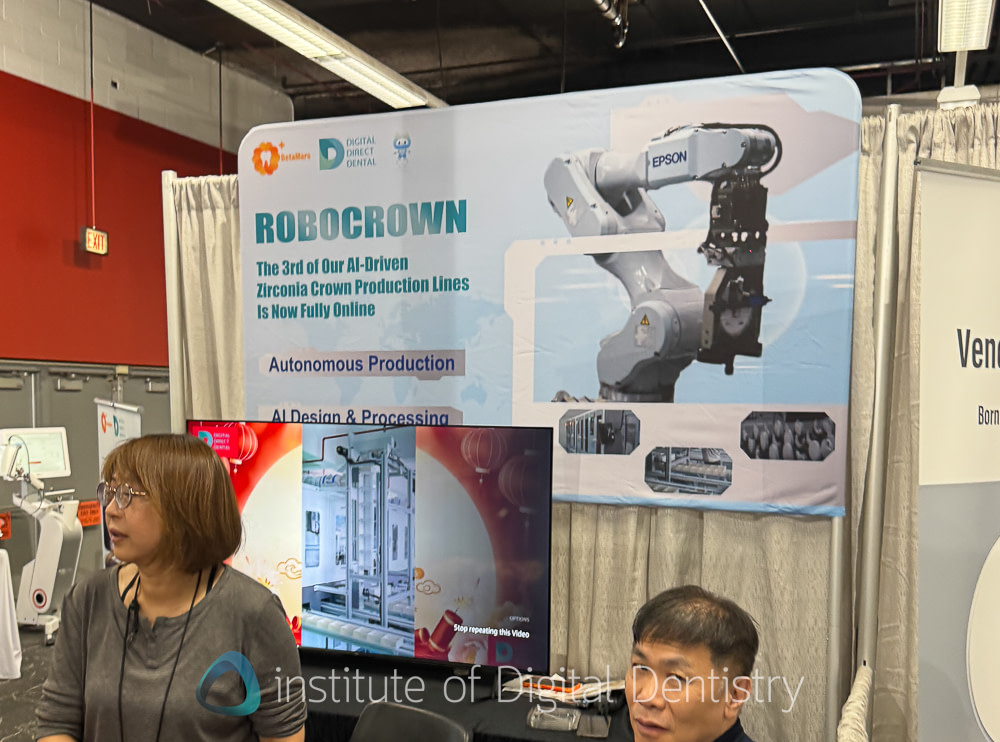
Robocrown - Robotic Disc Changing for Milling
One of those "future of the lab" moments at the show: a robotic system designed for automated disc changing in milling machines. The concept is simple. A robotic arm loads and unloads zirconia or PMMA discs into compatible mills, enabling truly lights-out production. Queue up your milling jobs, go home, and come back to finished work.
I have a video on my Instagram showing it at work if you are curious. Frankly, it was cool to watch it in action, set up with the DGShape mill at the show.
For the average lab, this might feel like overkill. But for high-volume milling centers processing dozens of discs per day, the math on labor savings and overnight production capacity makes a lot of sense. This is the kind of automation that has existed in industrial manufacturing for decades, but is only now trickling into dental. It won't be the last time we see robotics at Lab Day, and I suspect in a few years these systems will be far more common than they are today.
Stratasys – Color Printing Keeps Improving
Stratasys showcased their multi-material, full-color PolyJet printing technology at Lab Day, and every year the output looks better. This time, they had some fun demonstration pieces on display alongside the dental work: a printed pizza, an arm, and various other multi-colored objects that really showcase what the technology can do. The dental samples, particularly the full-color models and dentures, continue to demonstrate capabilities that DLP and LCD cannot match in a single print.
Their ability to simultaneously print multiple materials with different physical properties, colors, and translucencies in a single job remains genuinely unique. No new major releases for the dental side this year, but the steady improvement in output quality is evident.
The challenge remains the same: justifying the significantly higher equipment cost when DLP and LCD printers handle 95% of what most labs need at a fraction of the price. But for that other 5%, nothing else comes close.
TruAbutment – IO Connect and T-Marker Hits the US Market
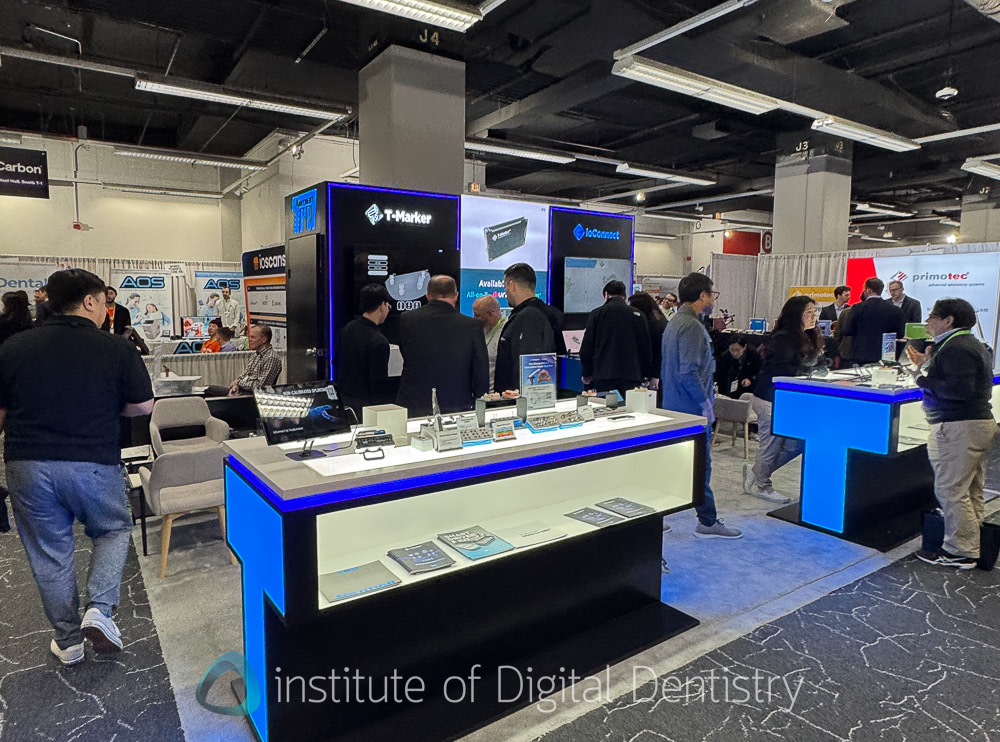
TruAbutment was noticeably busier on the lab side than the clinical show, running two booths like several other major companies. They showcased the IO Connect horizontal scan body system alongside what I think was the real story: the official US release of the T-Marker iPad/iPhone-based photogrammetry solution.
If you recall from our AEEDC 2026 coverage, the T-Marker launch was arguably the standout announcement of that entire show. The concept is compelling - photogrammetry-level accuracy for full-arch implant position capture using markers and an iPad or iPhone you already own, rather than a dedicated photogrammetry device costing thousands. Seeing it now officially available in the US market is a significant milestone.
The booth was packed, and the interest was clearly genuine. Full-arch implant work represents one of the highest-value treatment categories in North American dentistry, and anything that simplifies the digital capture workflow while reducing equipment costs is going to get attention. The T-Marker taps directly into that demand.
The bigger picture here is worth noting too. Between T-Marker on iPad, Medit's i900 Mobility running natively on iPad, and various other clinical tools migrating to tablets, we may be watching the early stages of a broader shift in how digital dentistry hardware is delivered. Consumer devices as clinical platforms rather than dedicated proprietary hardware.
If T-Marker delivers on its accuracy promises in real-world clinical use, it could meaningfully change how practices approach full-arch digitization. One I'll be testing closely.
Metal 3D Printing
Metal printers continued their slow but steady march into dental laboratory workflows. Several manufacturers displayed systems for printing RPD frameworks, implant components, and other metal prosthetics. The technology promises to eliminate traditional casting processes and reduce material waste, but the same adoption hurdles persist: high equipment costs, complex post-processing, and a steep learning curve for labs with decades of casting expertise.
That said, the presence of metal printing at Lab Day grows each year, and the samples on display are looking increasingly refined. This feels like a technology that's been years away from mainstream lab adoption, but the gap is genuinely closing.
AI Design Services and Lab Management
The lab show floor was dense with AI-powered design services, lab management platforms, and cloud-based CAD solutions. It felt like every row in the exhibition hall had "AI" somewhere in its signage.
Some of these are genuinely useful automation tools for design and case management. Others feel more like buzzword marketing. The challenge for labs is separating reality from noise in an increasingly crowded space.
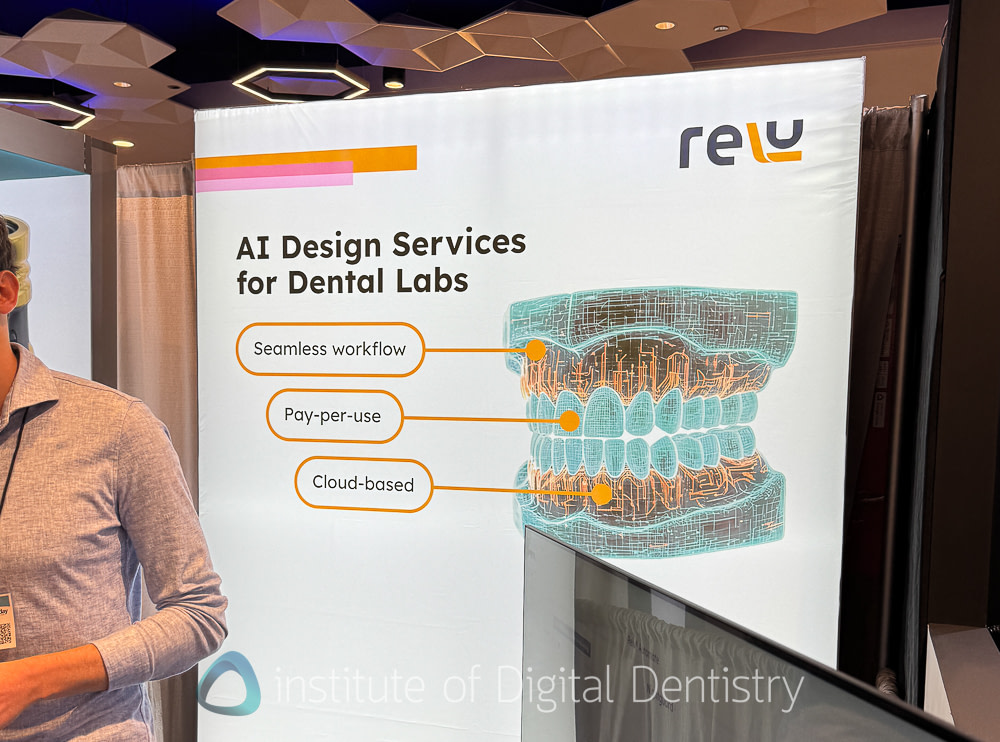
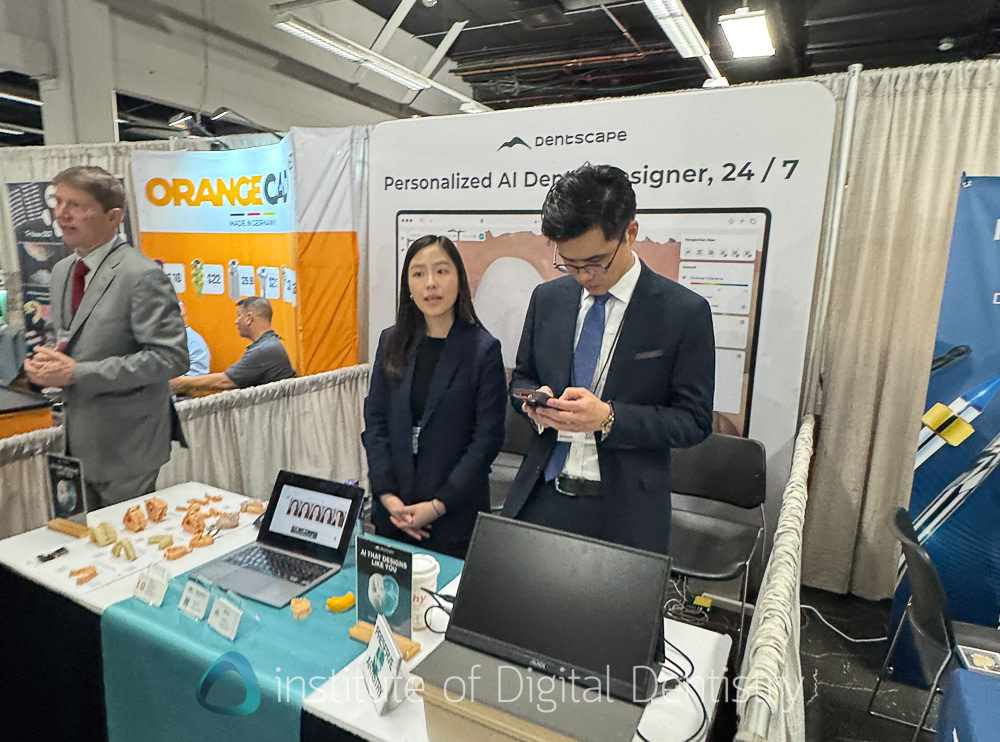
Chinese laboratories were also present in numbers, offering their design and manufacturing services for export. This reflects the increasingly global nature of modern dental laboratory production, where a scan captured in Texas can be designed in Shenzhen and manufactured in China for a fraction of the cost in America. Whether that's an opportunity or a threat depends on which side of the lab bench you sit on. Regardless, this has been going on for years, and it was interesting to see these Chinese manufacturers pay for booths at the event to advertise their offerings to lab techs.
Download the iDD Highlights PDF
A summarized version of this blog.
View as a flipbook online or download a copy to read it later.
All the Standard Milling Companies Present
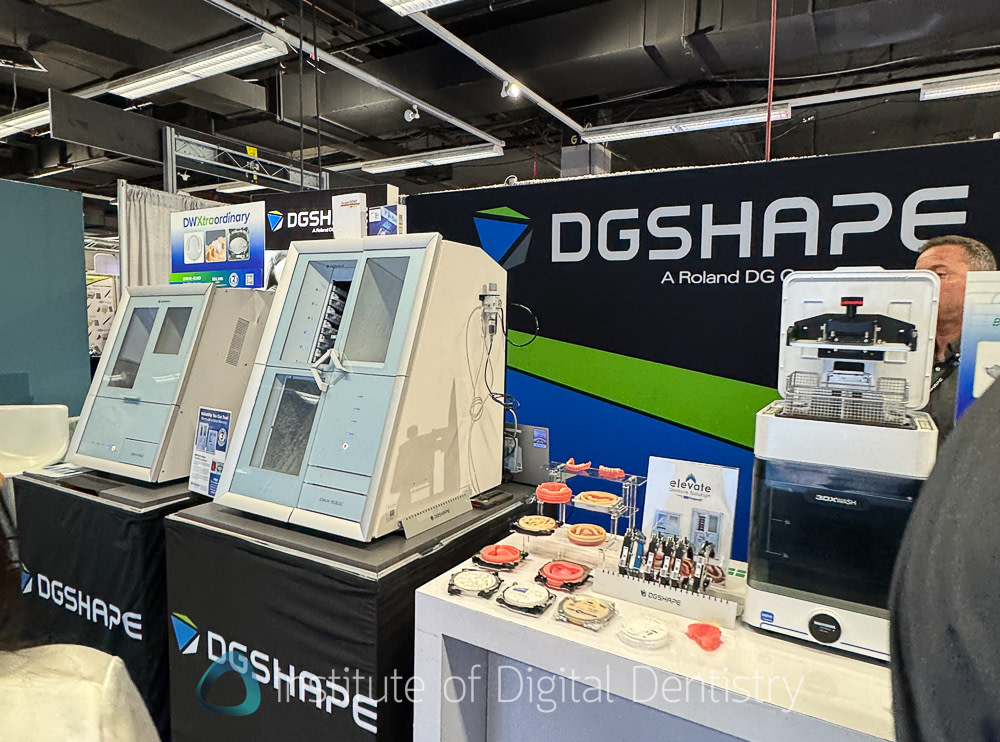
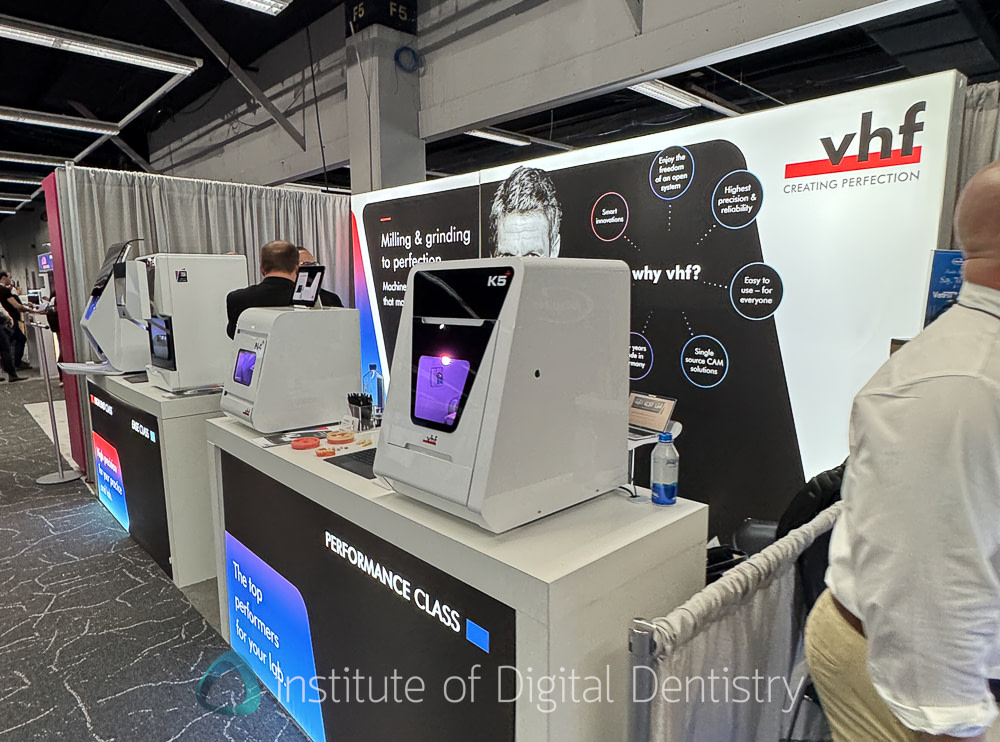
All the usual milling companies were present - VHF, IMES-ICORE, DG Shape, Panthera, Alien Milling, and others.
No major new releases in this space, and frankly, that's expected. Milling technology is mature, reliable, and isn't going anywhere. While 3D printing captures headlines and attention, subtractive manufacturing remains the gold standard for zirconia, lithium disilicate, and other high-strength restorations.
These companies keep doing what they do well, and labs keep buying their machines. Not every segment needs constant disruption.
New Resins, Printers, and Materials
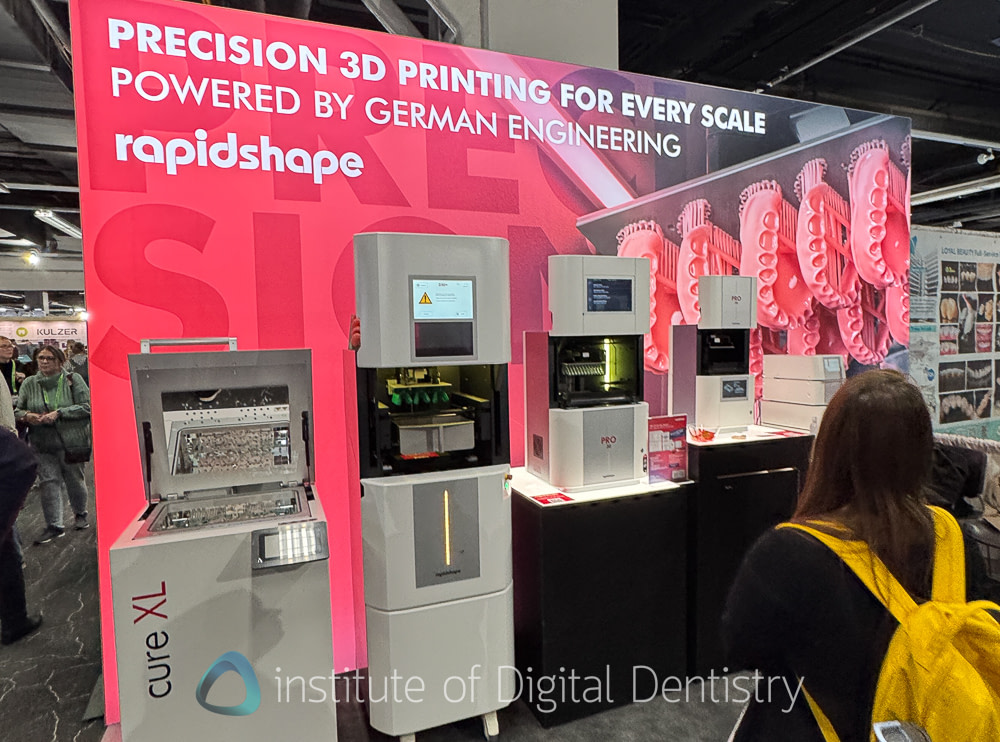
Beyond the specific companies I've covered above, Lab Day featured an abundance of zirconia discs, resins (particularly denture base and crown-printing materials), new printer models, and expanding material portfolios from manufacturers of all sizes. The 3D printing materials space is getting increasingly competitive, with more options at more price points than ever before. The trend from last year continues and is only accelerating.
All the major names were here: Carbon, VOCO, ZirconZahn, Kuraray, Vulcan, Aidite, Upcera, GC, VHF, MIYO, and plenty more. Just again… nothing really new or a huge headline from any of them. A consolidation year across the board.
Interestingly, some products you'd think are more clinic-focused were here on the lab side too. PIC Dental and MicronMapper both had booths at Lab Day, which makes sense when you think about it: labs are increasingly the ones advising their client dentists on full-arch scanning workflows and technology purchases. More digitally focused dentists are attending Lab Day as well, which speaks to the show's quality and relevance of the show. The line between "lab show" and "digital dentistry show" continues to blur.
And then there are the milling services, external labs, and outsourcing providers. Combined with platforms like IOSCANS and Dandy's aggressive play on the clinic side, you start to wonder: what will the dental lab look like in ten years? That's a question Lab Day makes you think about every single year, and this year it felt more pressing than ever.
Final Thoughts
Chicago 2026 reinforced what we've been seeing at every major show this year: the digital dentistry industry is in a development and consolidation phase. Not a stagnation phase - that's an important distinction.
Companies are refining products, expanding material options, deepening AI integration, and building out ecosystems. The days of constant hardware launches and a new scanner at every show appear to be behind us, at least for now. And honestly? That might not be a bad thing. The industry needed time to catch its breath, and practices and labs need time to actually implement what's already available before the next wave arrives.
The most fascinating takeaway from this trip was the widening gap between the lab and clinical shows. Lab Day felt like the future of digital dentistry - packed halls, genuine excitement, meaningful technical conversations. The clinical show felt like an industry still finding its footing with digital adoption, albeit with increasingly polished booth presentations and a growing awareness that digital transformation is no longer optional.
The unique American flavour of these shows also deserves mention. The explosion of AI agent companies at the Midwinter Meeting, such as receptionists, practice management, diagnostics, marketing, and invoicing, is something I simply don't see at other global shows, at least not at this scale. It reflects both the sophistication and the business pressures of the American dental market, where practice efficiency and patient acquisition are as important as clinical technology. Whether this AI-agent trend spreads to other regions or remains a predominantly North American phenomenon will be interesting to watch.
Looking ahead, IDS 2027 remains the next major milestone for the industry. If companies are truly holding back major announcements, that's where we should expect to see them. In the meantime, Chicago 2026 showed us an industry that is working hard, refining steadily, and preparing for whatever the next chapter looks like.
Did I miss anything? Did you see something worth sharing? Please let me know in the comments below.
Thanks for reading.
We truly appreciate and look forward to these summaries.
Hey Chris, I appreciate the kind words. I am glad they are useful.